

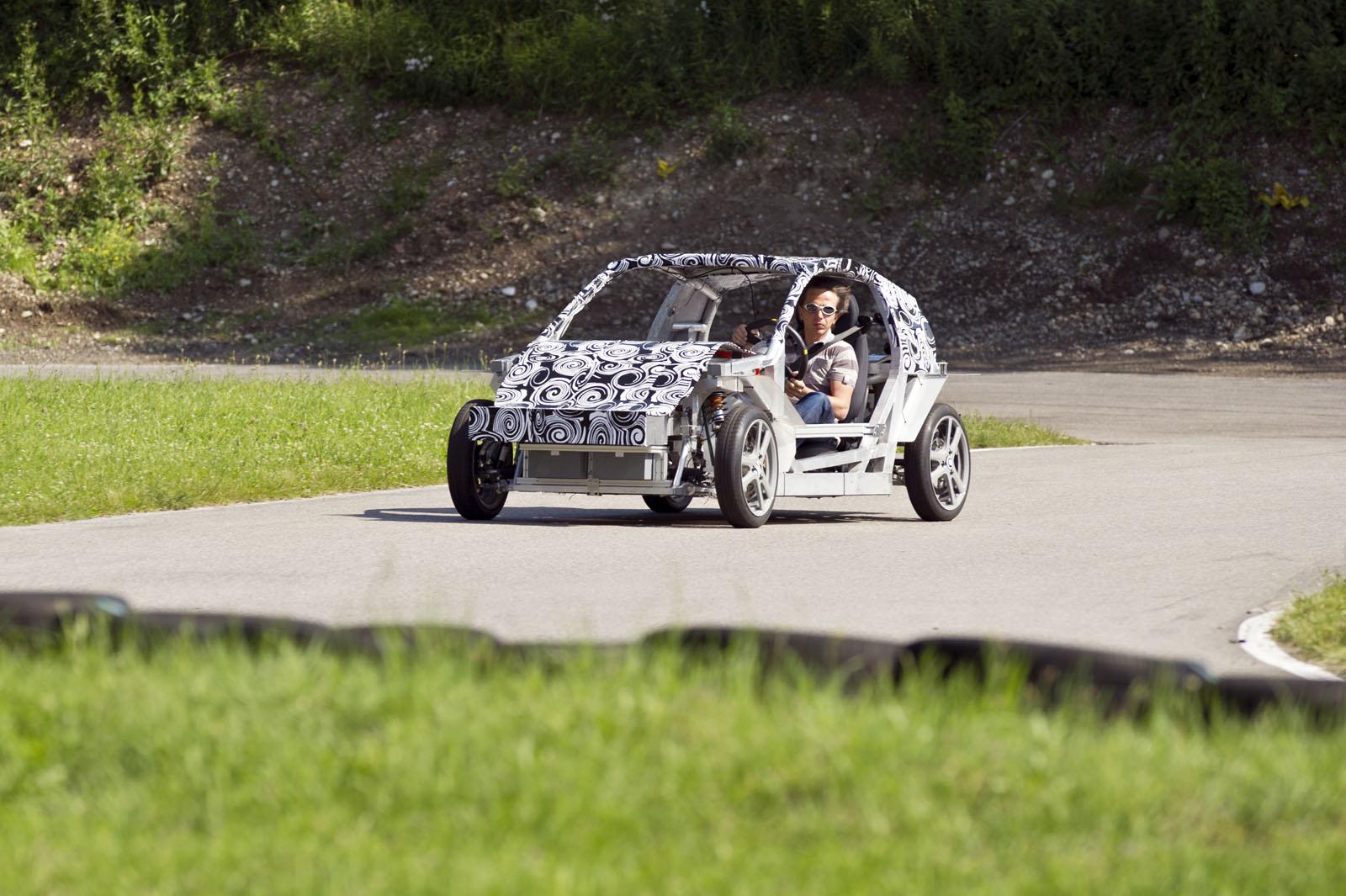
Το Τεχνικό πανεπιστήμιο του Μονάχου παρουσίασε το πρωτότυπο MUTE το οποίο θα κάνει ντεμπούτο και αυτό τον Σεπτέμβριο στη Φρανκφούρτη. Οι Γερμανοί το έχουν οραματιστεί ως ένα οικονομικό ηλεκτρικό αυτοκίνητο το οποίο φορά έναν μικρό ηλεκτροκινητήρα απόδοσης 16.5 kW (22 ίππων) ο οποίος τροφοδοτείται από μια μπαταρία 10 kWh. Η κίνηση μεταφέρεται στον πίσω άξονα μέσω ενός “torque vectoring” διαφορικού.
Το βάρους μόλις 500 κιλών πρωτότυπο κάνει τα 0-60 χλμ/ώρα σε 6.8 δευτερόλεπτα με τελική ταχύτητα τα 120 χλμ/ωρα.
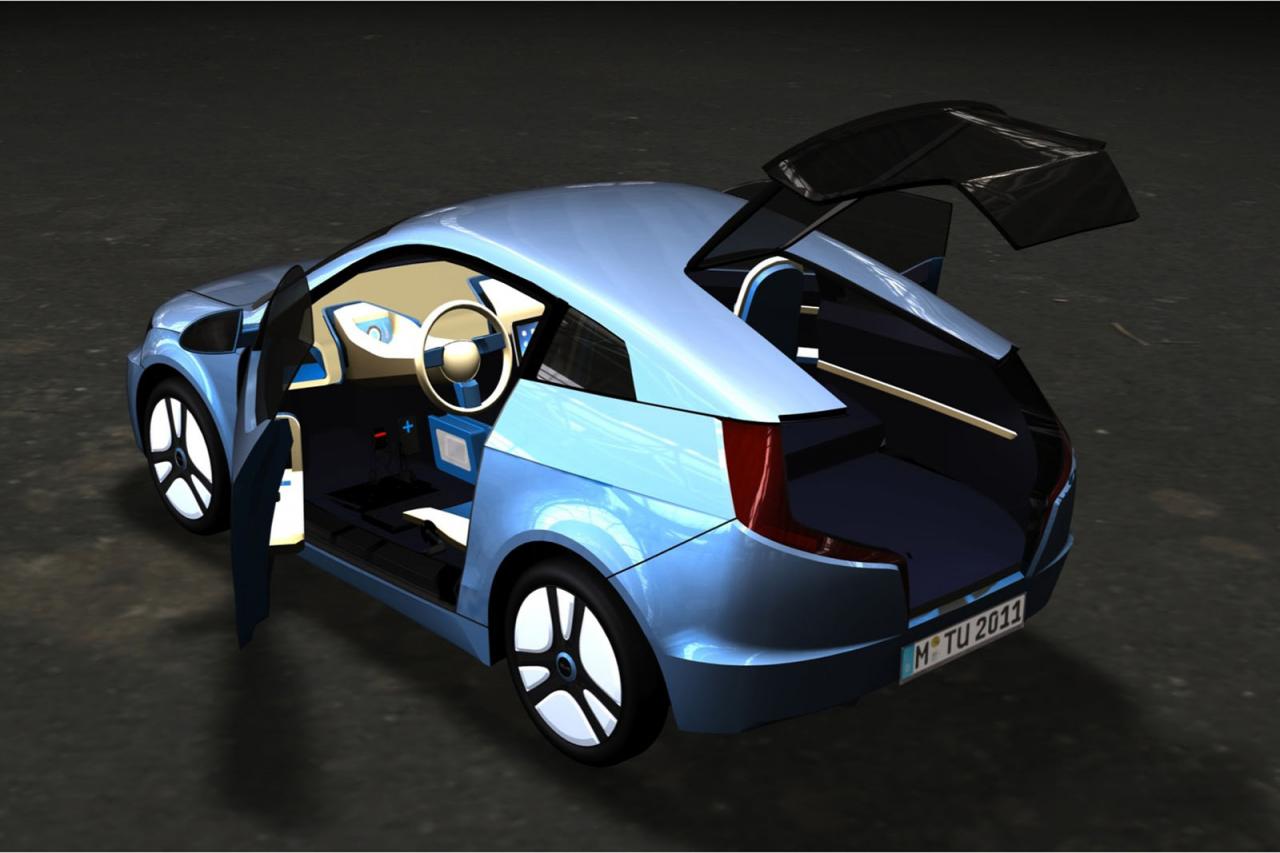
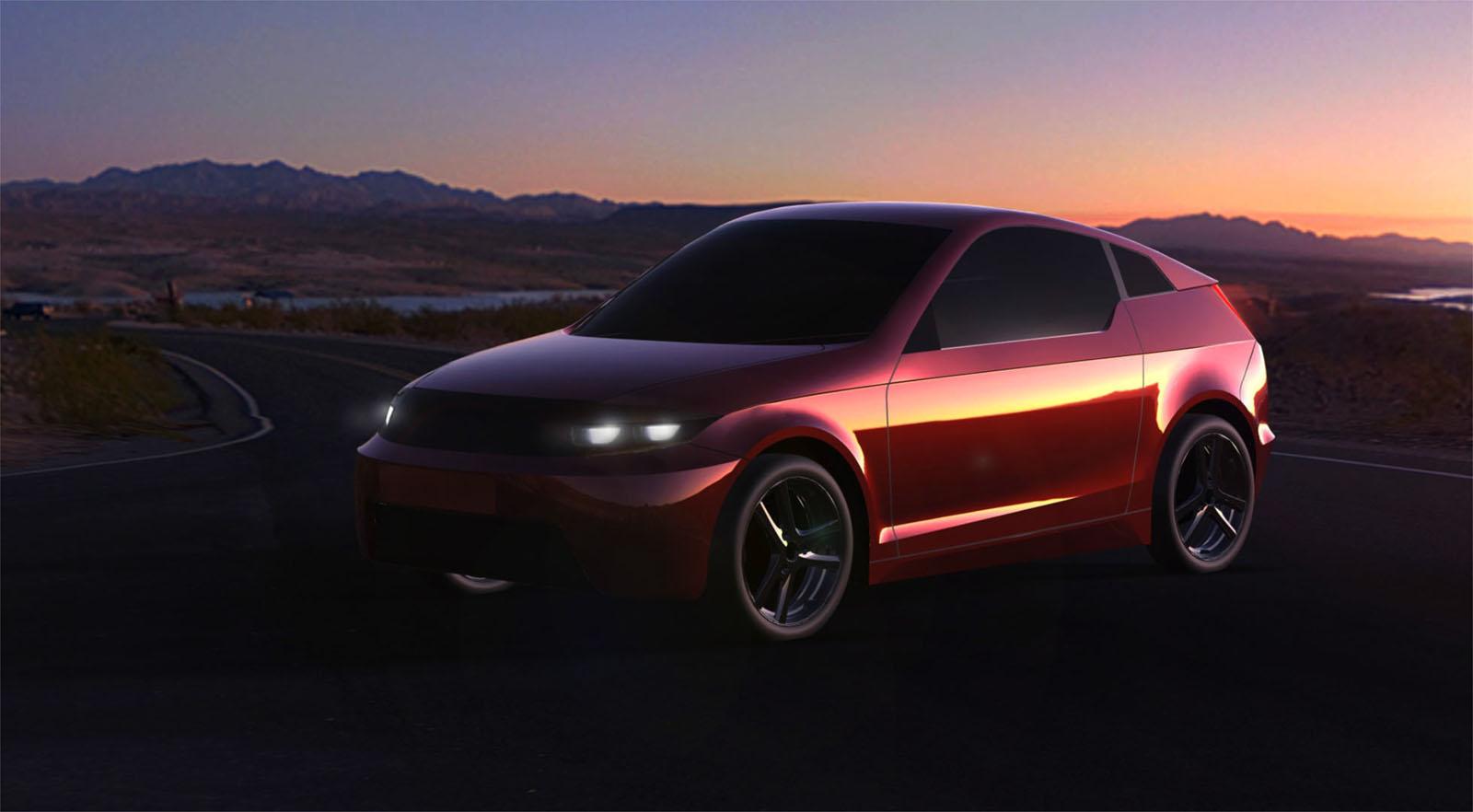
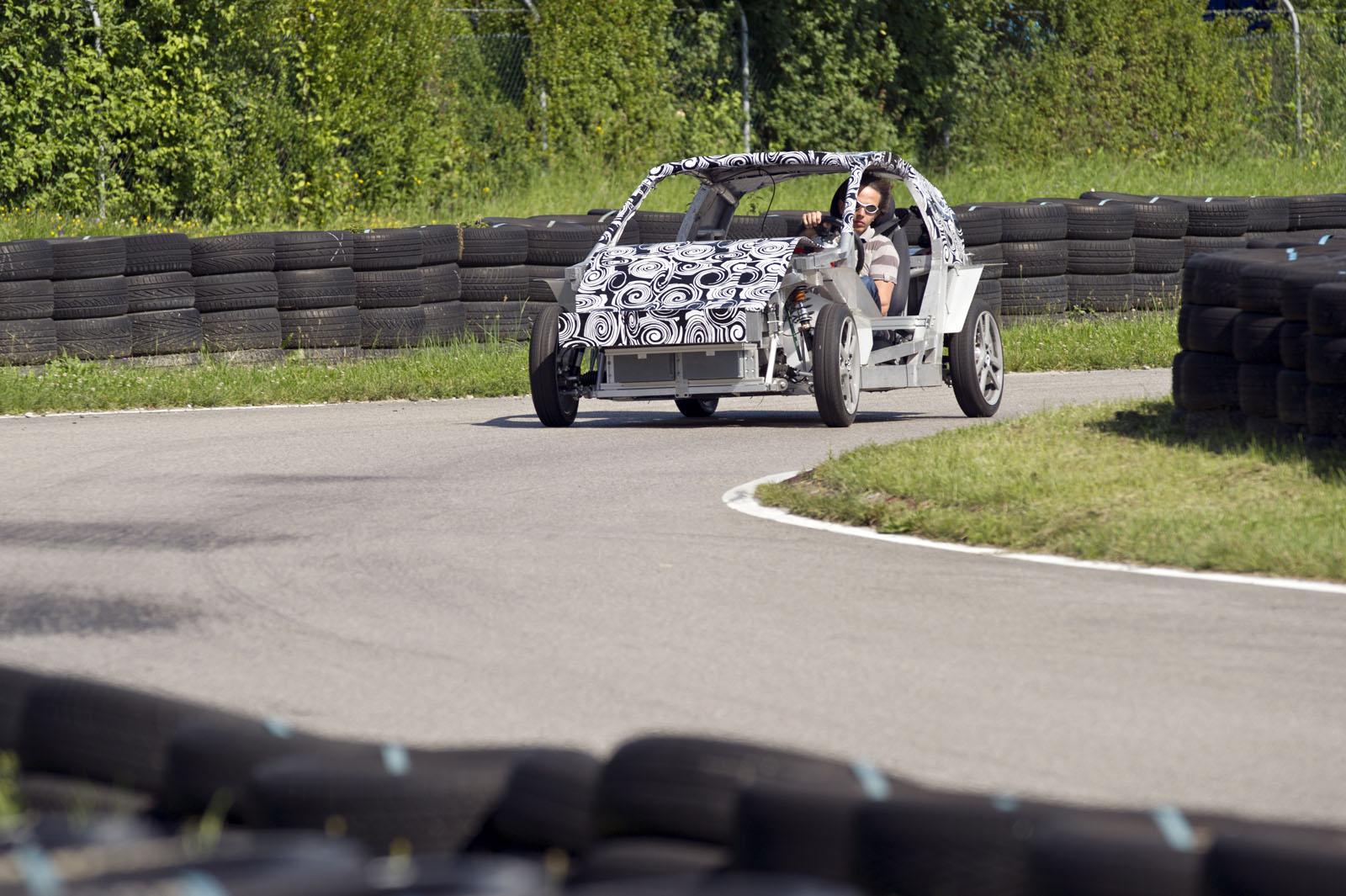
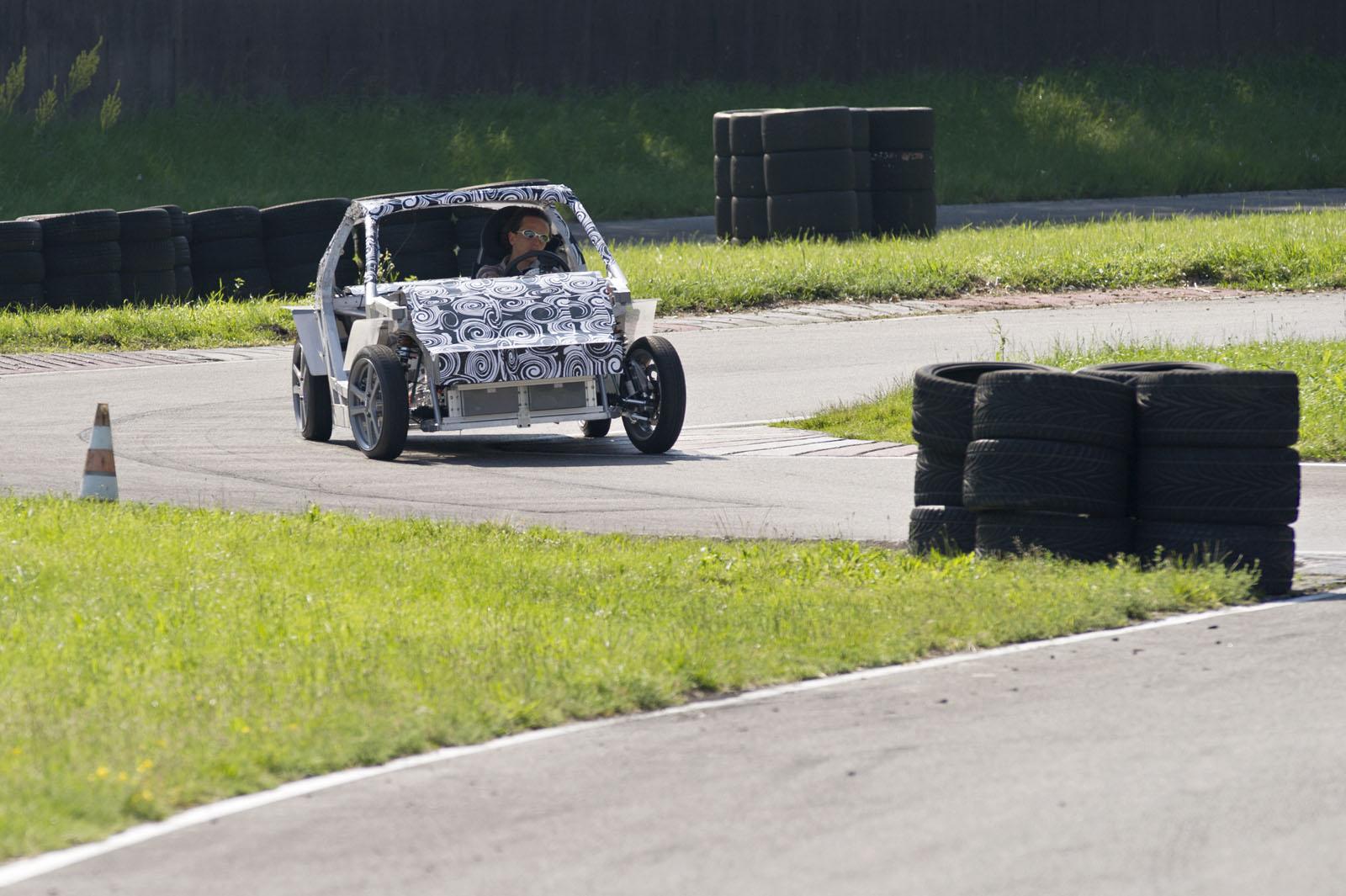
[Πηγή: TUM]
[learn_more caption=”Δελτίο Τύπου”]
MUTE prototype displays excellent driving dynamics
Technische Universitaet Muenchen will be presenting its new electric vehicle concept “MUTE” at the international motor show in Frankfurt from 15 to 25 September. Following months of preliminary work on computer simulations, the first completed prototype showed in driving tests that MUTE possesses excellent driving properties – not only in theory, but also in practice.
For the first time, a handful of curious bystanders had the opportunity to see TU Muenchen’s new electric vehicle in test runs. But the final design of MUTE remained shrouded; it will first be revealed at the IAA in Frankfurt (15 – 25 September 2011, hall 4, C 23). The MUTE prototype is built so that it has the same driving dynamics as the final vehicle.
The first test drives speak for the ingenious construction of the vehicle, which was tried and tested in numerous computer simulations. Particularly noticeable are MUTE’s narrow tires. They minimize rolling friction, thereby extending the range of the vehicle. To ensure good cornering ability in spite of the narrow tires (115/70R16), the lateral dynamics of the vehicle were optimized by adjusting suspension, damping and axle kinematics. As a result the MUTE prototype completed the ISO Lane Change test better than a most conventional medium-sized automobiles.
A further important feature is the low weight of the vehicle. MUTE has a curb weight of only 400 kg, with another 100 kg for the batteries. “Low weight is essential for electric vehicles,” says Professor Markus Lienkamp from the Chair of Automotive Technology at TUM. “More weight requires higher battery capacity for the same range and thus generates significantly higher costs. More weight also means inferior dynamics for a given level of motor power. But what we are aiming at is an affordable car that is fun to drive.”
MUTE’s low curb weight means that the weight of passengers and baggage cannot be ignored, which is why the ratio between the spring force and the resulting contact patch load is chosen slightly progressive. This ensures that driving comfort remains the same for both light and heavy drivers, although using springs with linear characteristic. Approaching full load the spring force in the tire contact patch increases progressively, diminishing comfort slightly to allow for sufficient residual spring travel.
The results of the first test runs are also important for the design of the active torque vectoring differential. A small electric machine integrated in the differential serves to distribute the force evenly between the two back wheels. Especially when braking in curves, twice as much energy can be recouped than without torque vectoring. This ideal distribution of propulsive force between the two back wheels makes the car much more agile and safer. As a result the driver will hardly notice any reduction in lateral dynamics caused by the narrow width of the tires.
Whenever possible, MUTE brakes by using the electric motor as a generator. The recovered energy is then fed back into the battery. When more braking power is needed, the electronic stability control (ESC) also activates the disc brakes on the front wheels.
“MUTE achieves a high level of safety through ESC and torque vectoring,” says Michael Graf, who designed the driving dynamics parameters and subsequently did the test drives. “MUTE falls into the top 25 percent of existing medium-sized vehicles when it comes to driving dynamics and is absolutely easy to handle.” Even load reversal in curves does not impede safe handling of the vehicle – oversteering is easy to compensate. “Our practical tests show that MUTE outperforms theoretical forecasts,” he adds proudly.
[/learn_more]