

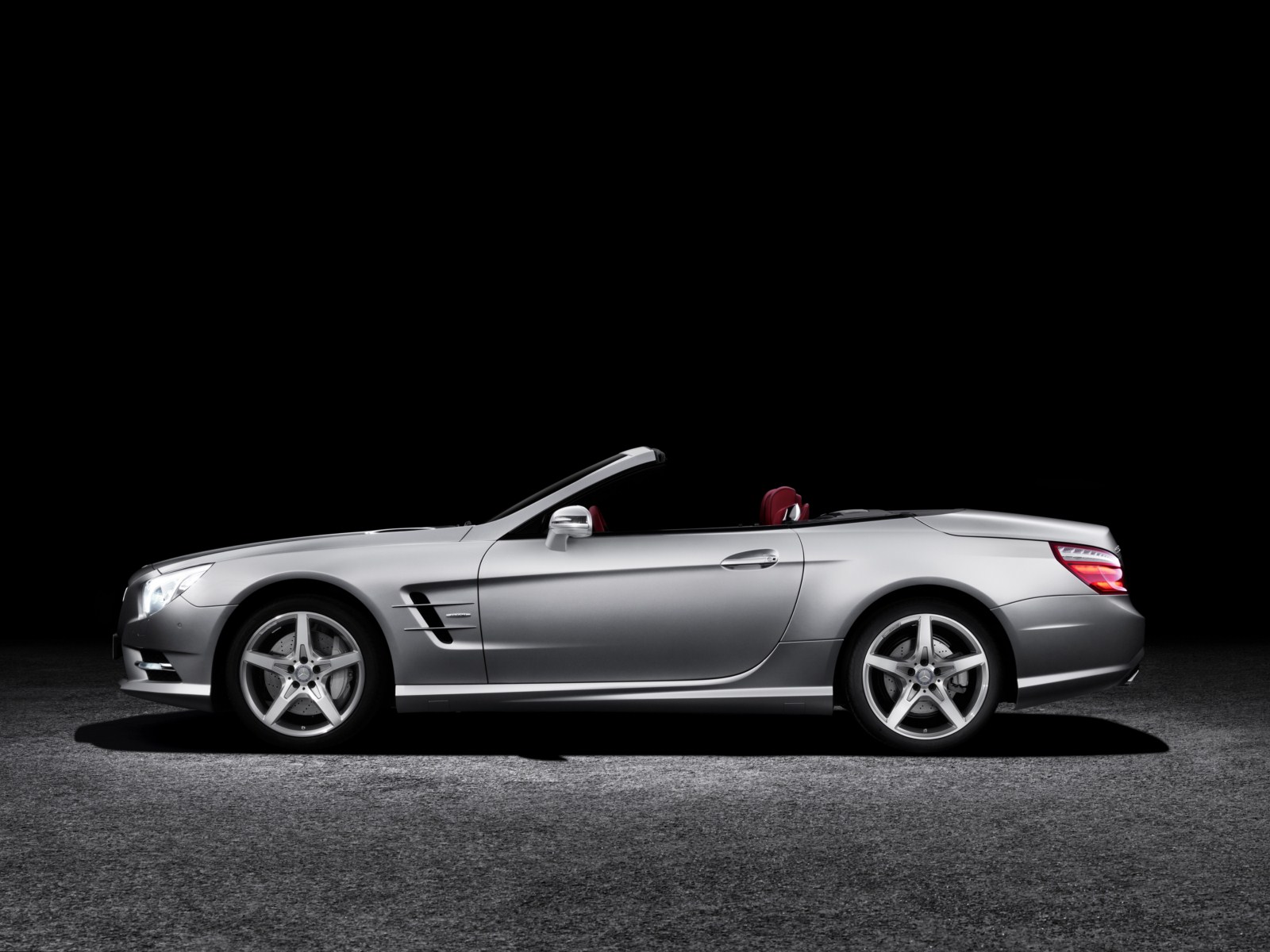
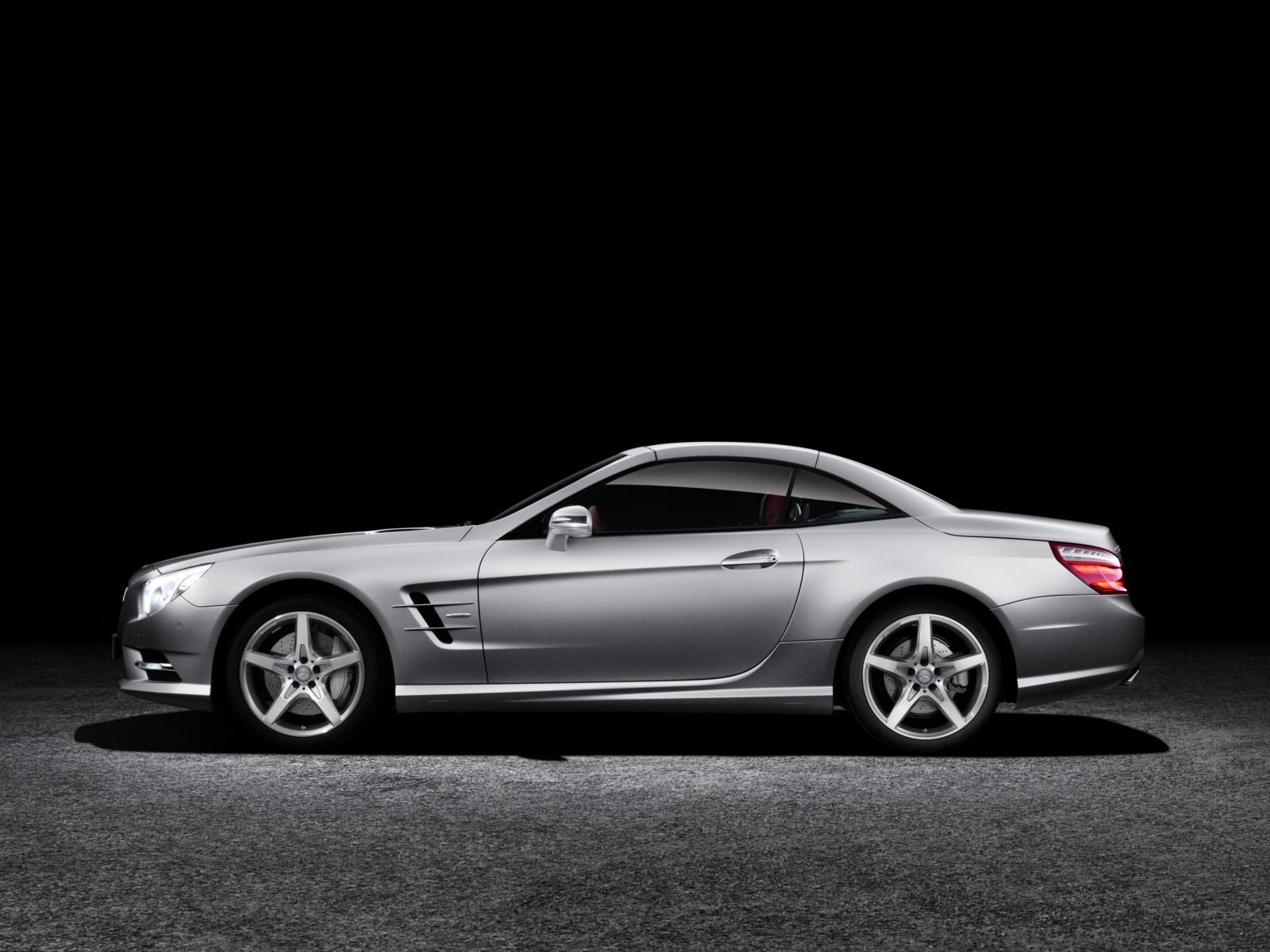
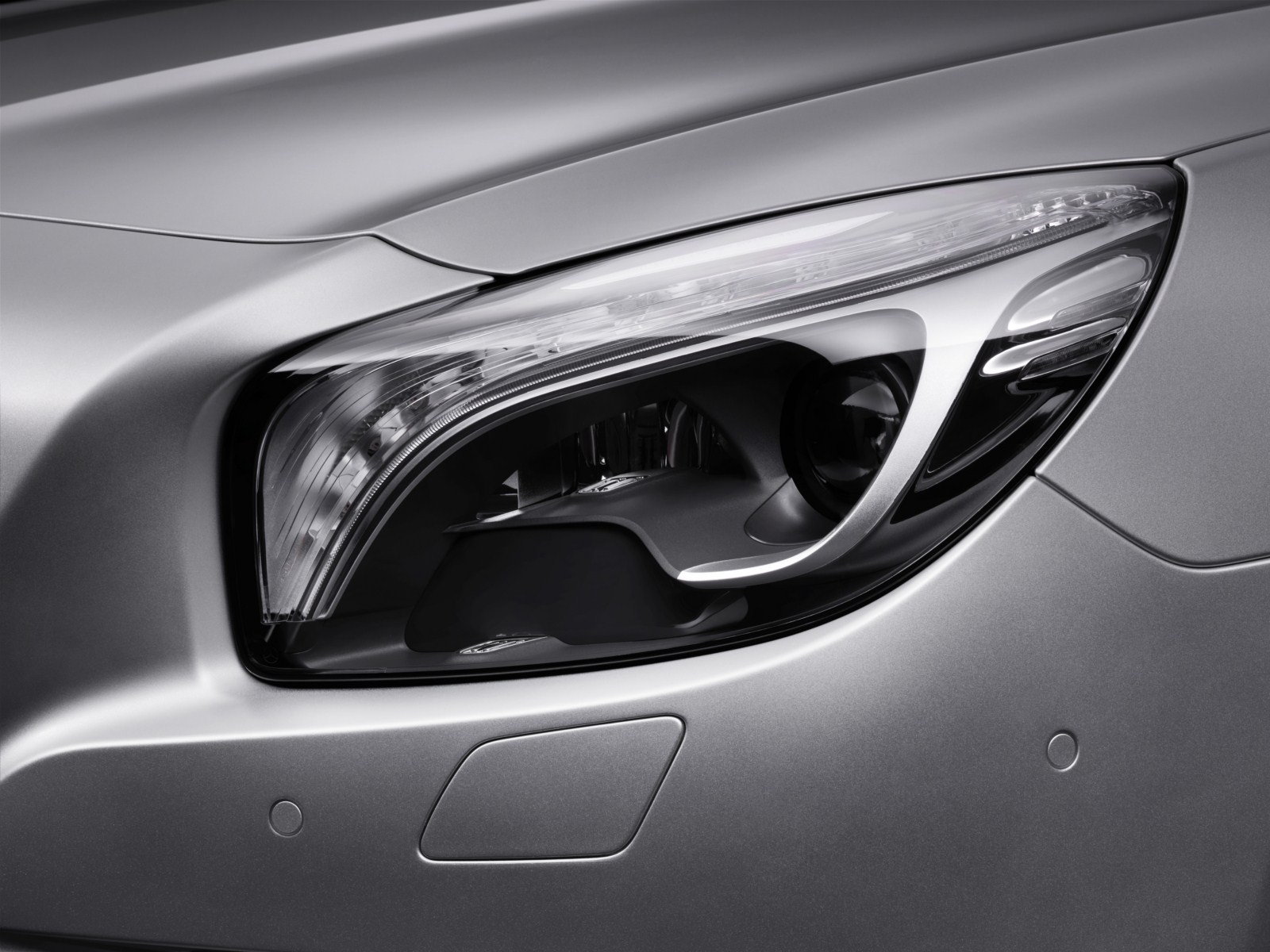
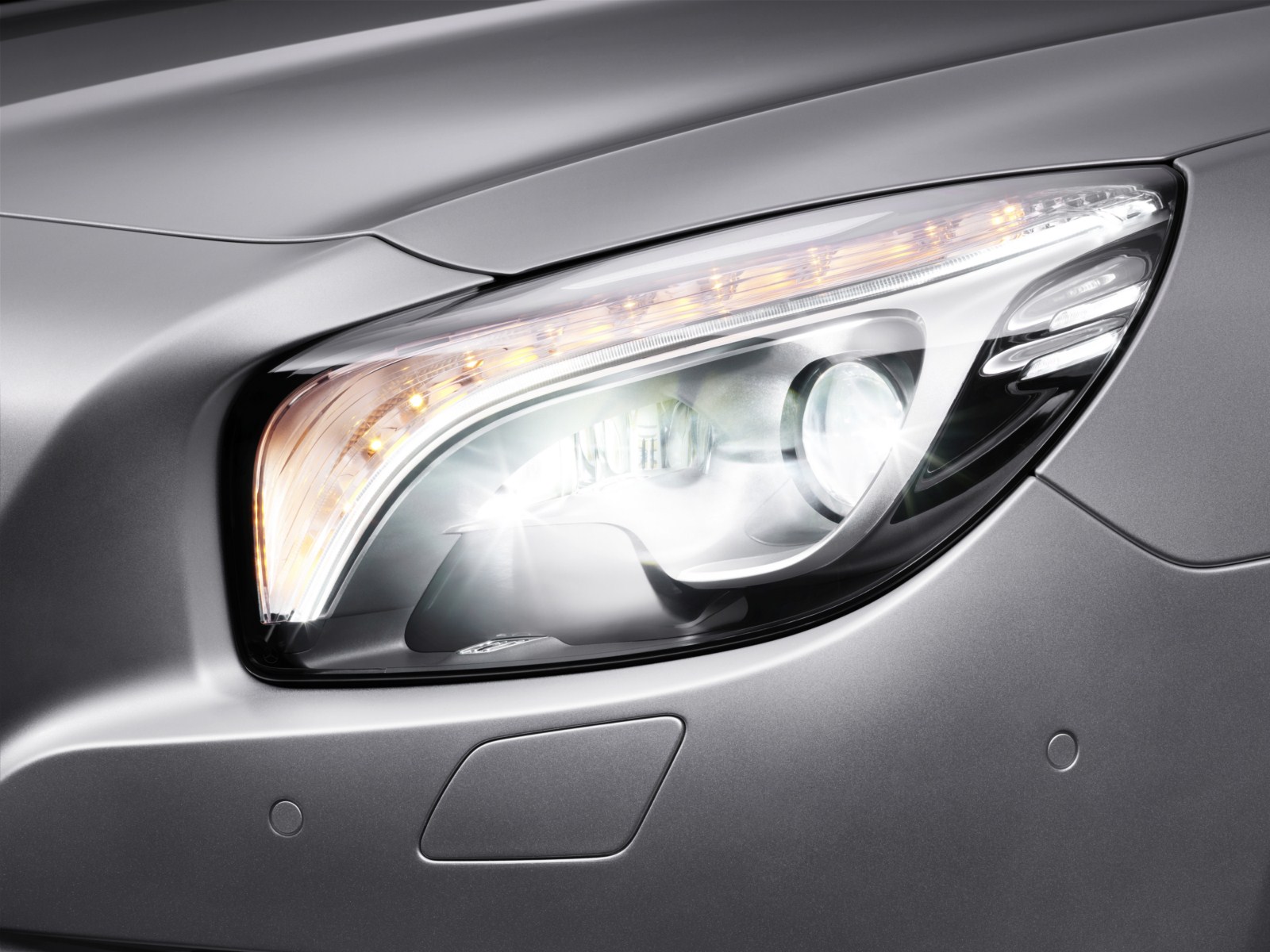
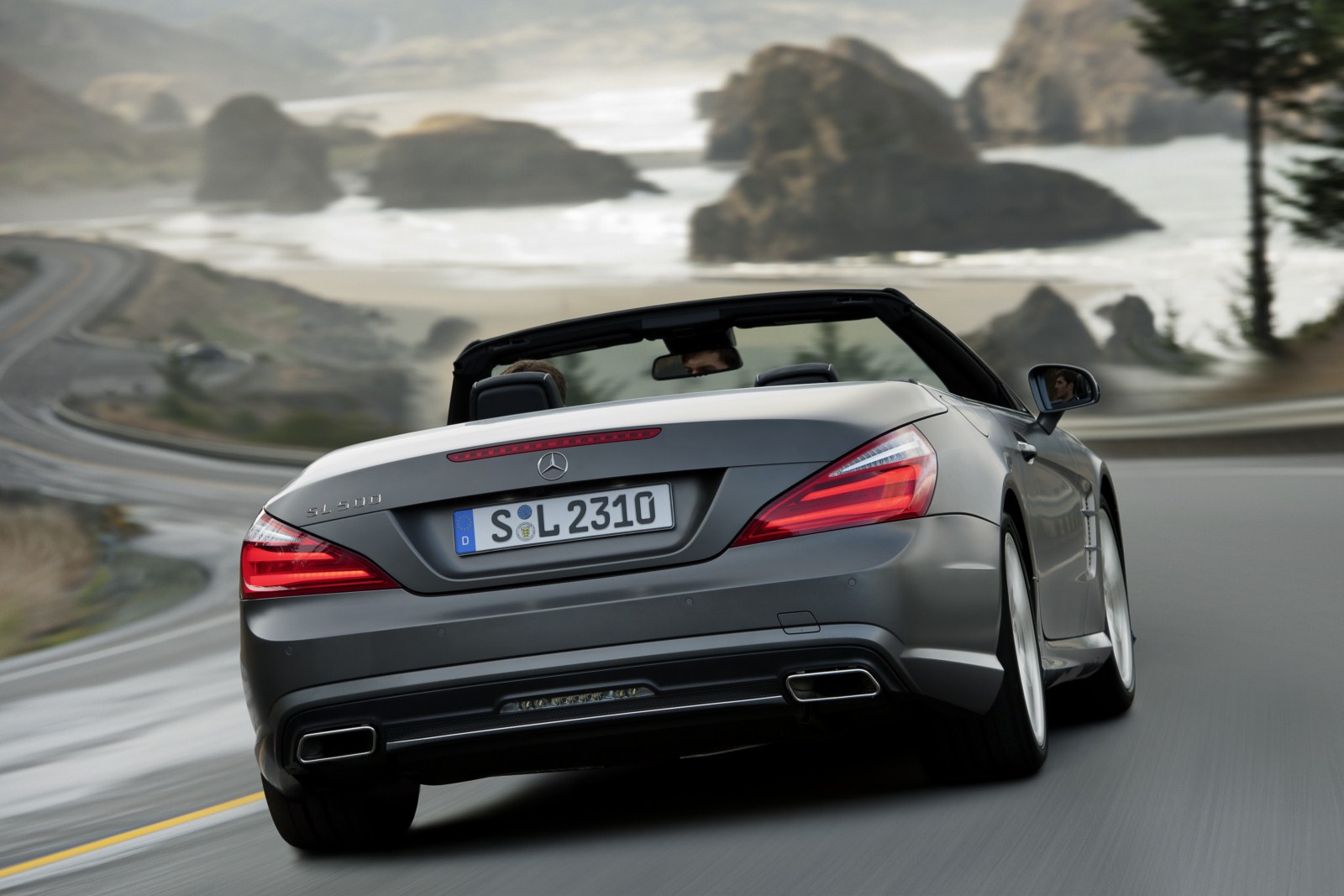
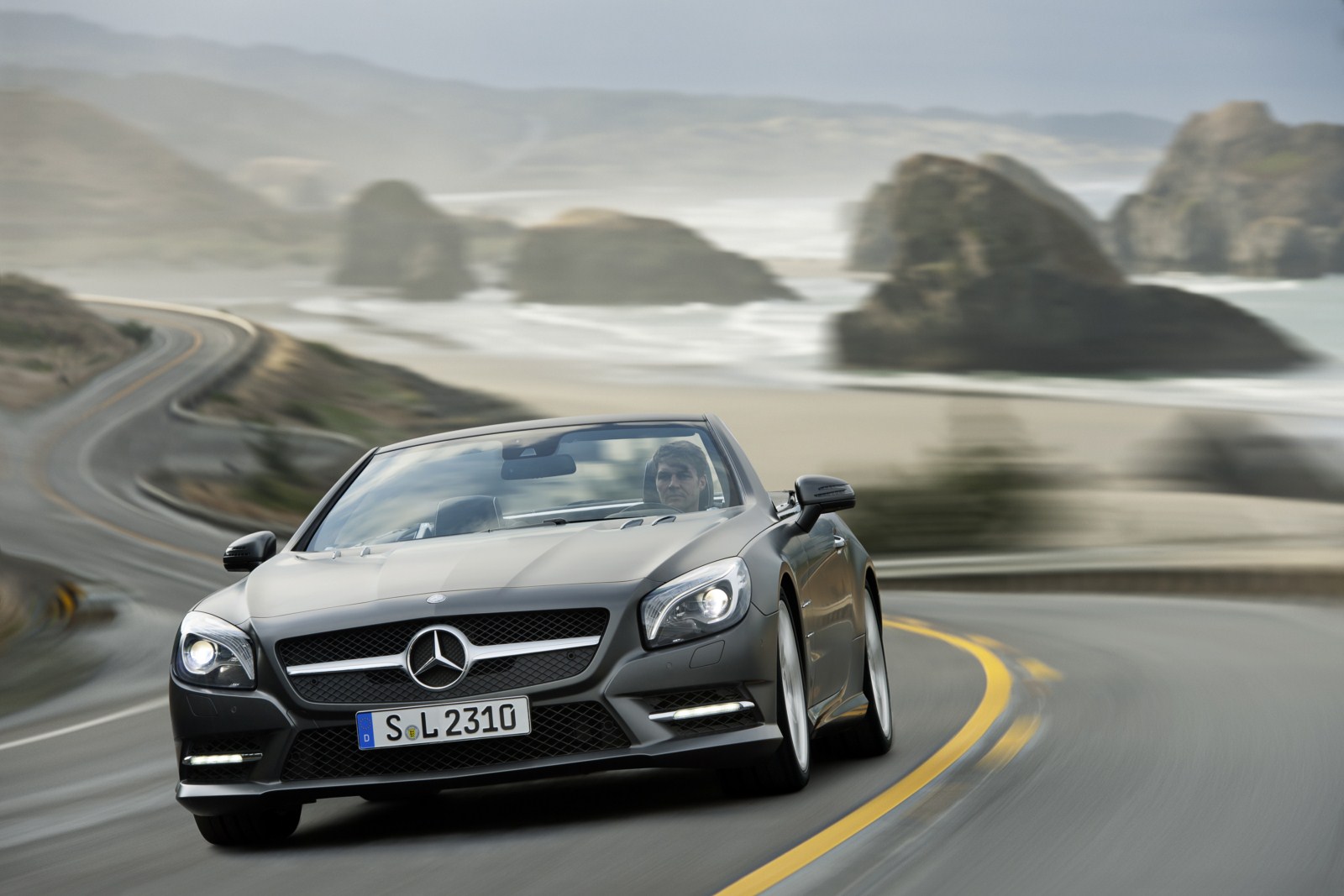
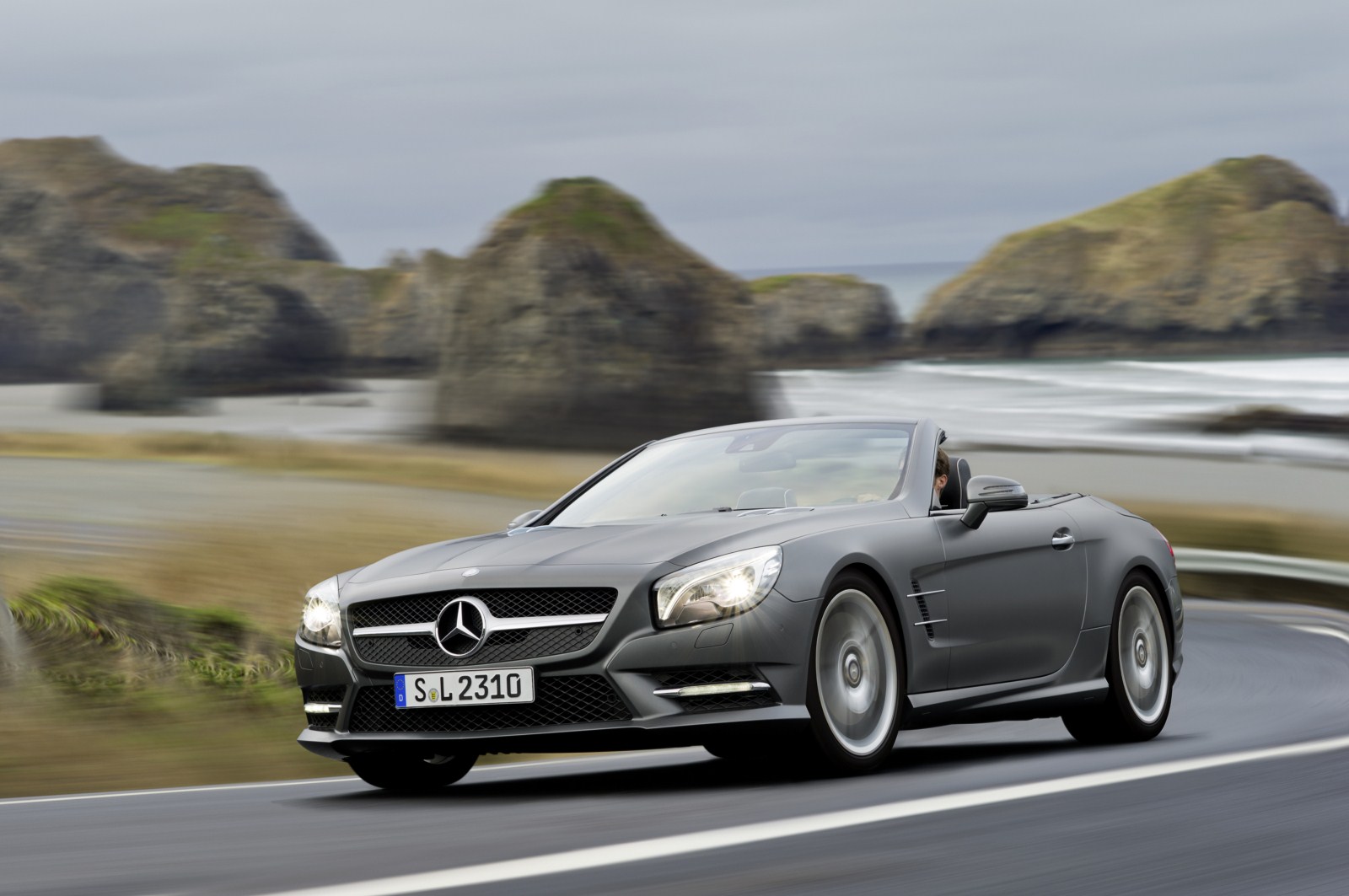
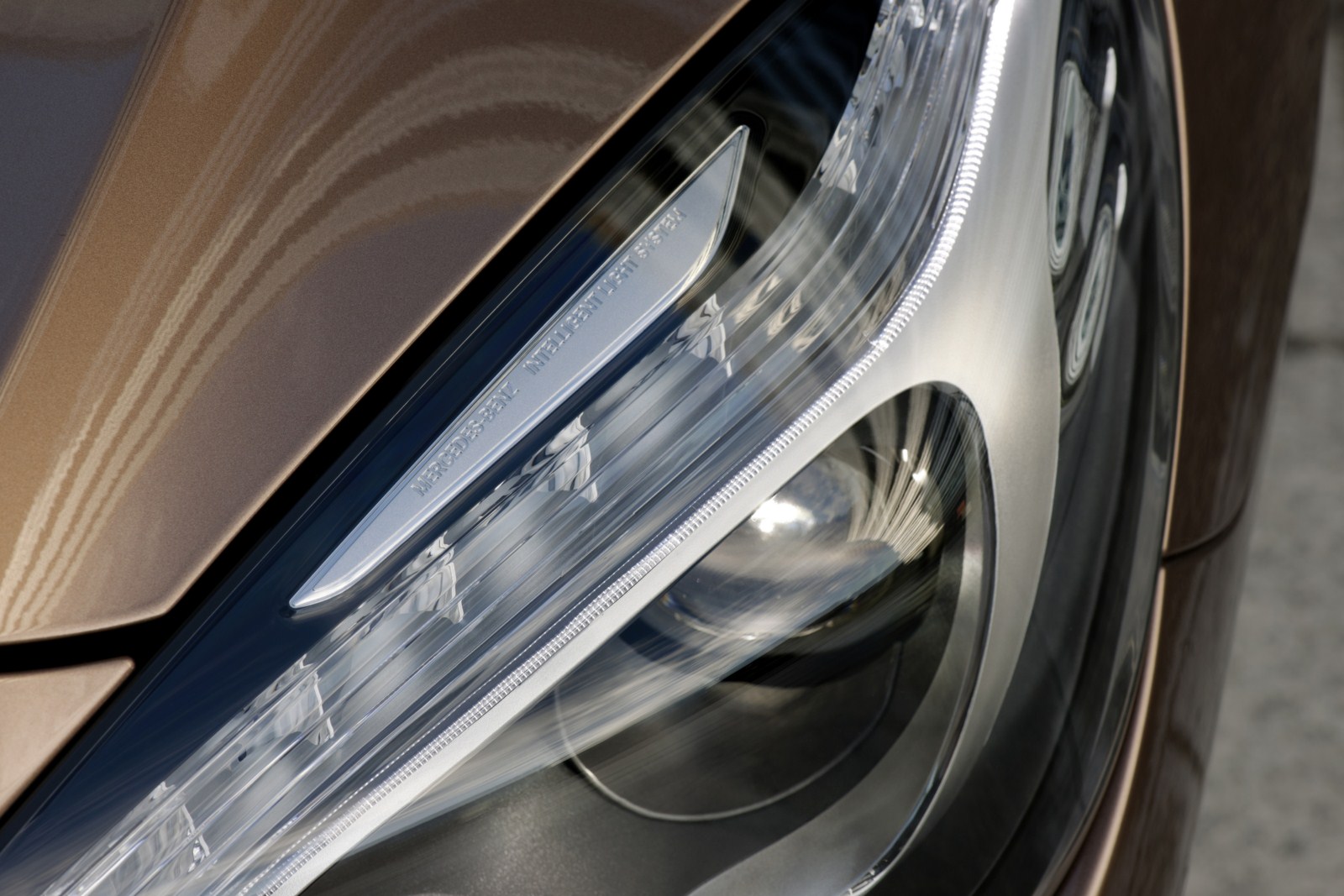
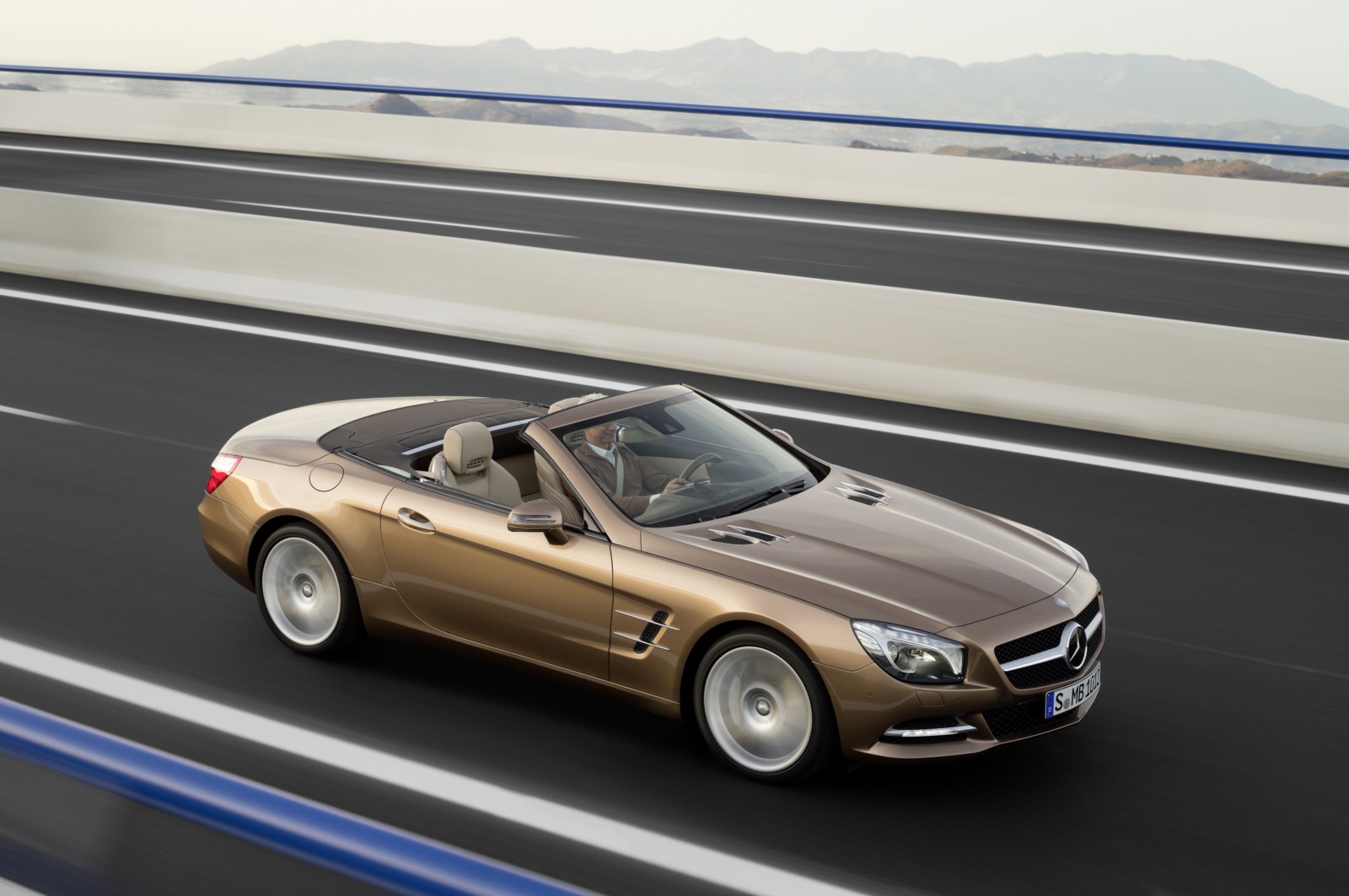
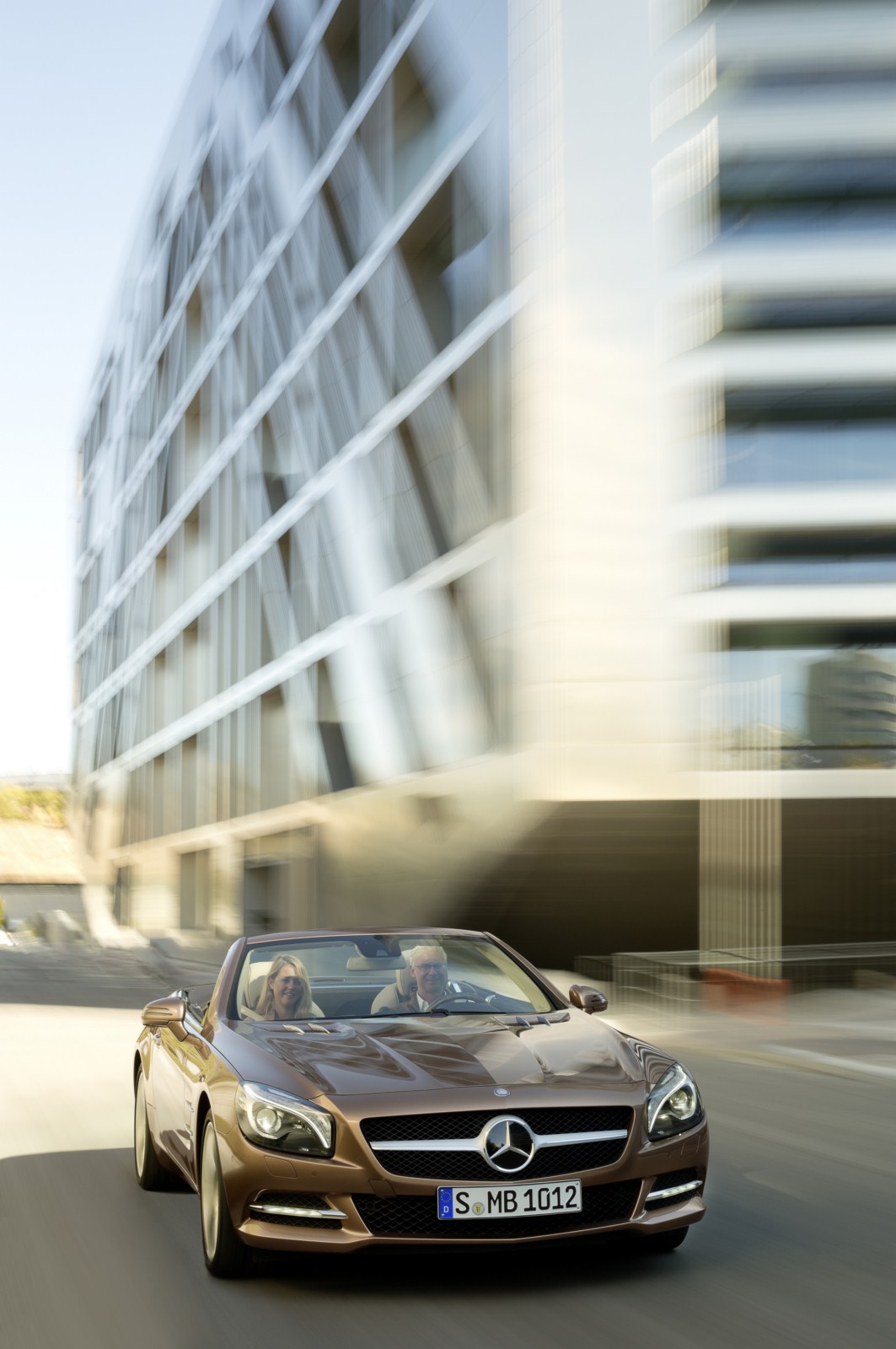
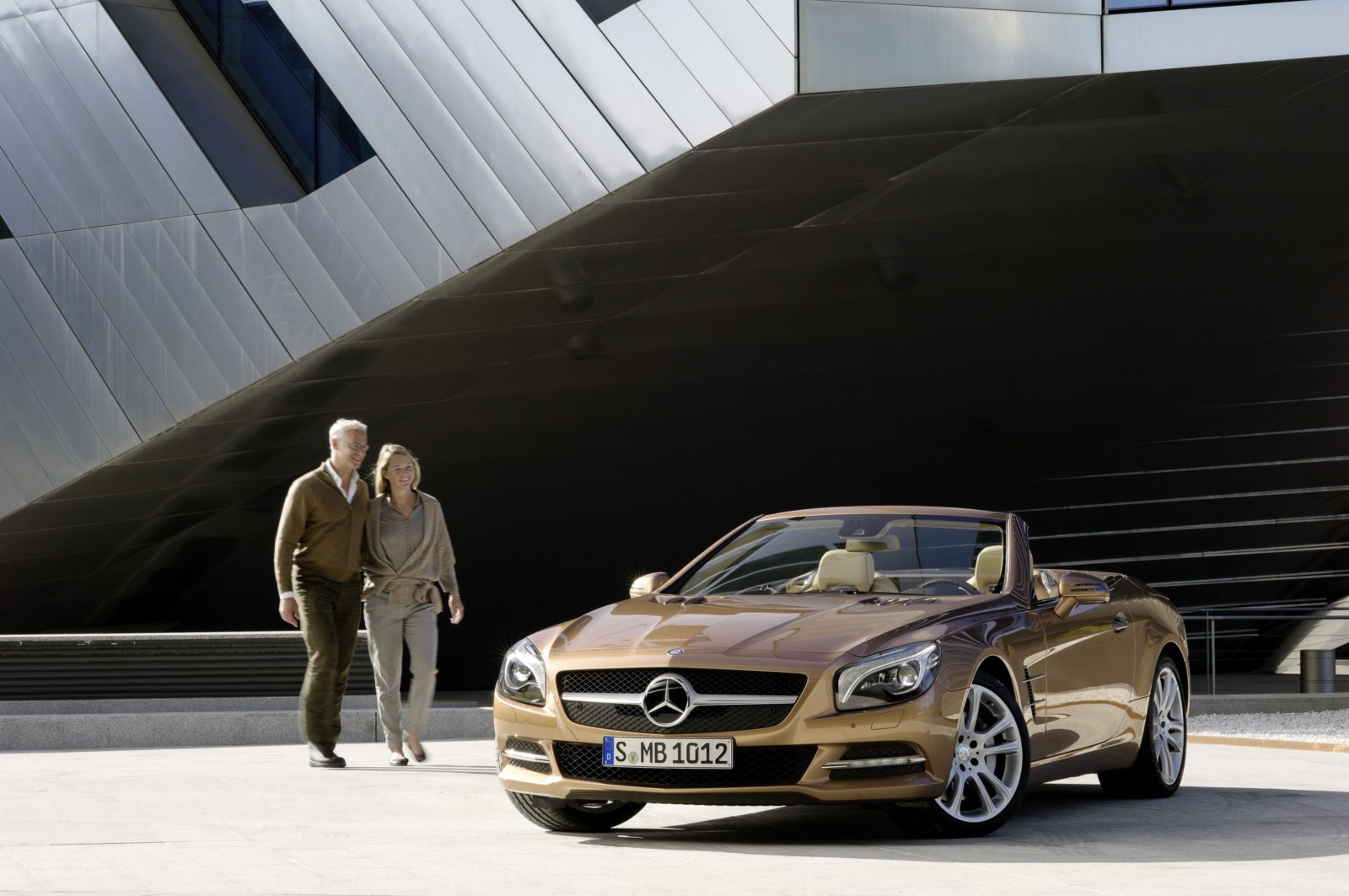
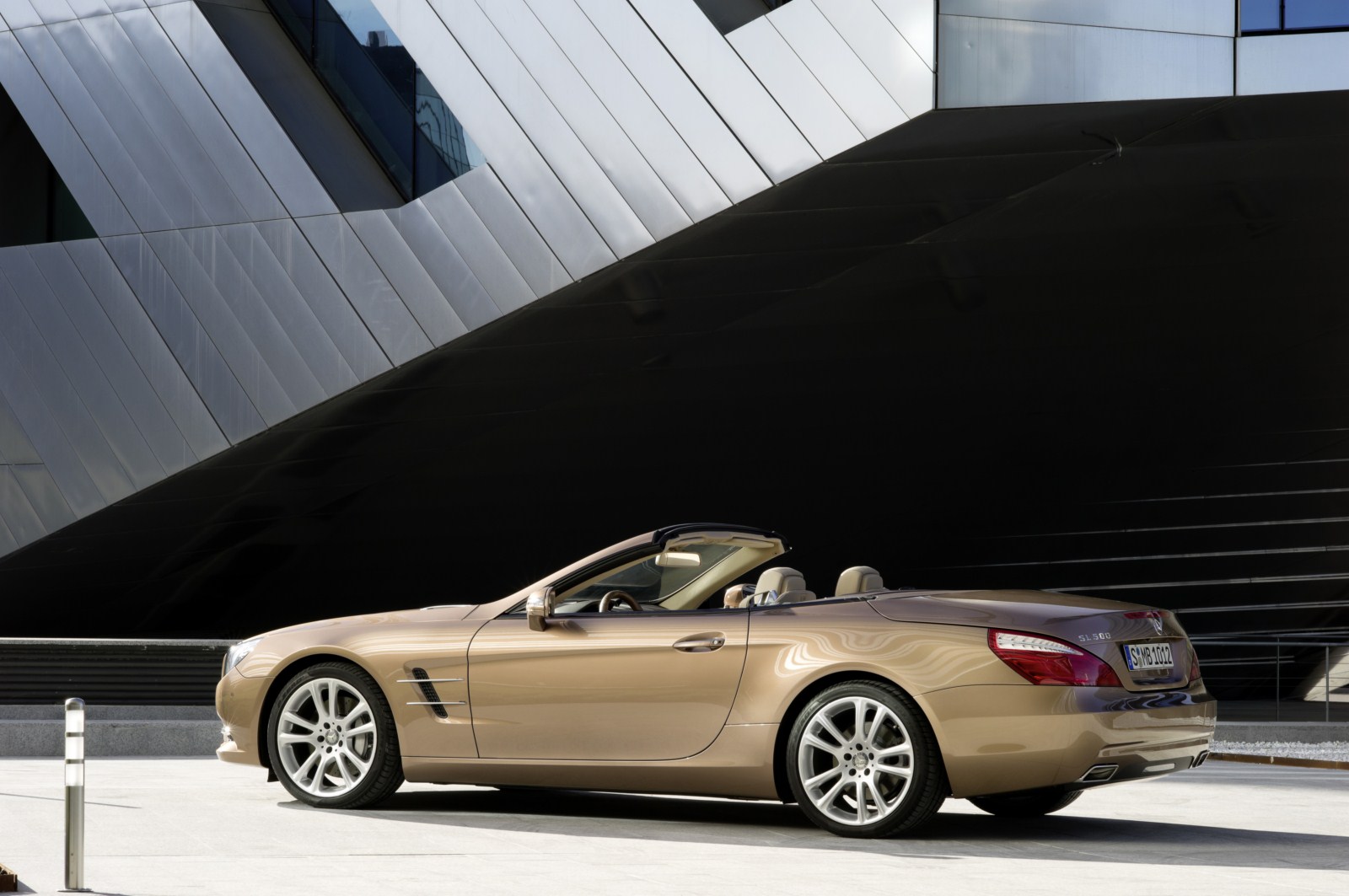
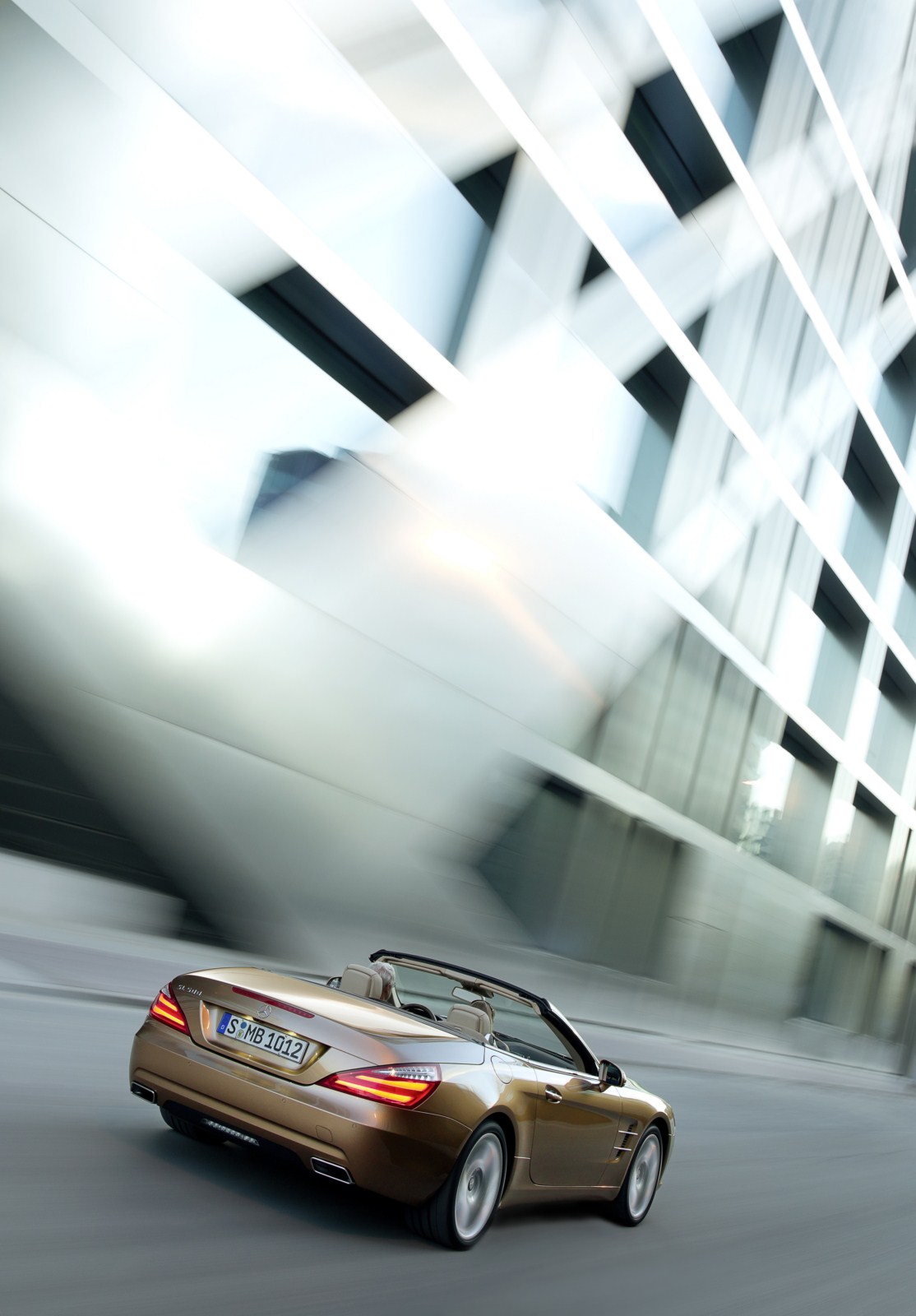
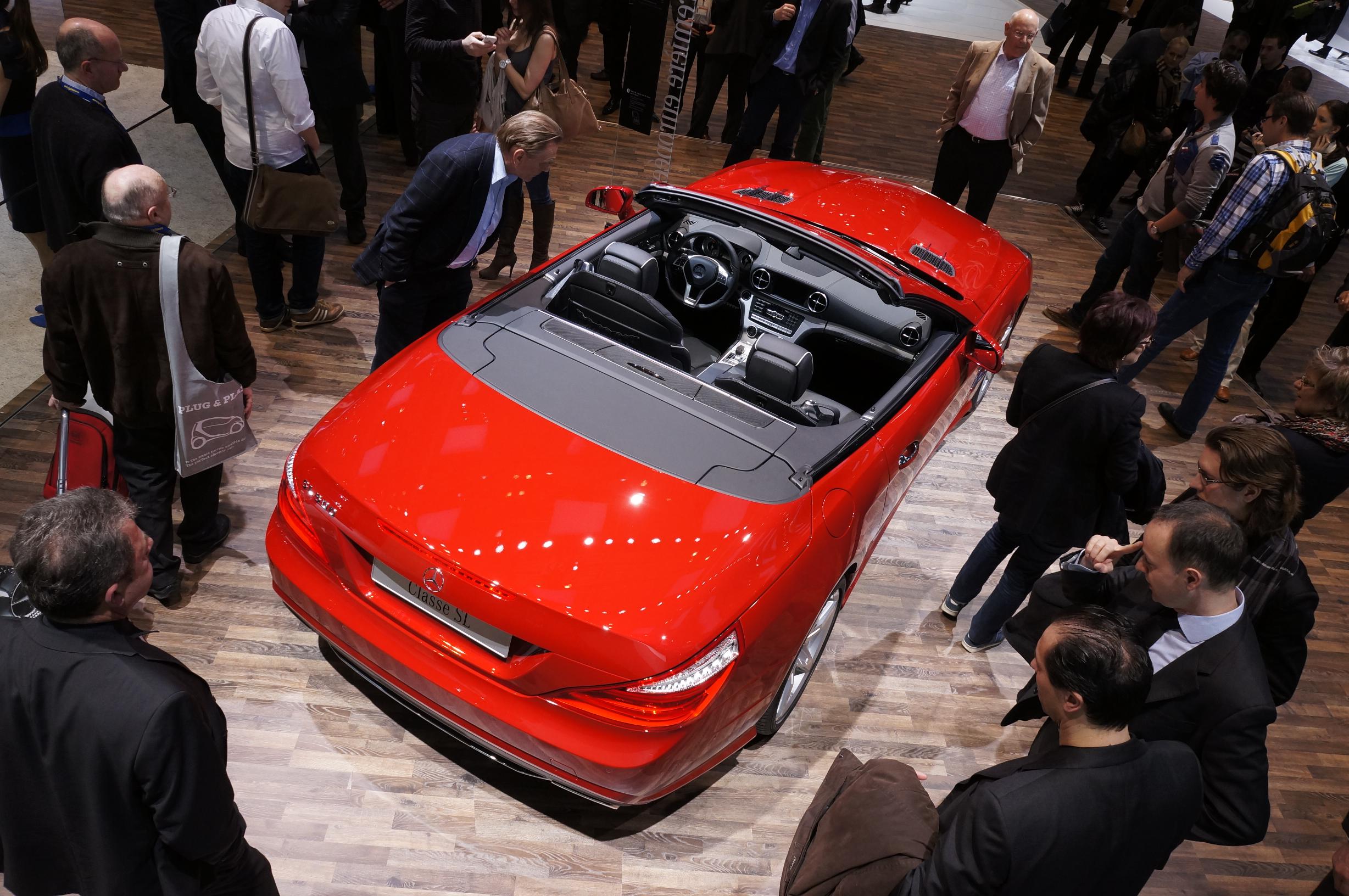
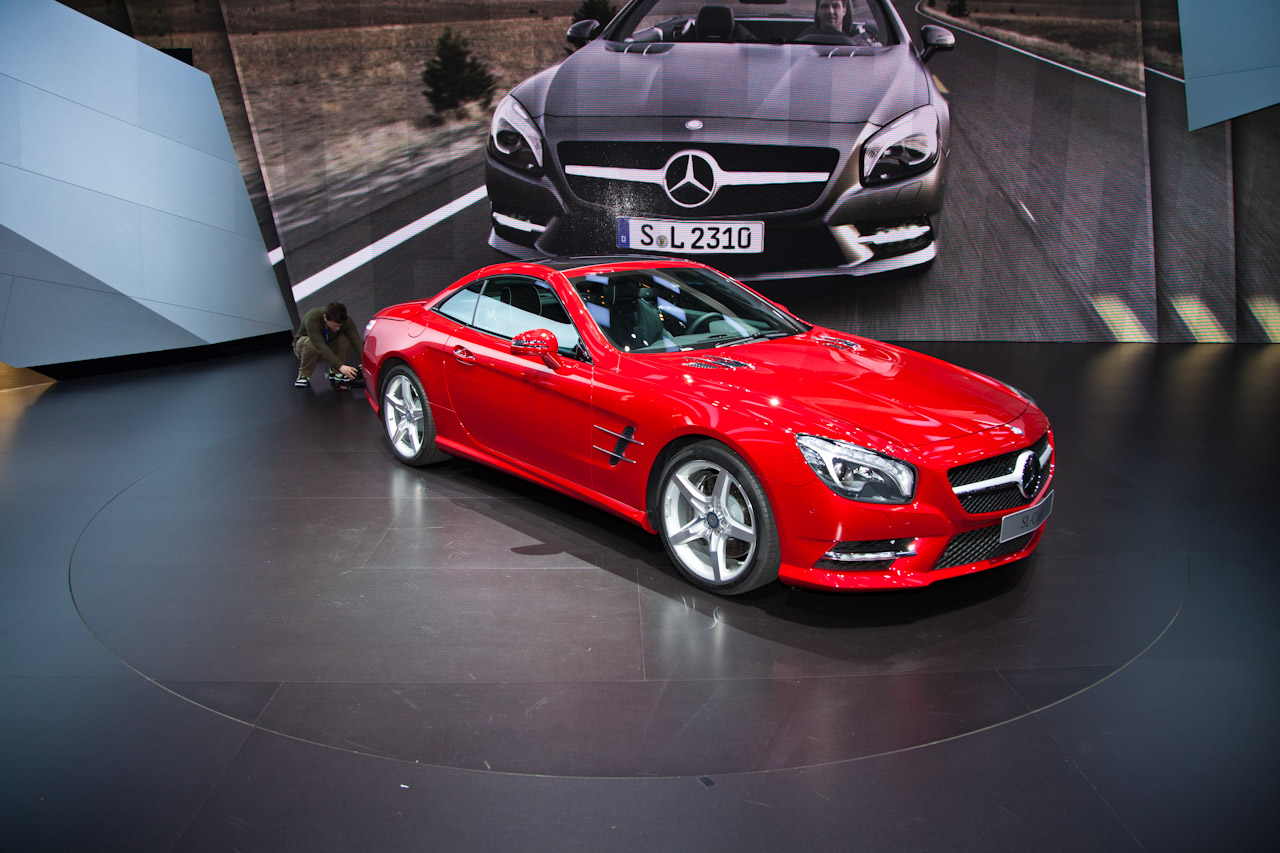
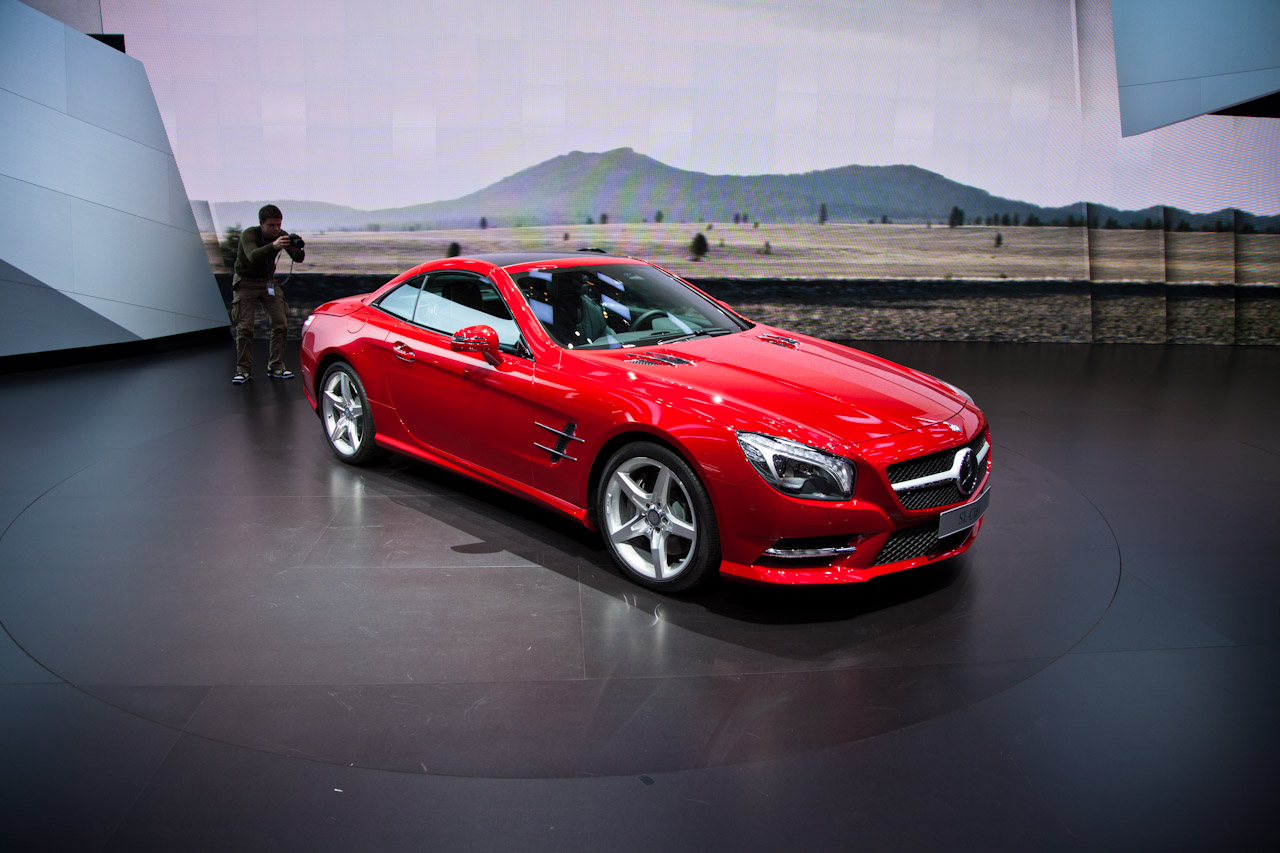
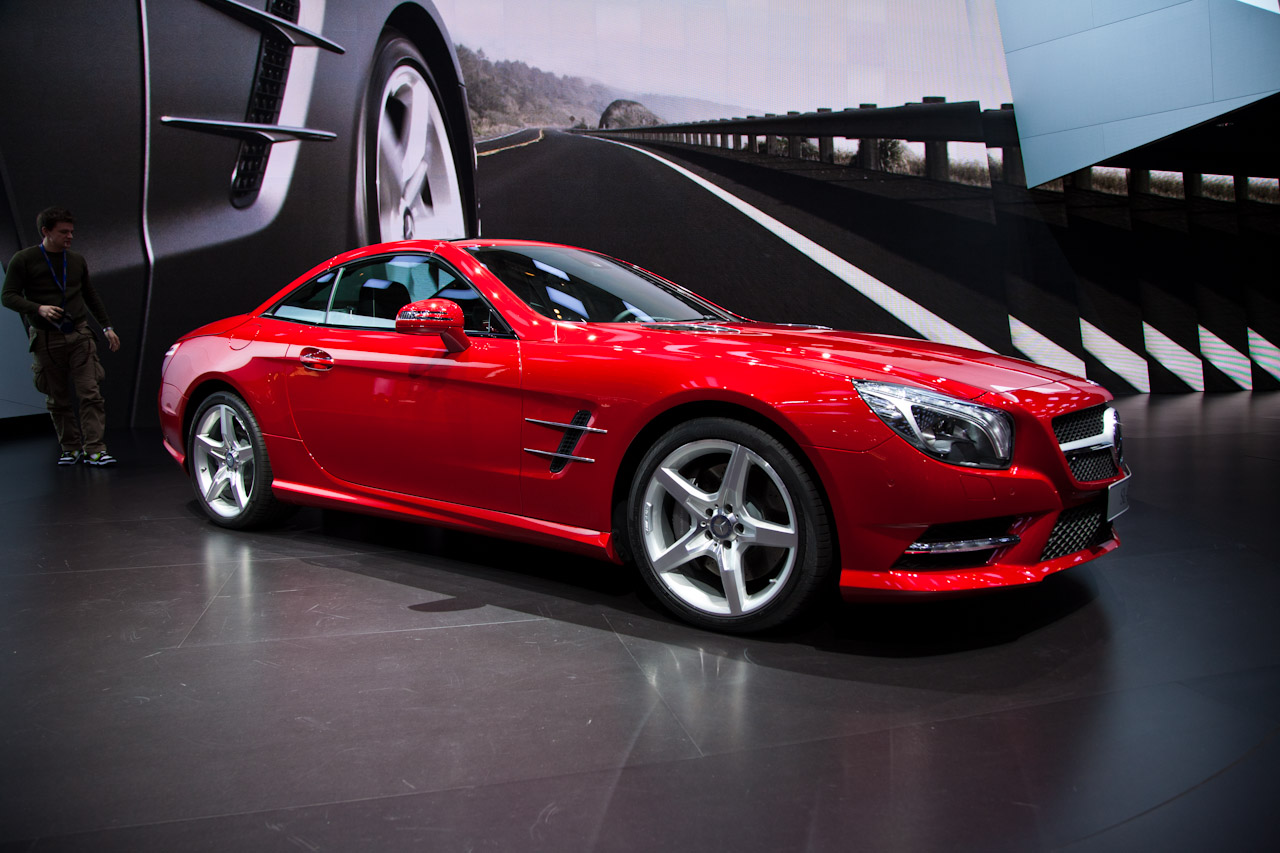
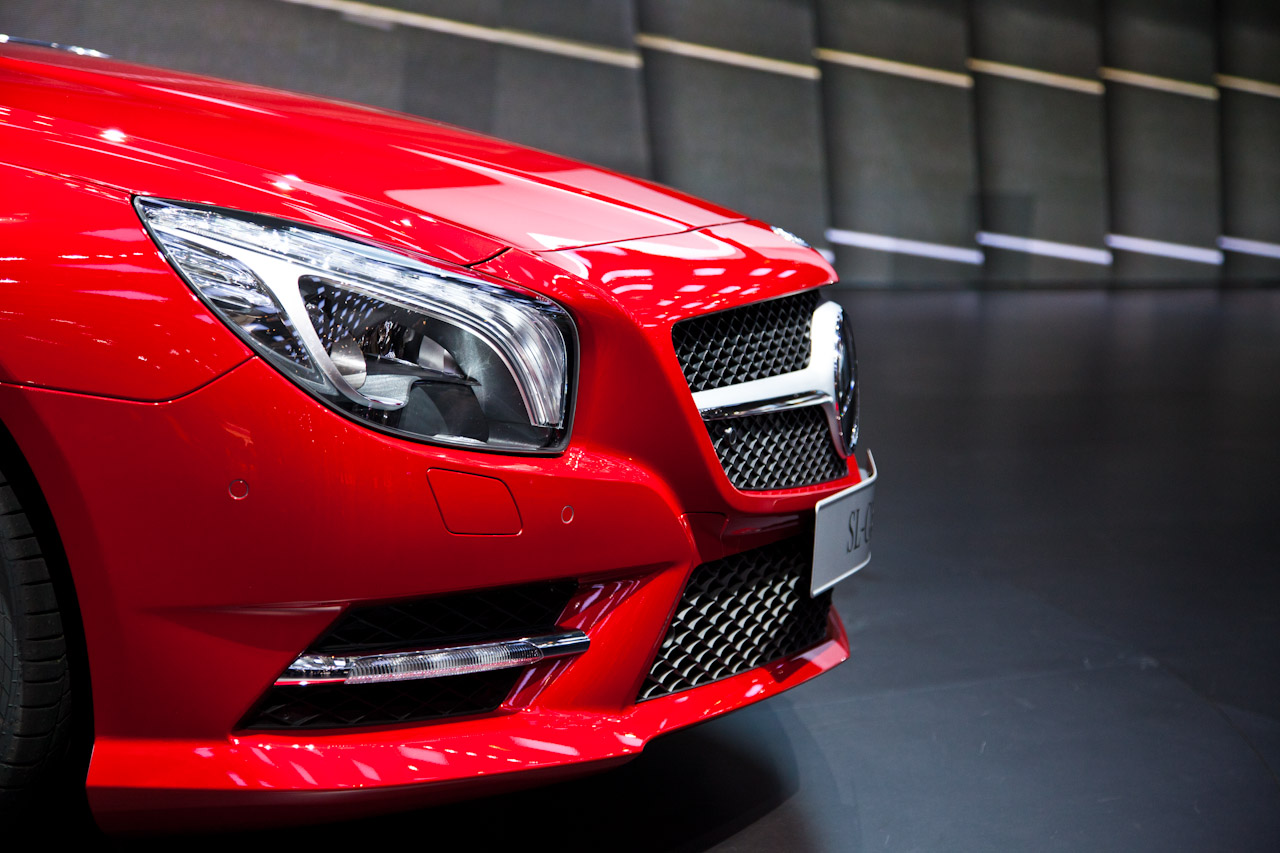
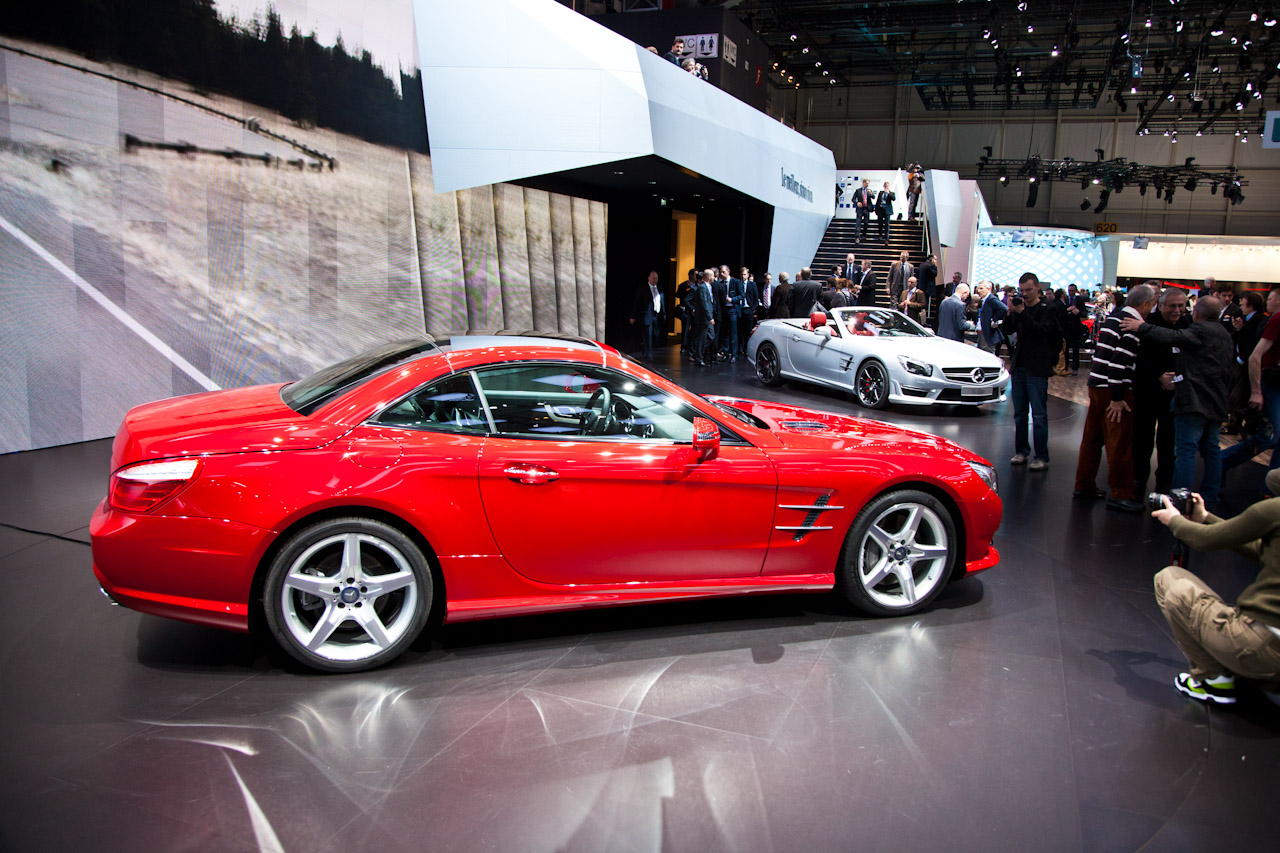
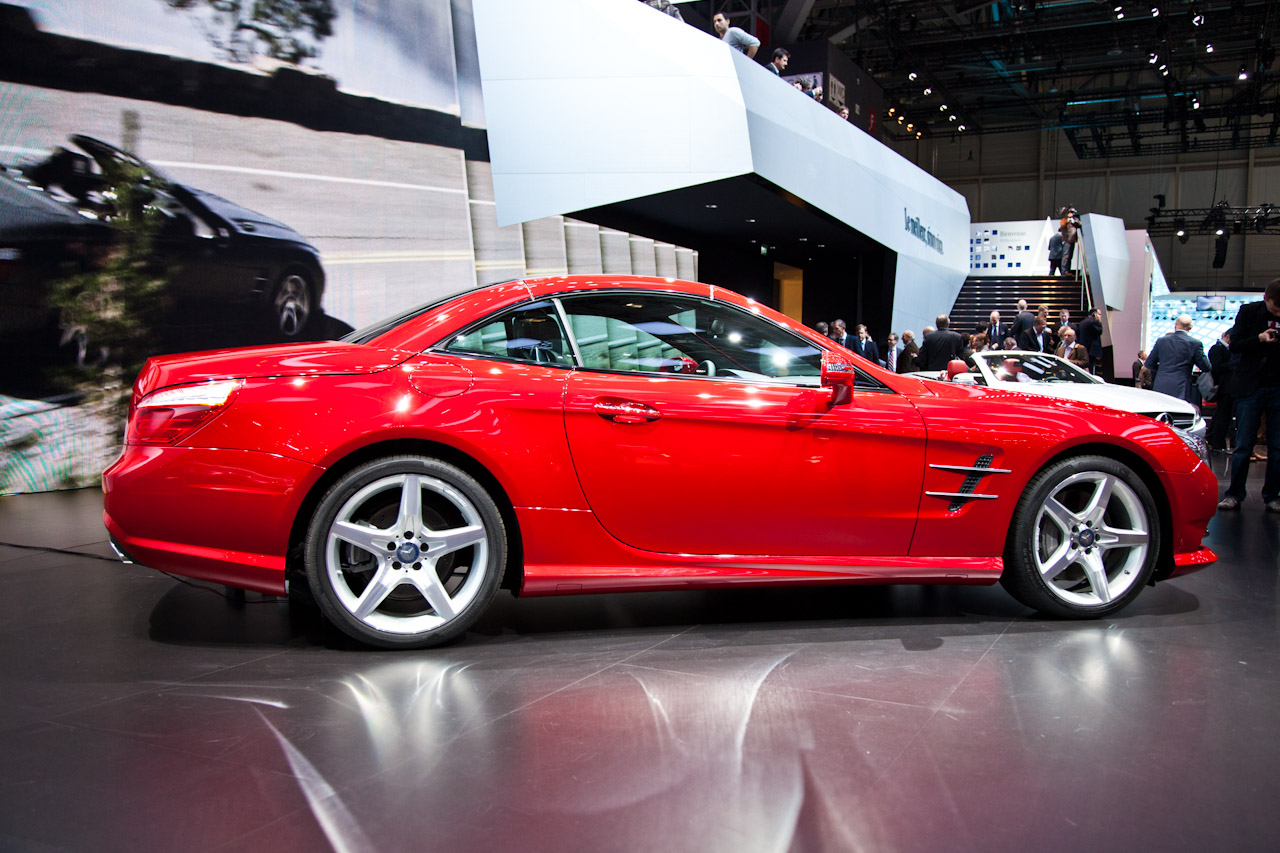
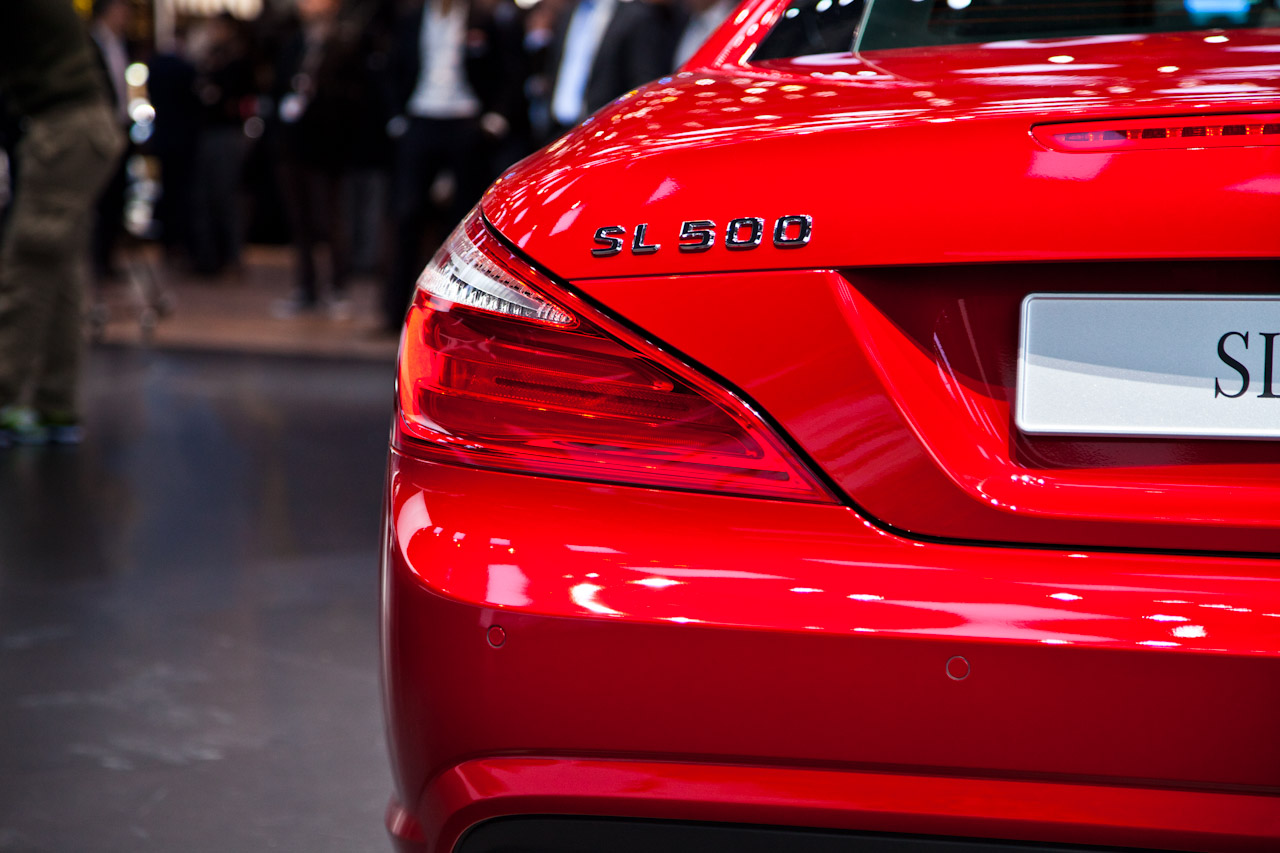
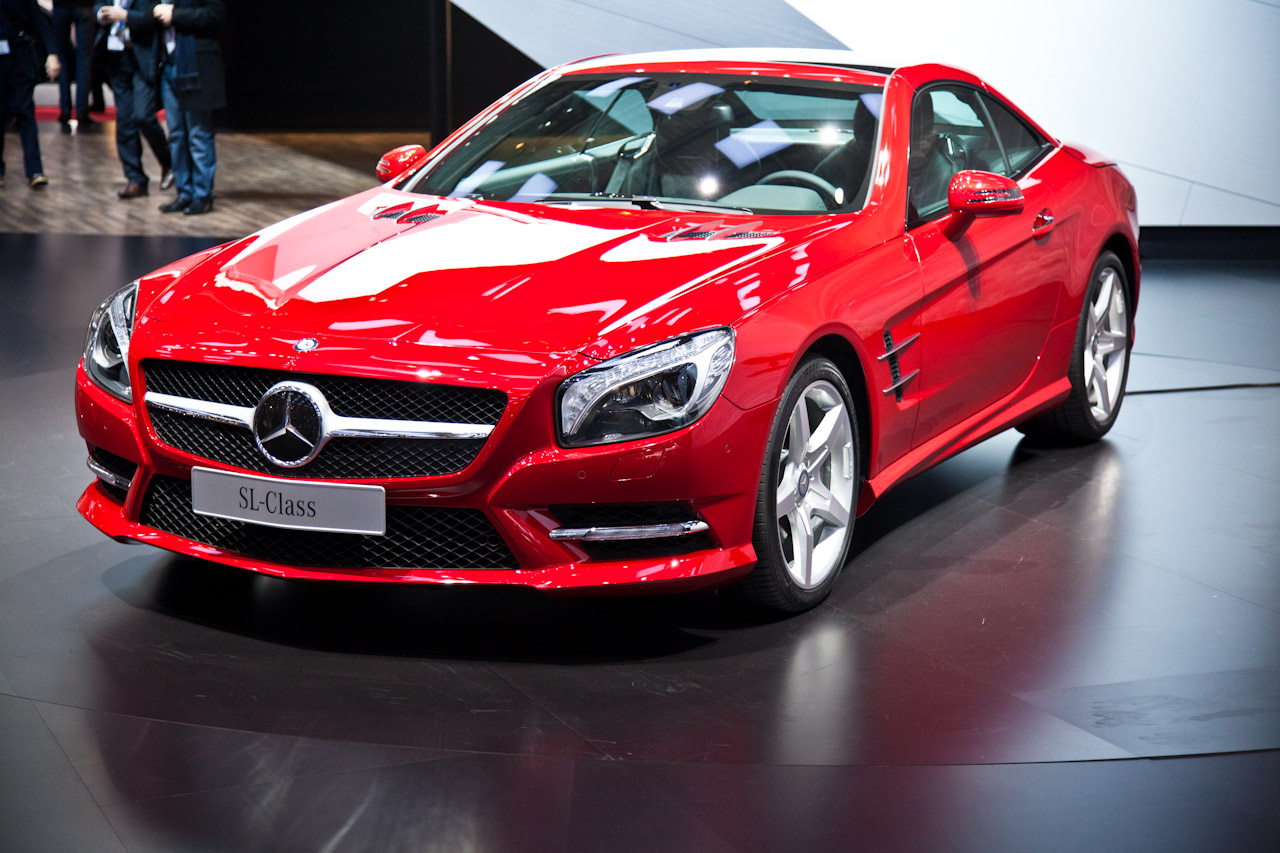
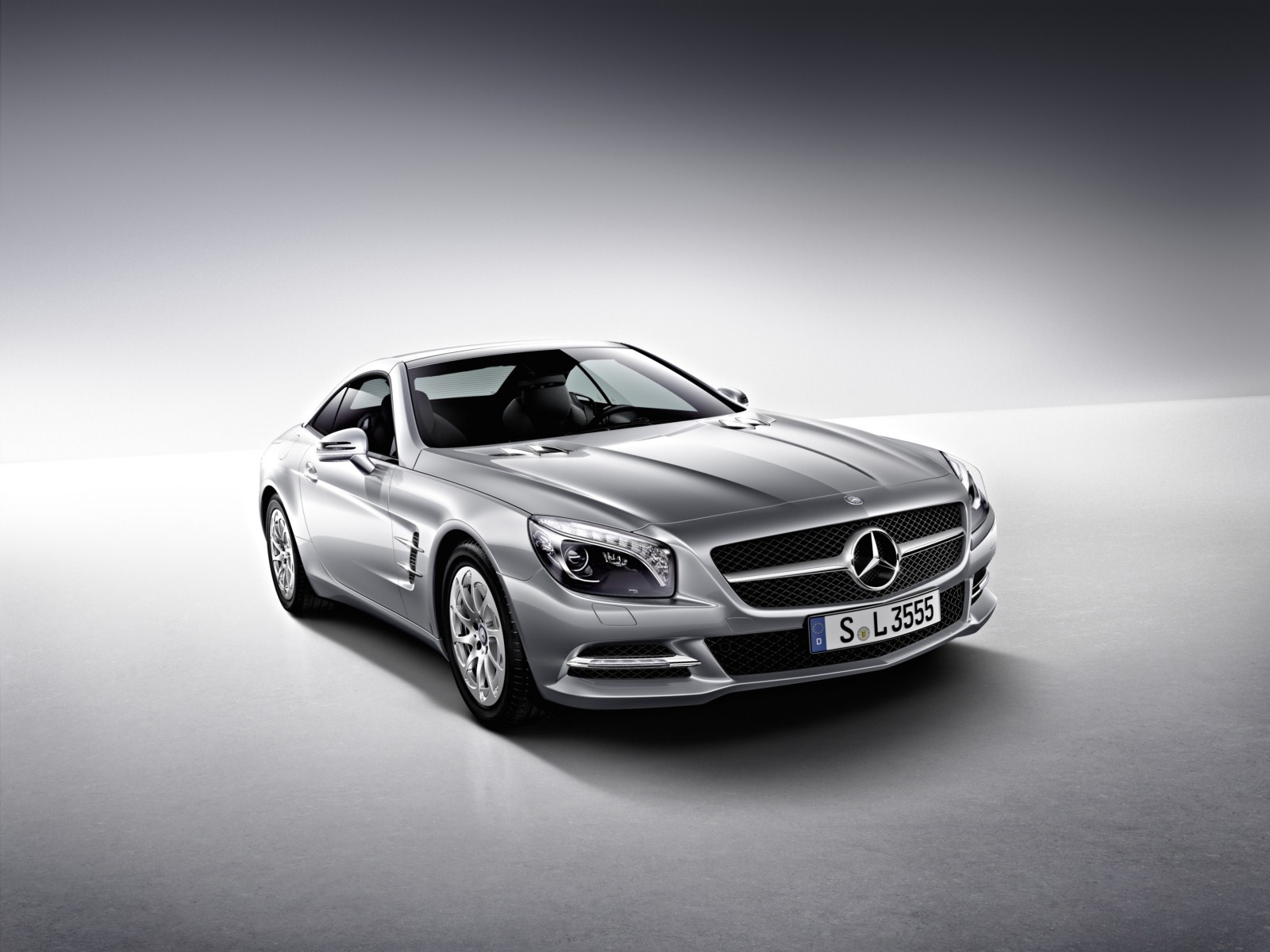
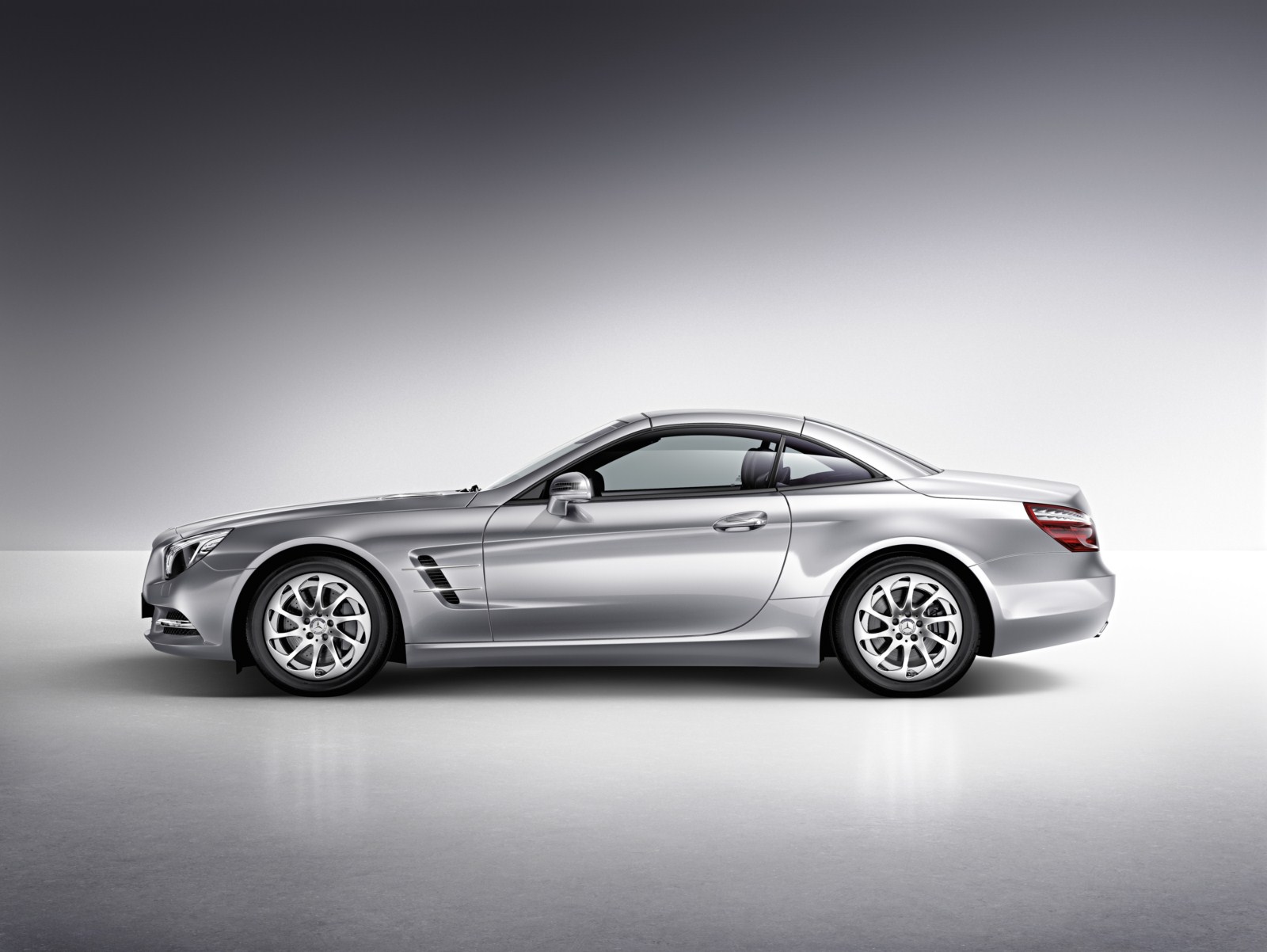
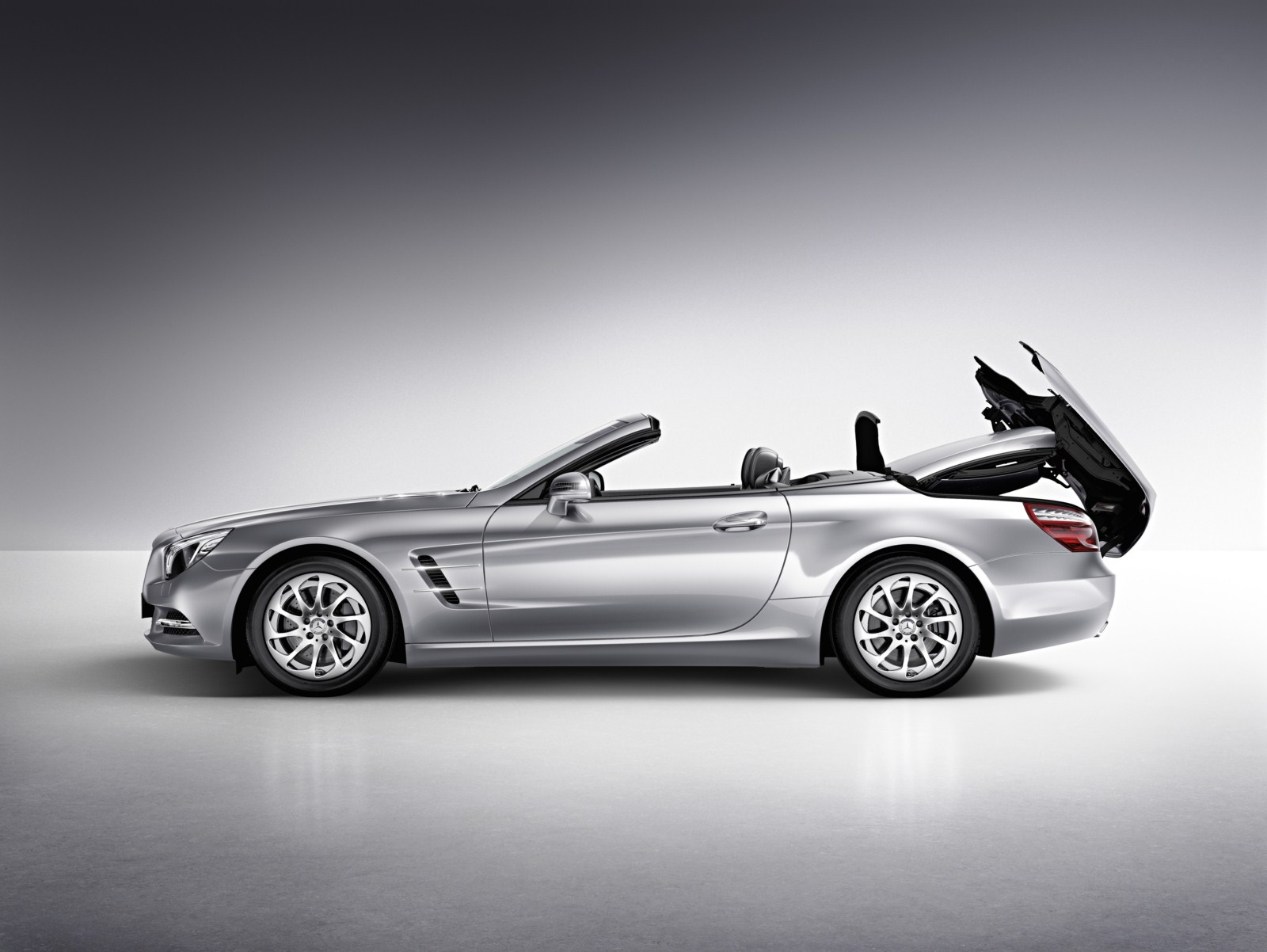
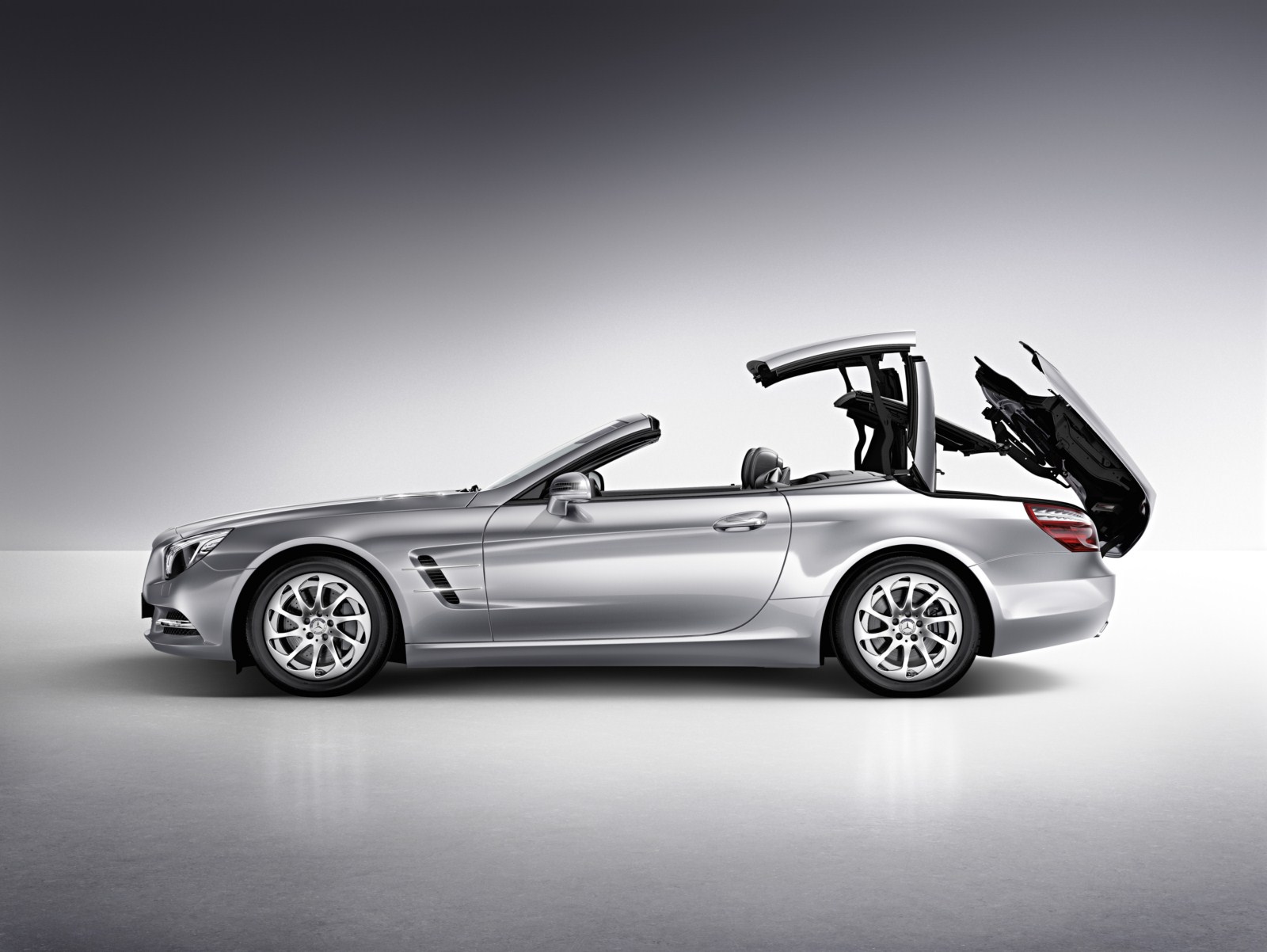
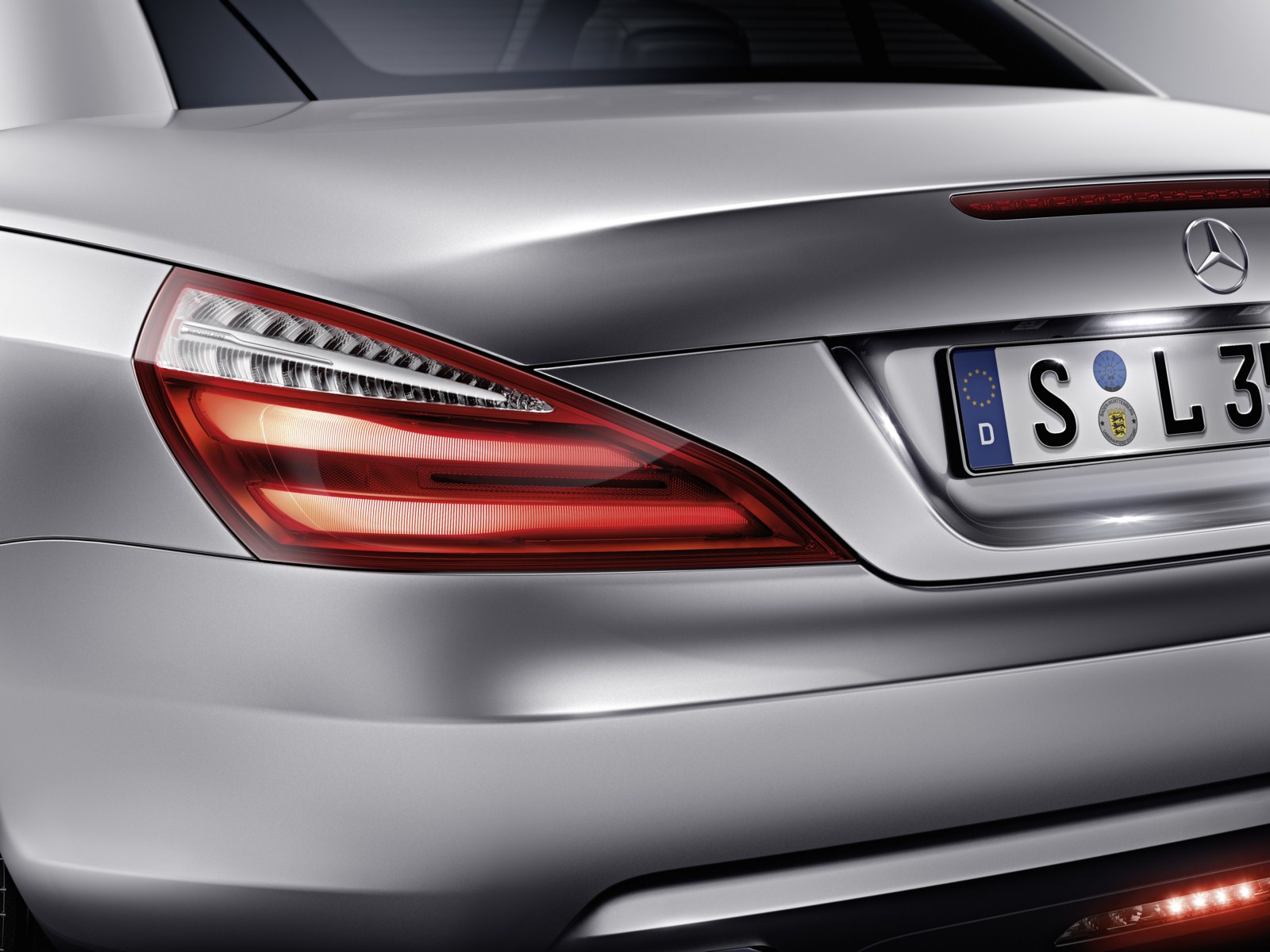
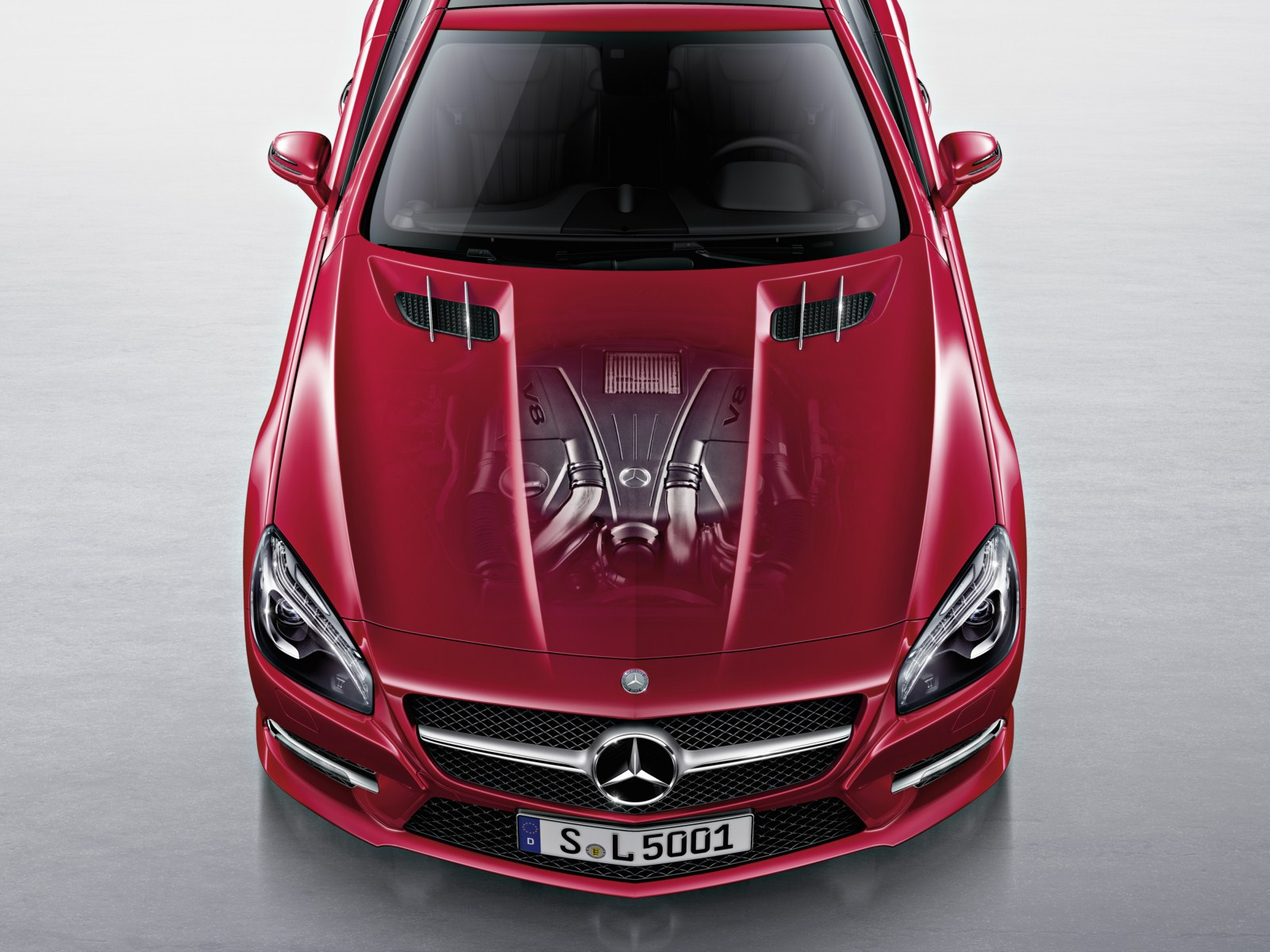
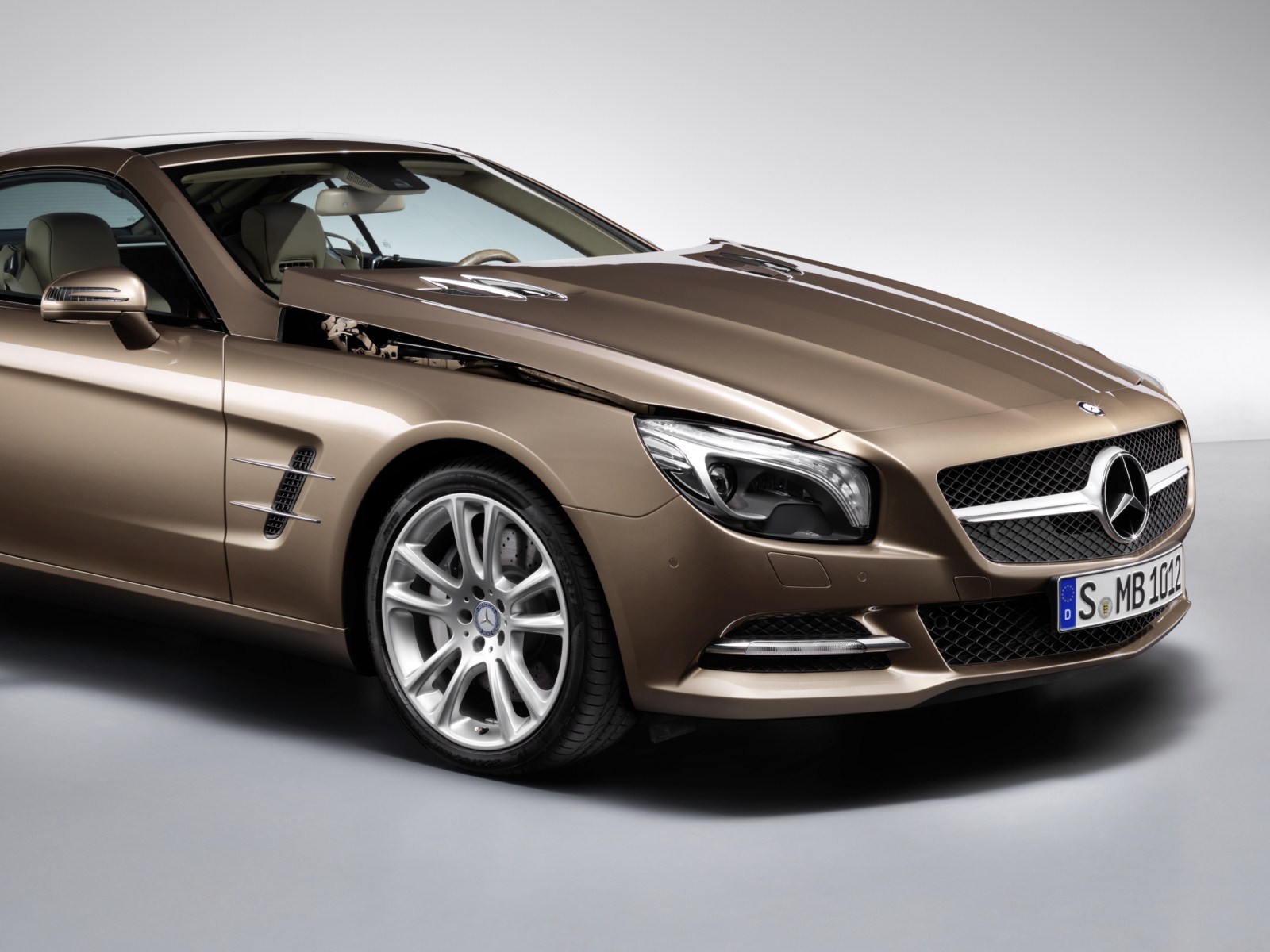
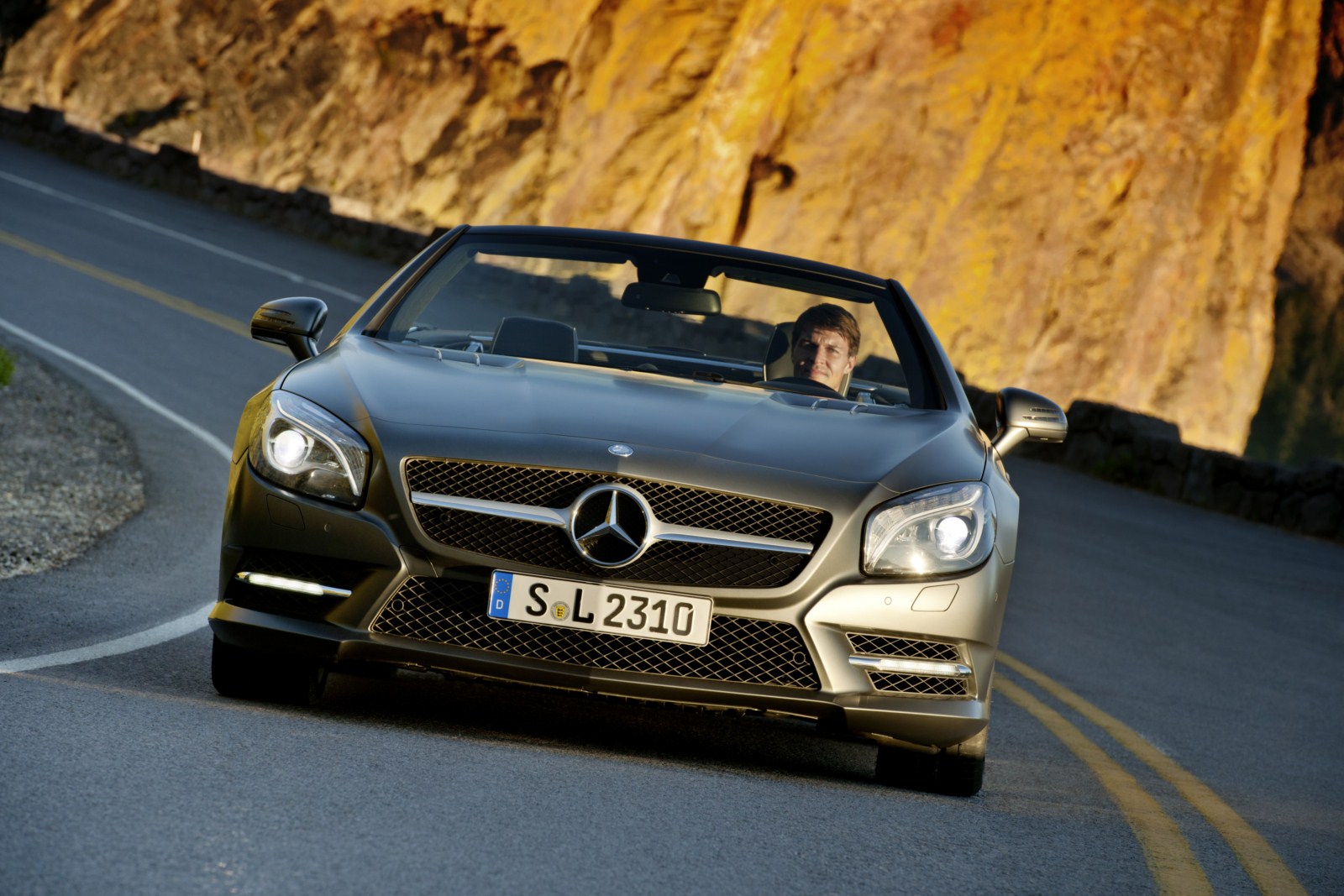
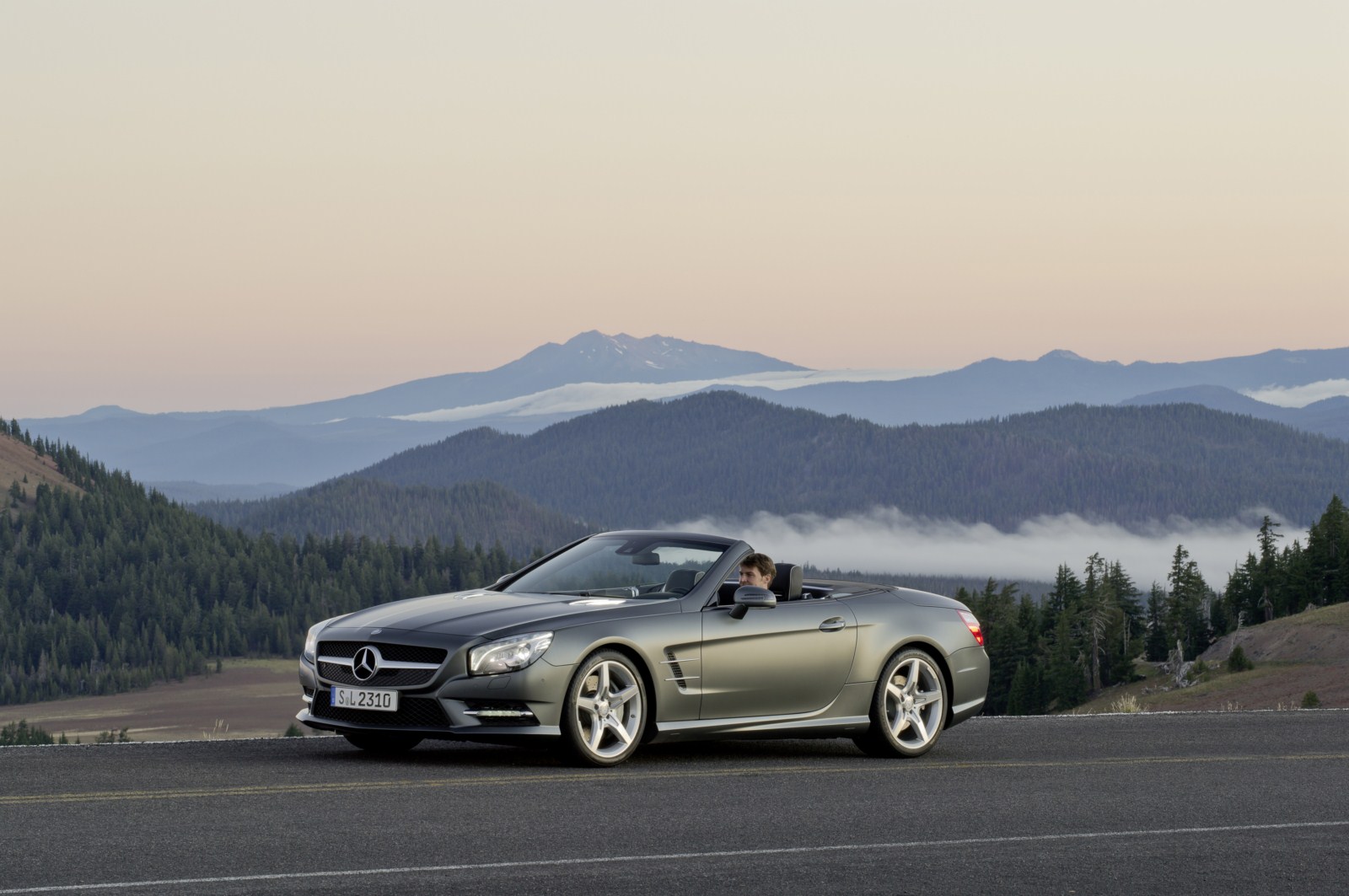
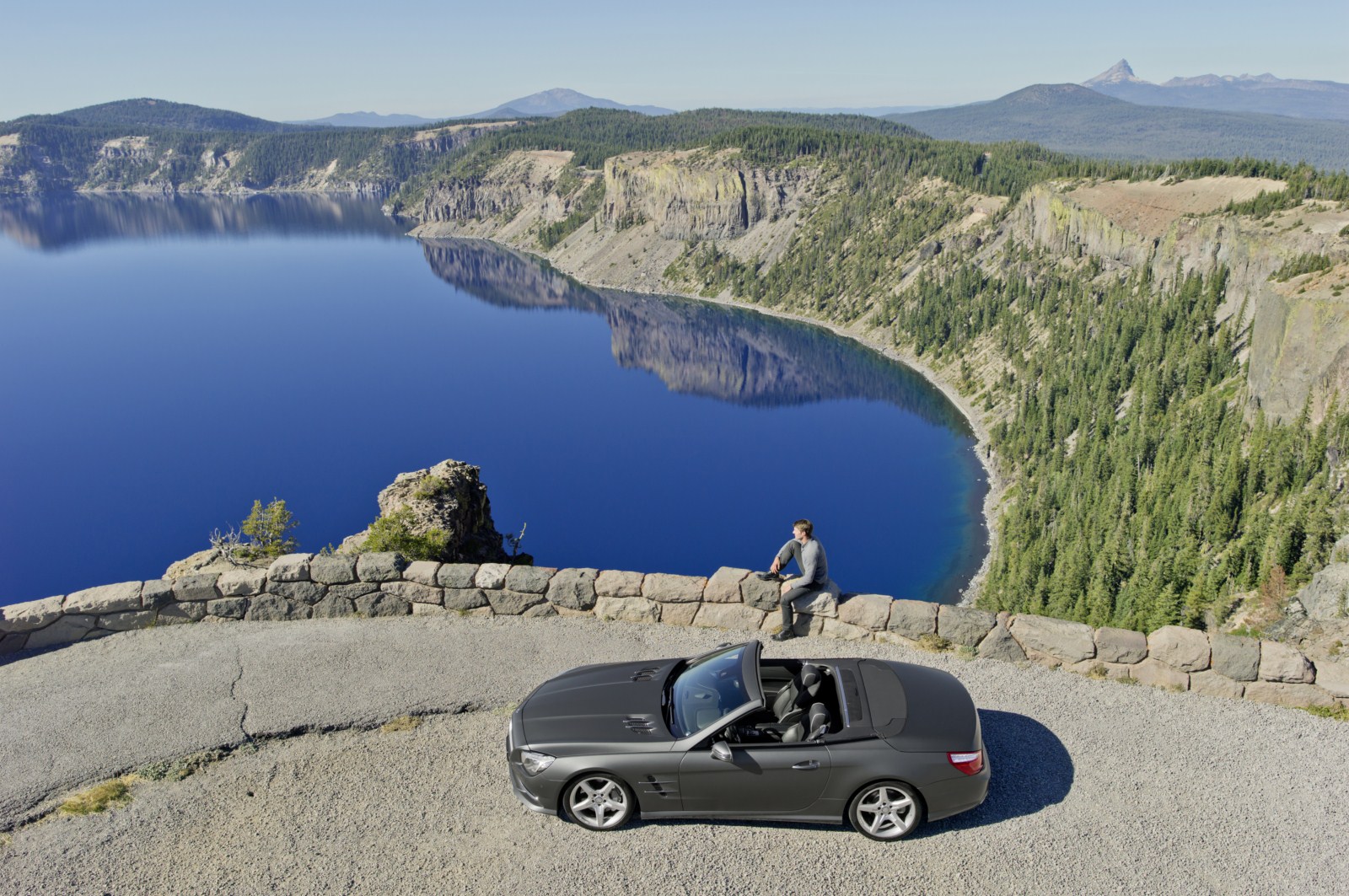
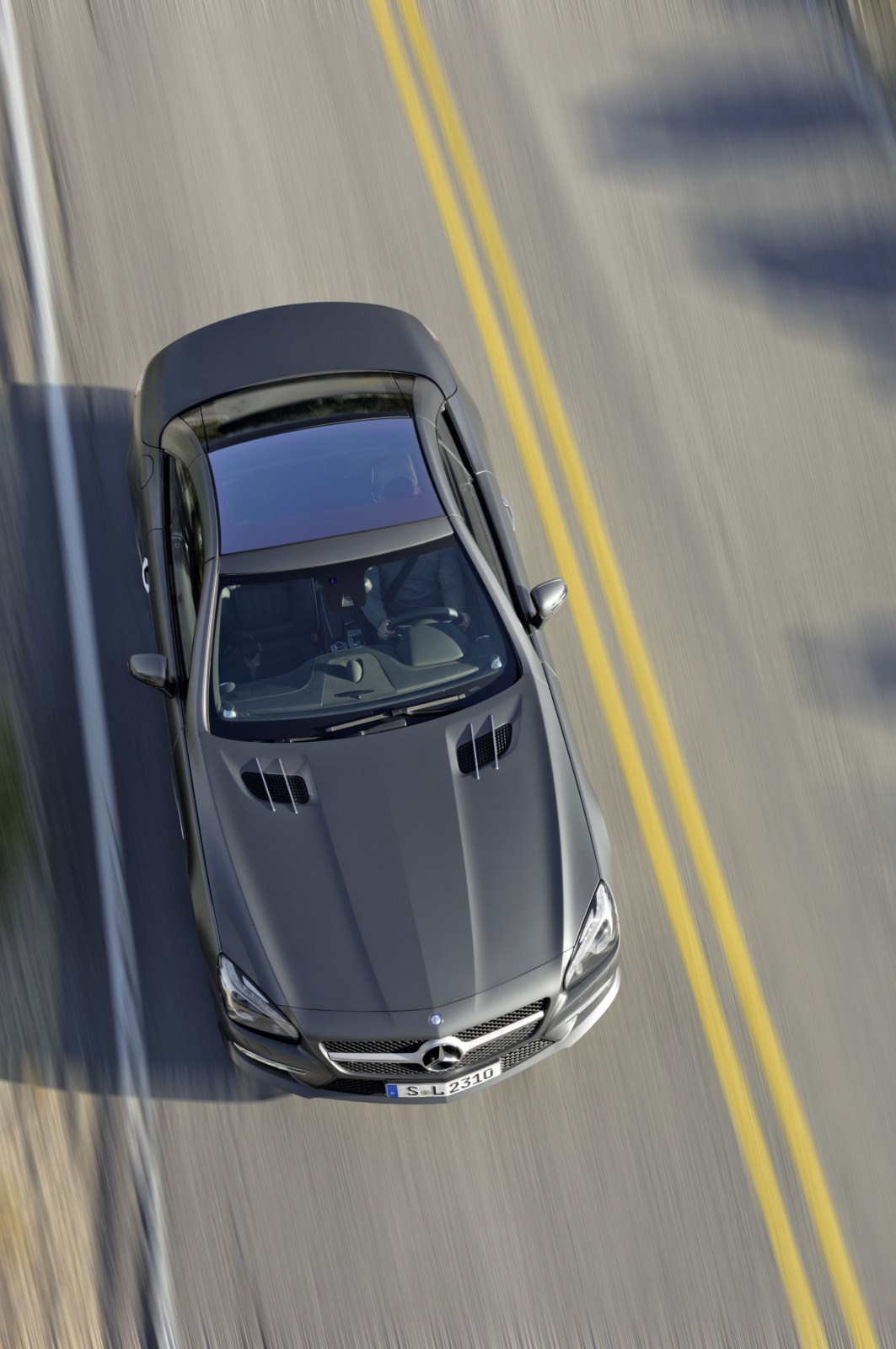
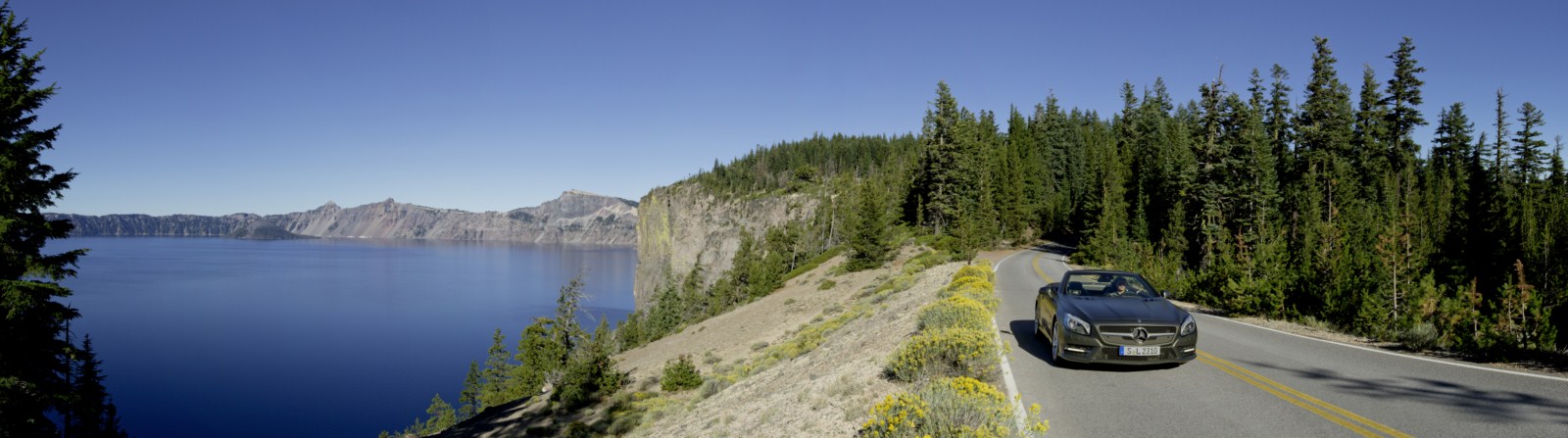
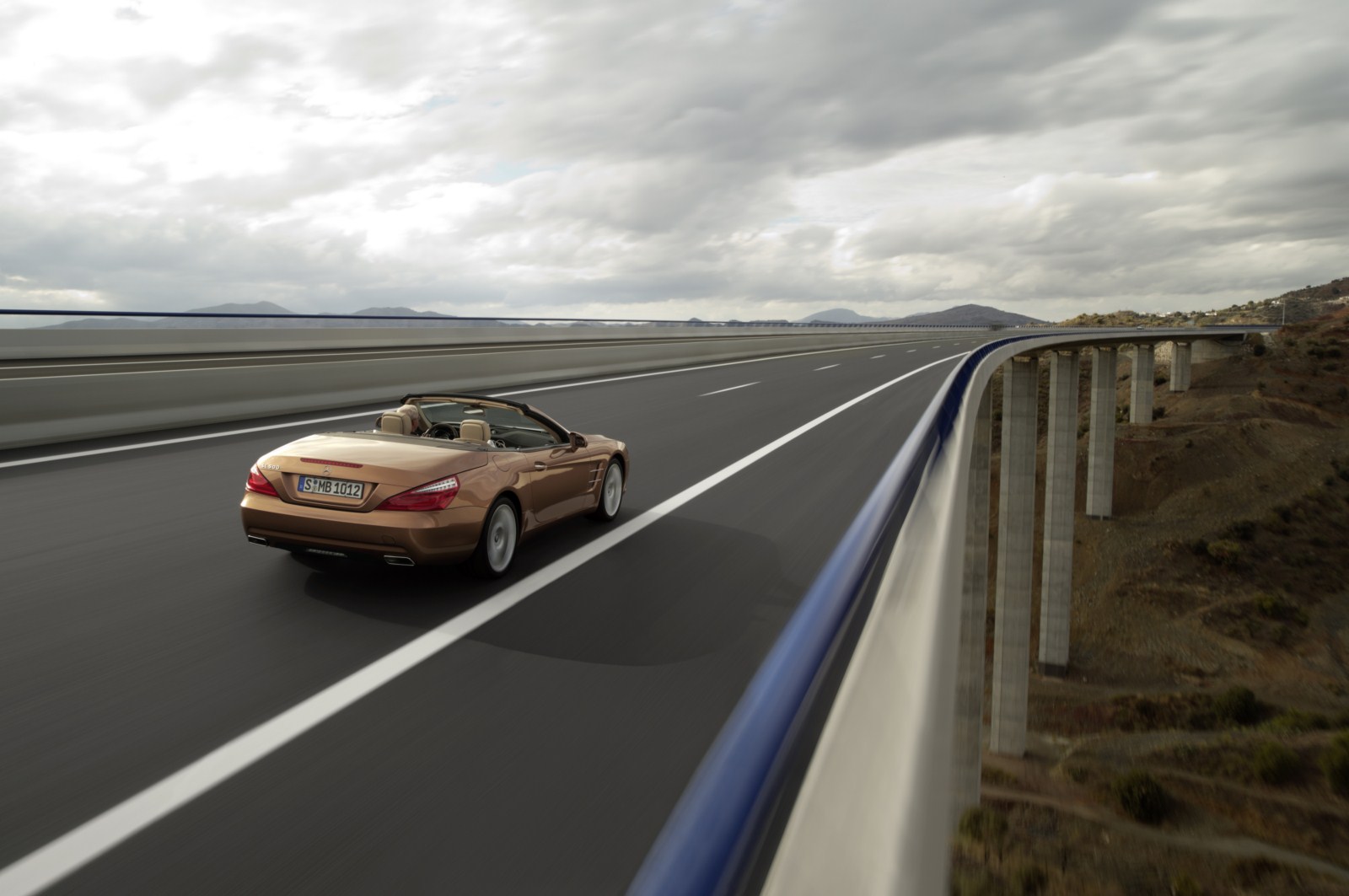
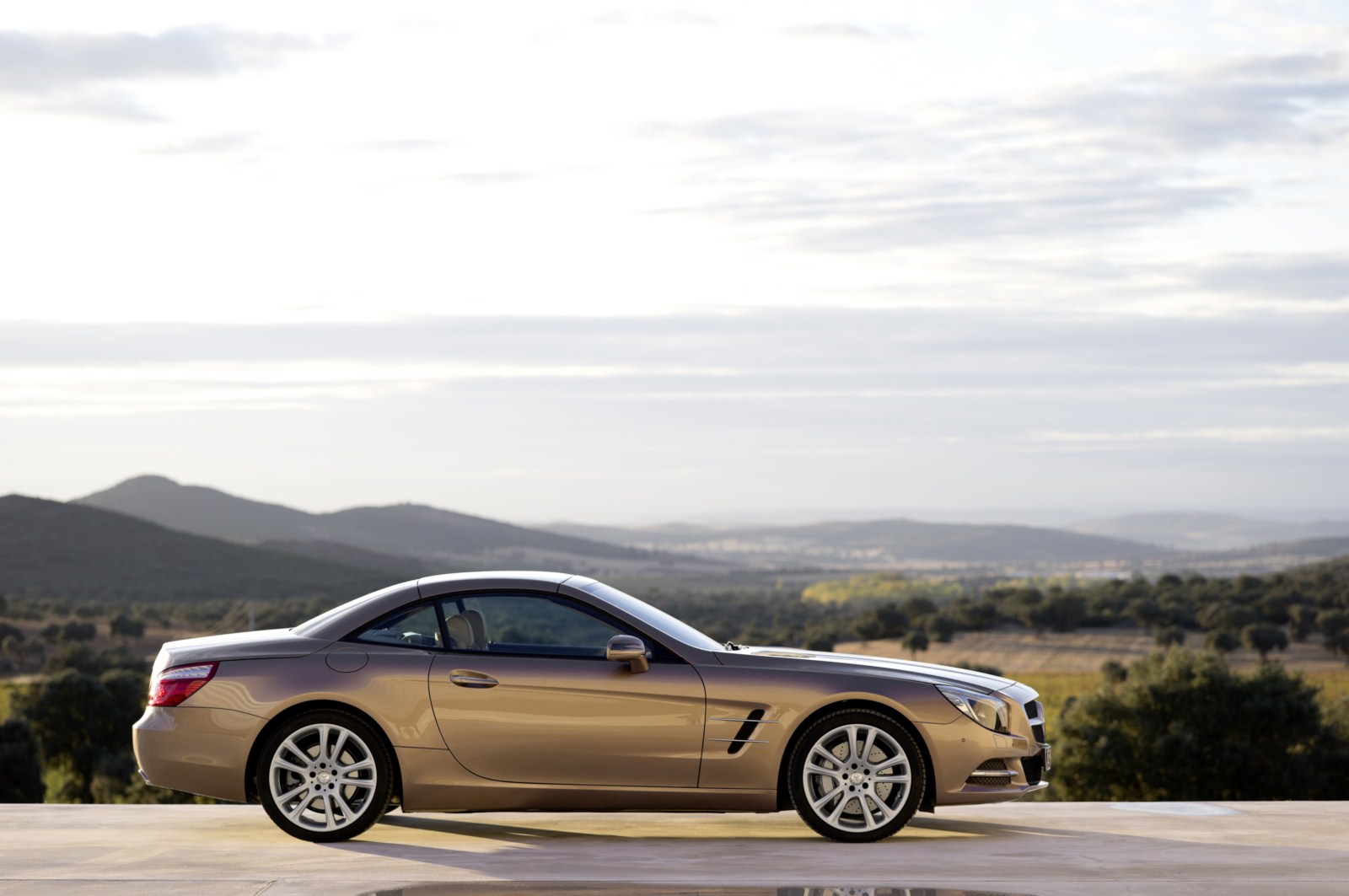
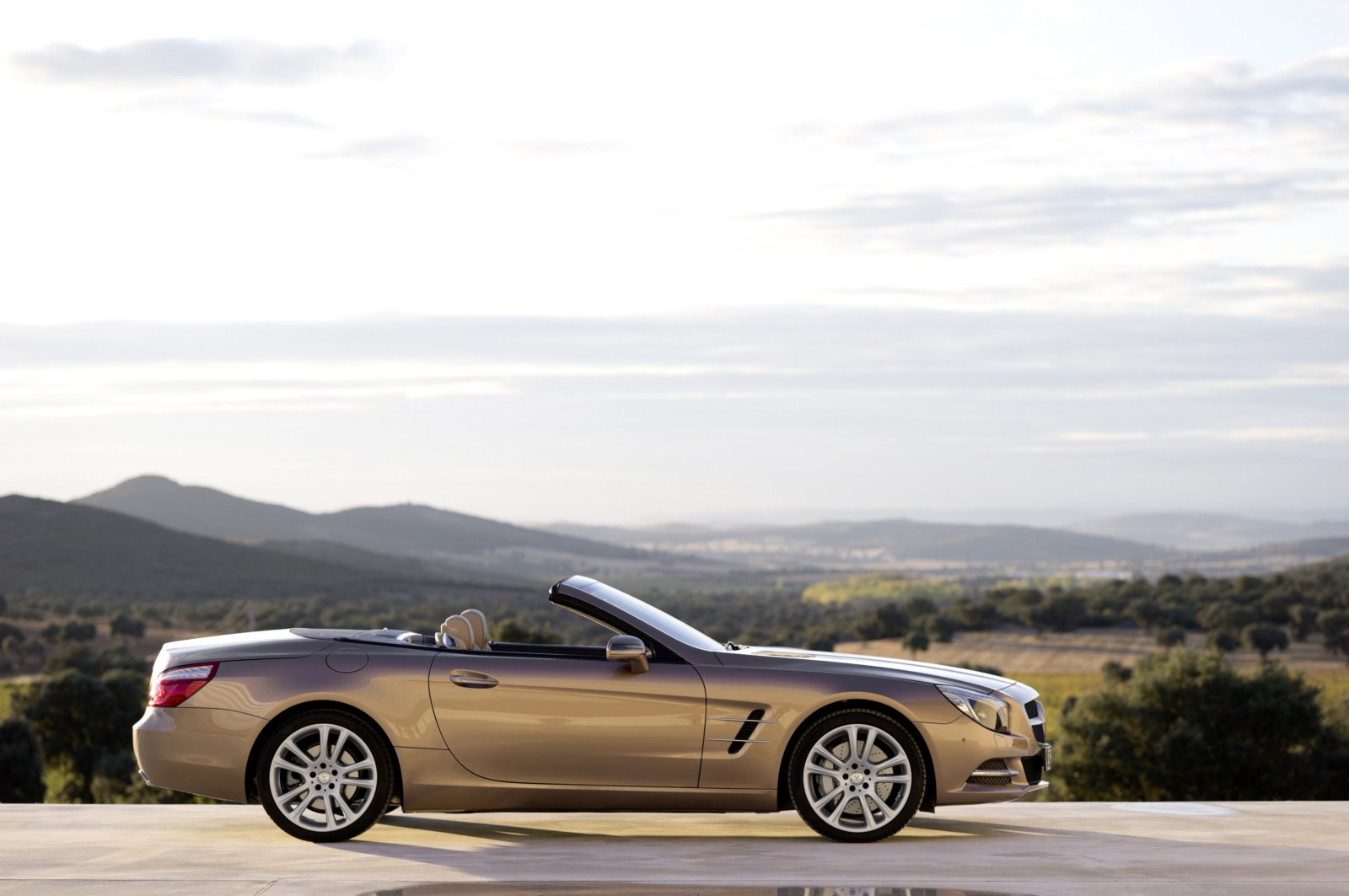
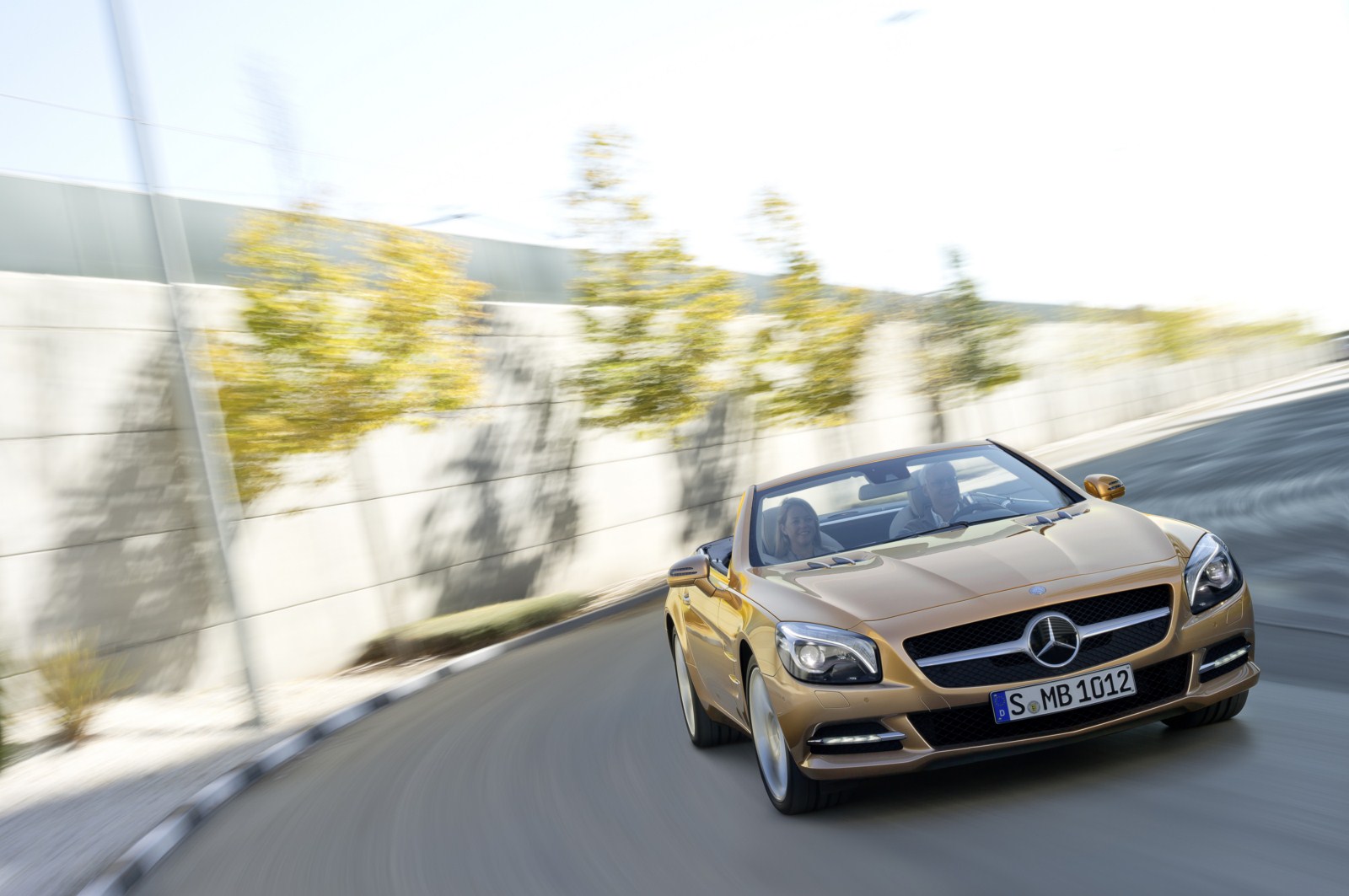
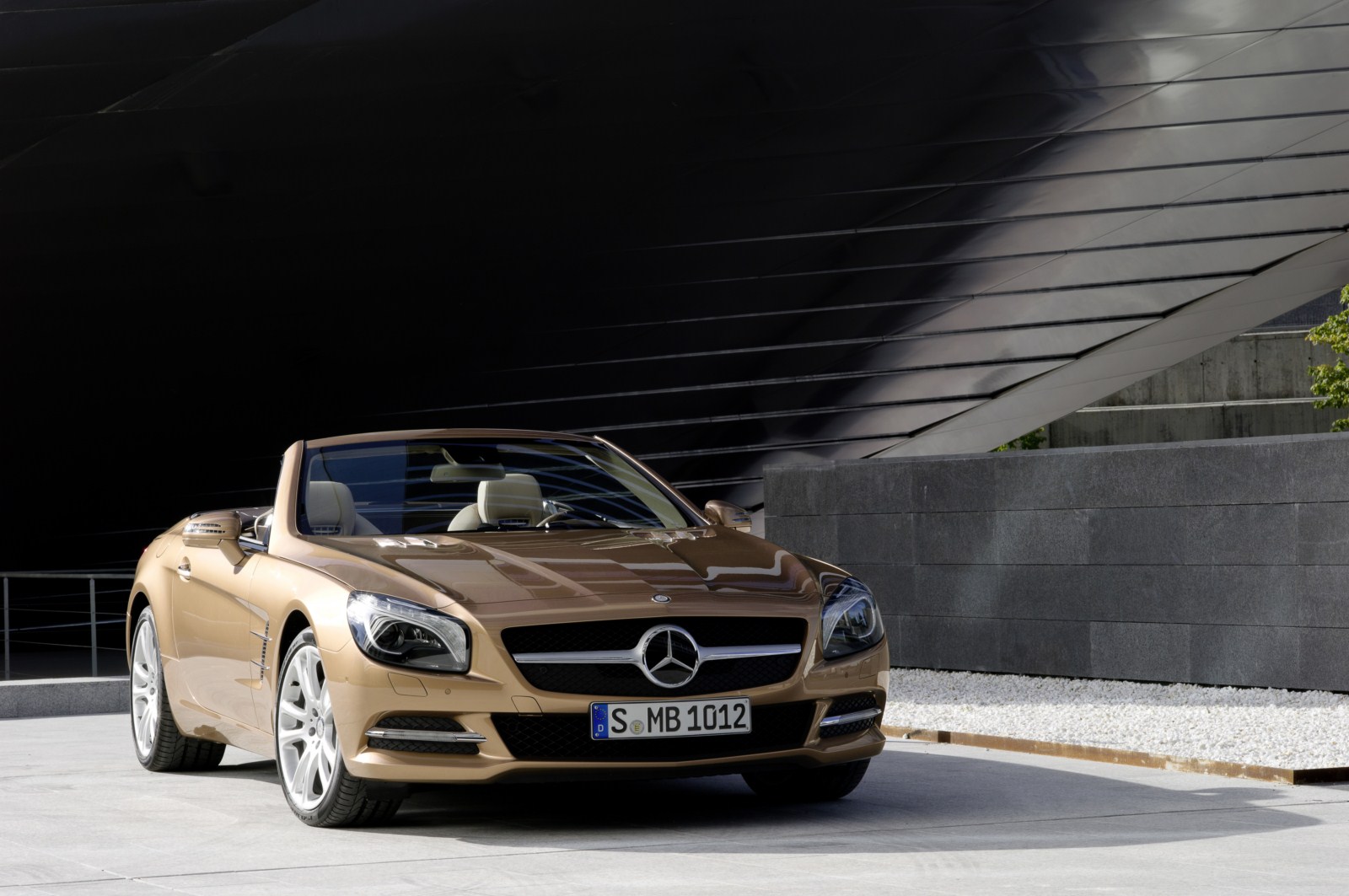
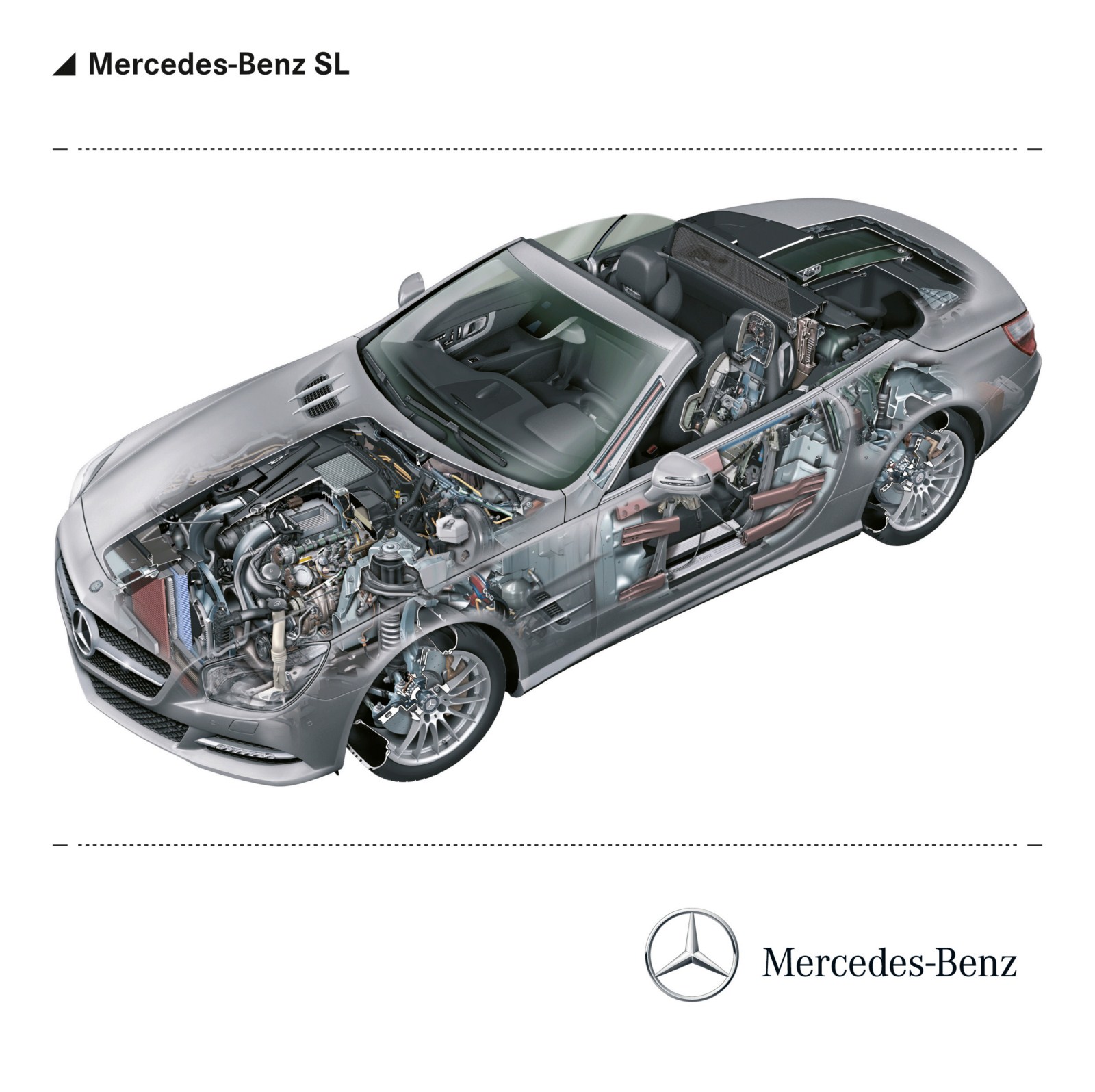
Η Mercedes έδωσε περισσότερες φωτογραφίες της νέας SL-Class η οποία κάνει ευρωπαικό ντεμπούτο αυτή την εβδομάδα στη Γενεύη. Διαθέτει τολμηρή και επιθετική σχεδίαση με τα μπροστά φωτιστικά σώματα με ενσωματωμένα LED να είναι κάτι που ίσως να ξενίσει μερικούς. Κατά τα άλλα δεν είναι τίποτα διαφορετικό από μια μεγάλη SLK όπου στο πίσω μέρος υπάρχουν διπλές απολήξεις των εξατμίσεων και LED φωτιστικά σώματα.
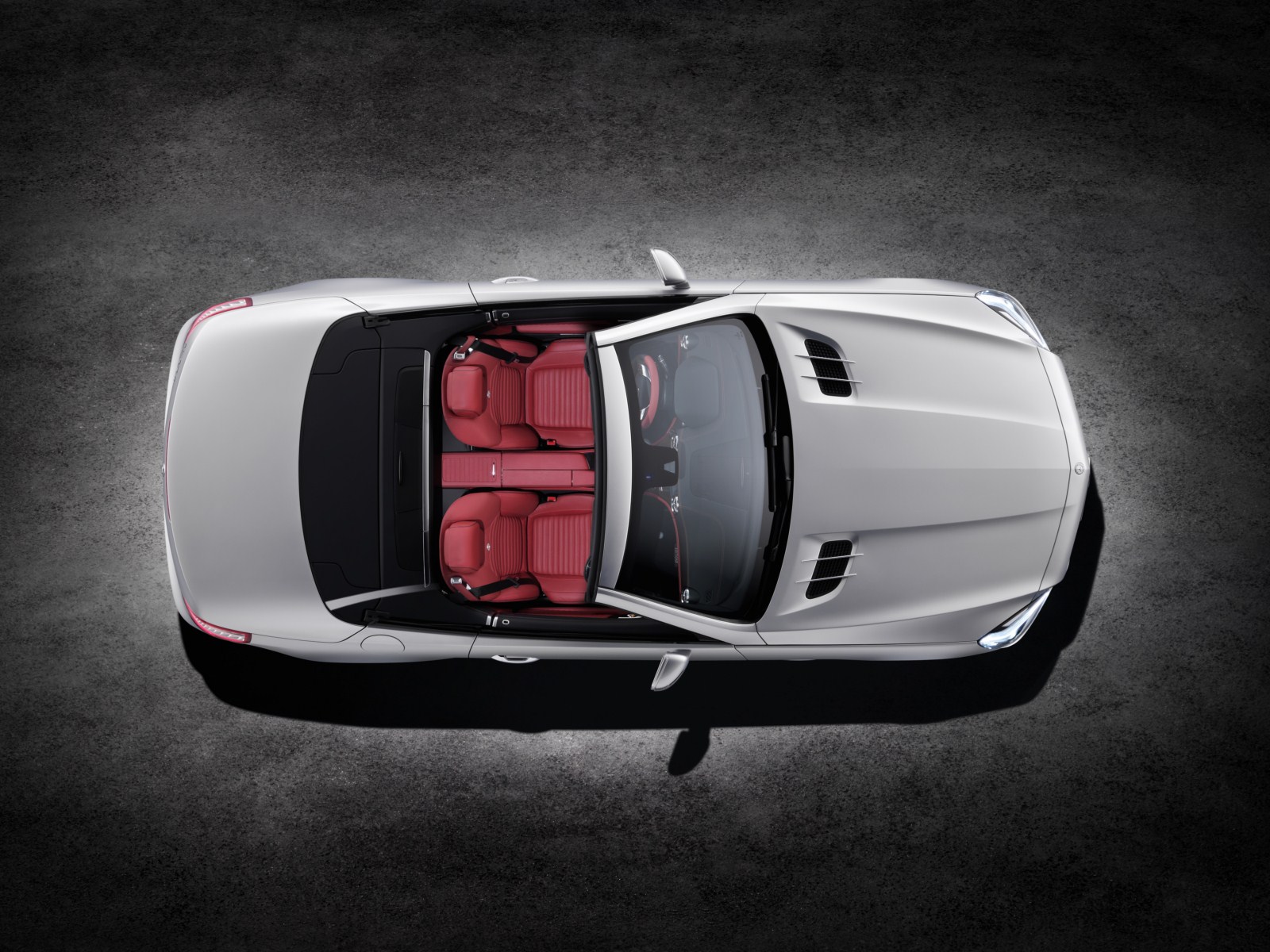
Η αναδιπλούμενη οροφή διαθέτει πλαίσιο κατασκευασμένο από μαγνήσιο και ζυγίζει έτσι 6 κιλά λιγότερα από ότι ζυγίζει η οροφή της προηγούμενης γενιάς, μειώνοντας έτσι το κέντρο βάρους. Επιπλέον διαθέτει και την ηλεκτροχρωμική γυάλινη οροφή Magic Sky Control που πρωτοπαρουσιάστηκε στην SLK.
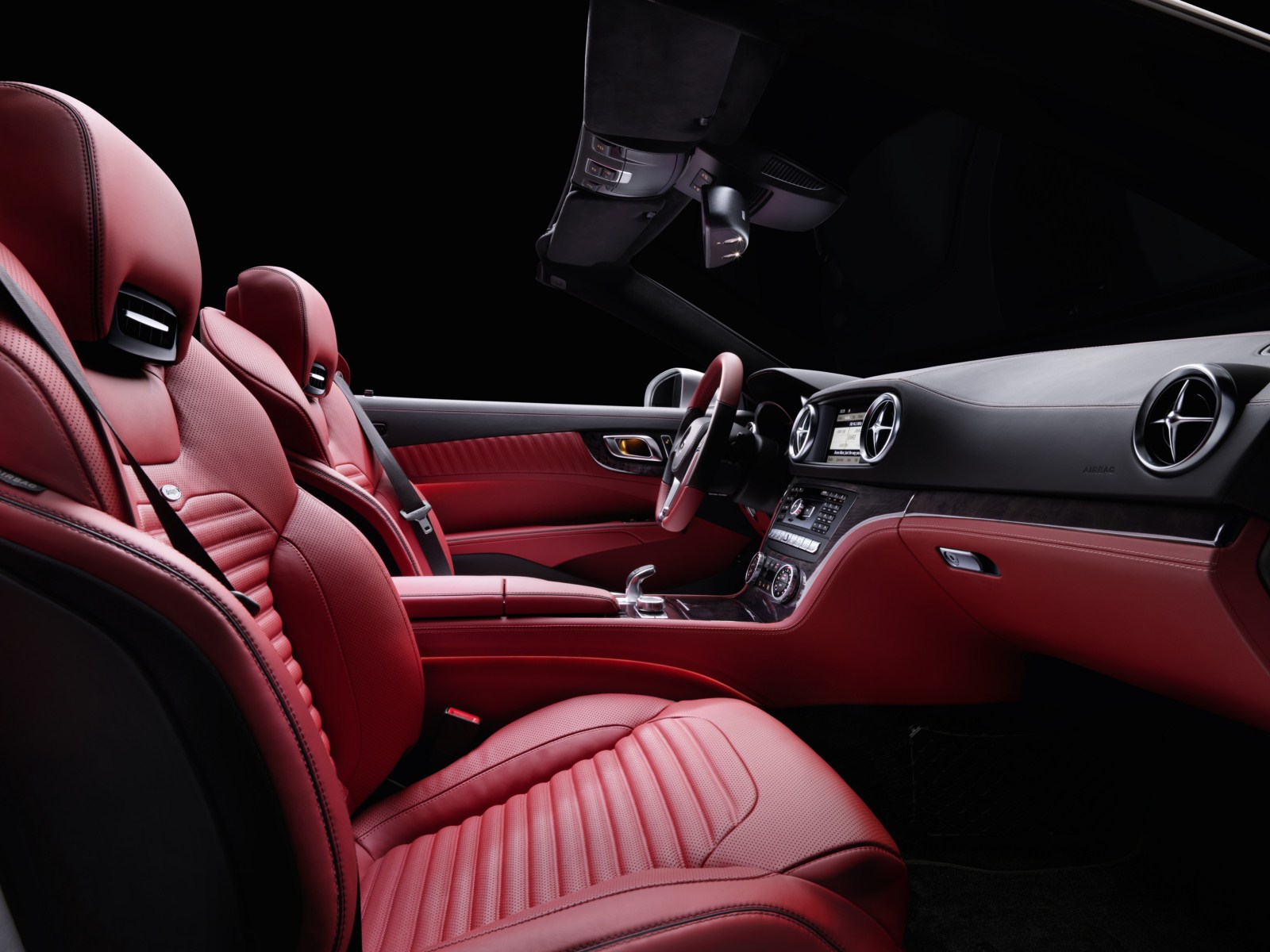
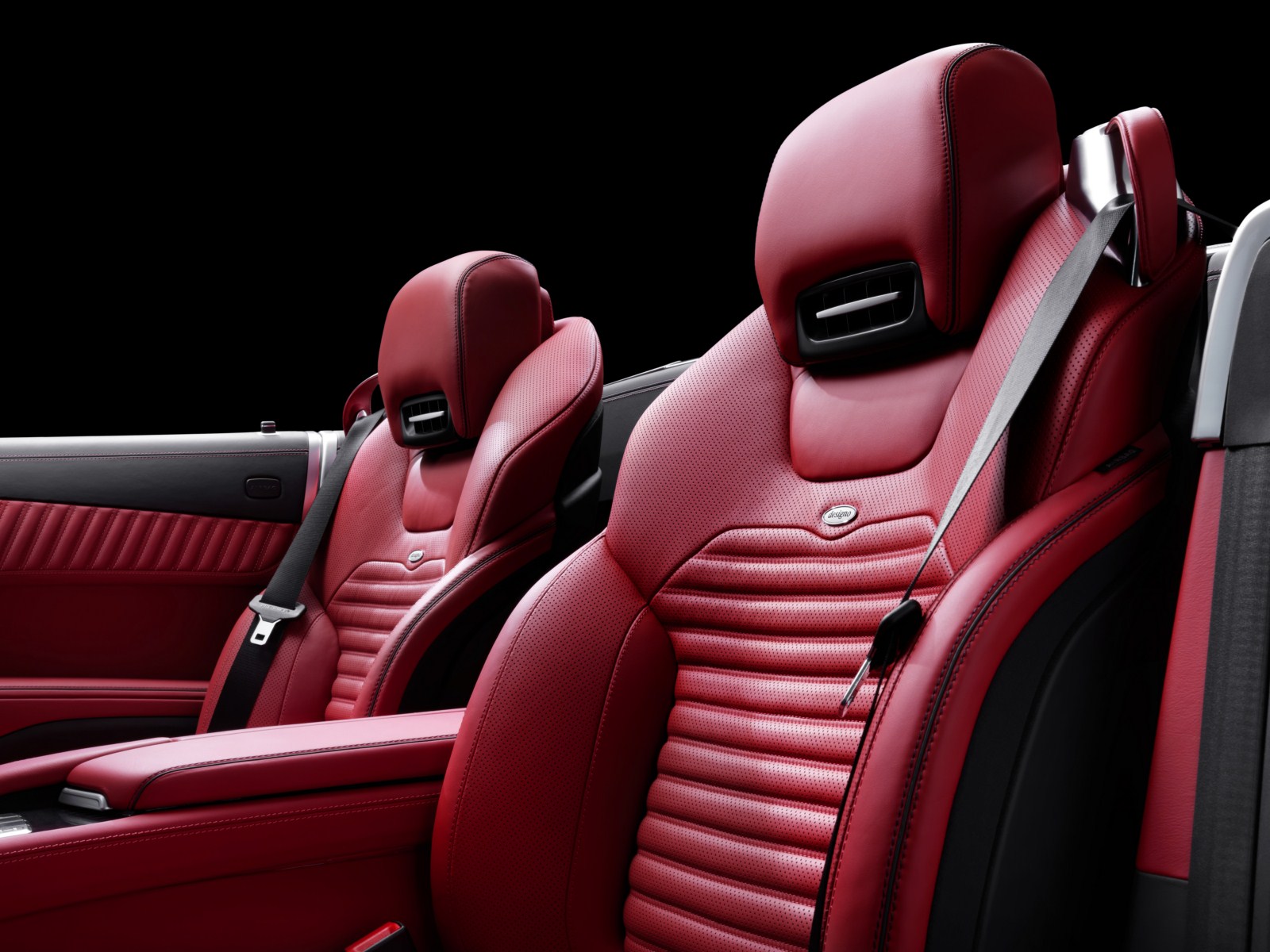
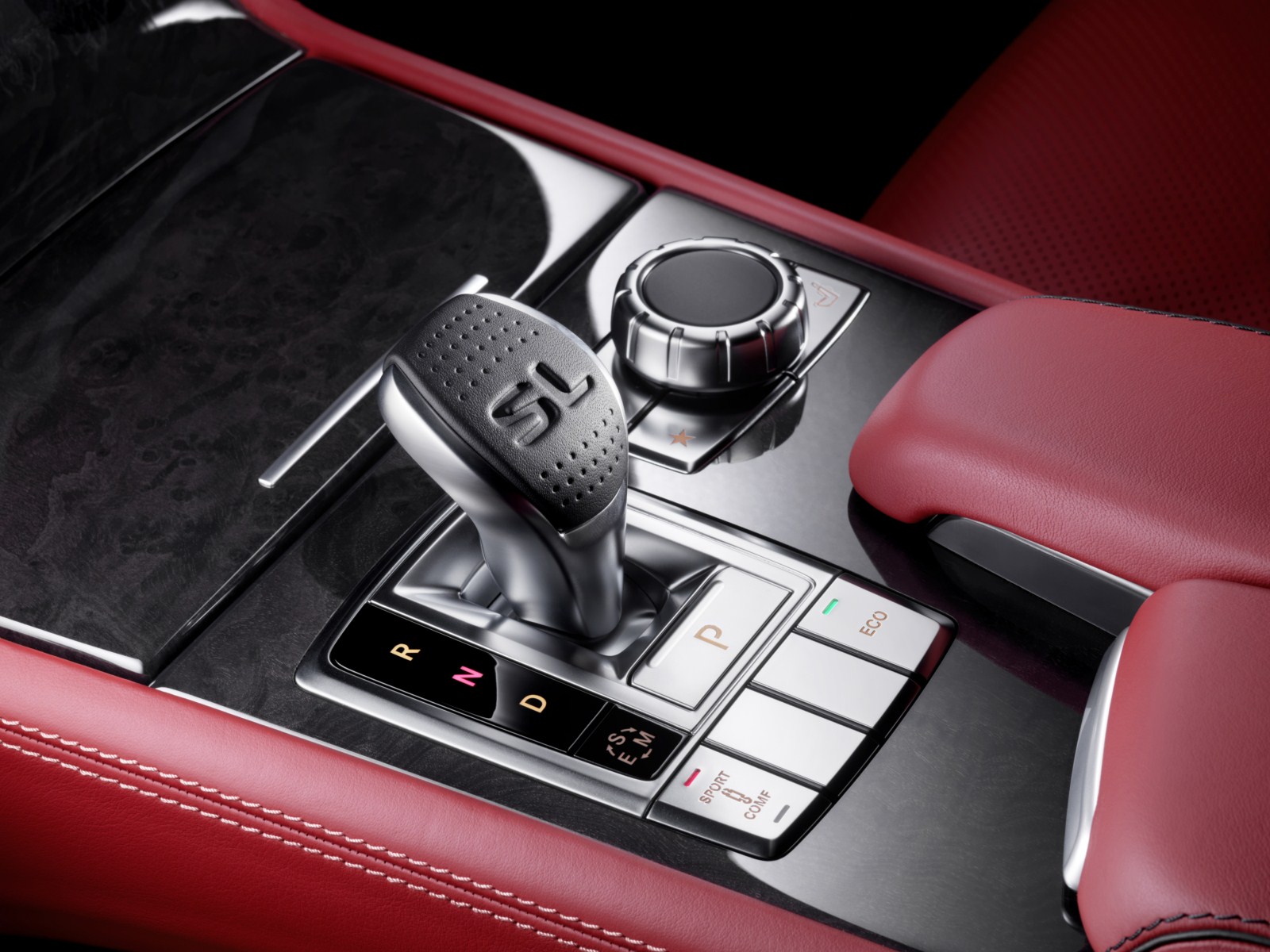
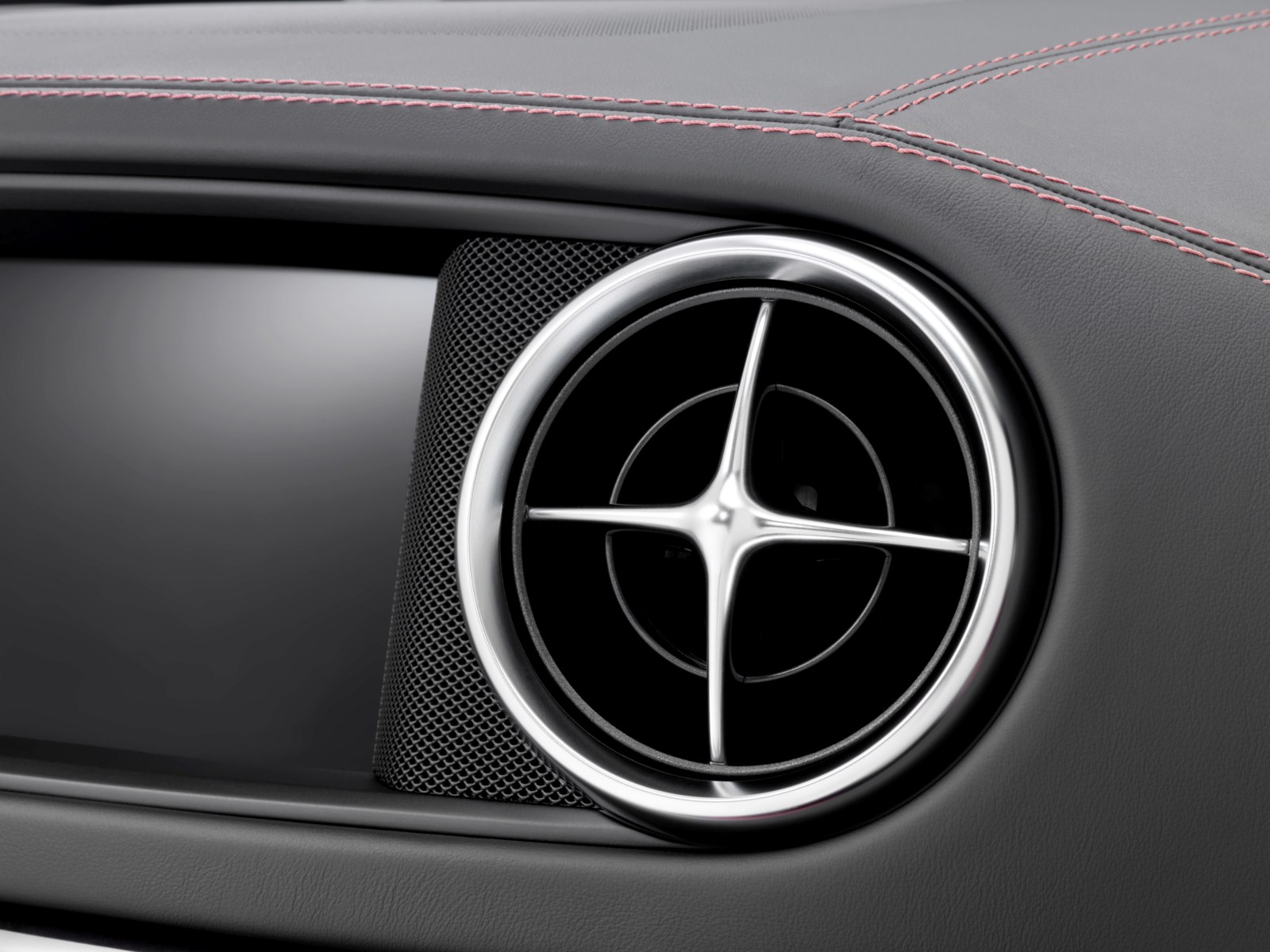
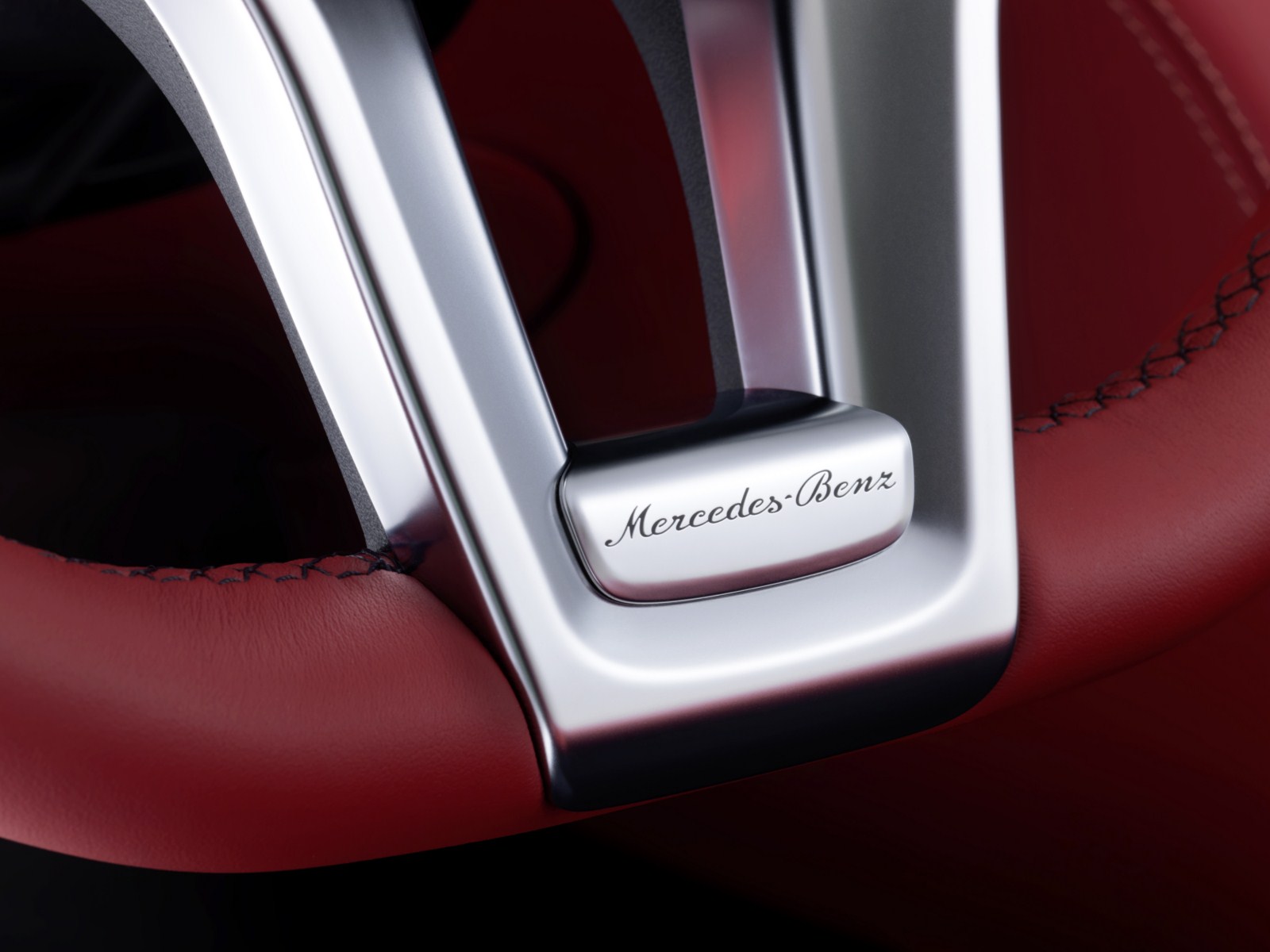
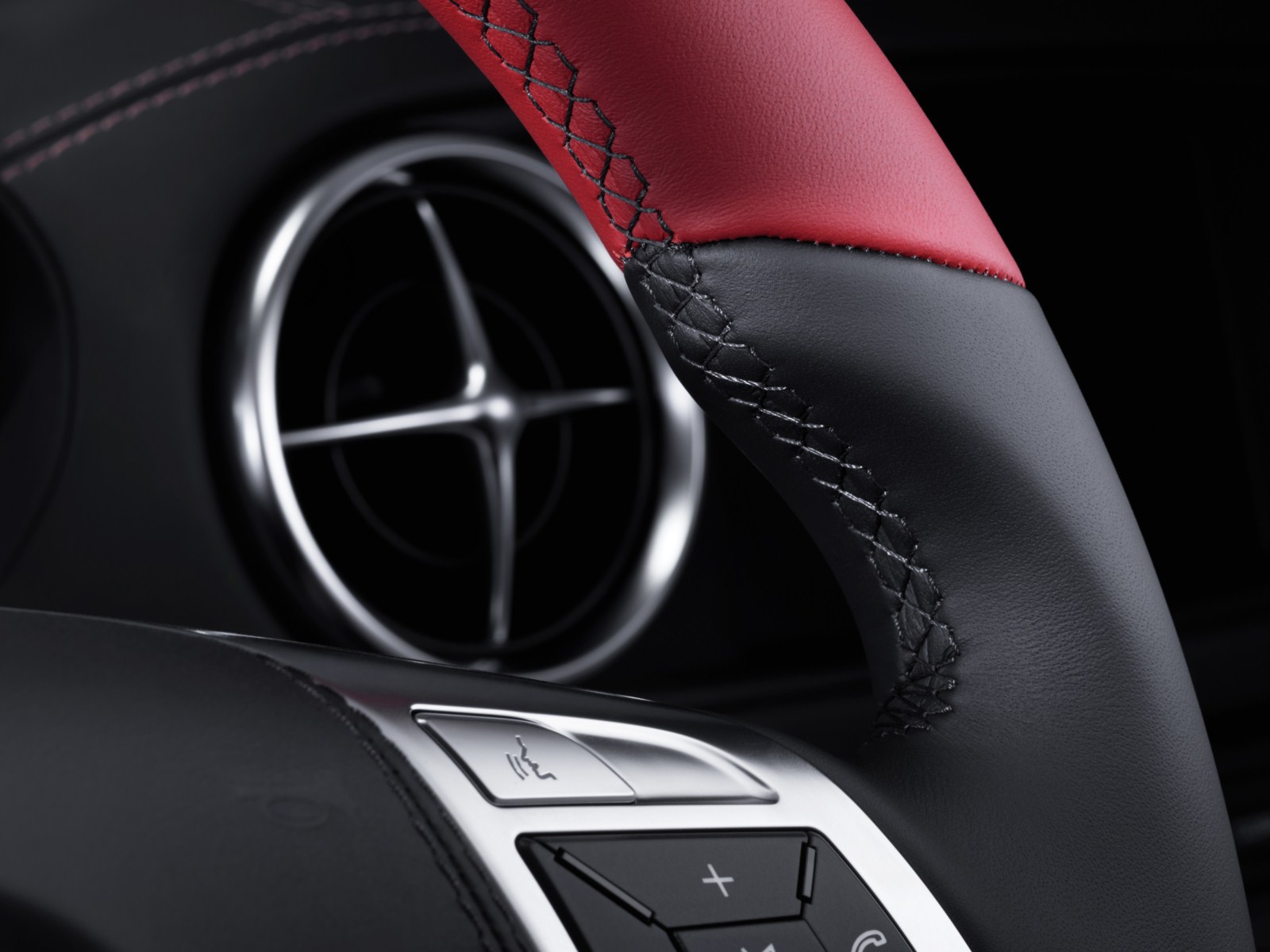
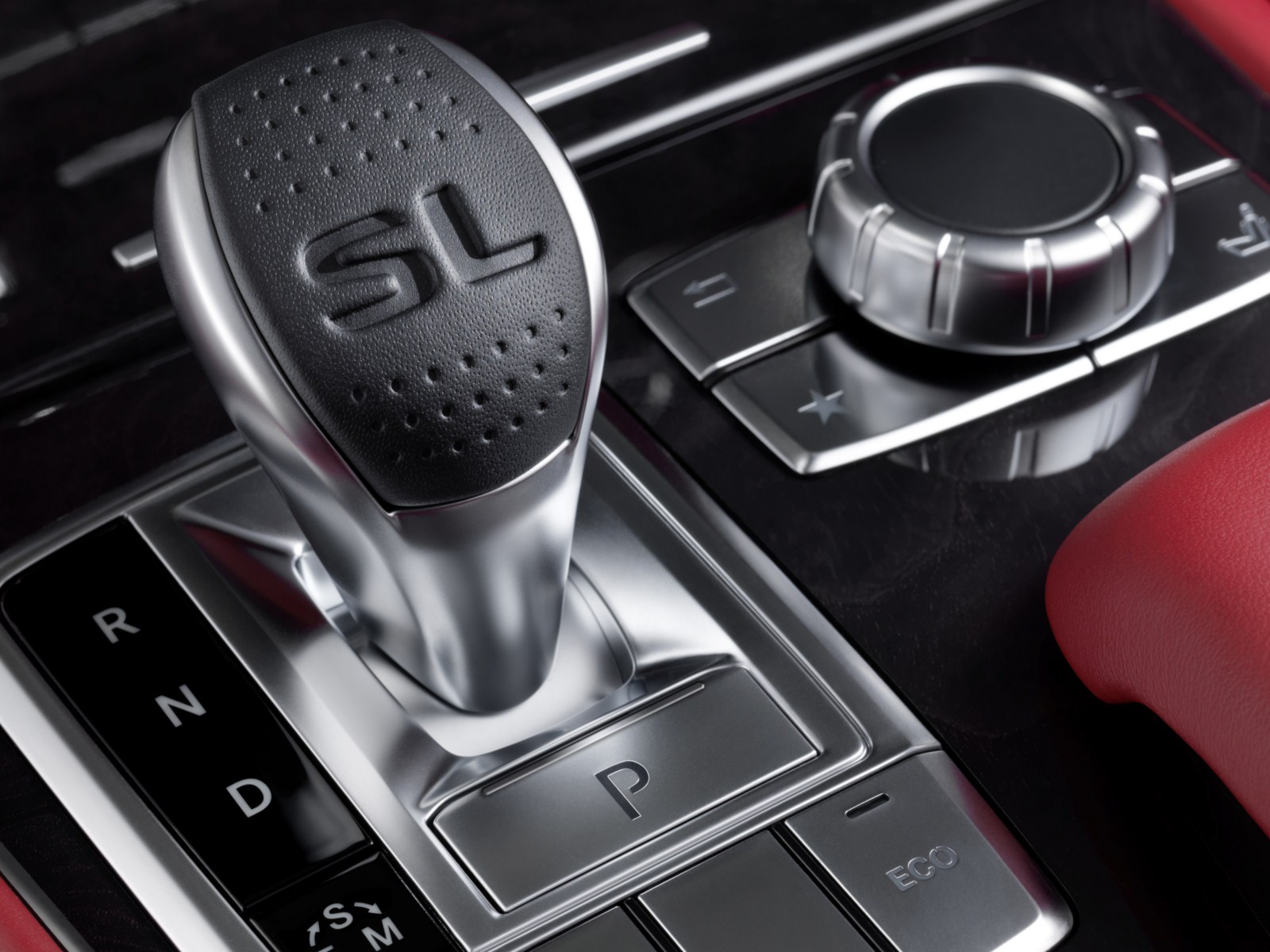
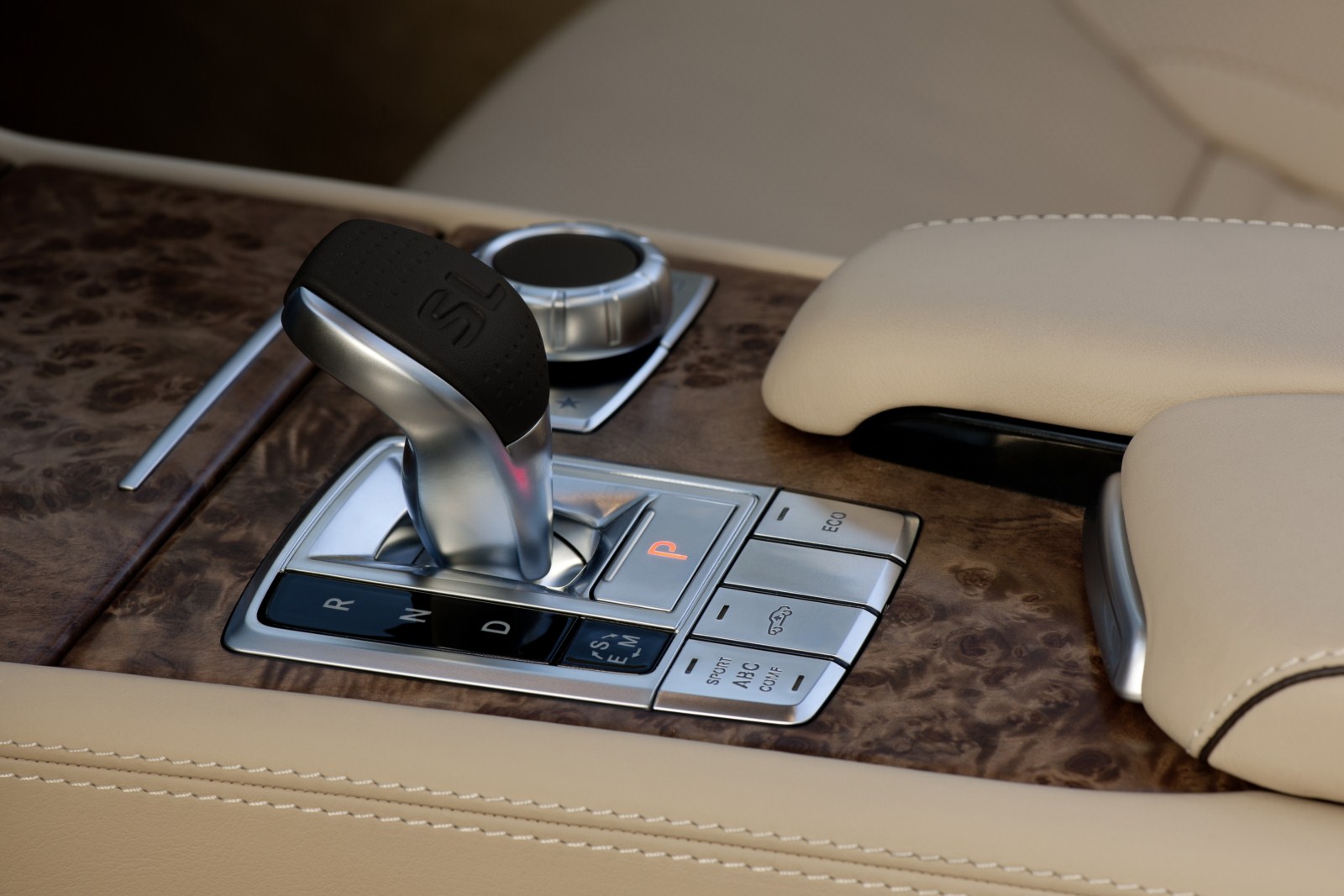
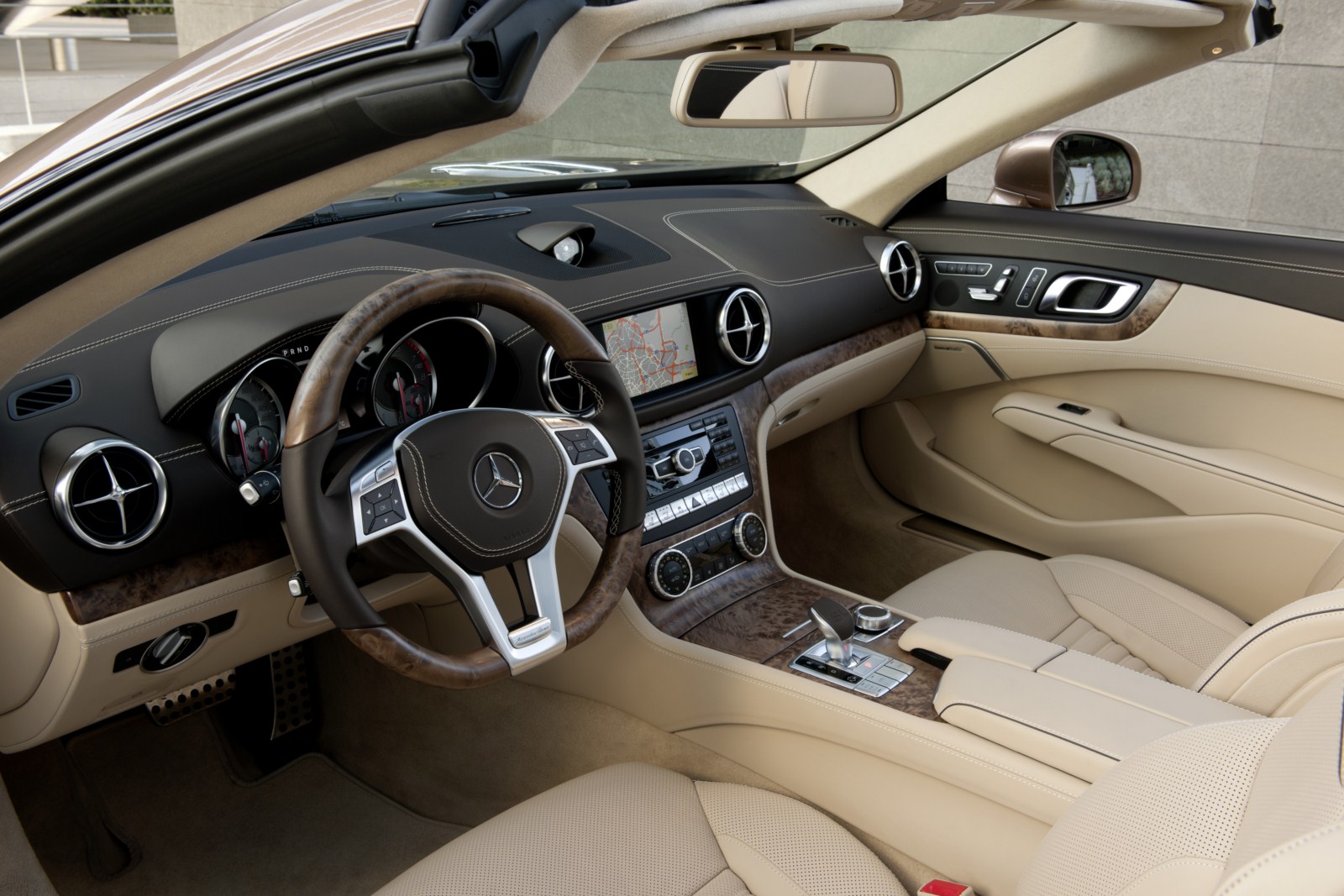
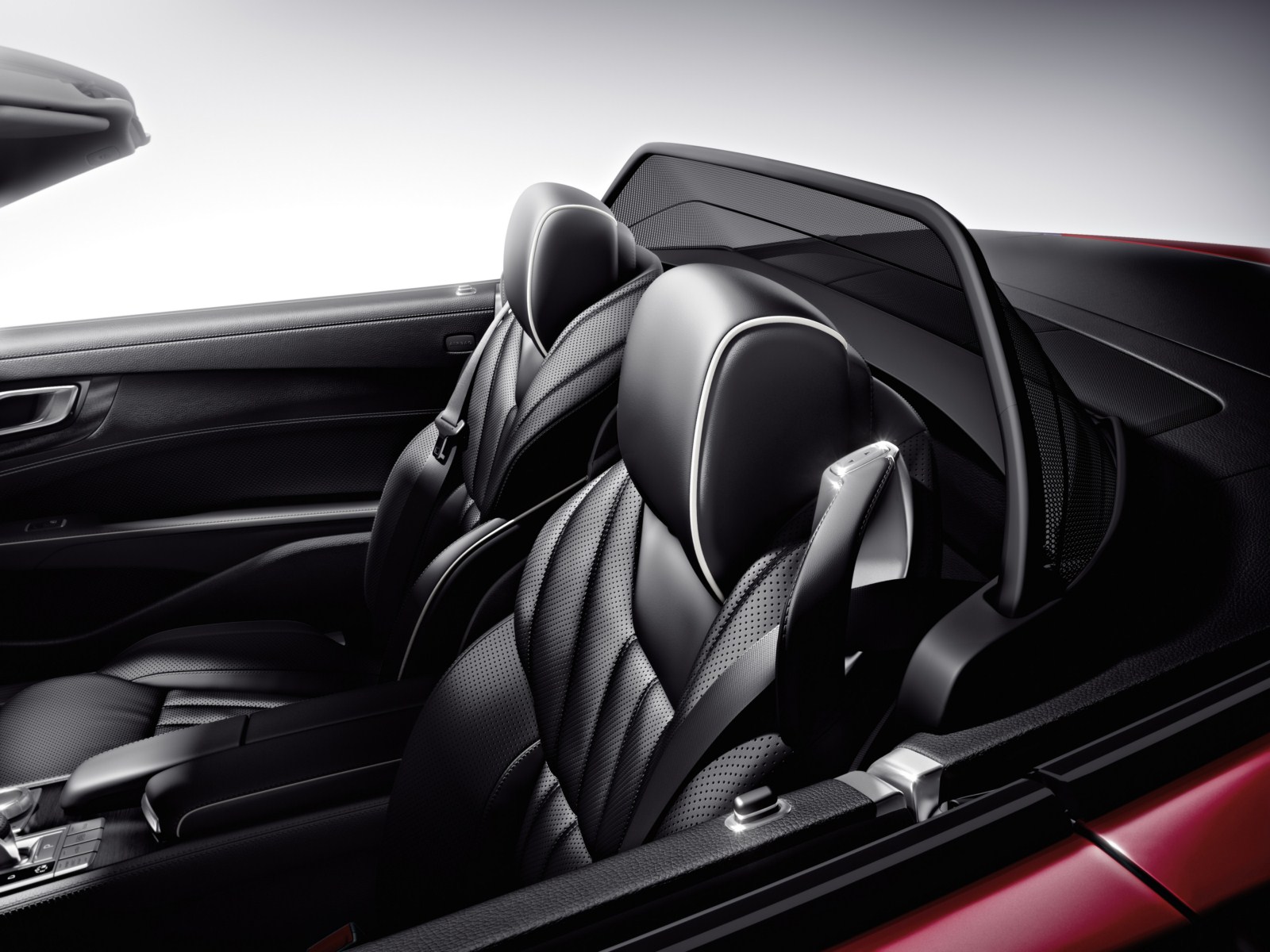
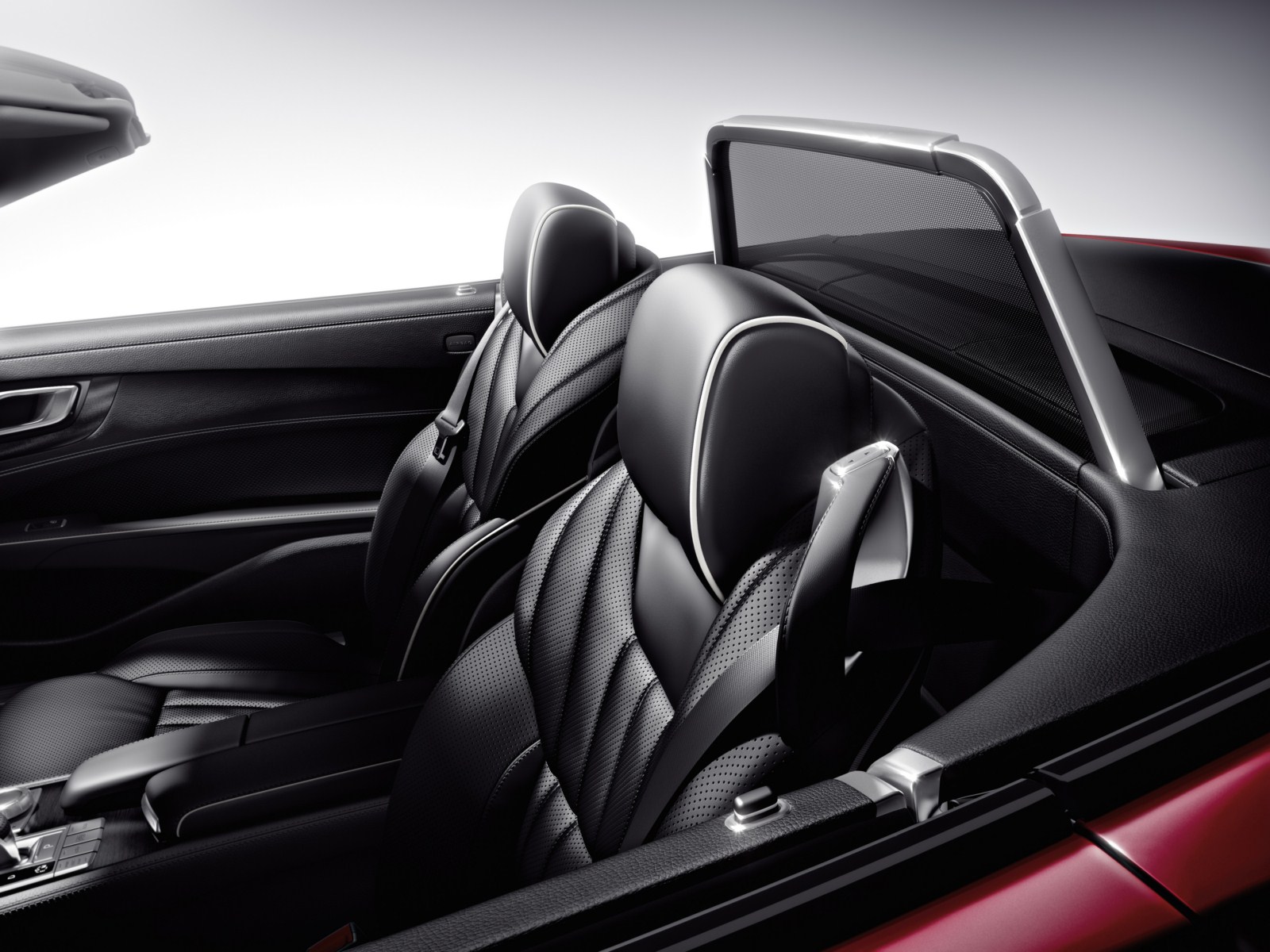
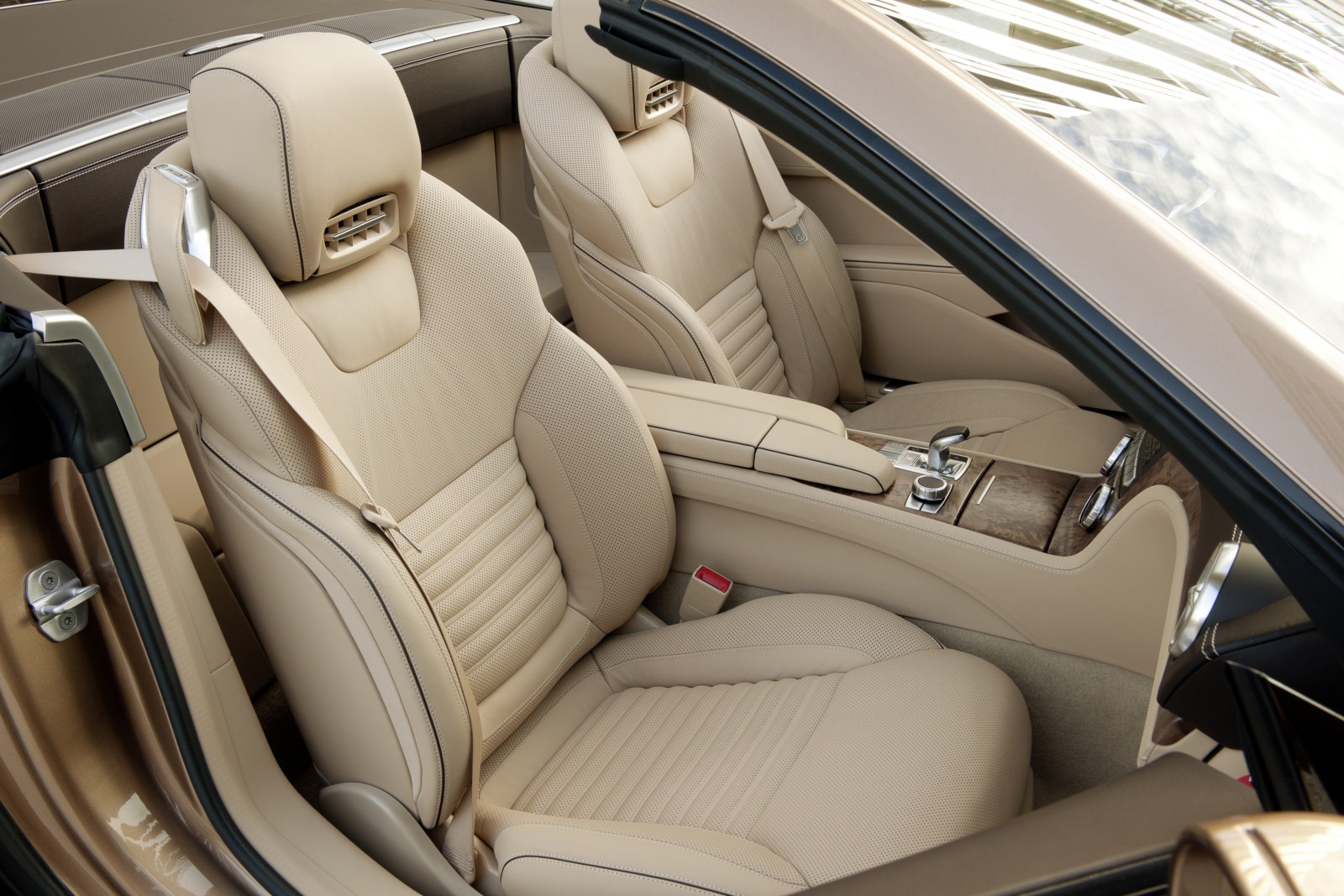
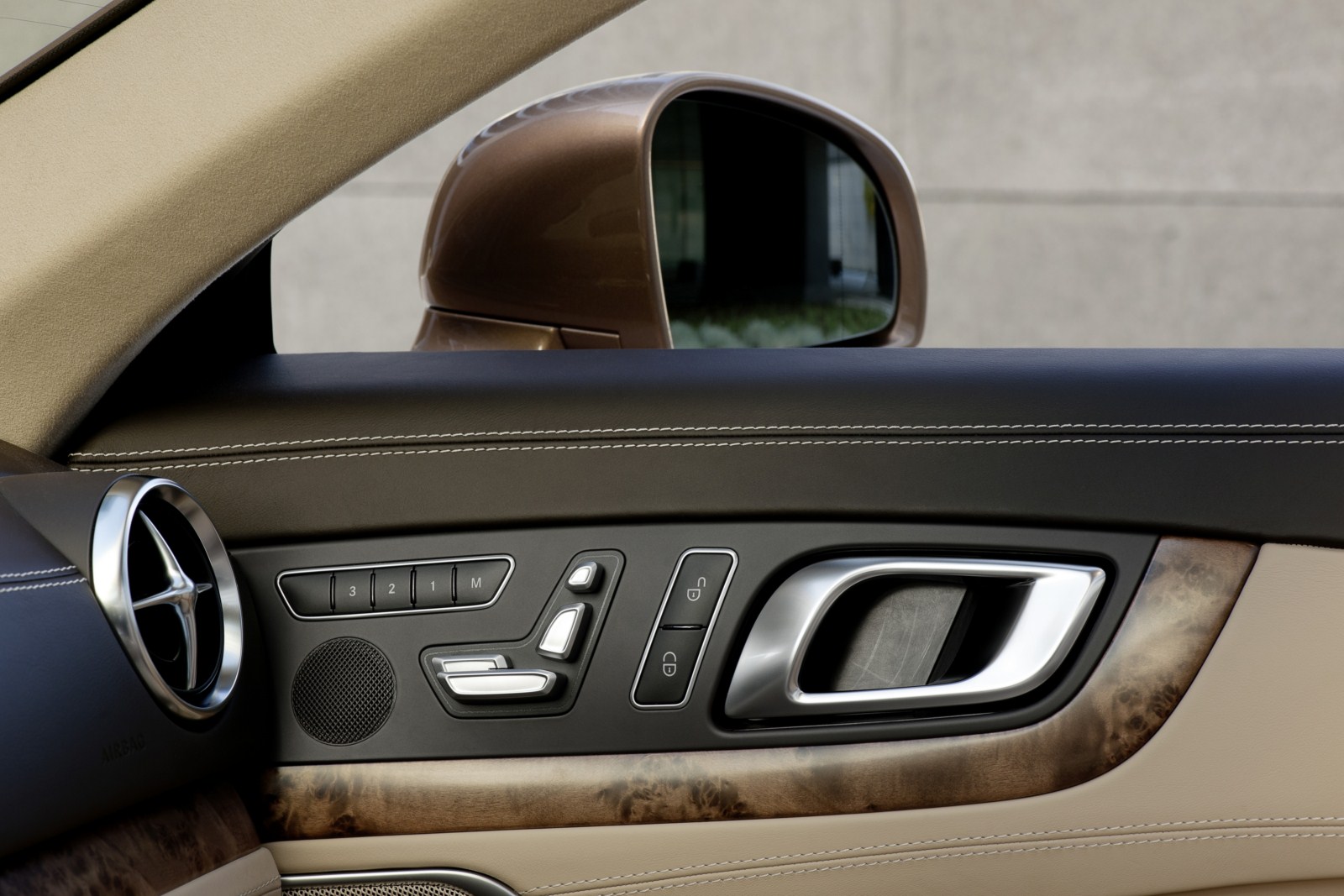
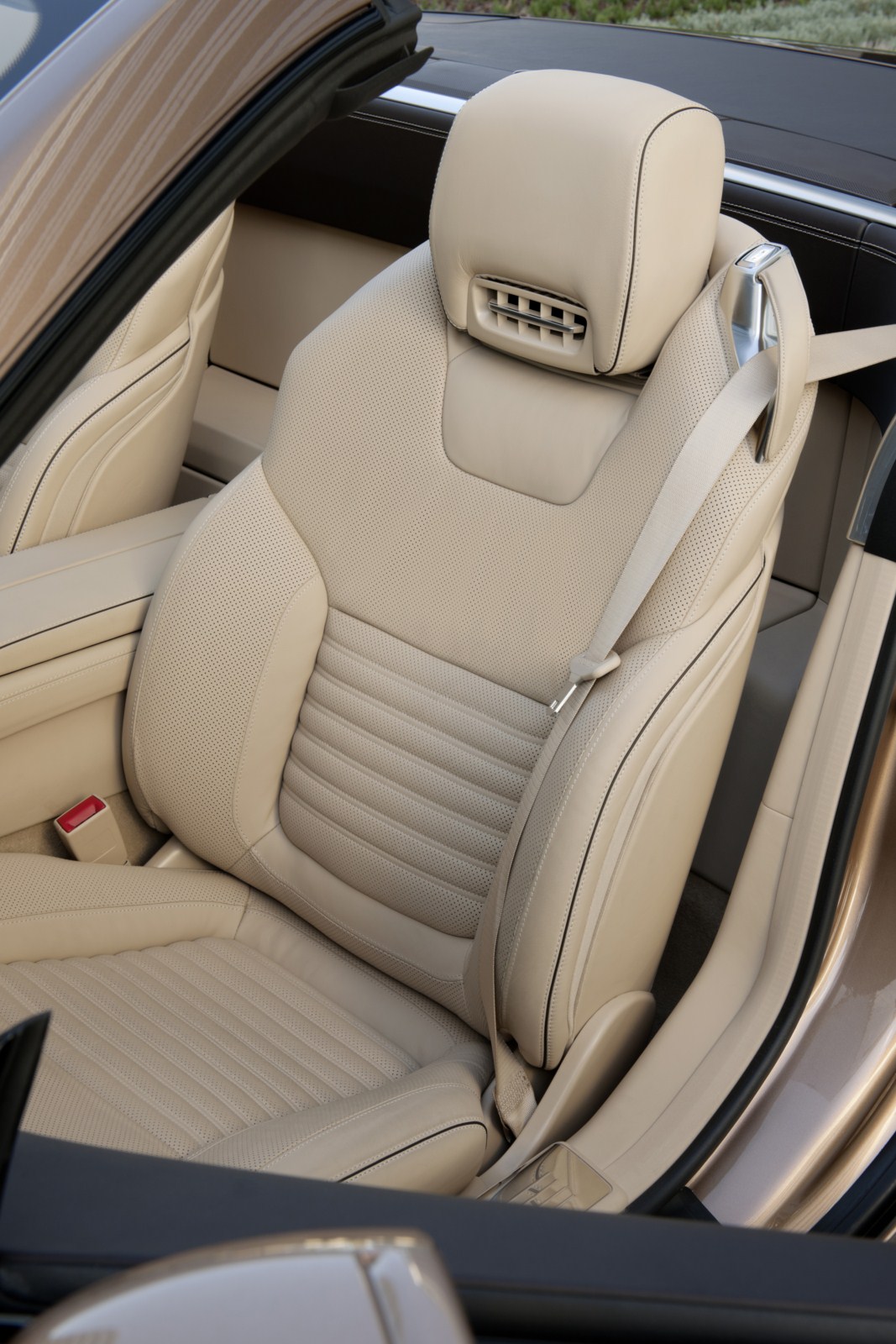
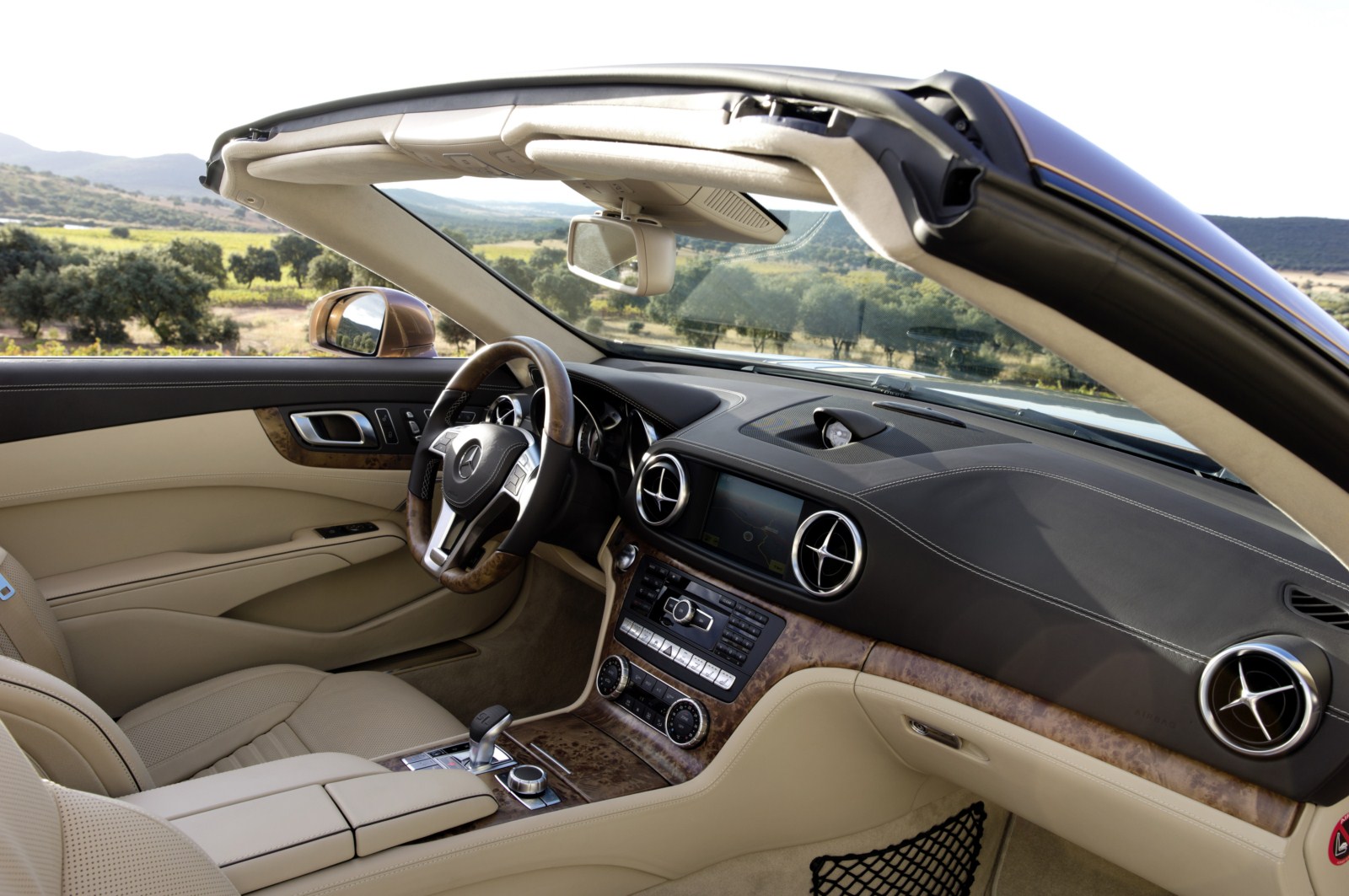
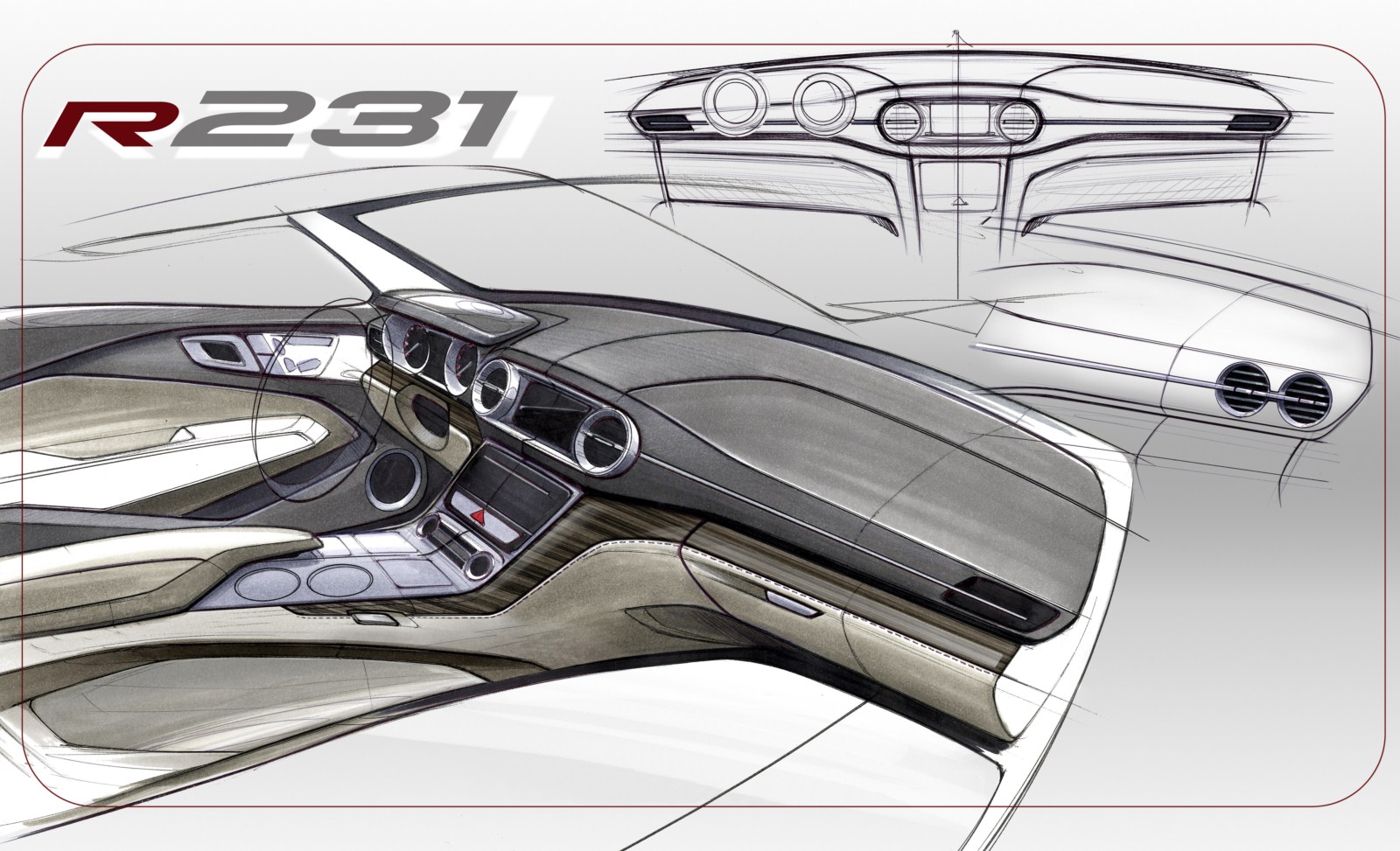
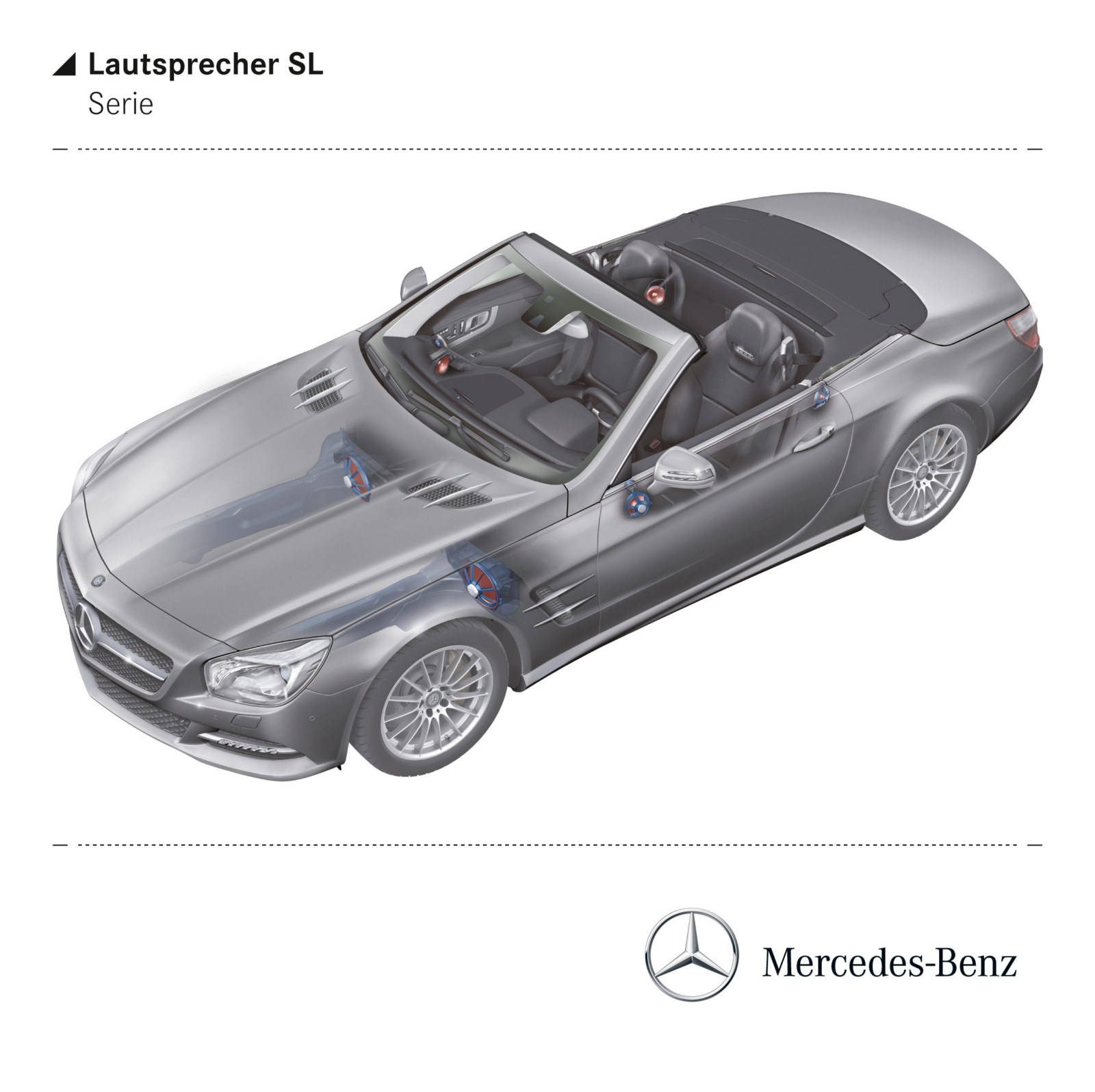
Το εσωτερικό της είναι εμπνευσμένο από την SLS μας λέει η Mercedes (SLK θα έλεγα εγώ) και διαθέτει υψηλής ποιότητας δερμάτινες επενδύσεις, ξύλινα και μεταλλικά διακοσμητικά. Οι αεραγωγοί είναι στρόγγυλης σχεδίασης, ο λεβιές του αυτόματου κιβωτίου είναι πολύ μικρός και καλαίσθητος ενώ υπάρχει και το νέο σύστημα ήχου Front Bass το οποίο θα έχει δύο woofer τοποθετημένα στα πόδια των επιβατών για να βελτιωθεί η ποιότητα ήχου στη καμπίνα.

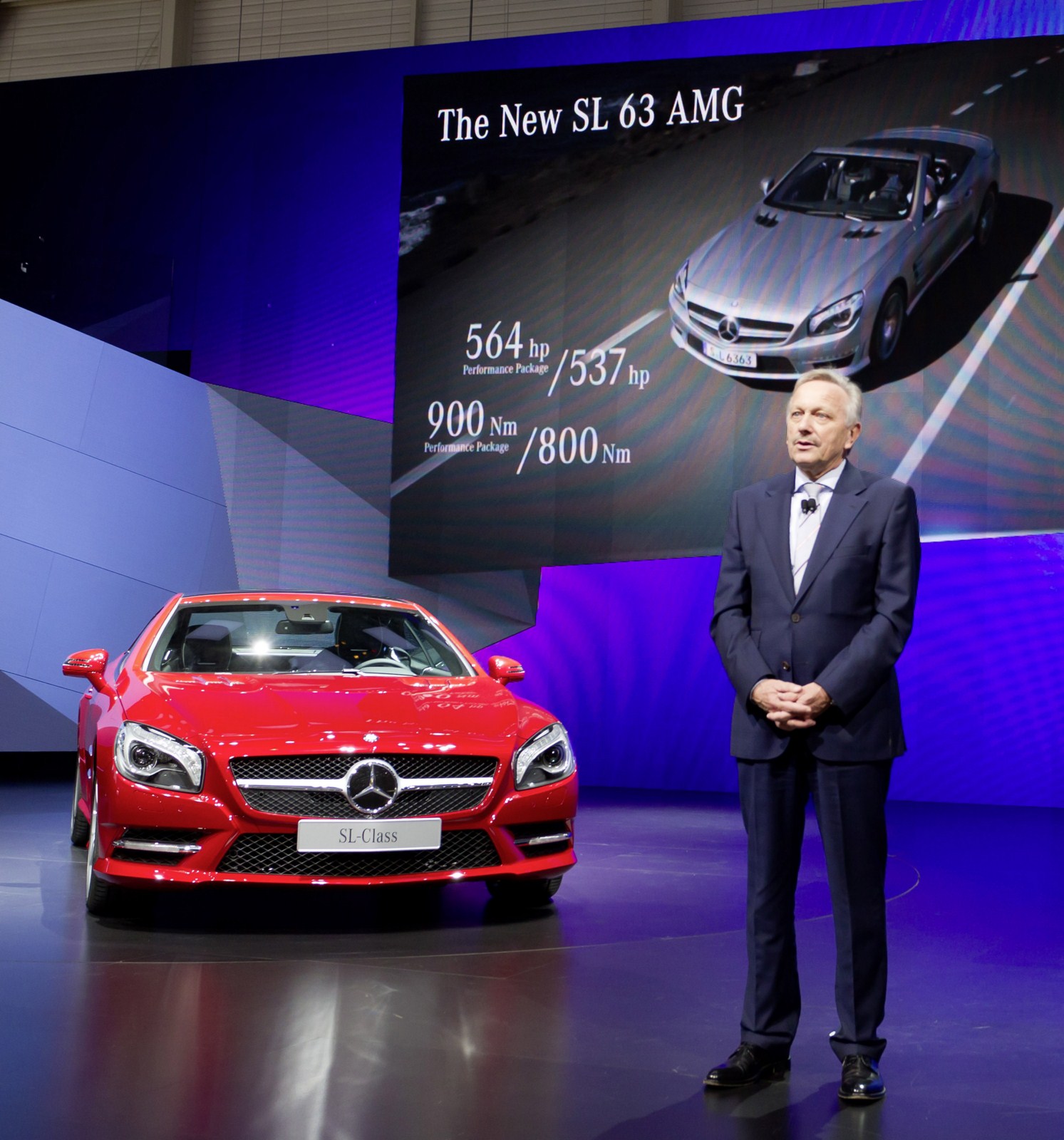
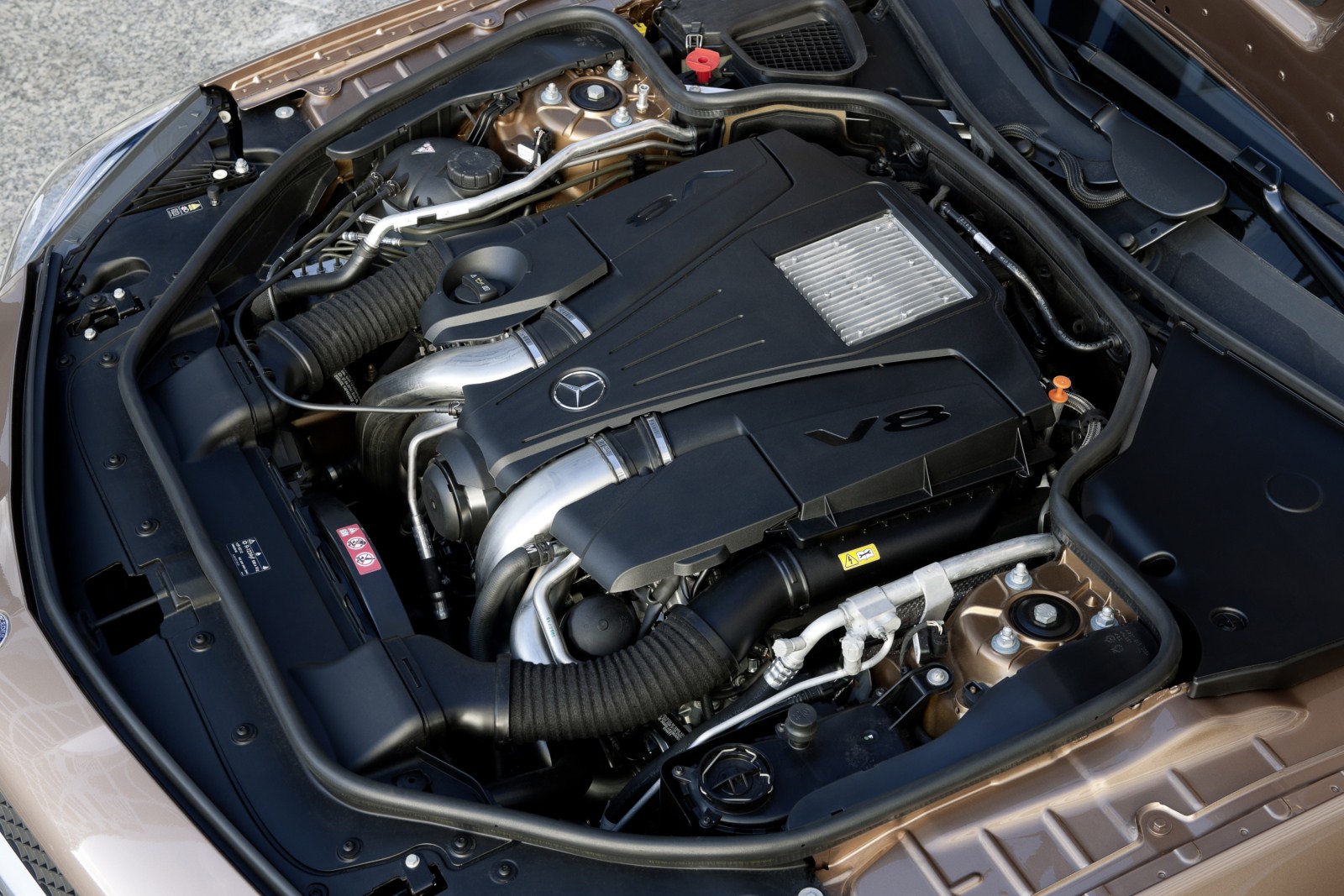
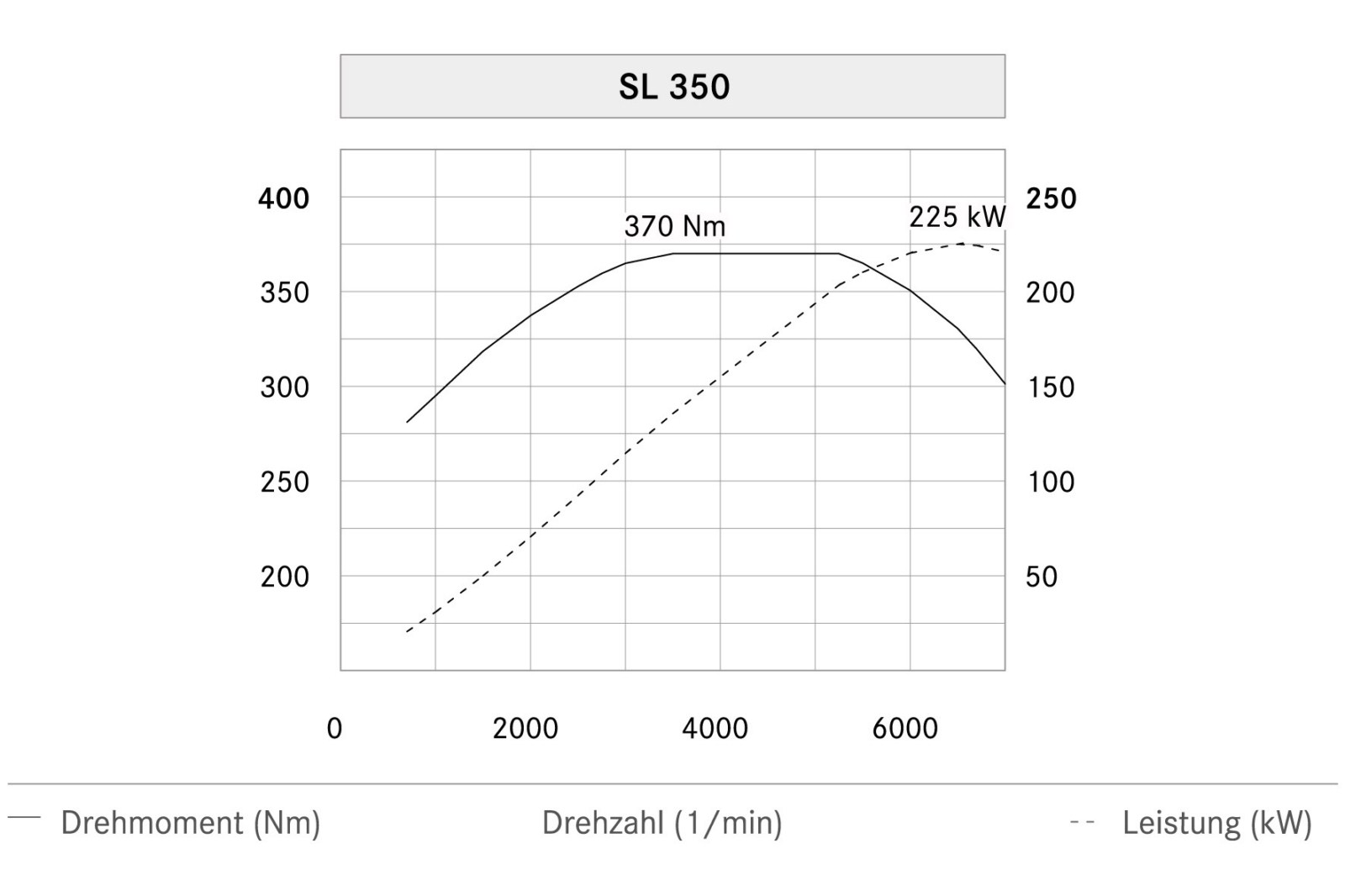
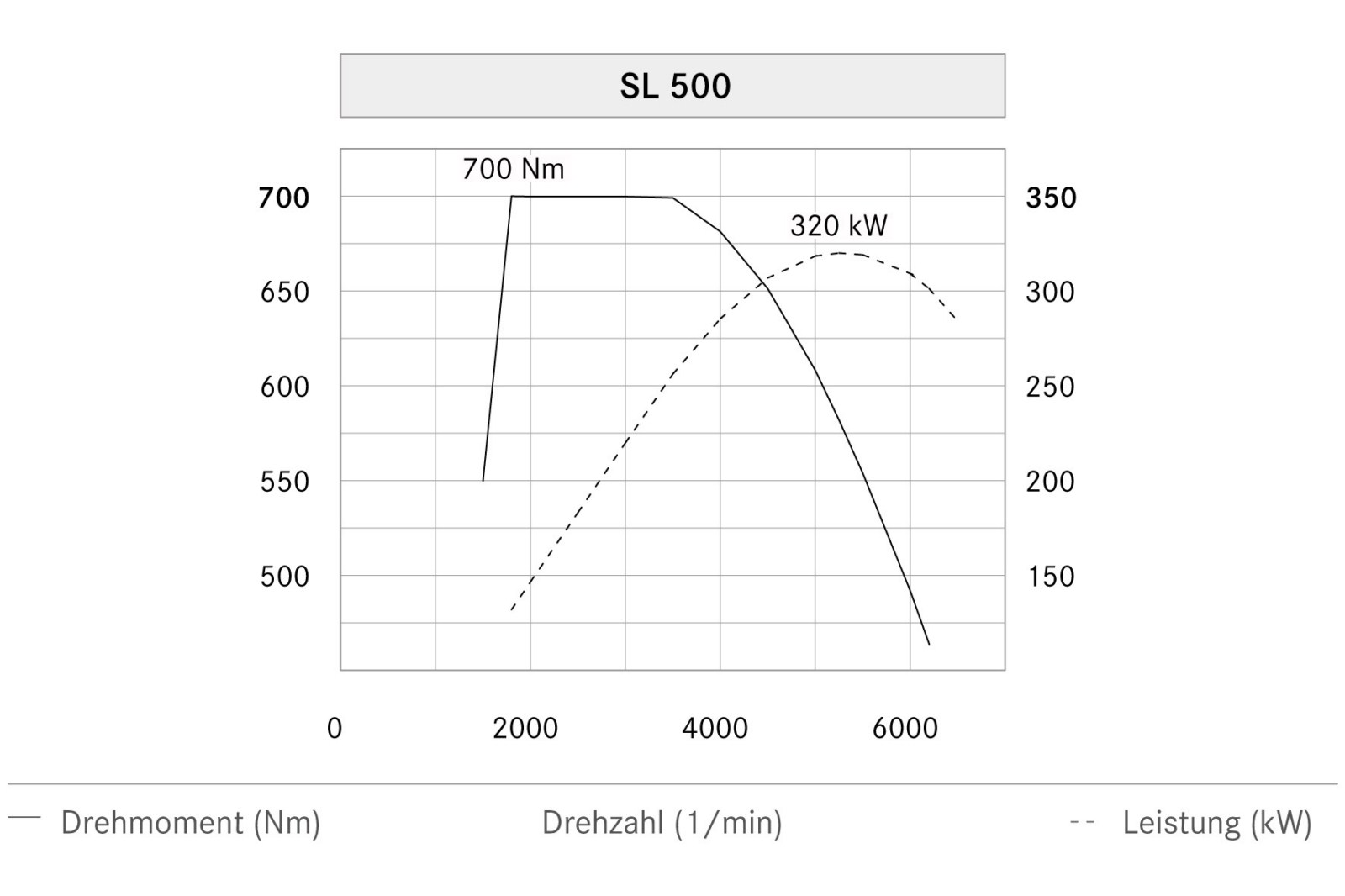
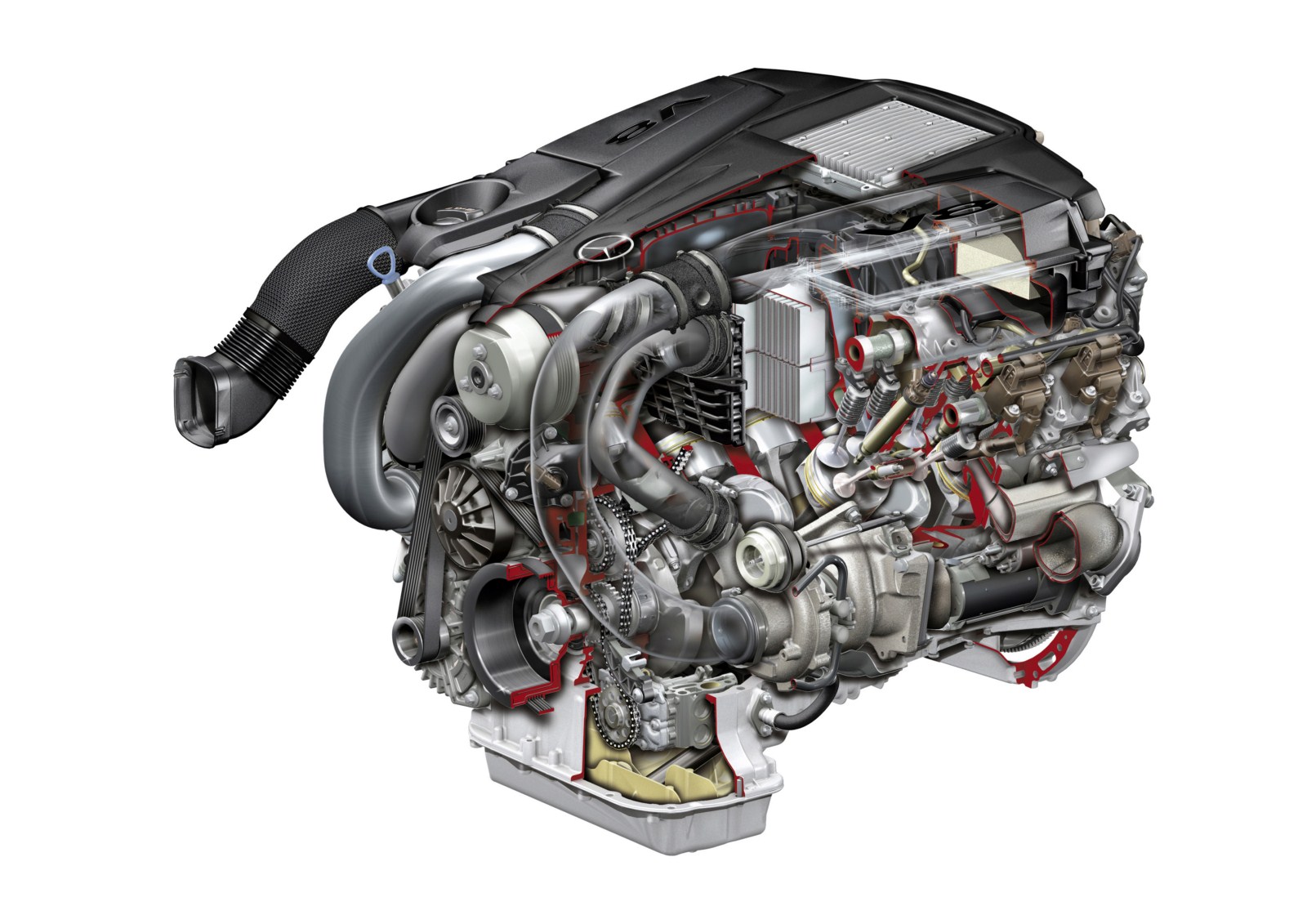
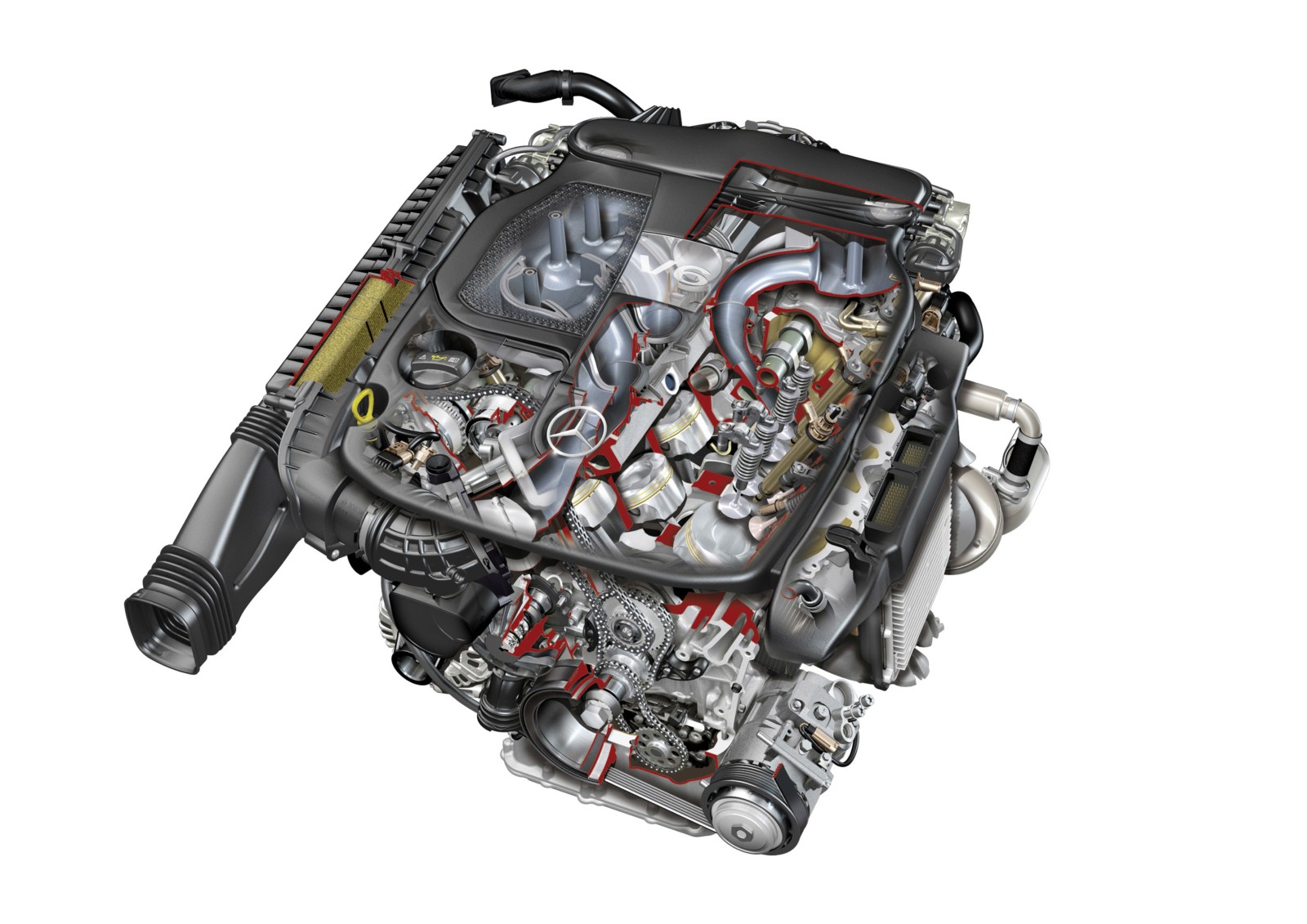
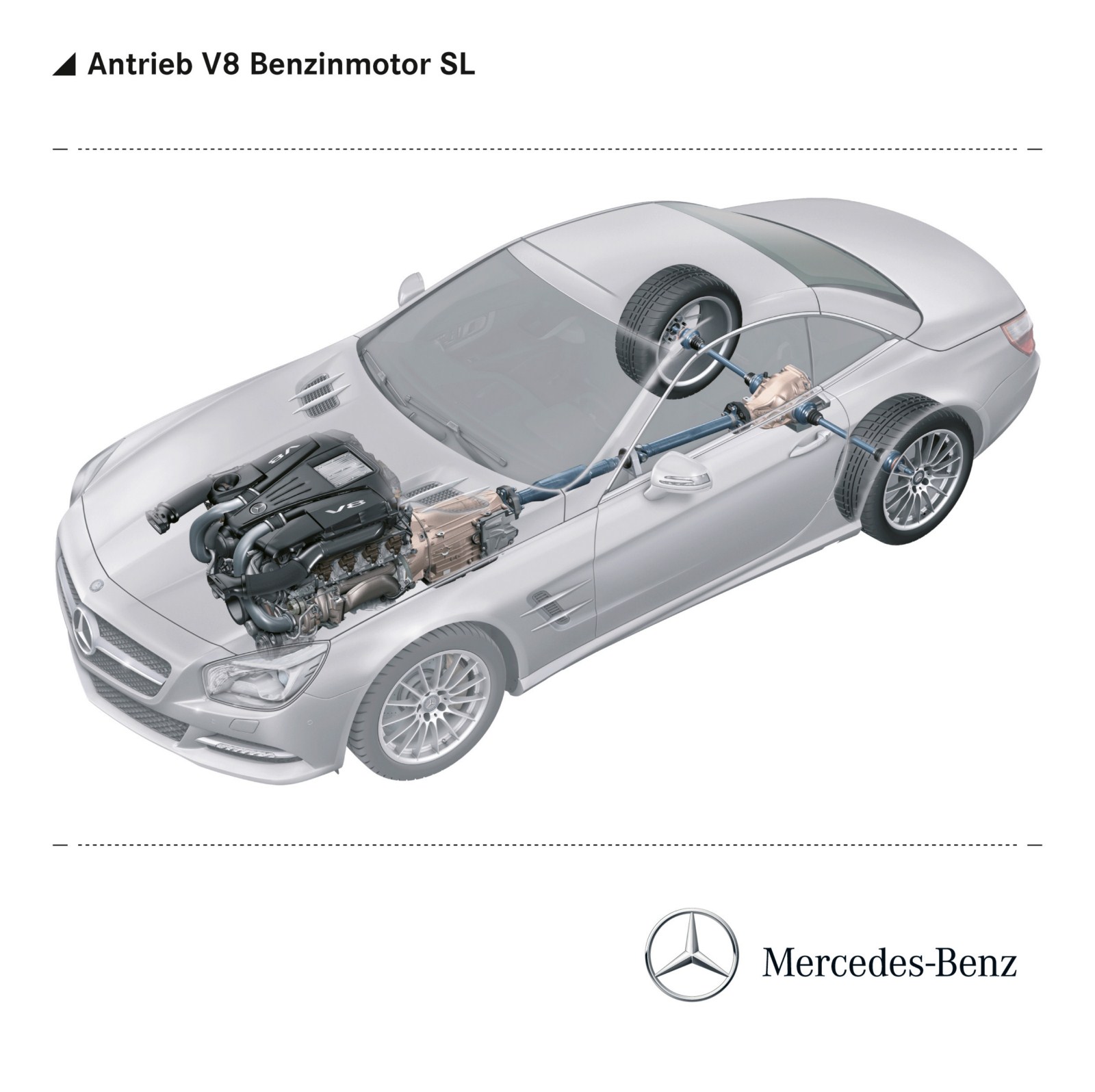
Μηχανικά τώρα, η νέα SL-Class θα είναι διαθέσιμη με 2 κινητήρες. Η έκδοση SL350 φορά τον V6 3.5-λίτρων απόδοσης 306 ίππων με 370 Nm ροπής, με τα 0-100 χλμ/ώρα να τα κάνει σε 5.9 δευτ. με μέση κατανάλωση 6.8 λίτρα/100 χλμ. Ο δεύτερος κινητήρας είναι ο twin-turbo V8 4.7-λίτρων στην έκδοση SL500 απόδοσης 435 ίππων με 699 Nm ροπής με τα 0-100 χλμ/ώρα να τα κάνει σε 4.6 δευτ. Στο μέλλον θα παρουσιαστούν και οι εκδόσεις SL63 AMG και SL65 AMG, γι’αυτους που θέλουν γρηγορότερες εκδόσεις.
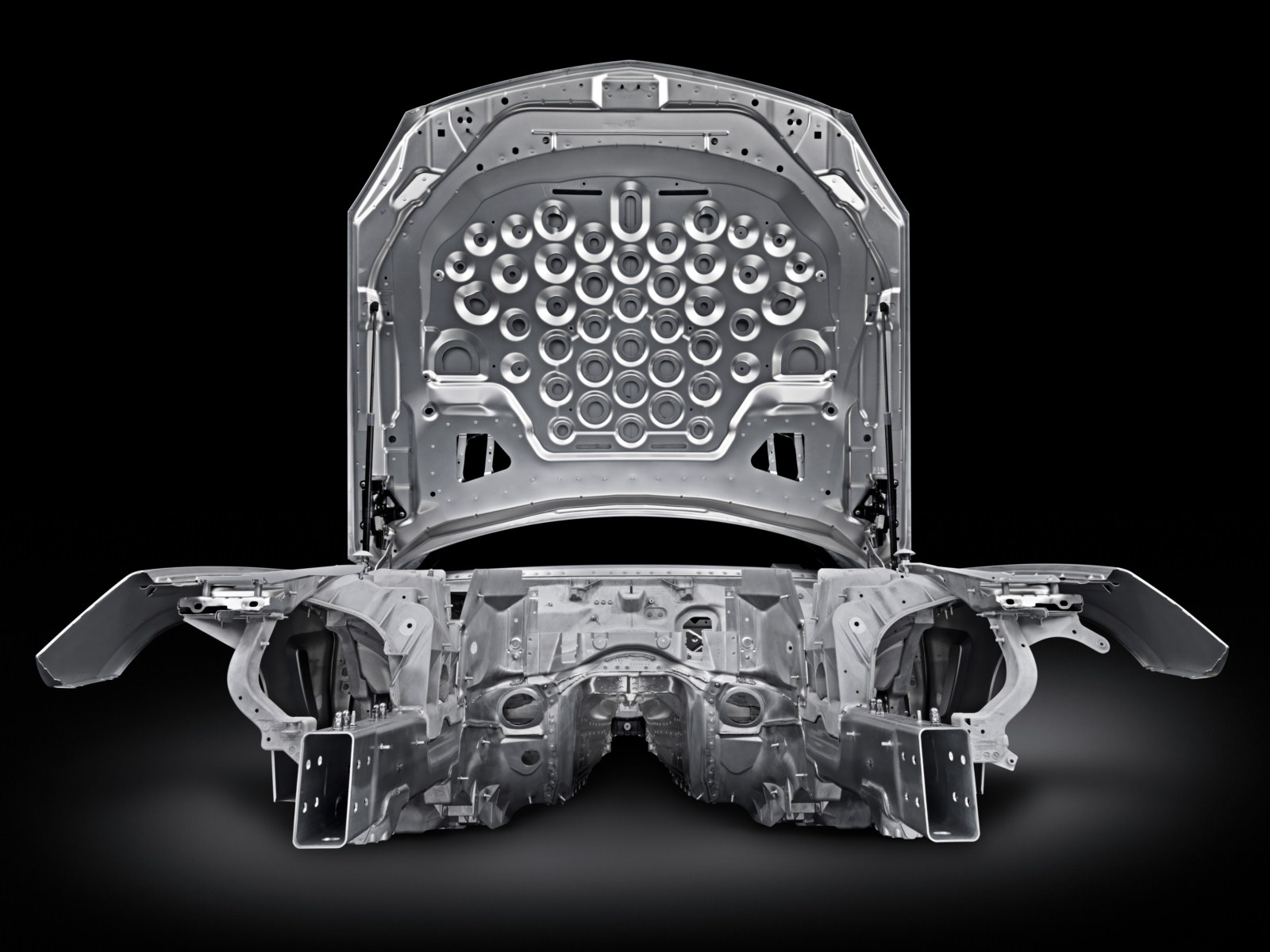
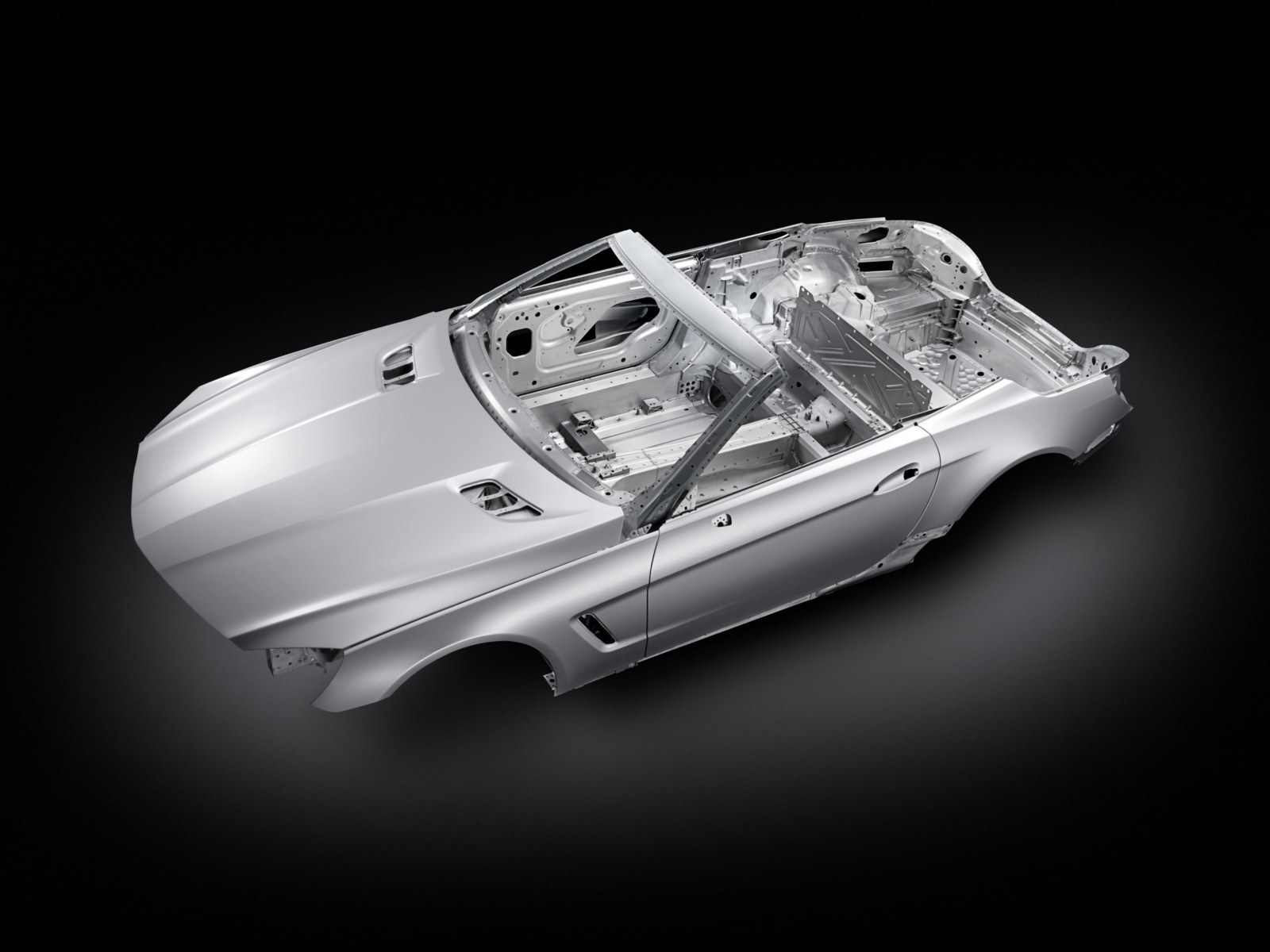
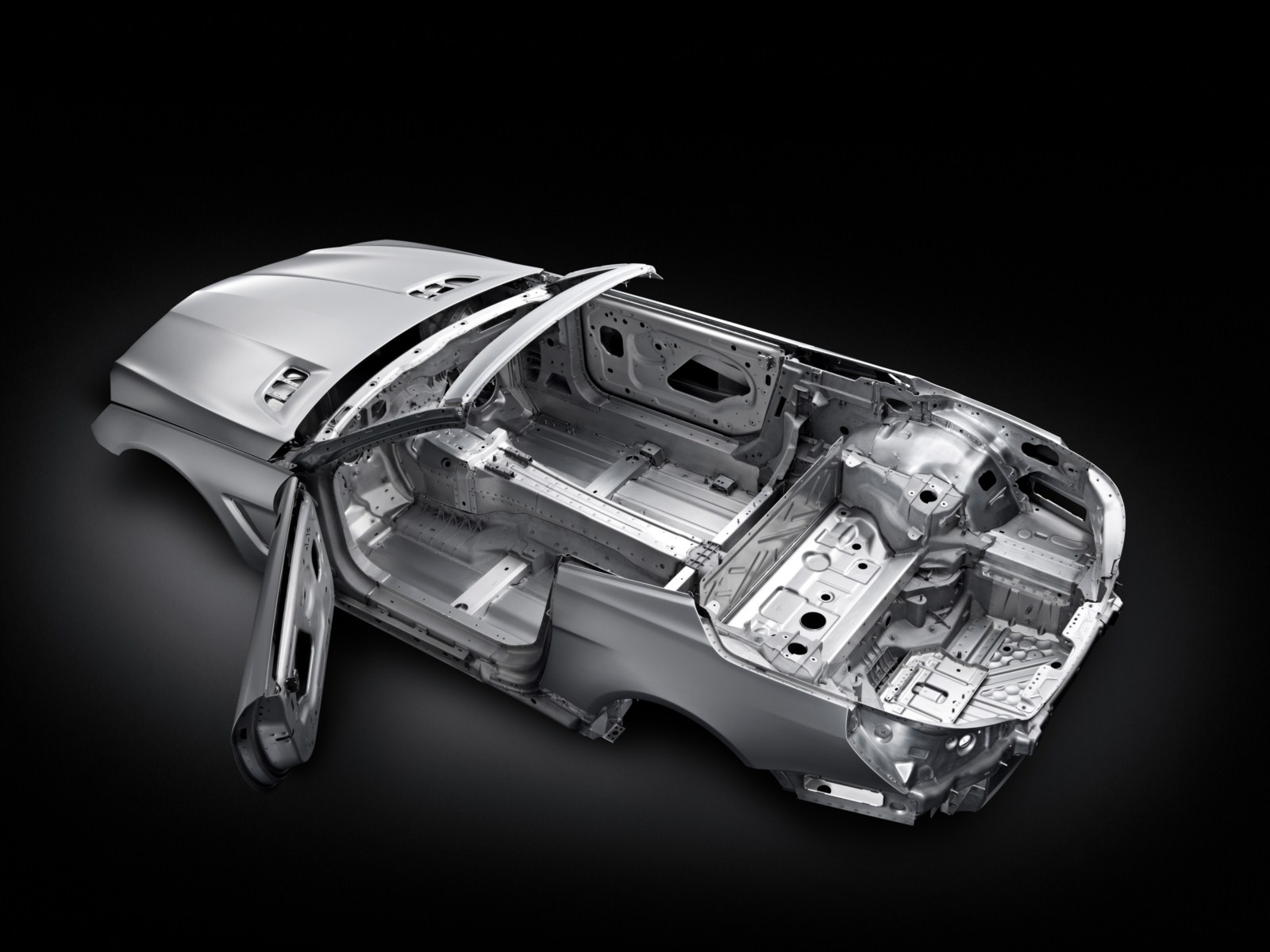
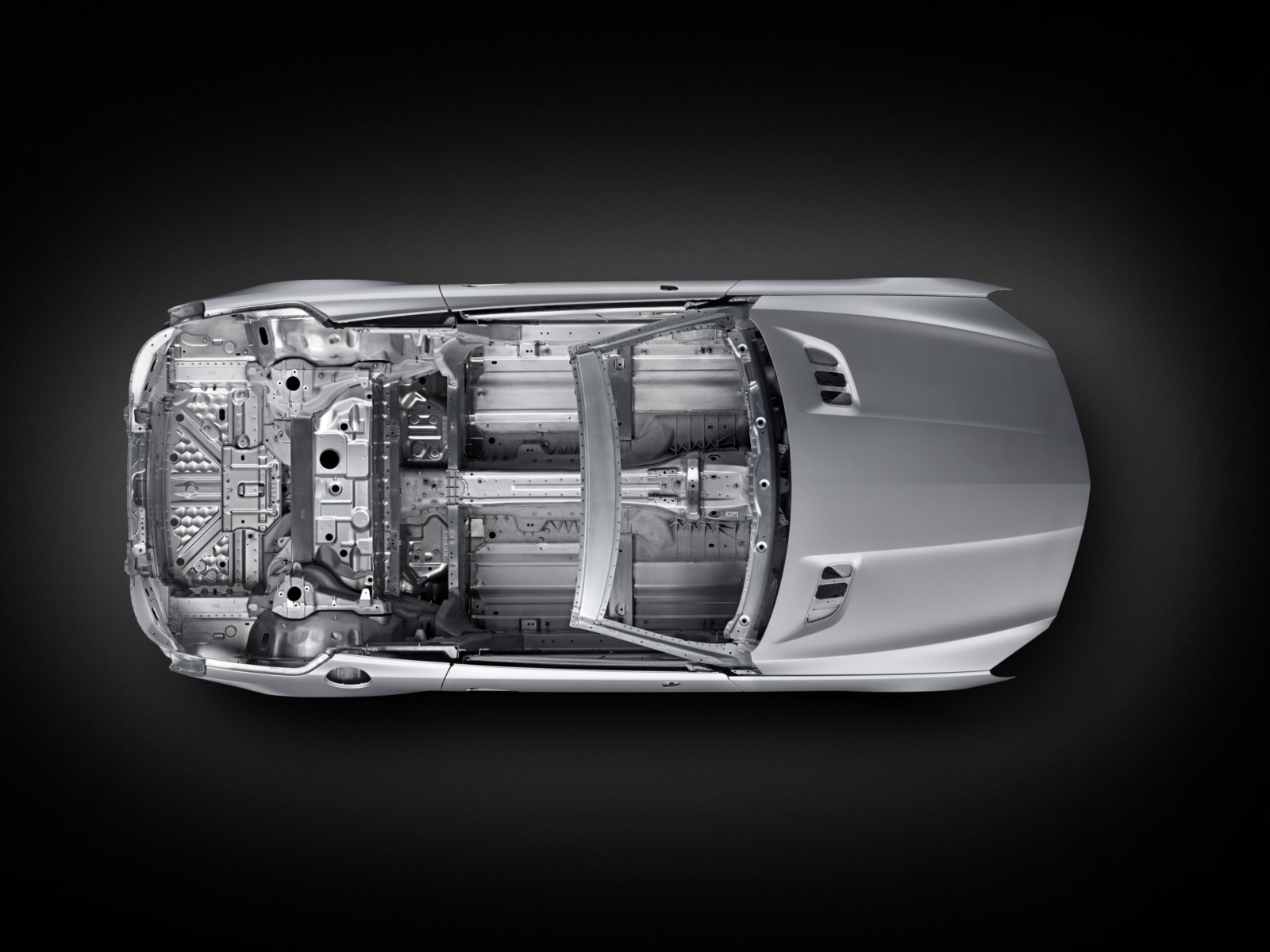
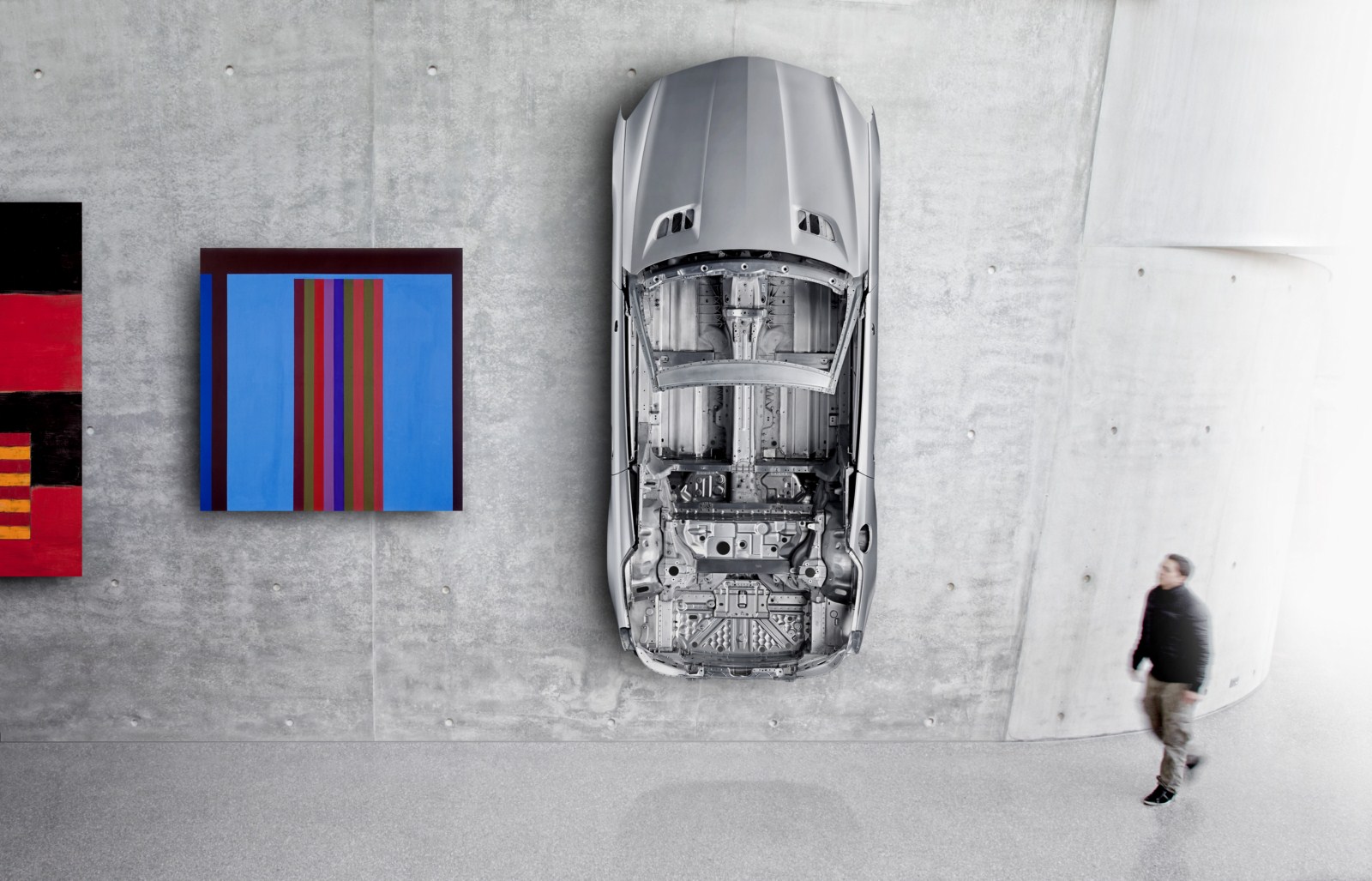
Το μεγάλο roadster των Γερμανών διαθέτει αλουμινένιο σώμα και ζυγίζει 140 κιλά λιγότερα από παλαιότερο μοντέλο. Παρά το μειωμένο βάρος, η νέα SL είναι κατά 20% πιο άκαμπτη από την τωρινή και καταναλώνει 30% λιγότερο καύσιμο.

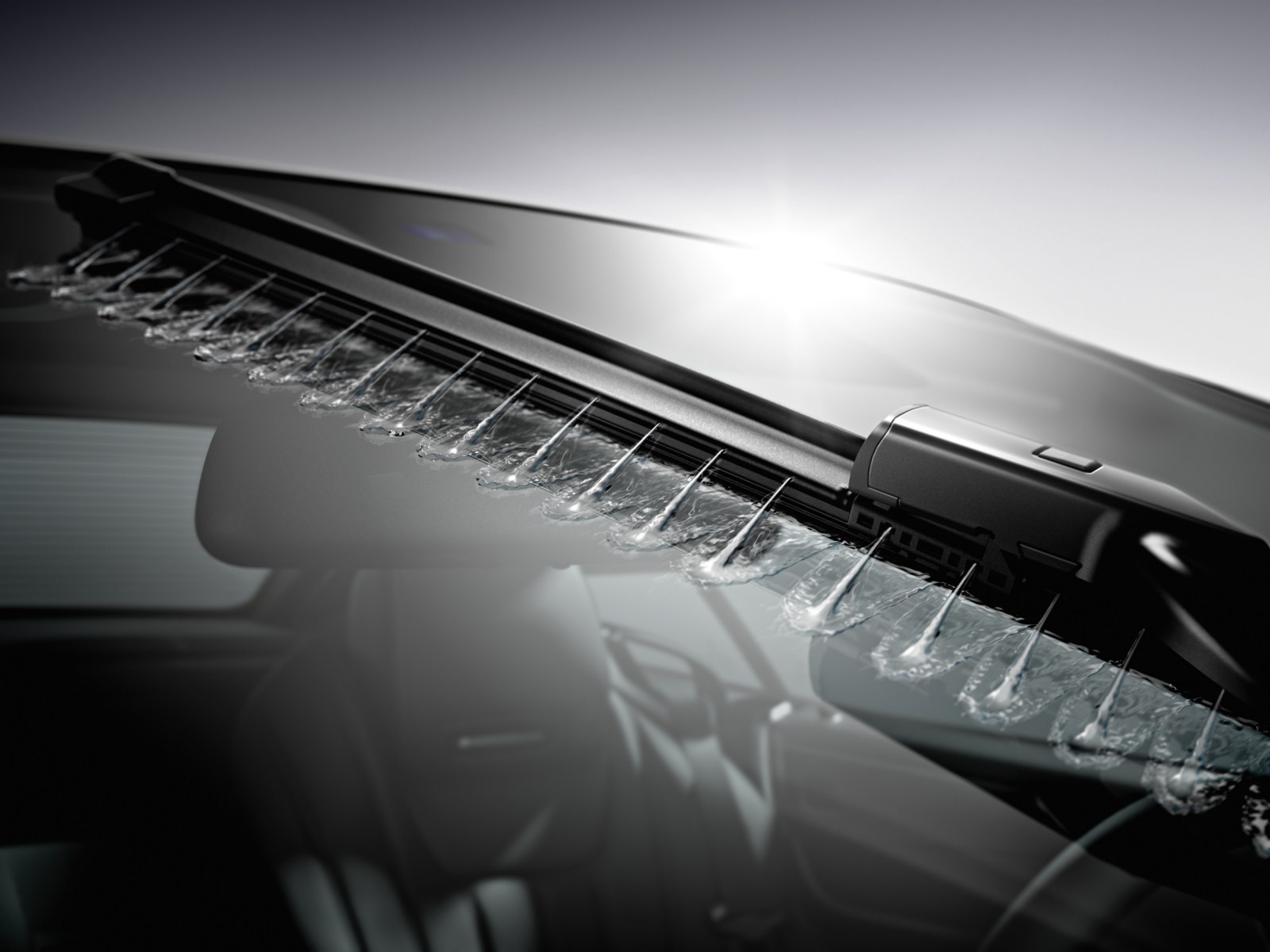
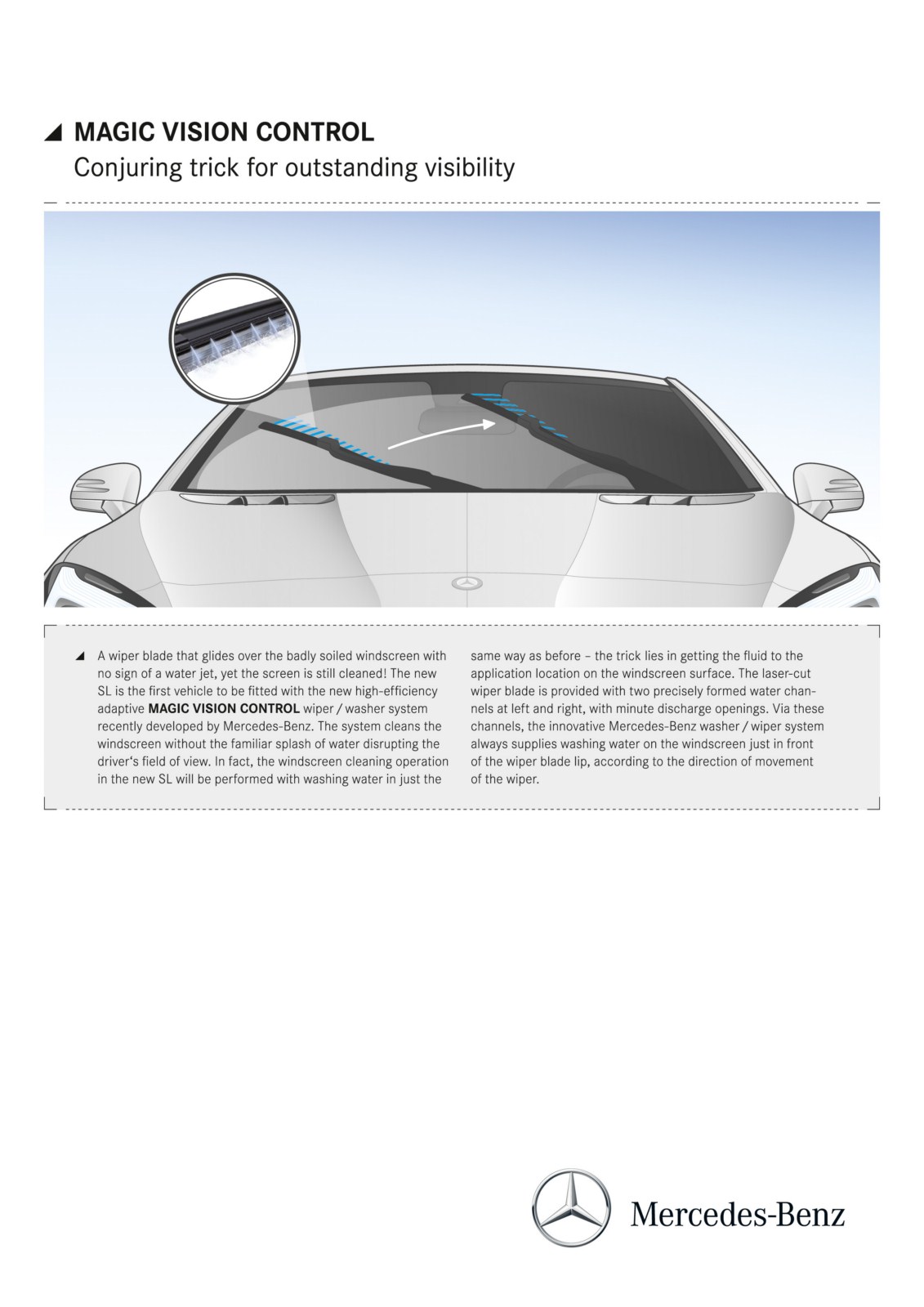
Επιπλέον η νέα SL-Class θα φορέσει το νέο σύστημα Magic Vision Control το οποίο ενσωματώνει τα ακροφύσια του συστήματος πλύσης του παρμπρίζ πάνω στους υαλοκαθαριστήρες έτσι ώστε να μην μπαίνει νερό μέσα στη καμπίνα όταν η οροφή είναι ανοικτή.
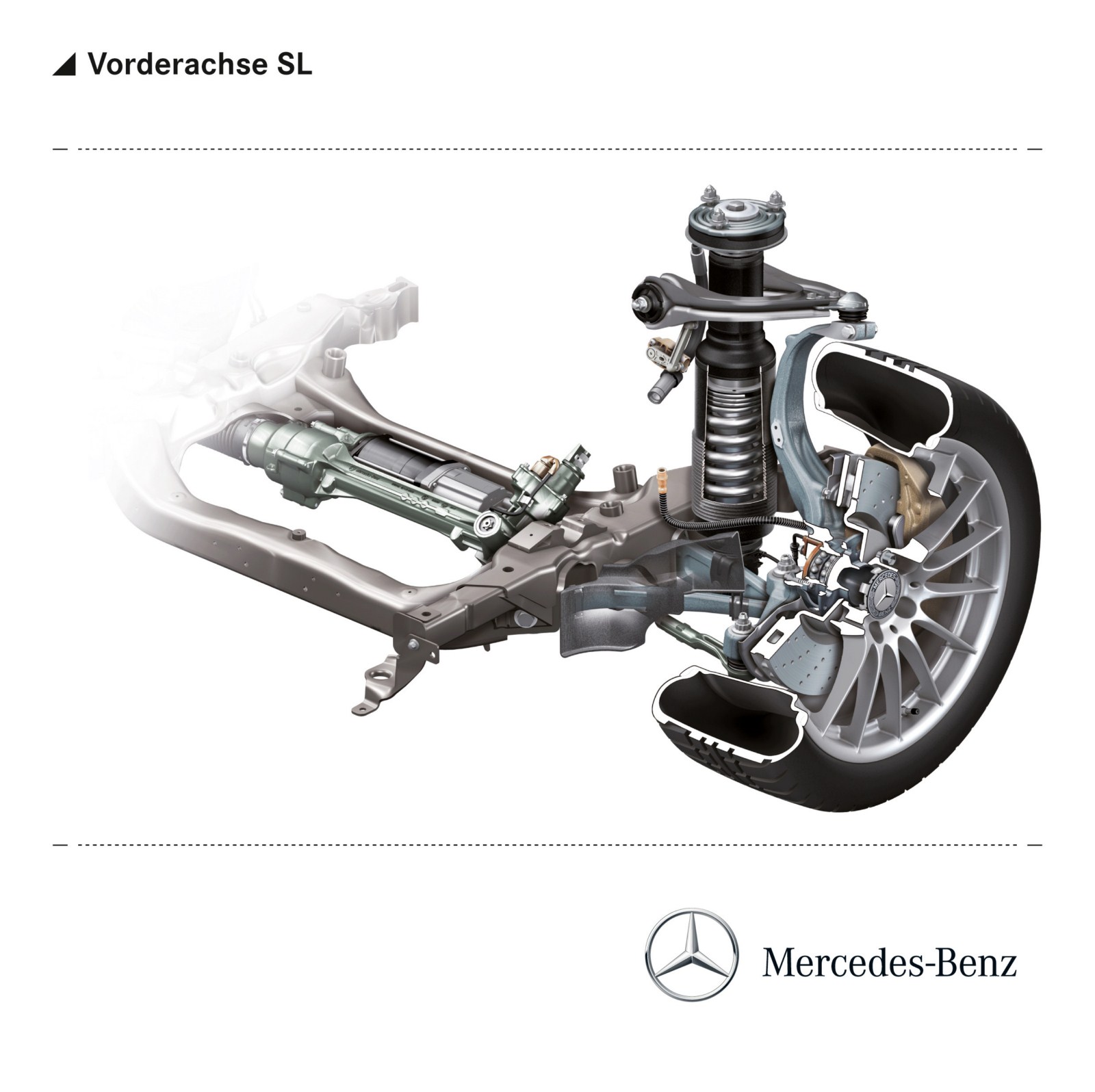
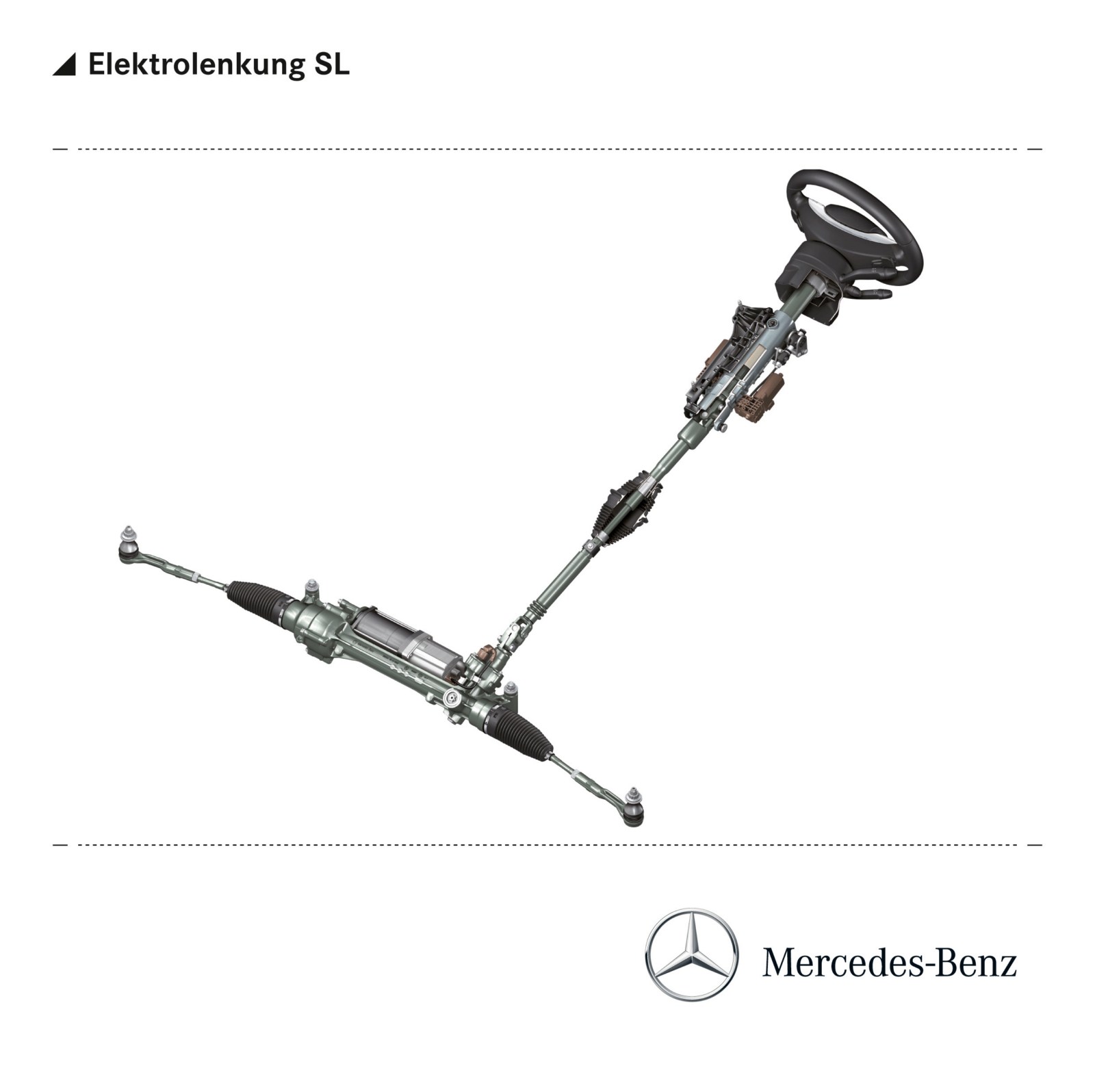
Το αυτοκίνητο διαθέτει ηλεκτρομηχανική κρεμαργιέρα, ανάρτηση πολλαπλών συνδέσμων με χαλύβδινα ελατήρια και ημι-ενεργά αμορτισέρ. Στην έκδοση SL350 το σύστημα Active Body Control βρίσκεται στον επιπλέον εξοπλισμό ενώ στην SL500 στον στάνταρ. Οι παραγγελίες έχουνε ξεκινήσει από σήμερα (15/12/2011) με αρχικη τιμή 93.534 ευρώ για την SL530 και 117.096 ευρώ για την SL500. Περισσότερες λεπτομέρειες μπορείς να βρεις στο δελτίο τύπου που ακολουθεί.
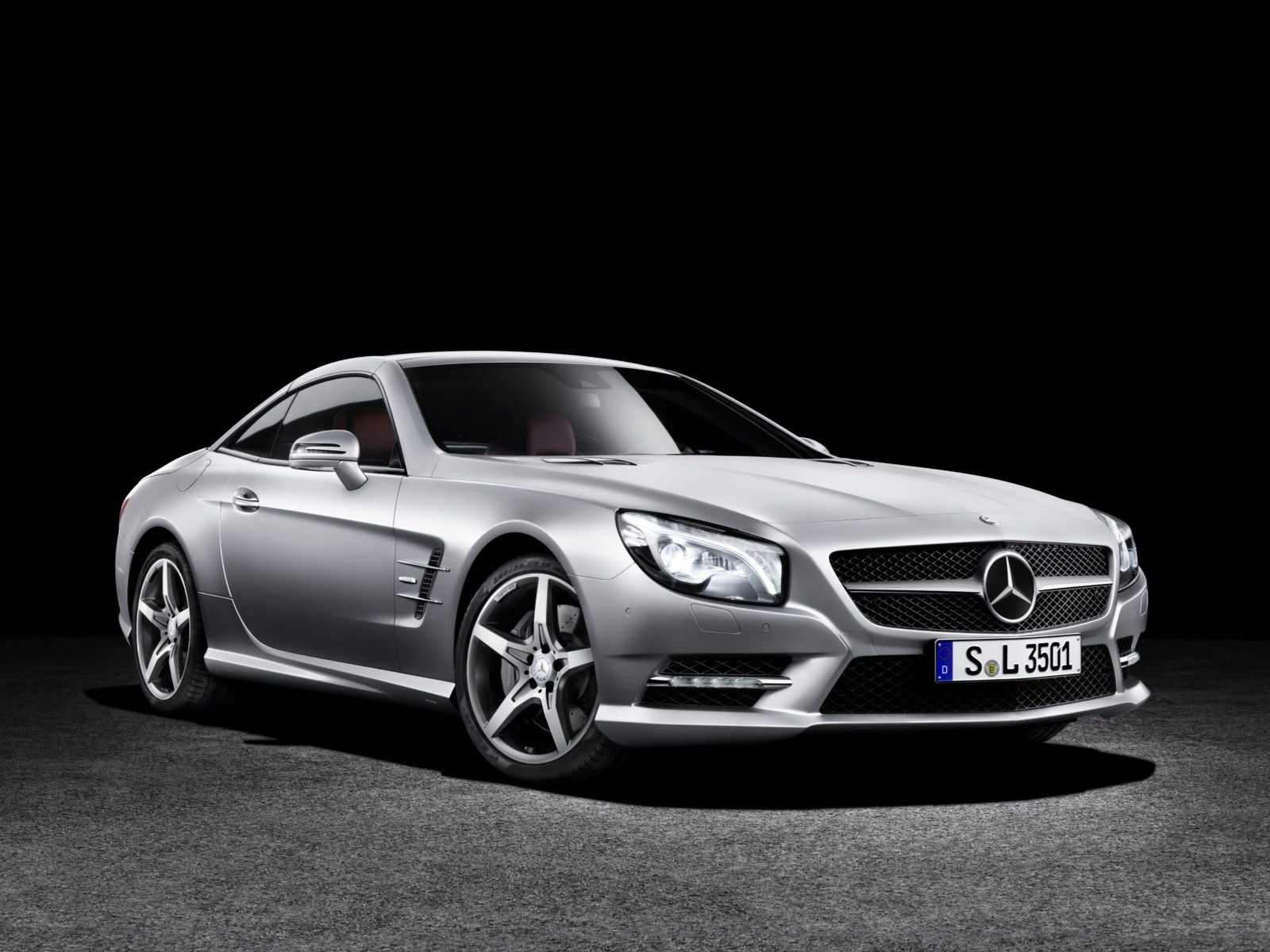
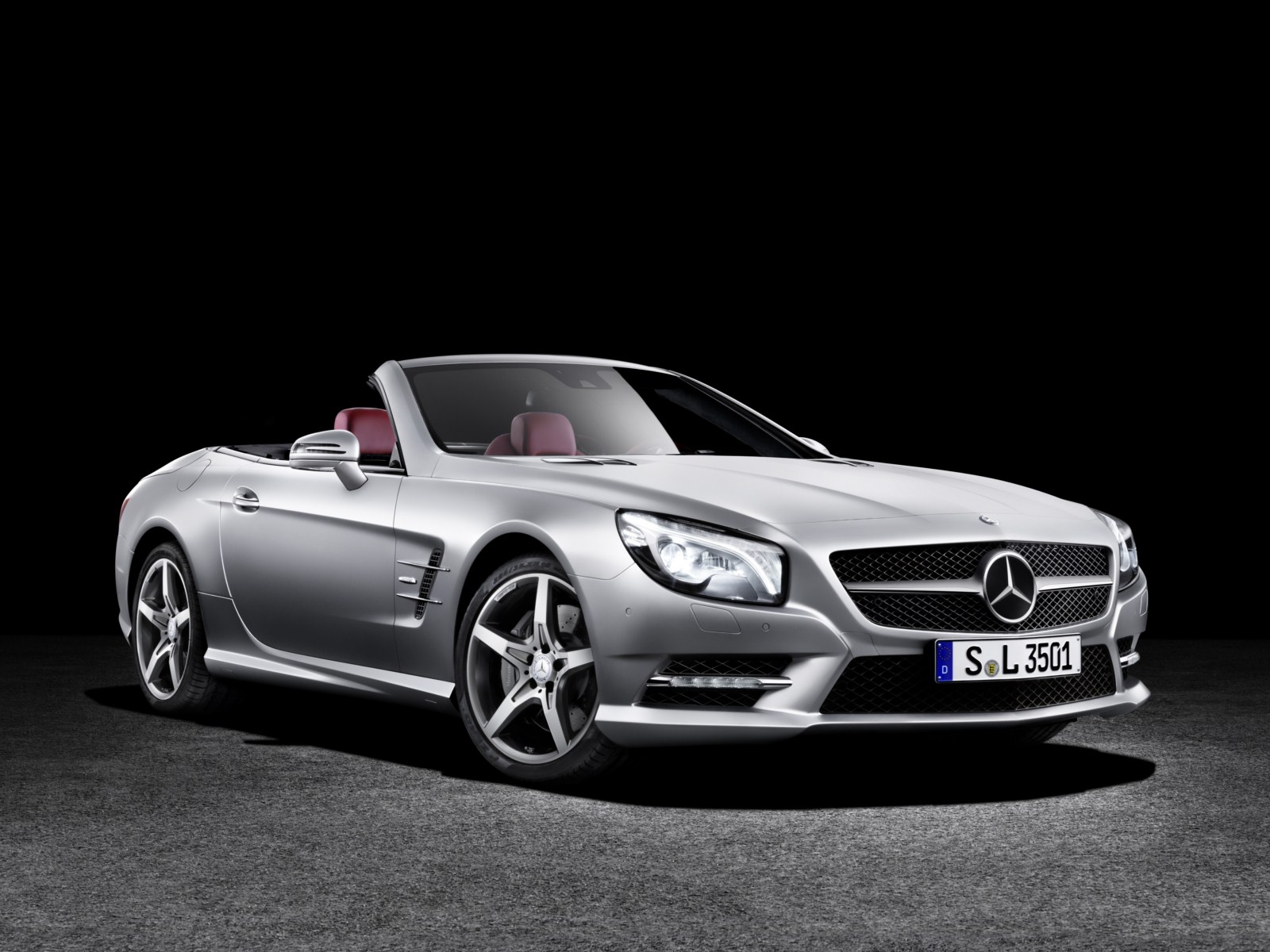
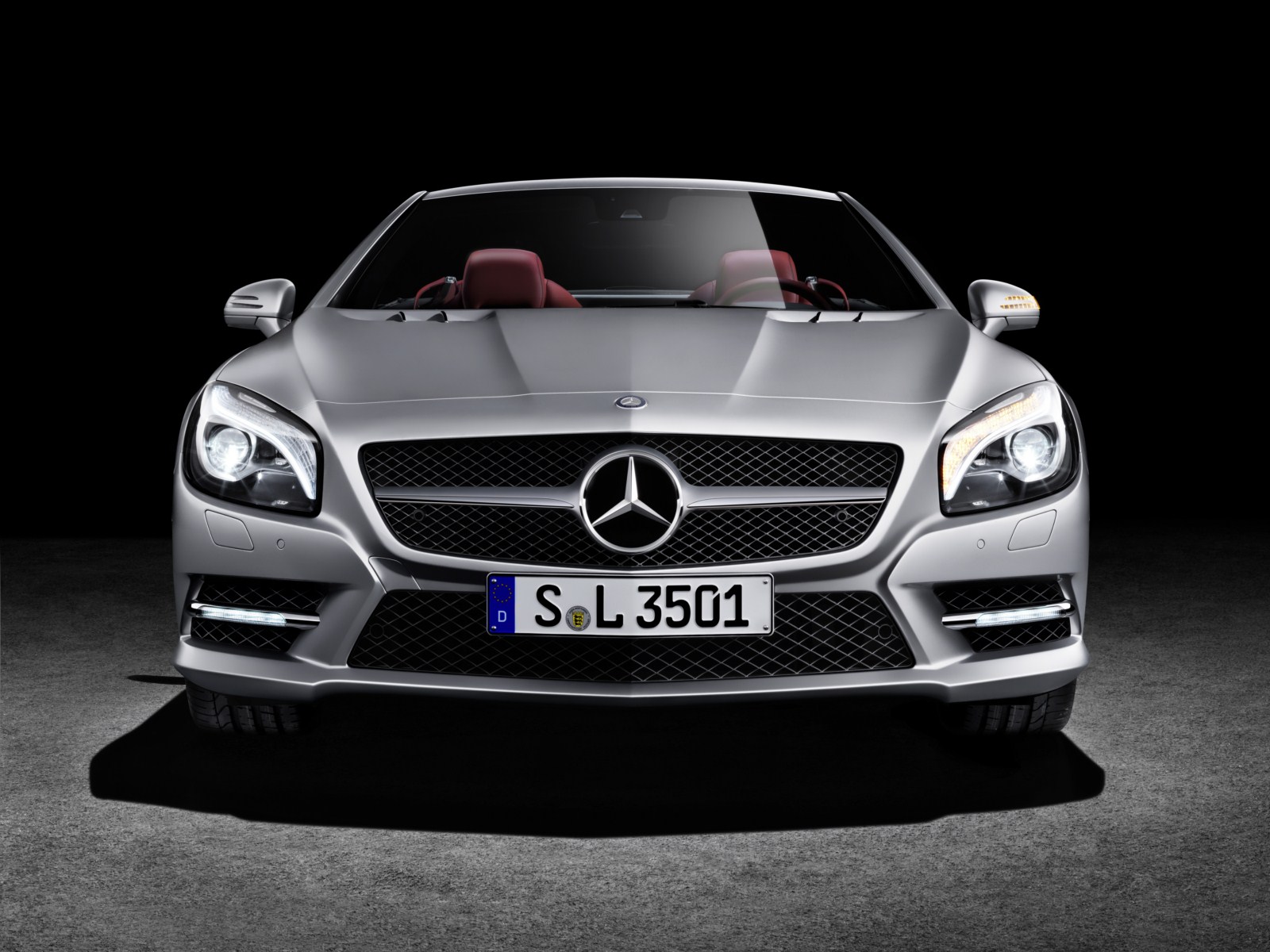
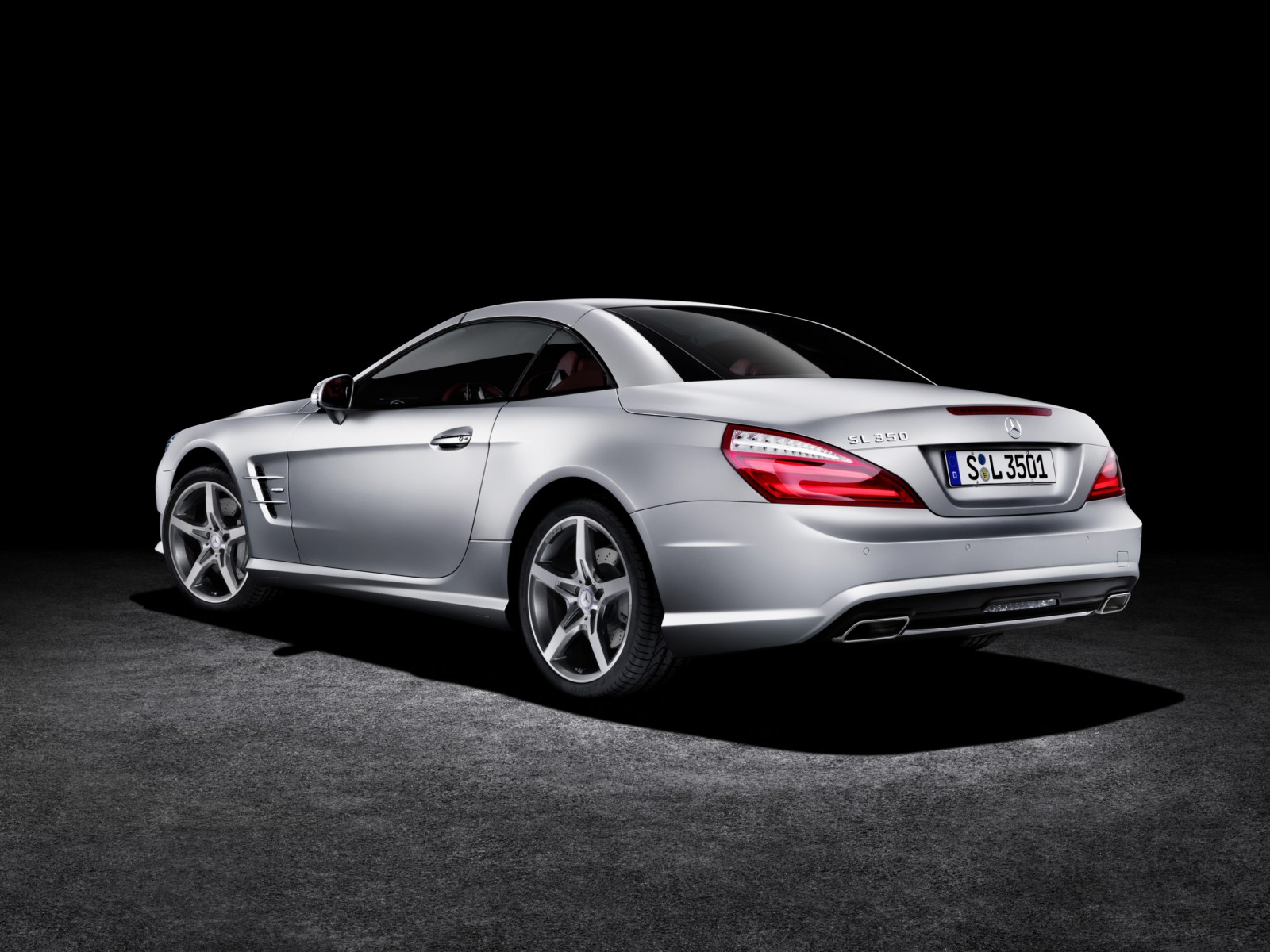
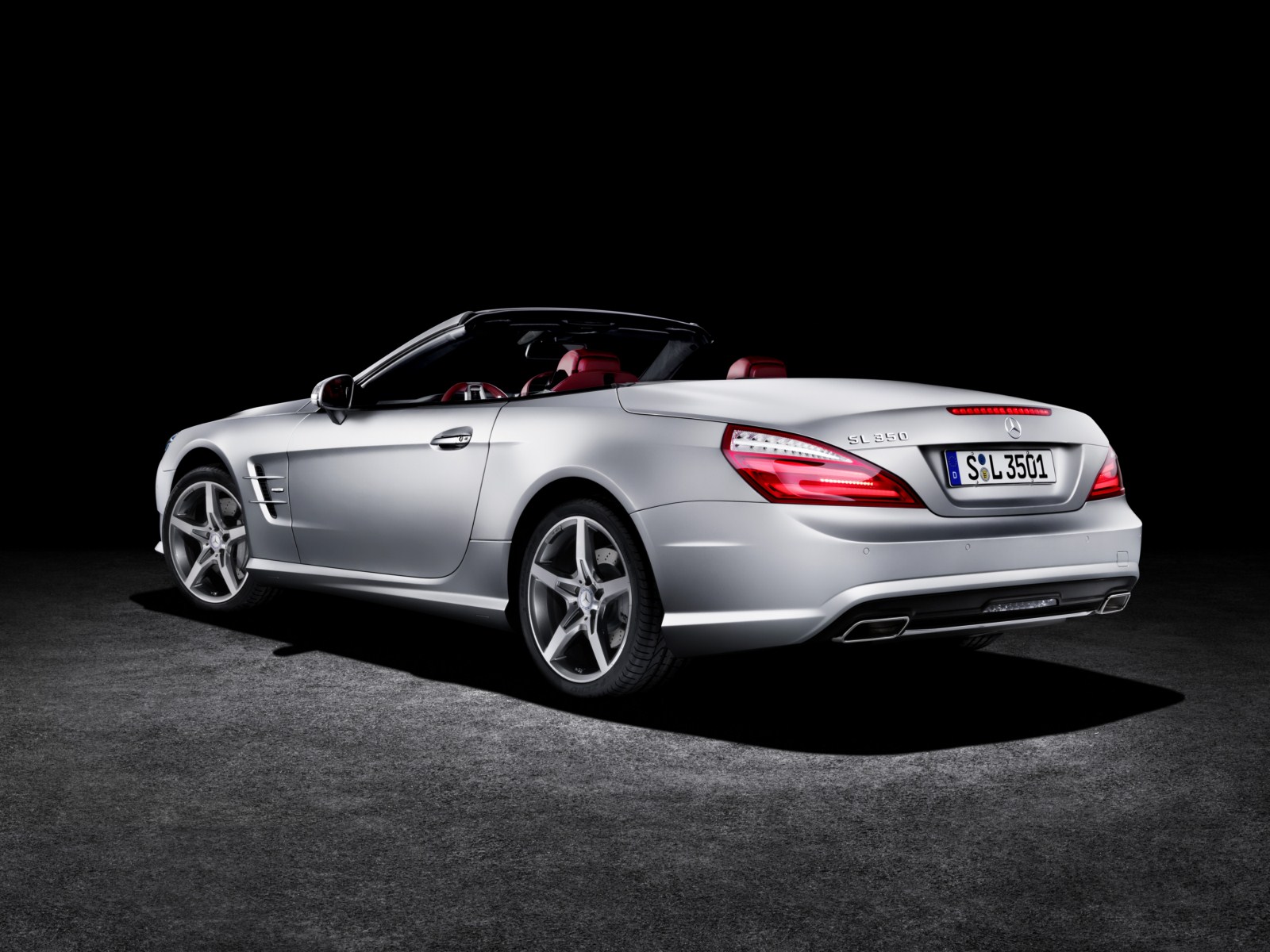
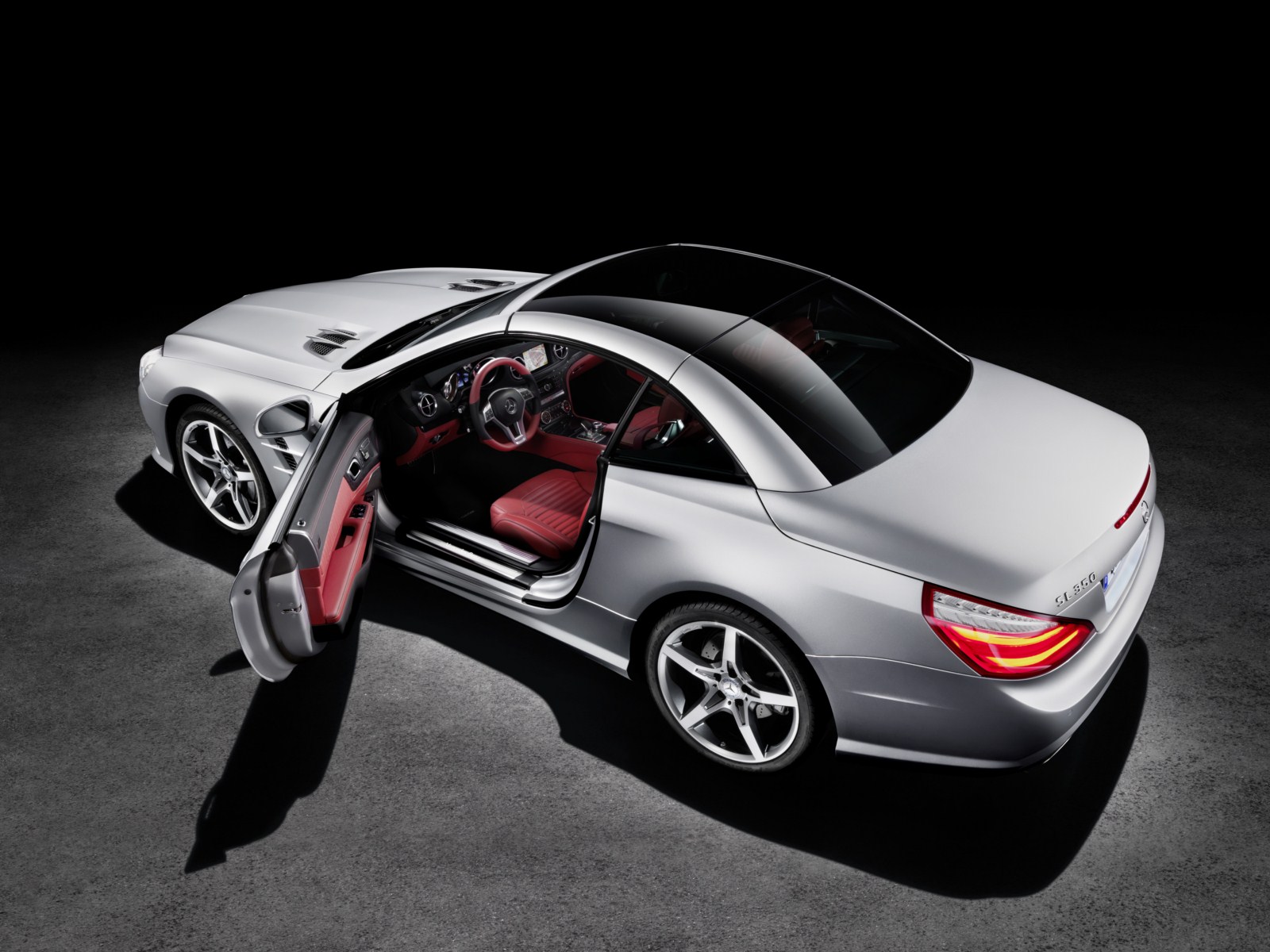
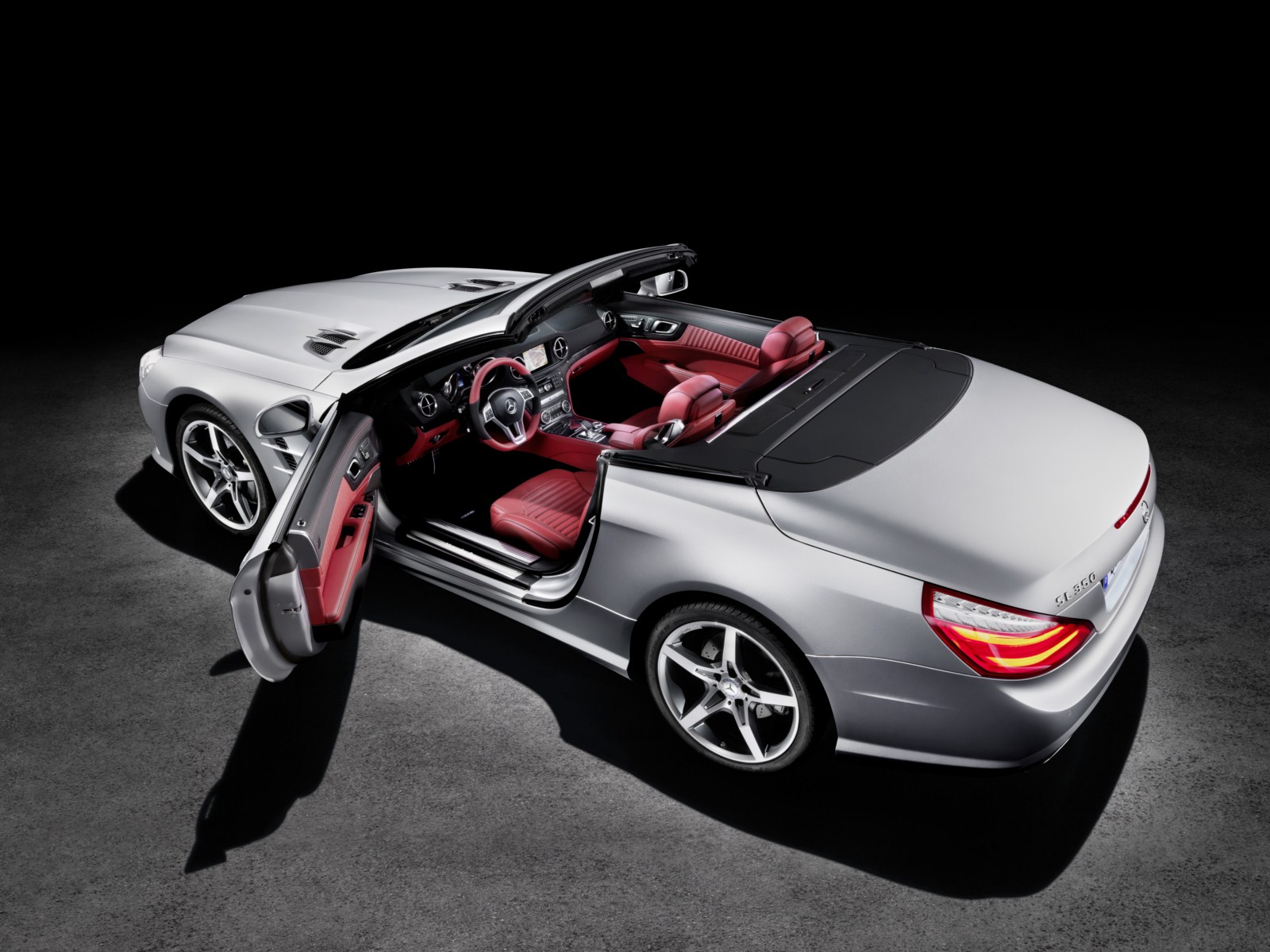
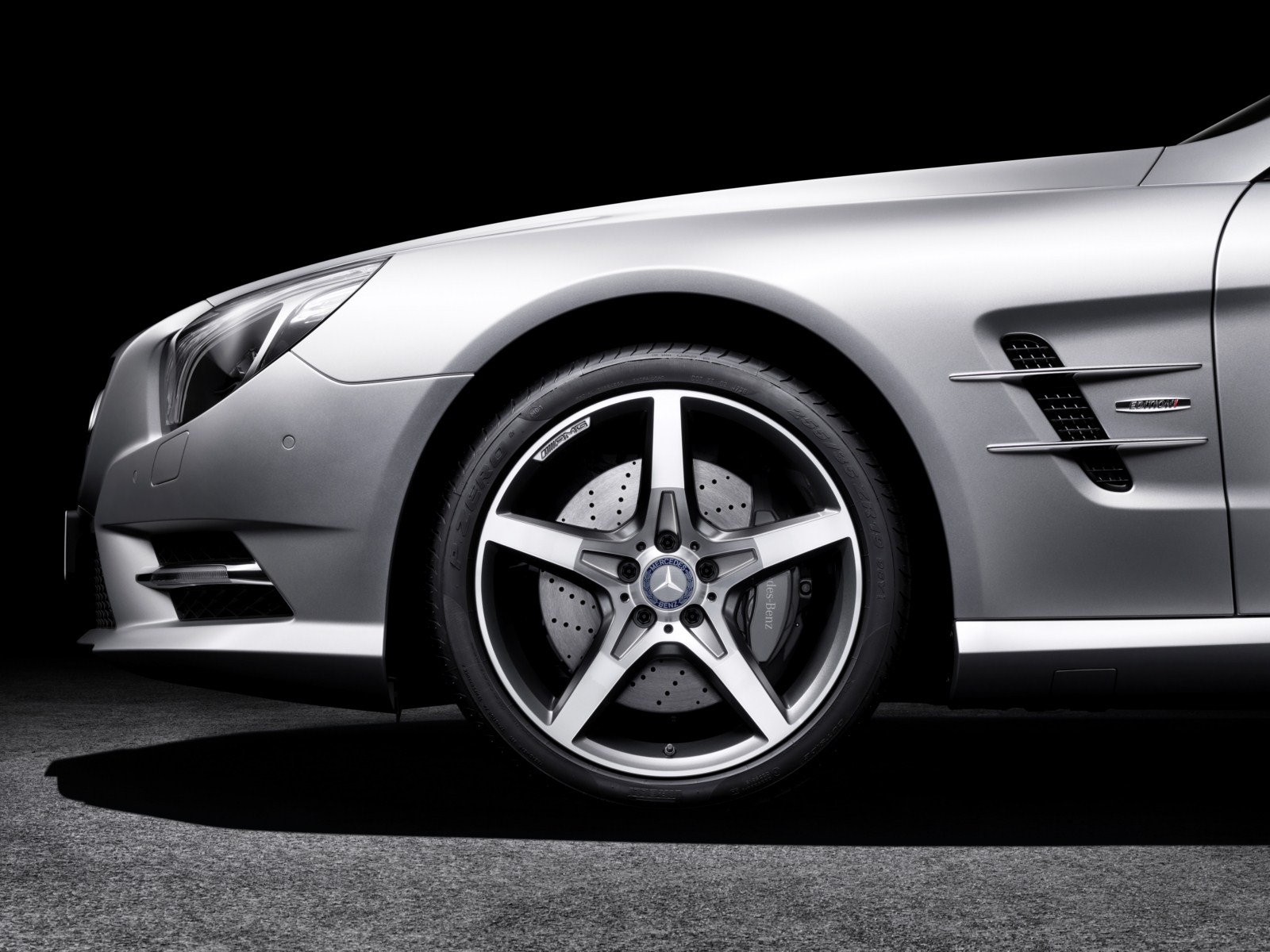
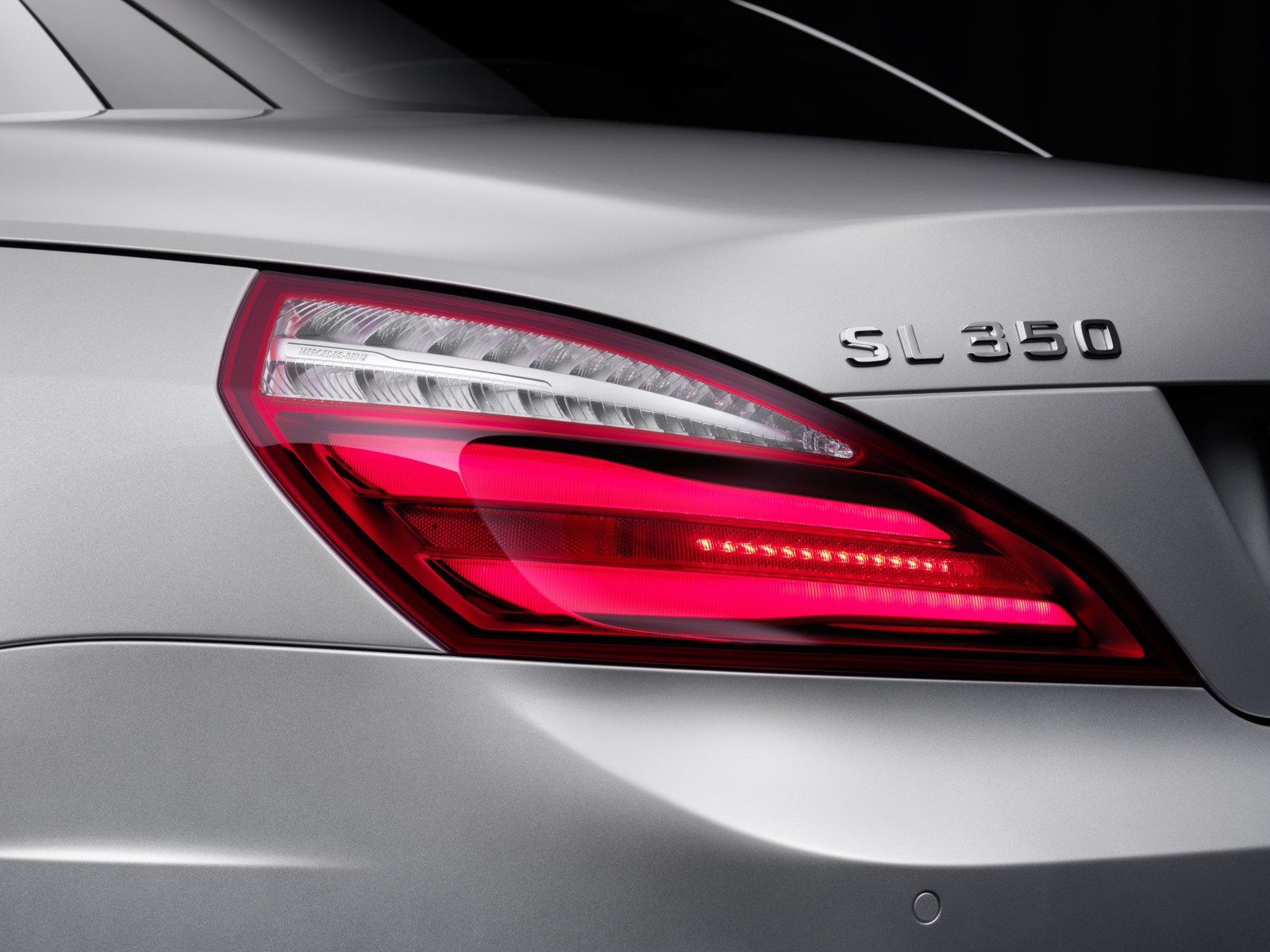
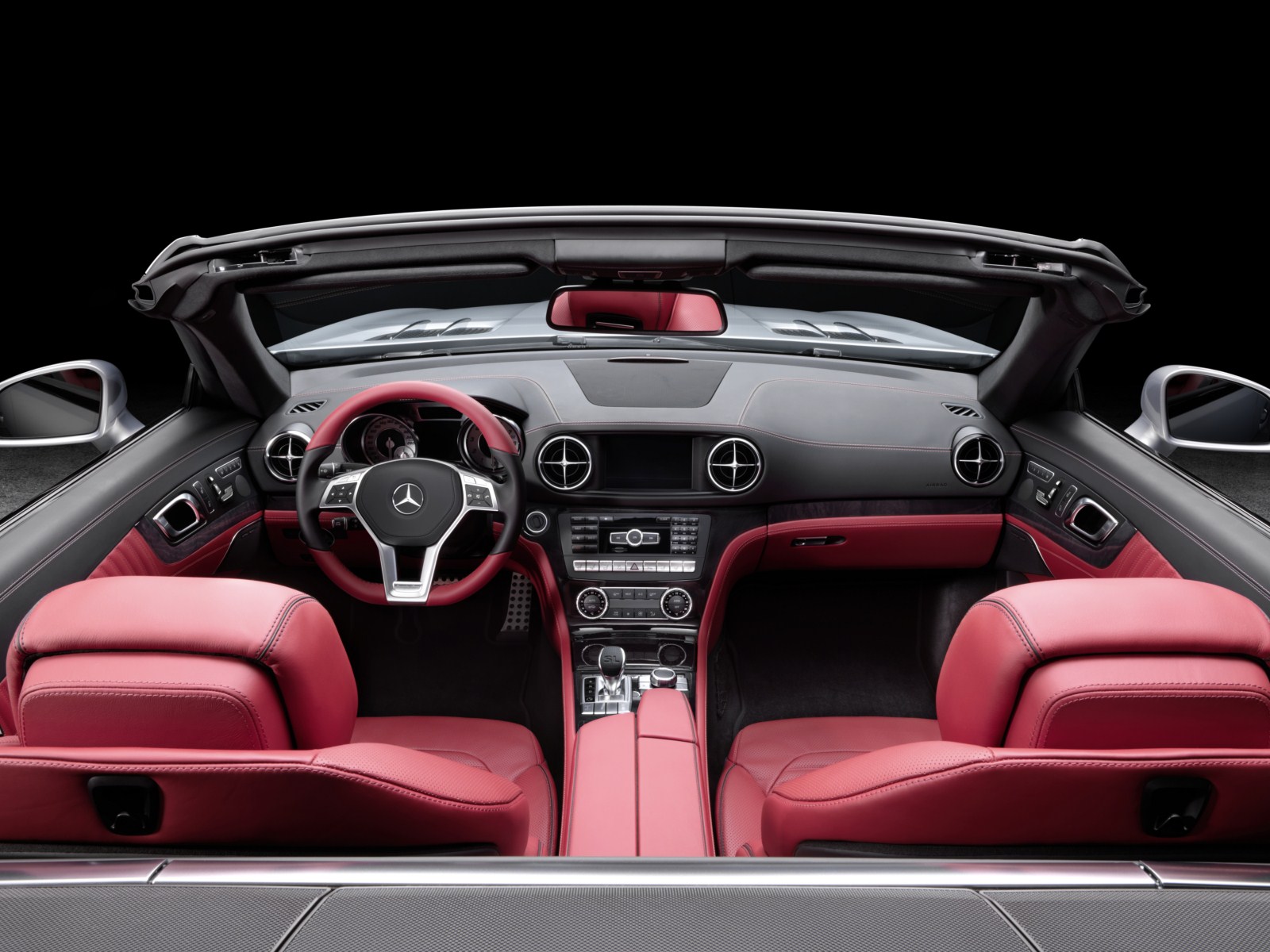
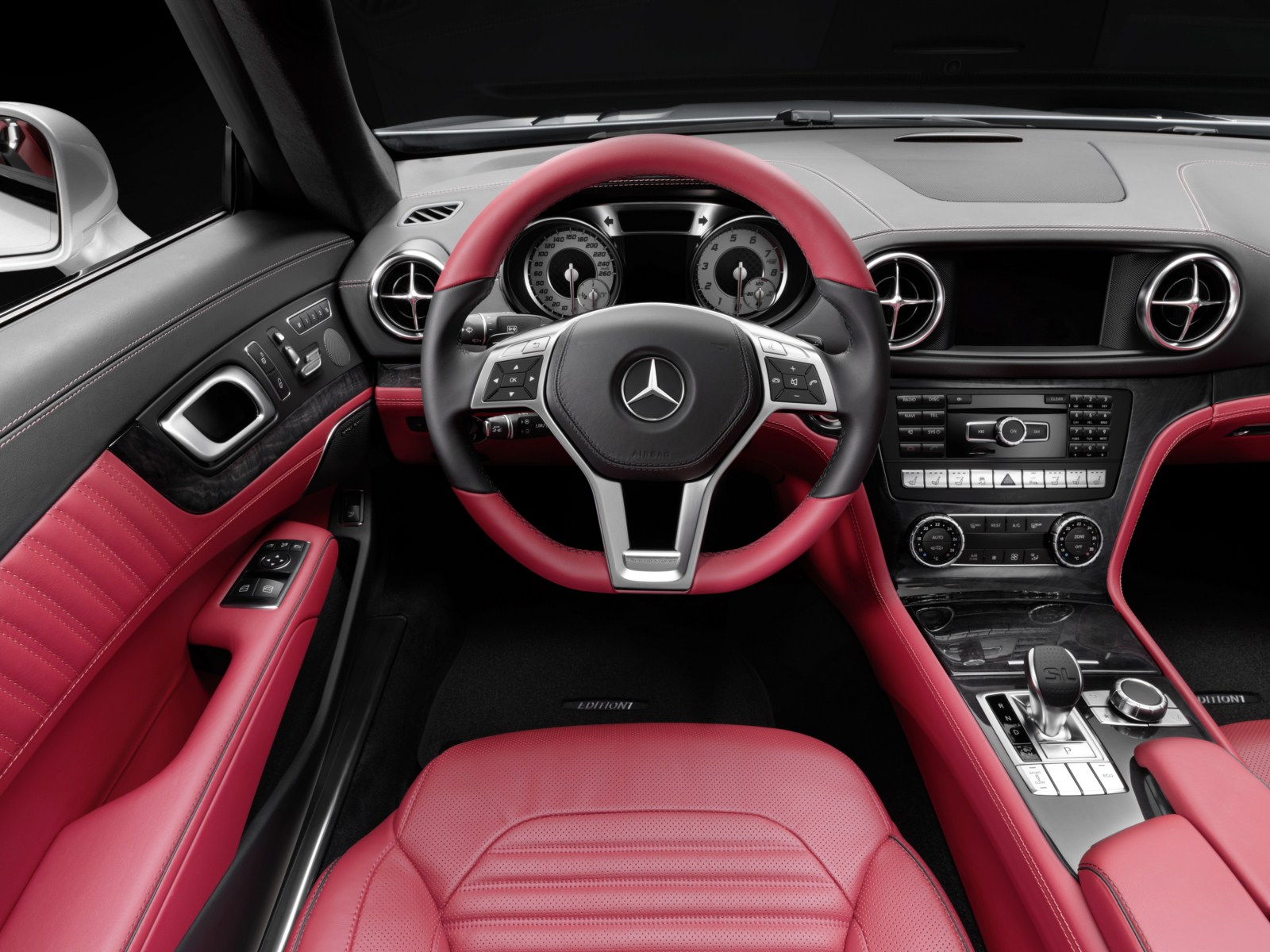
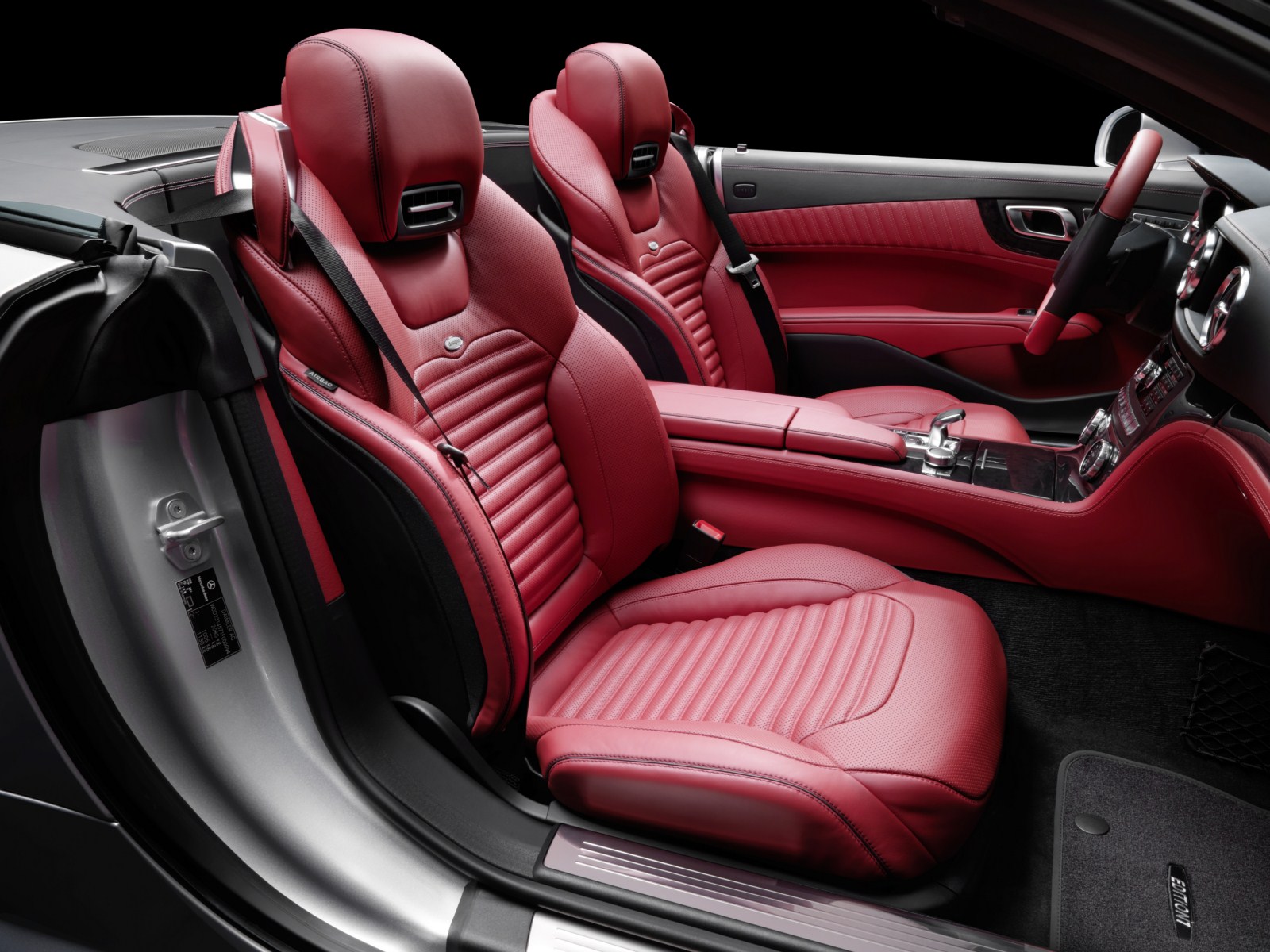
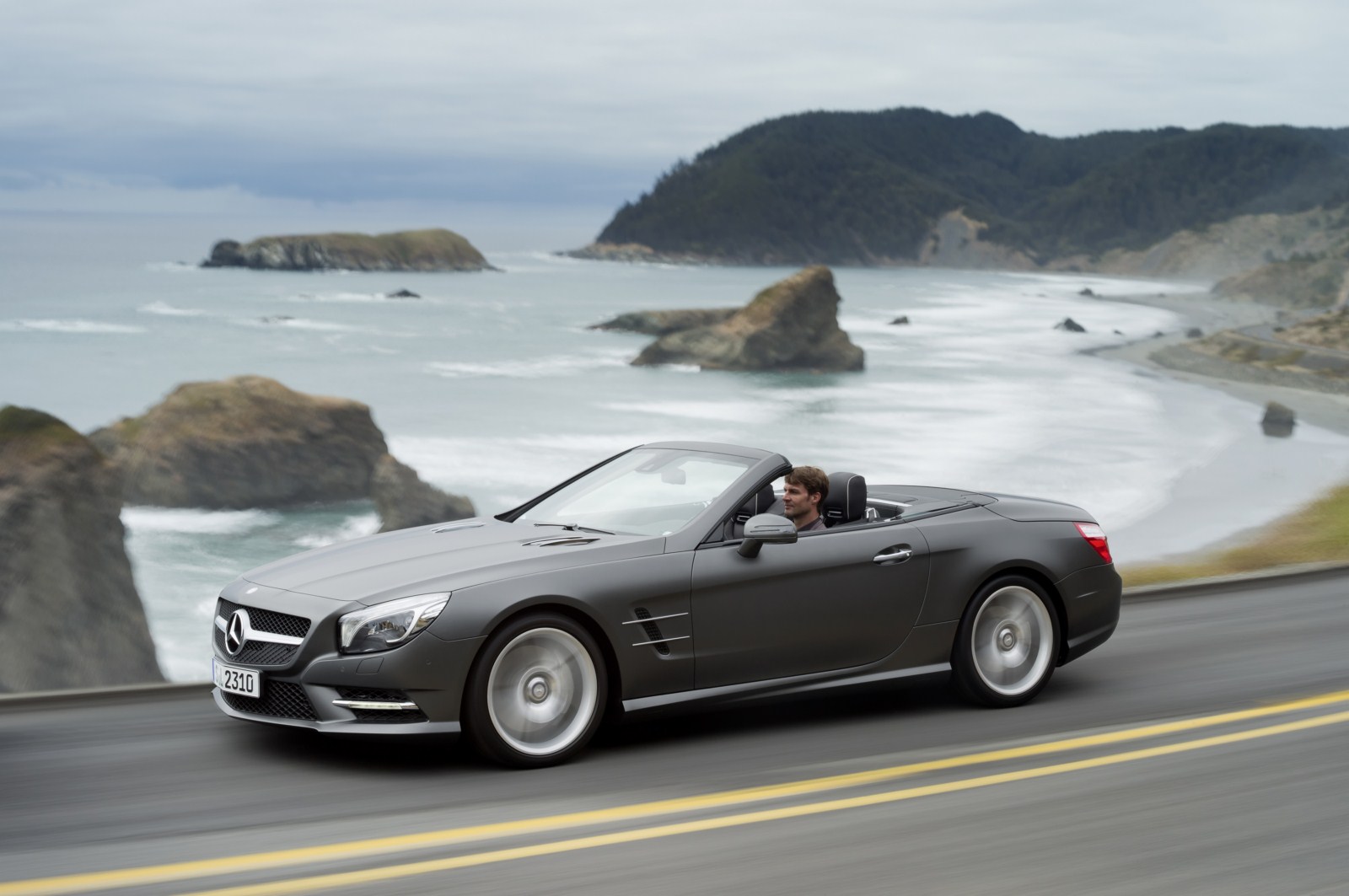
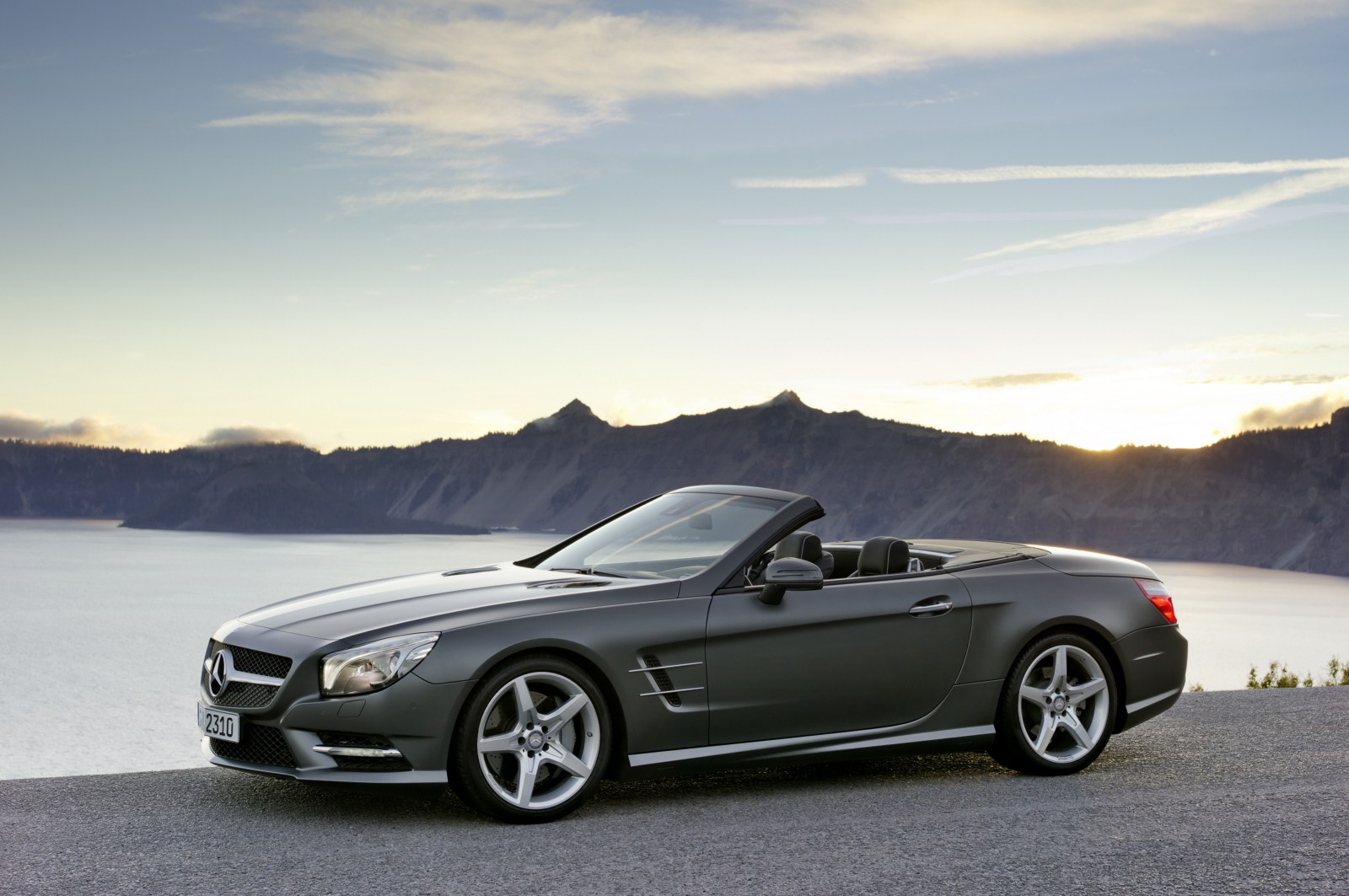
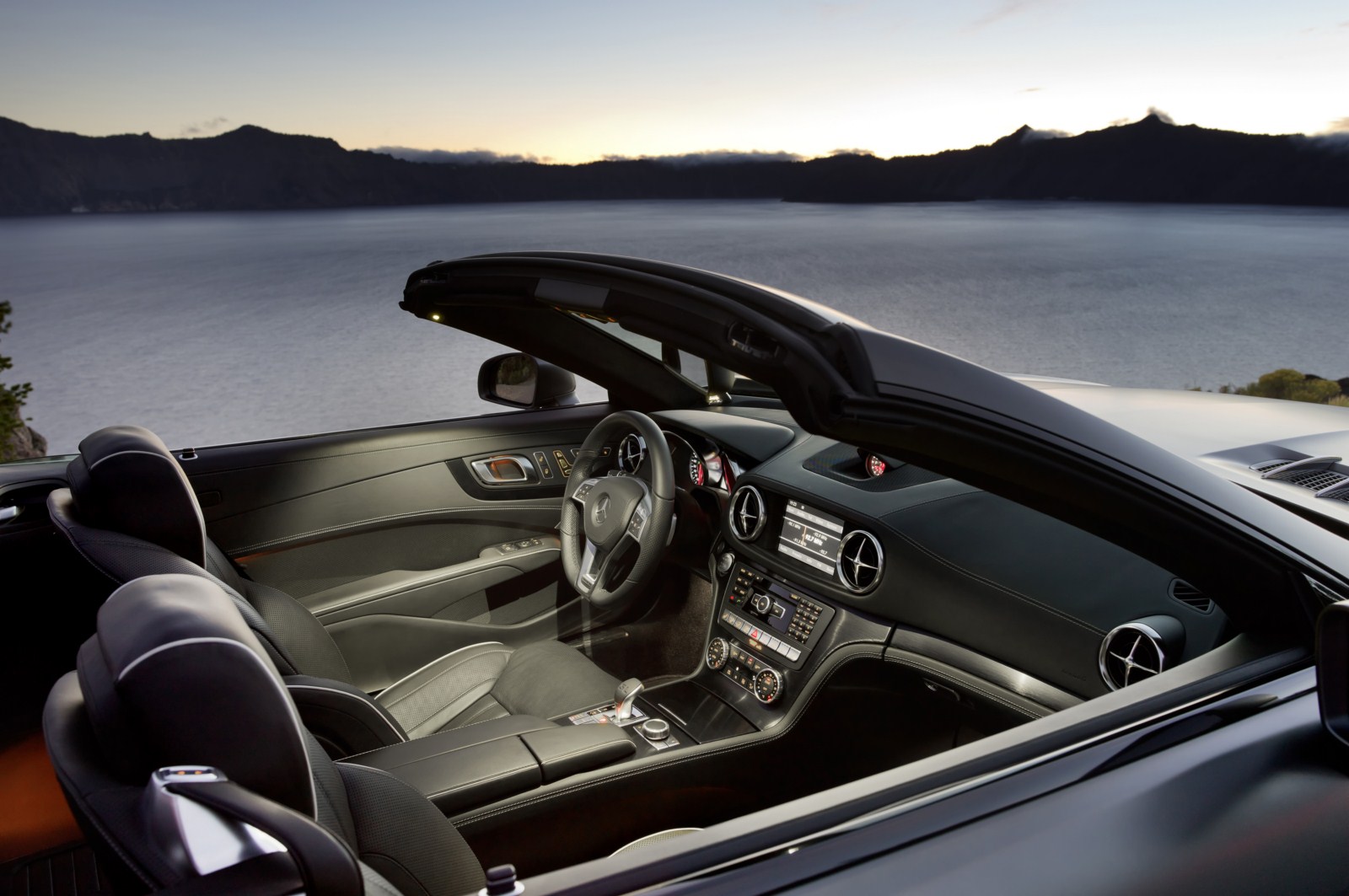
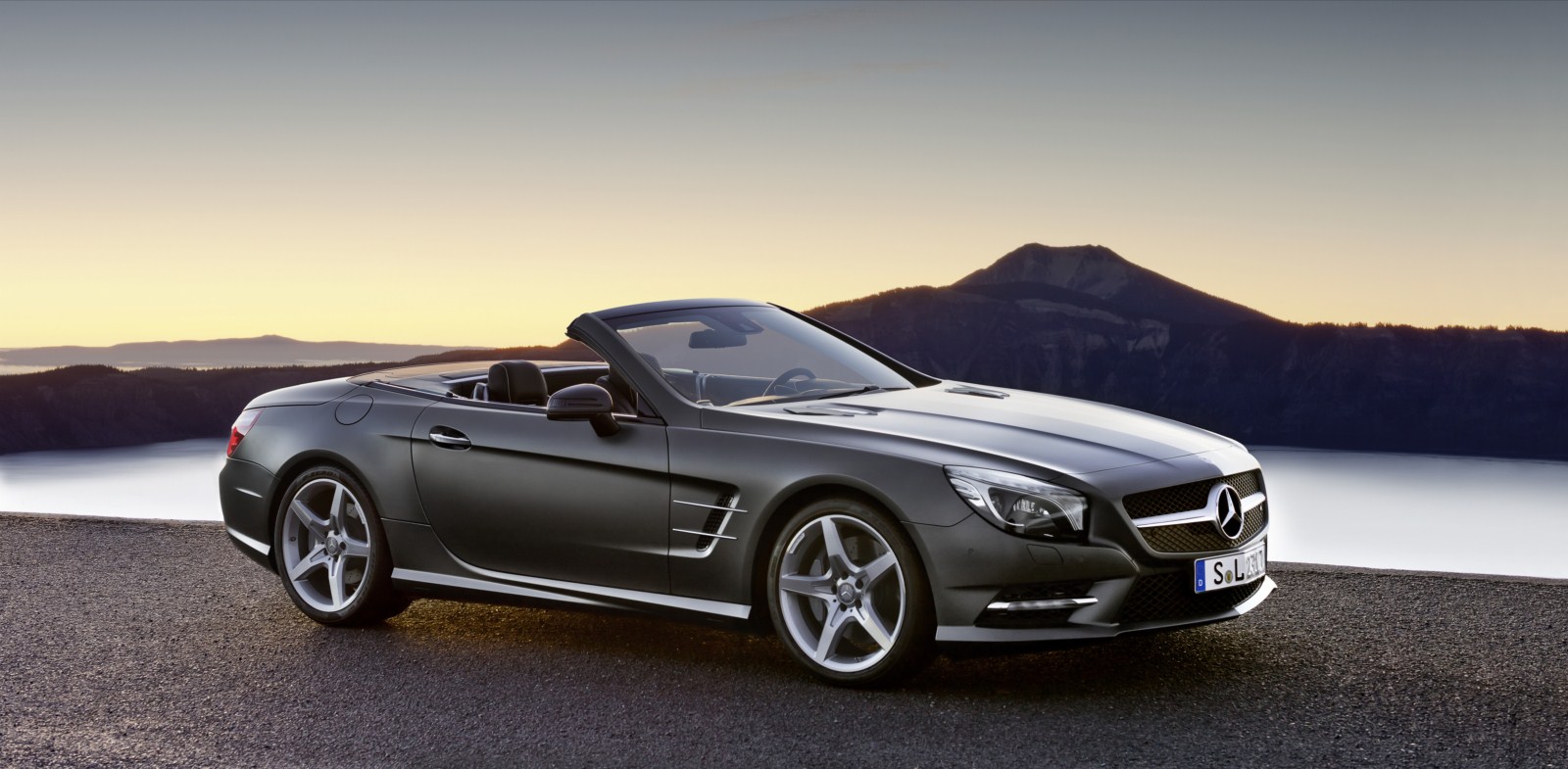
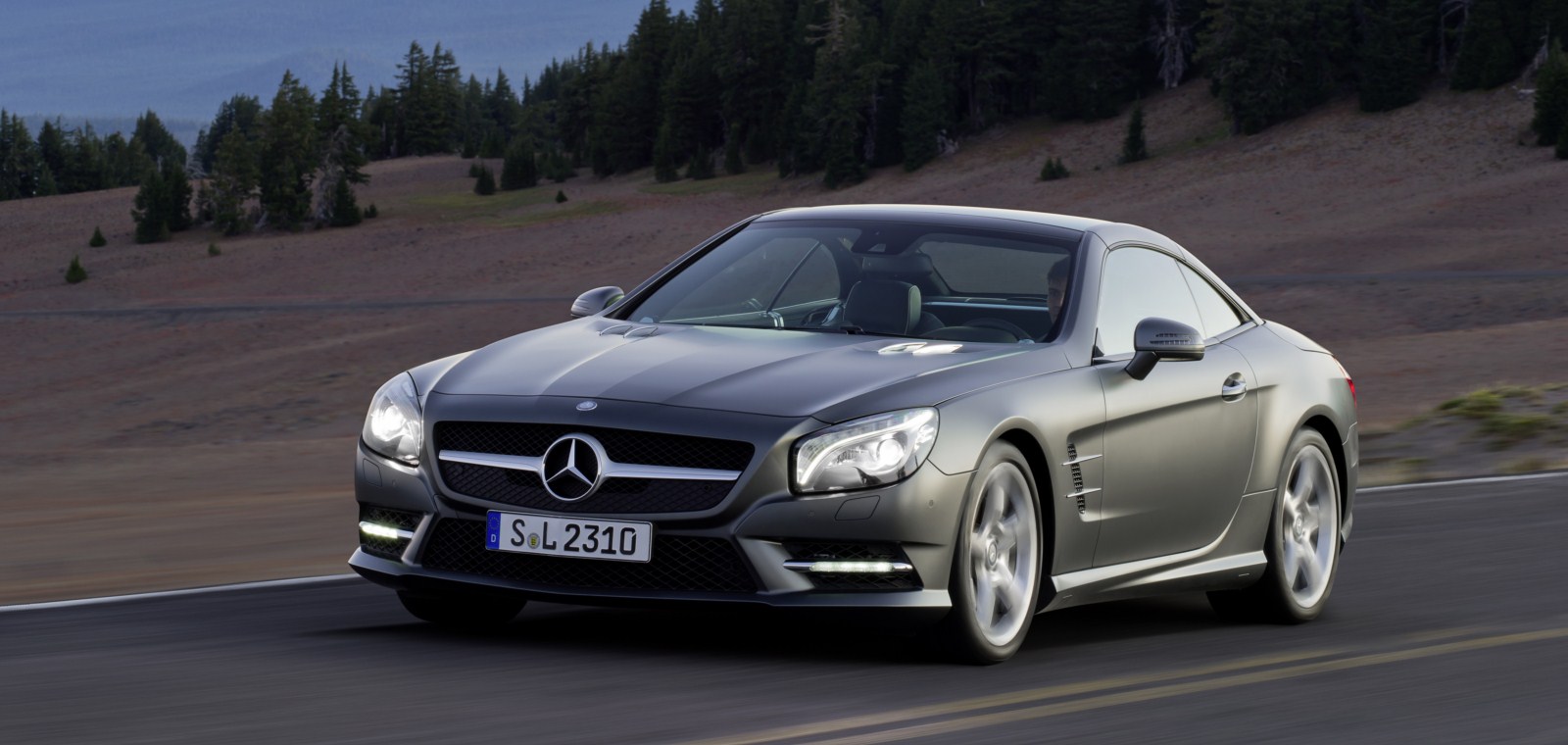
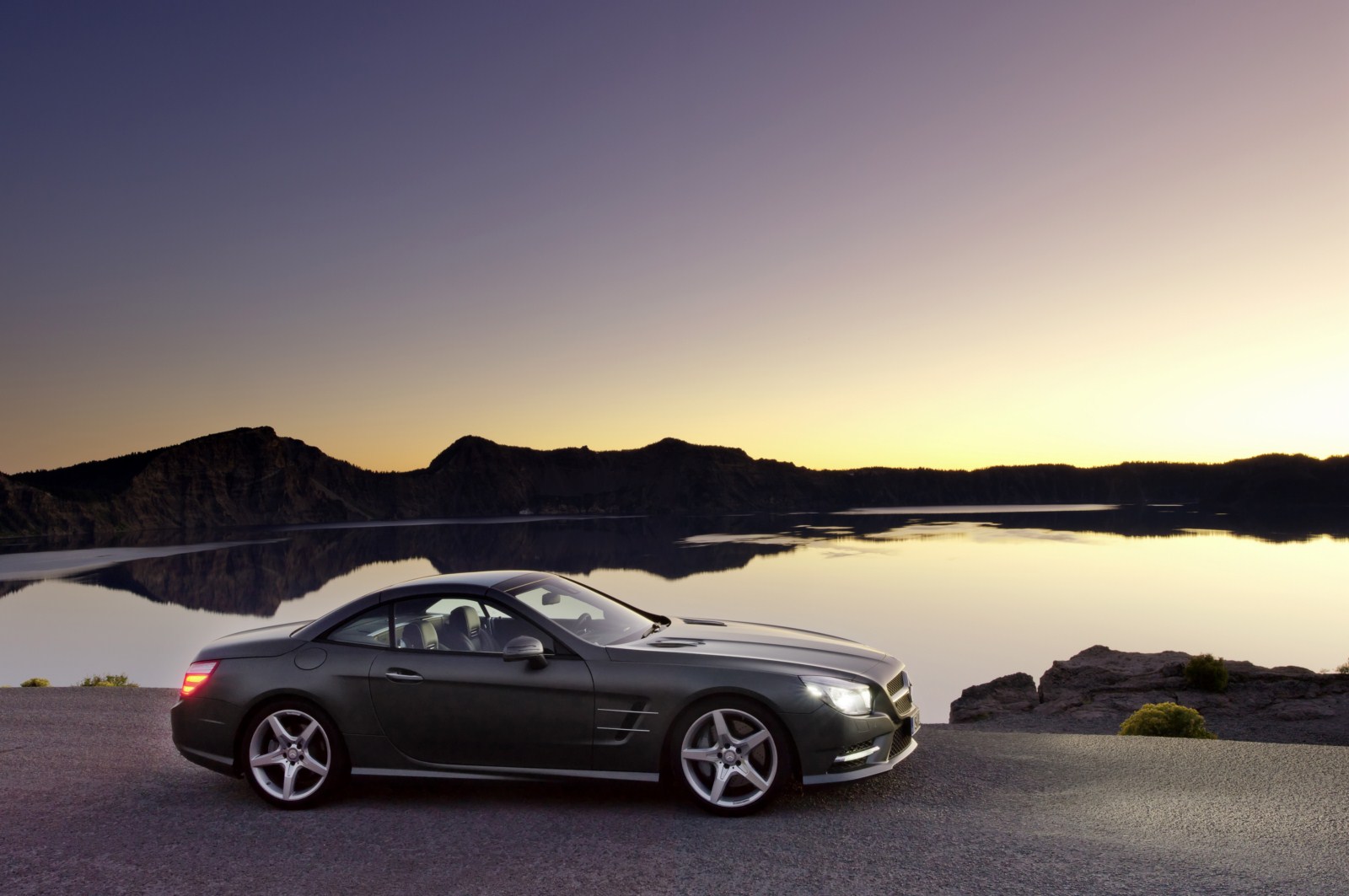
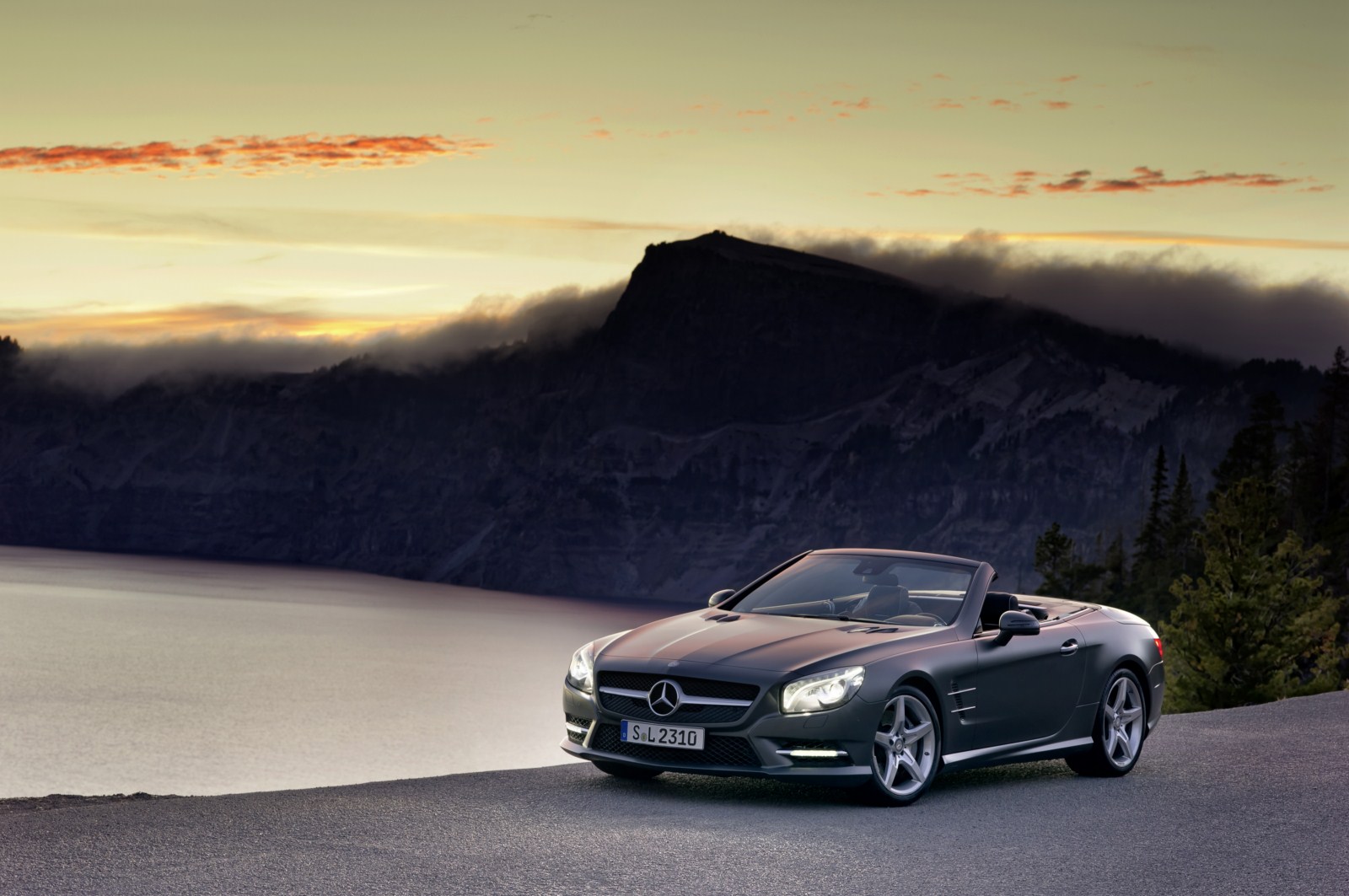
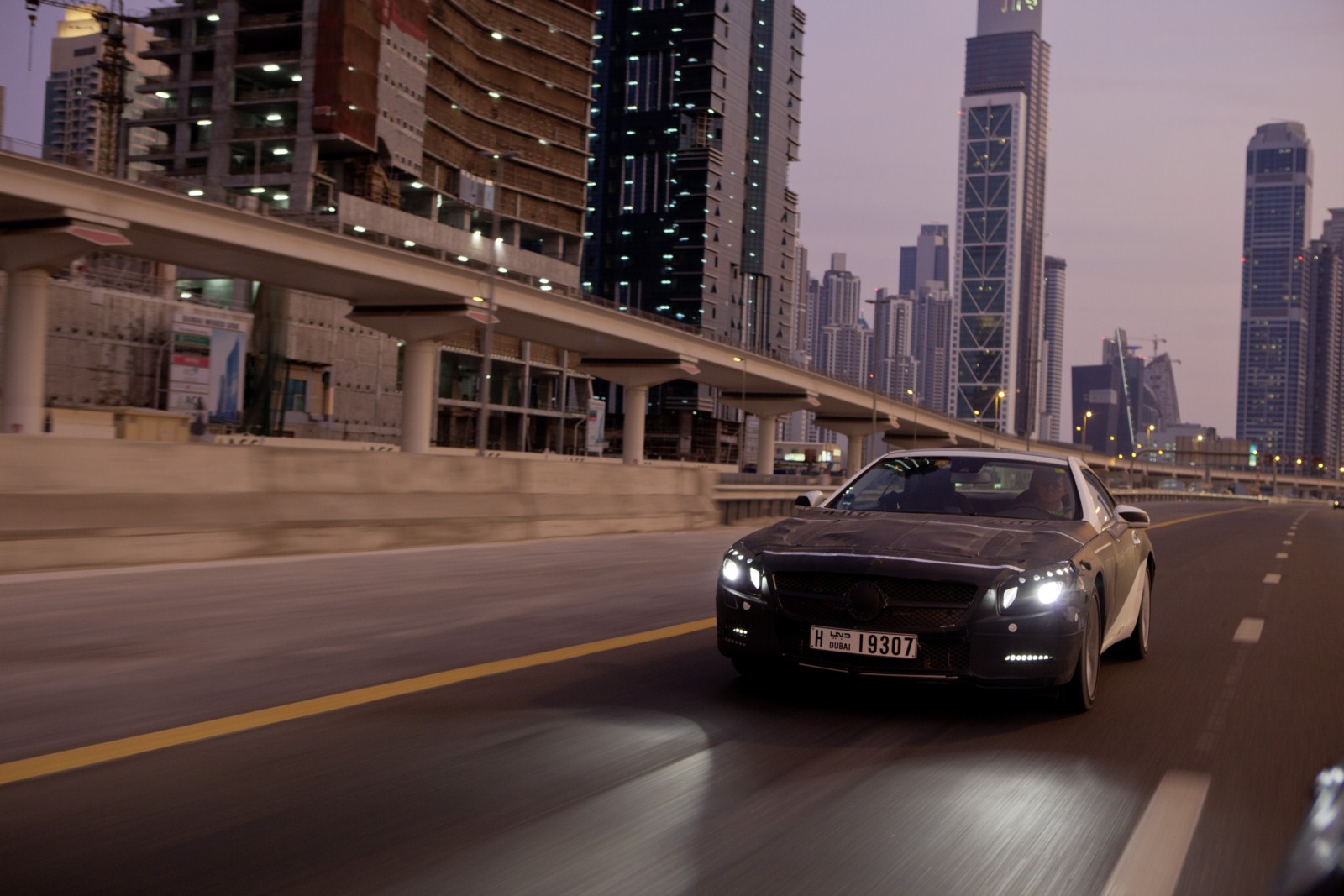
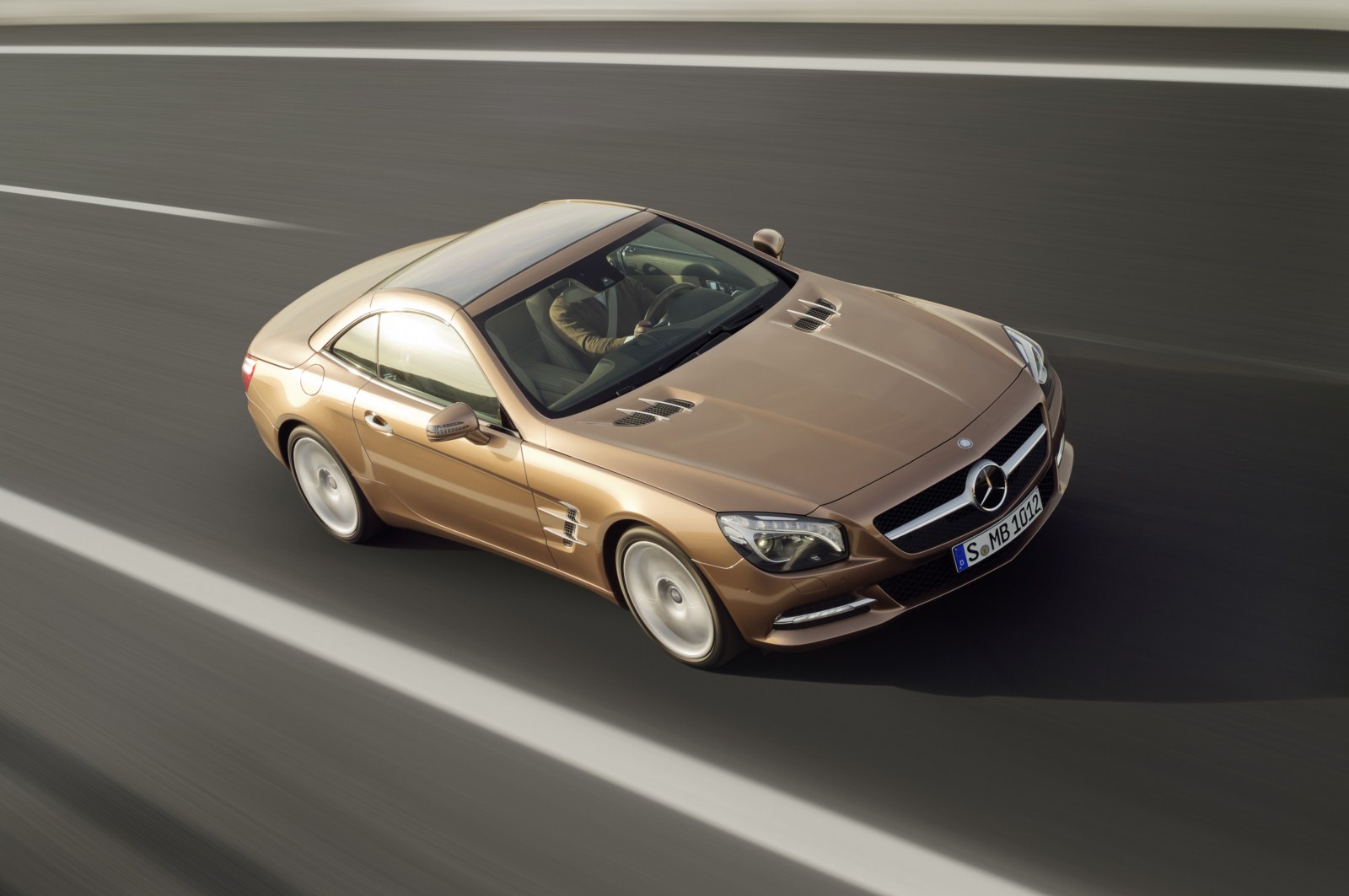
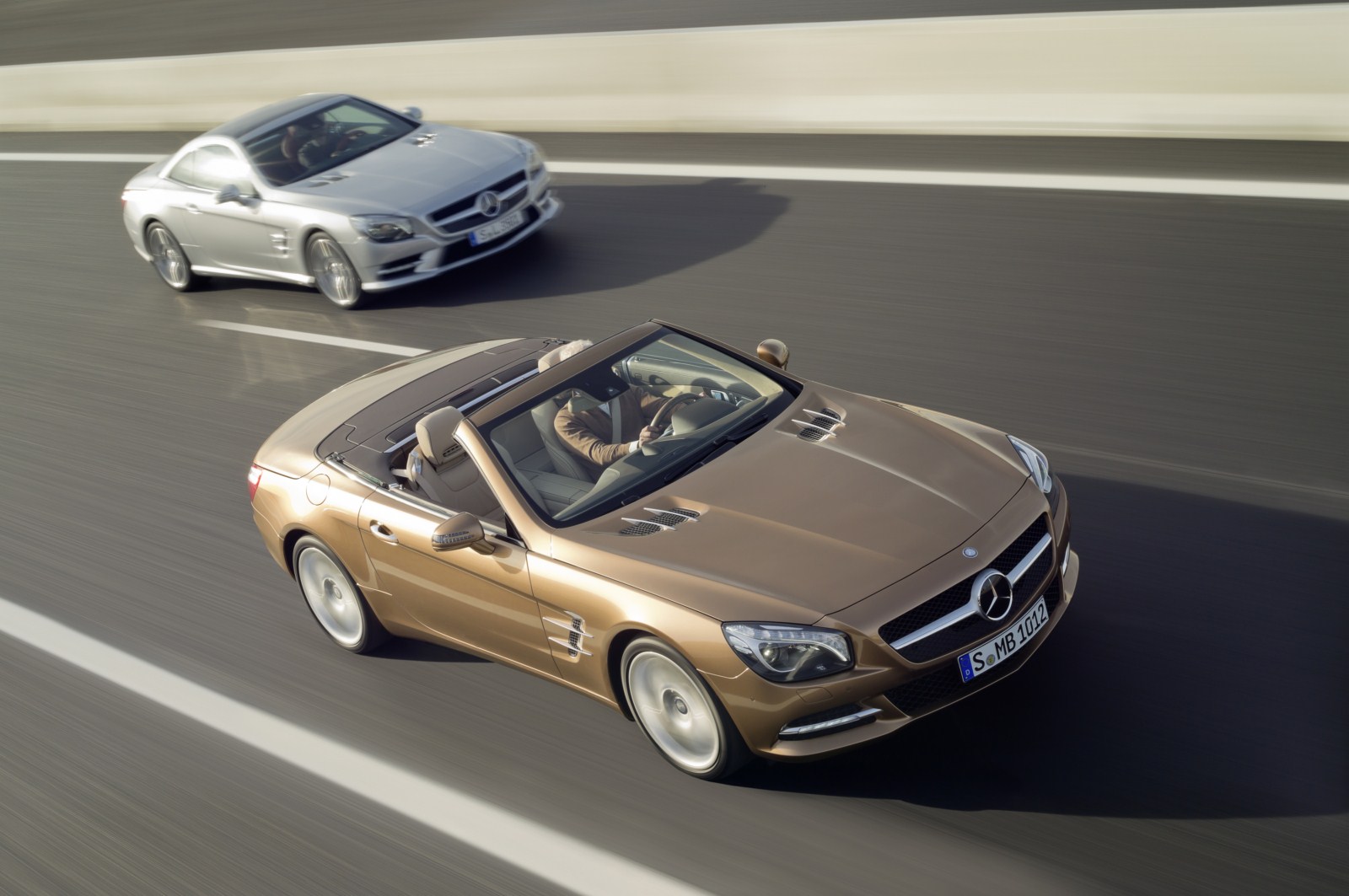
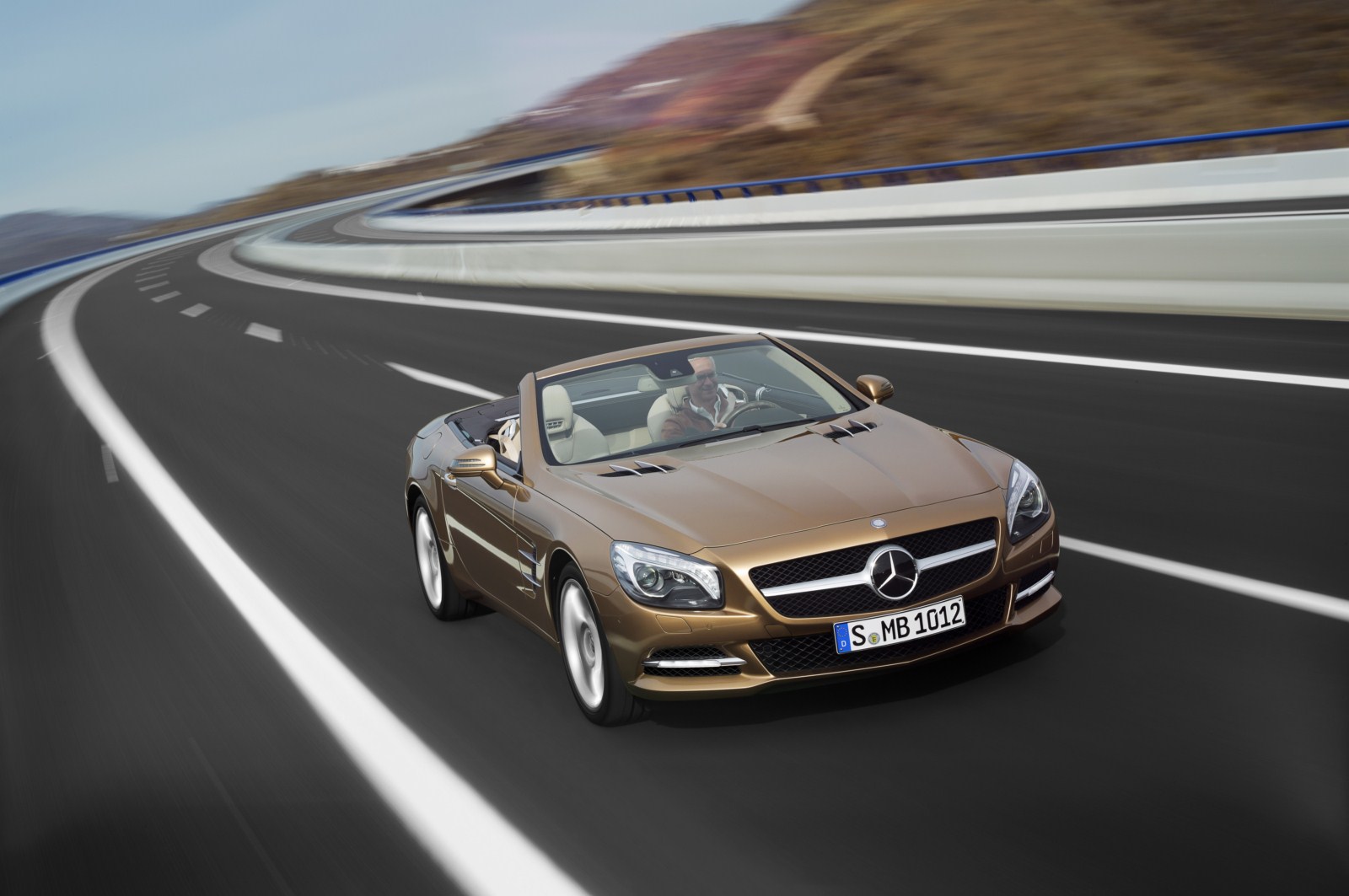
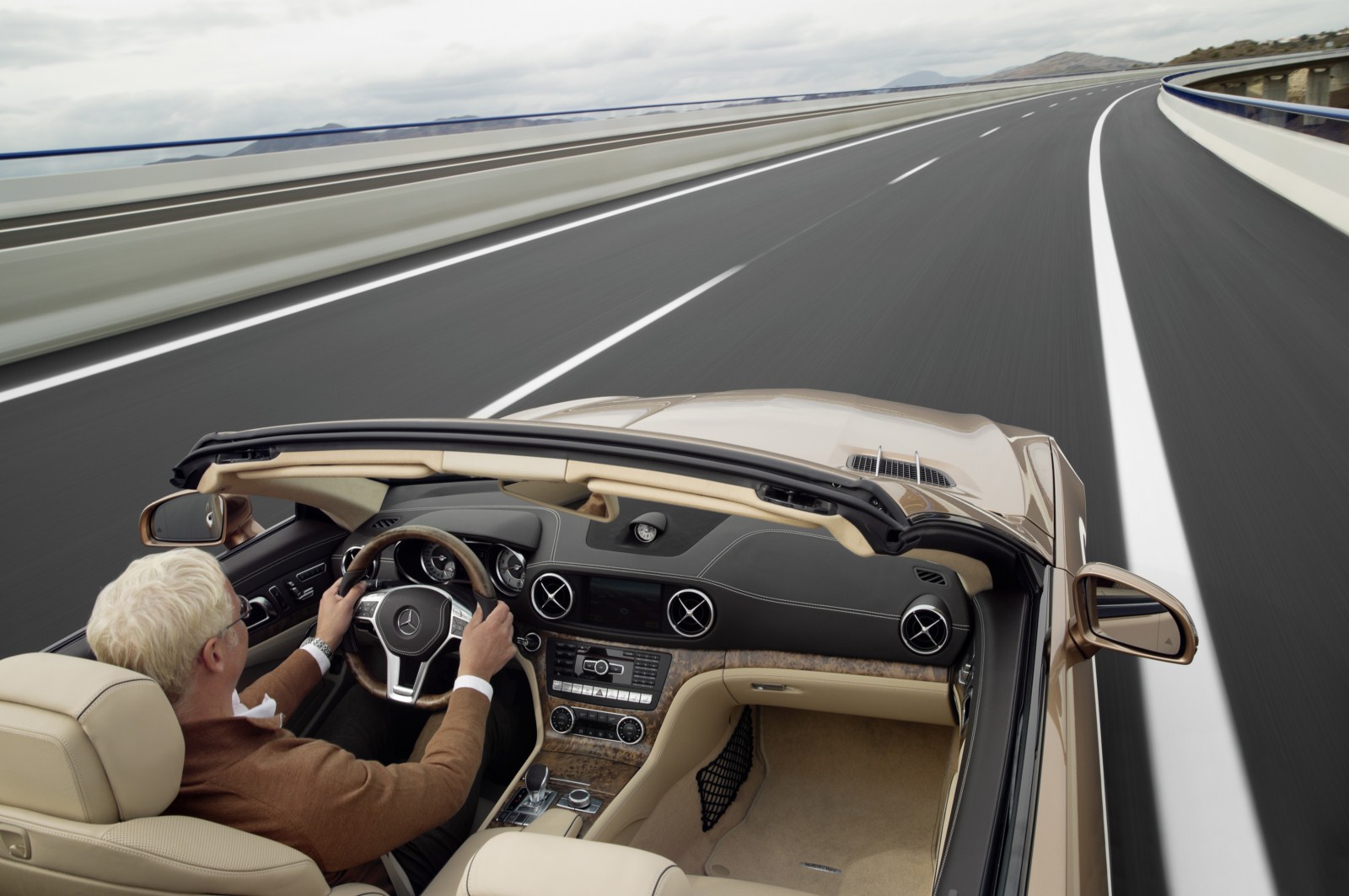
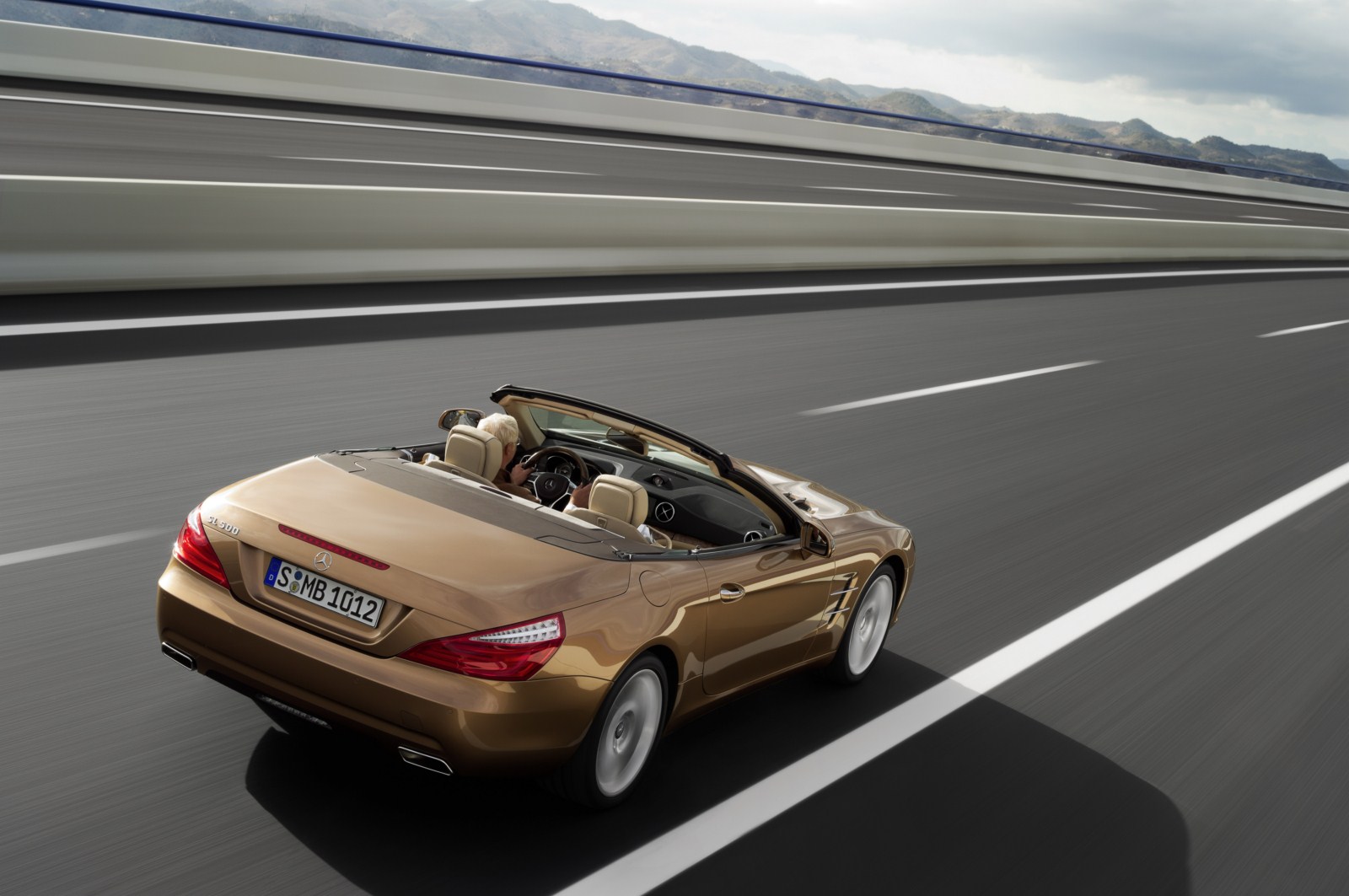
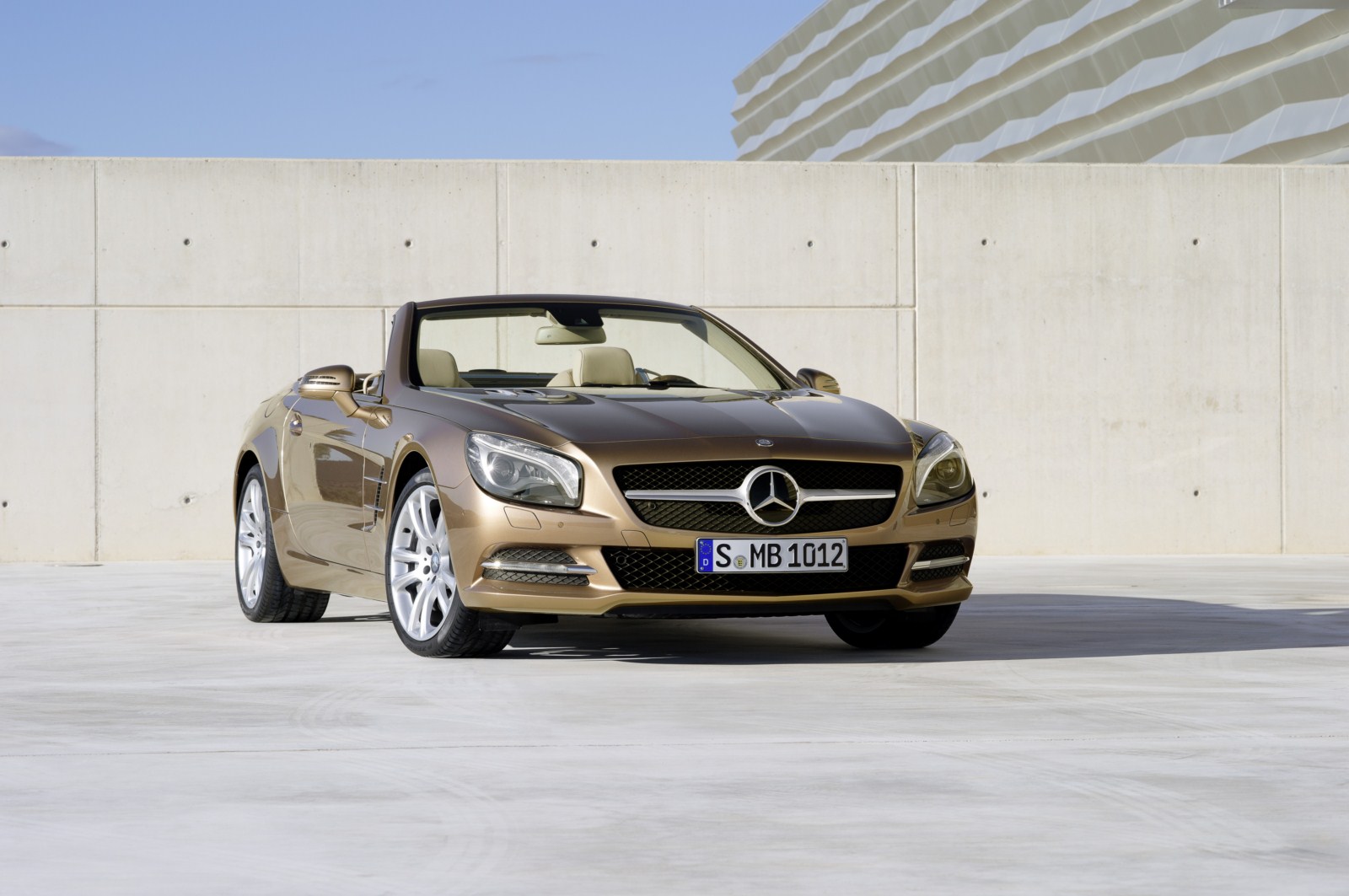
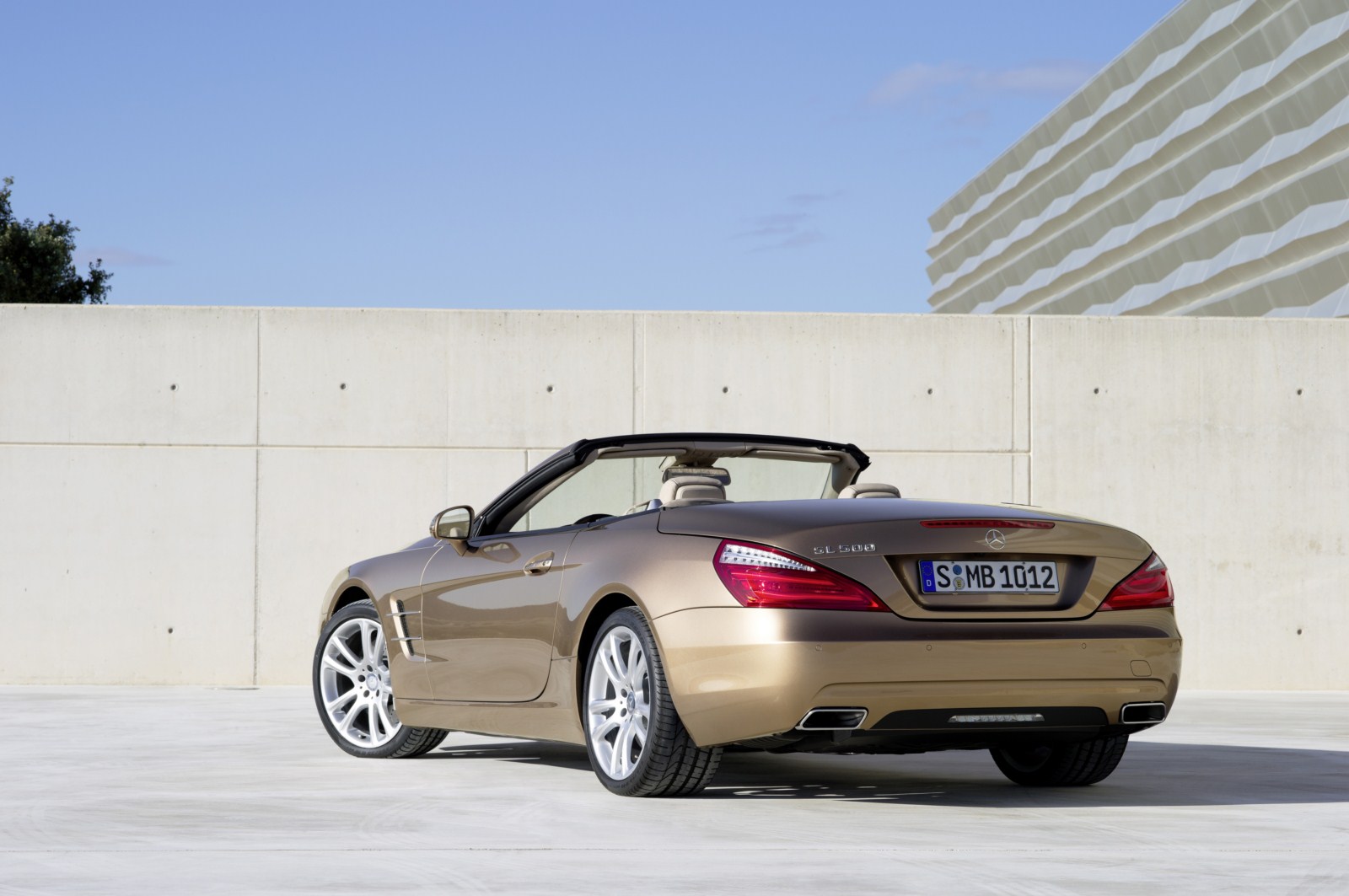
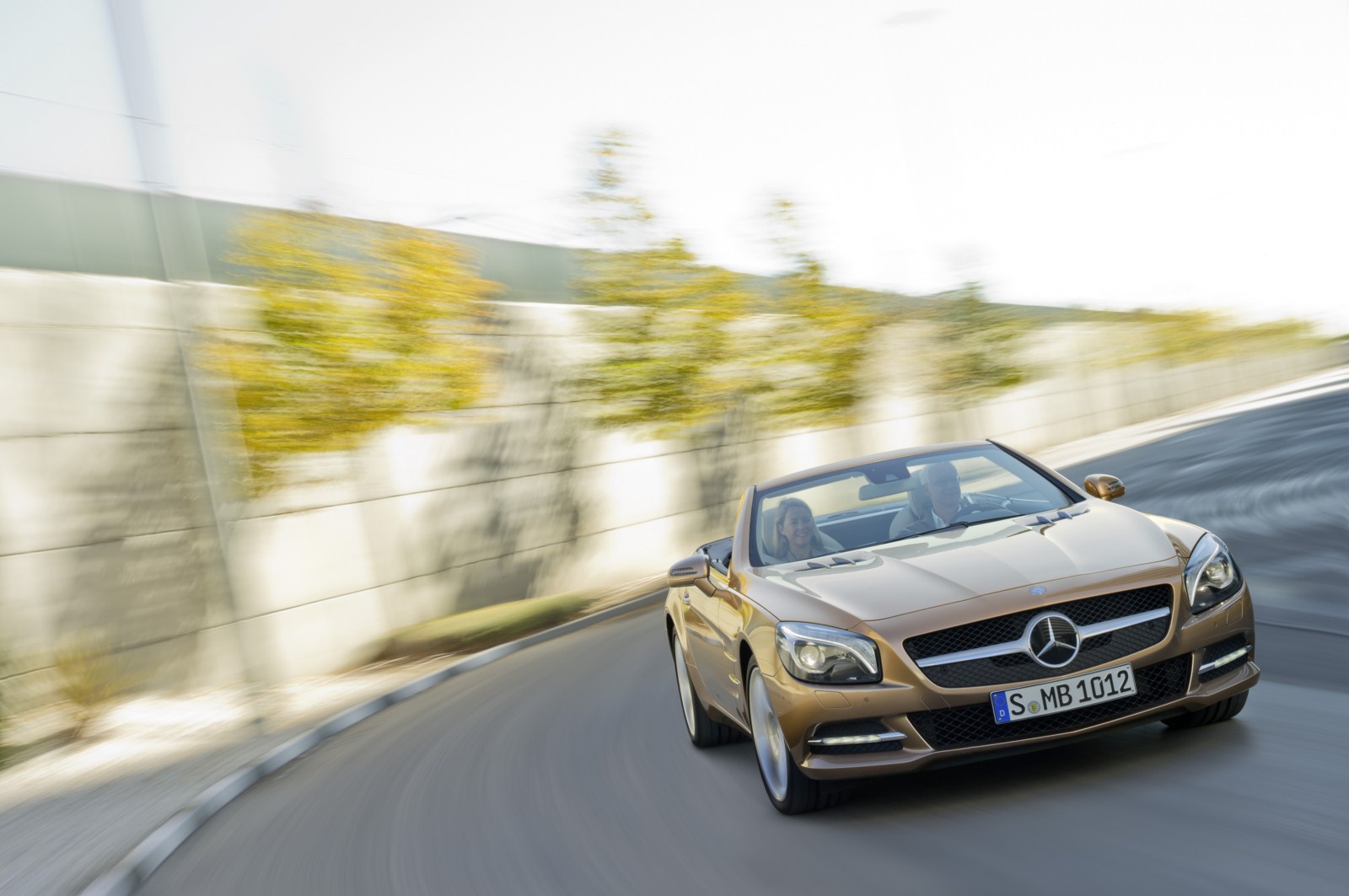
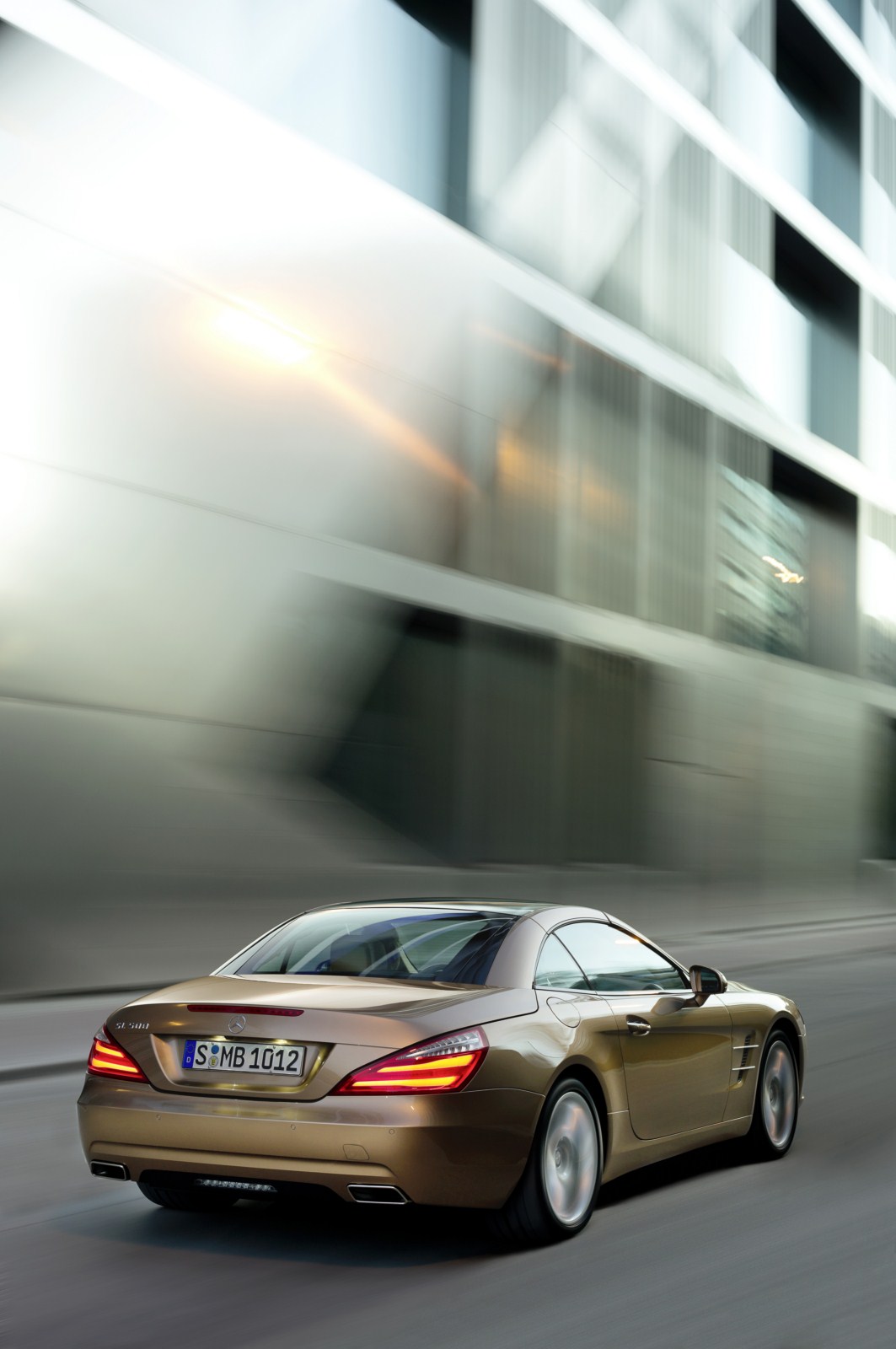
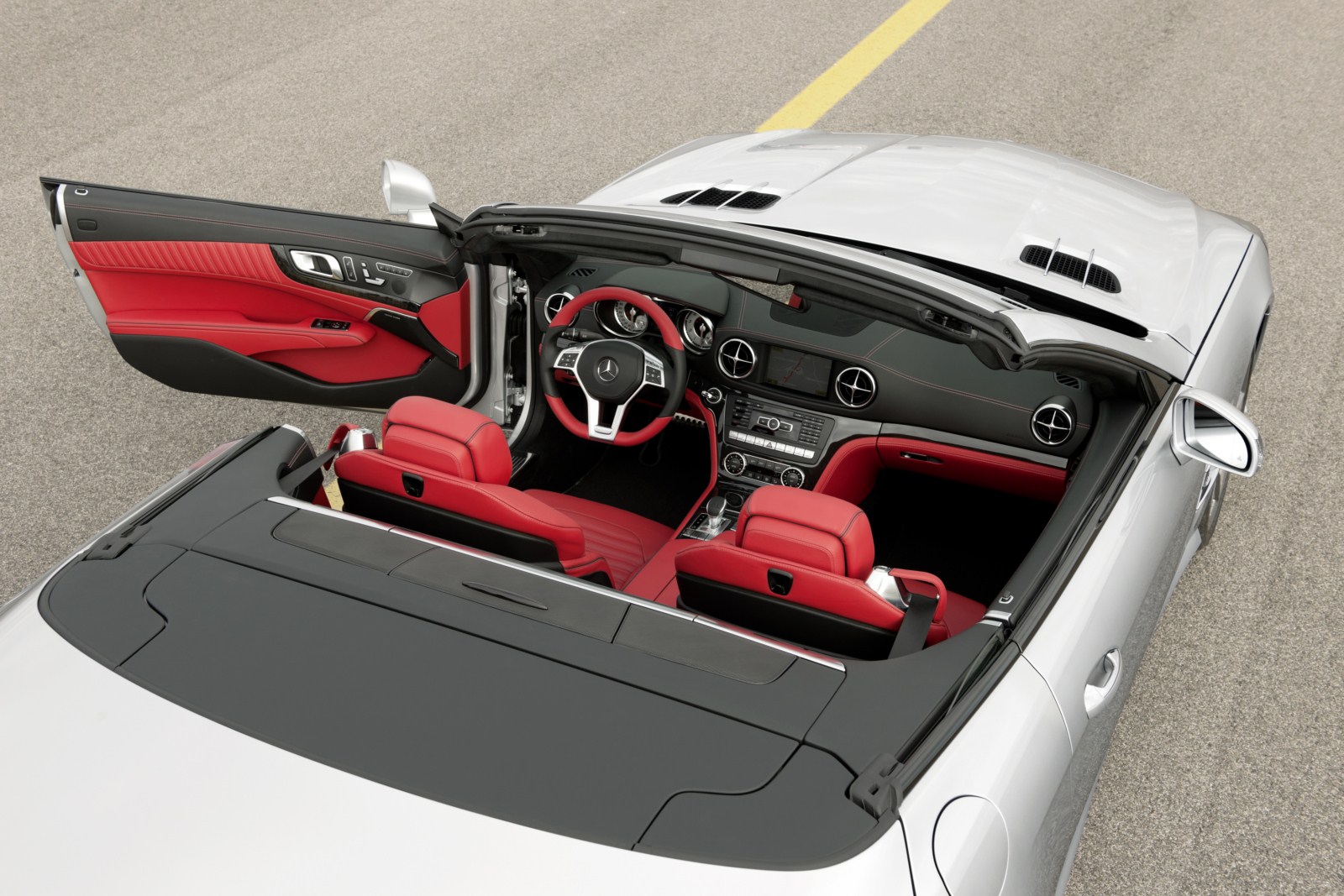
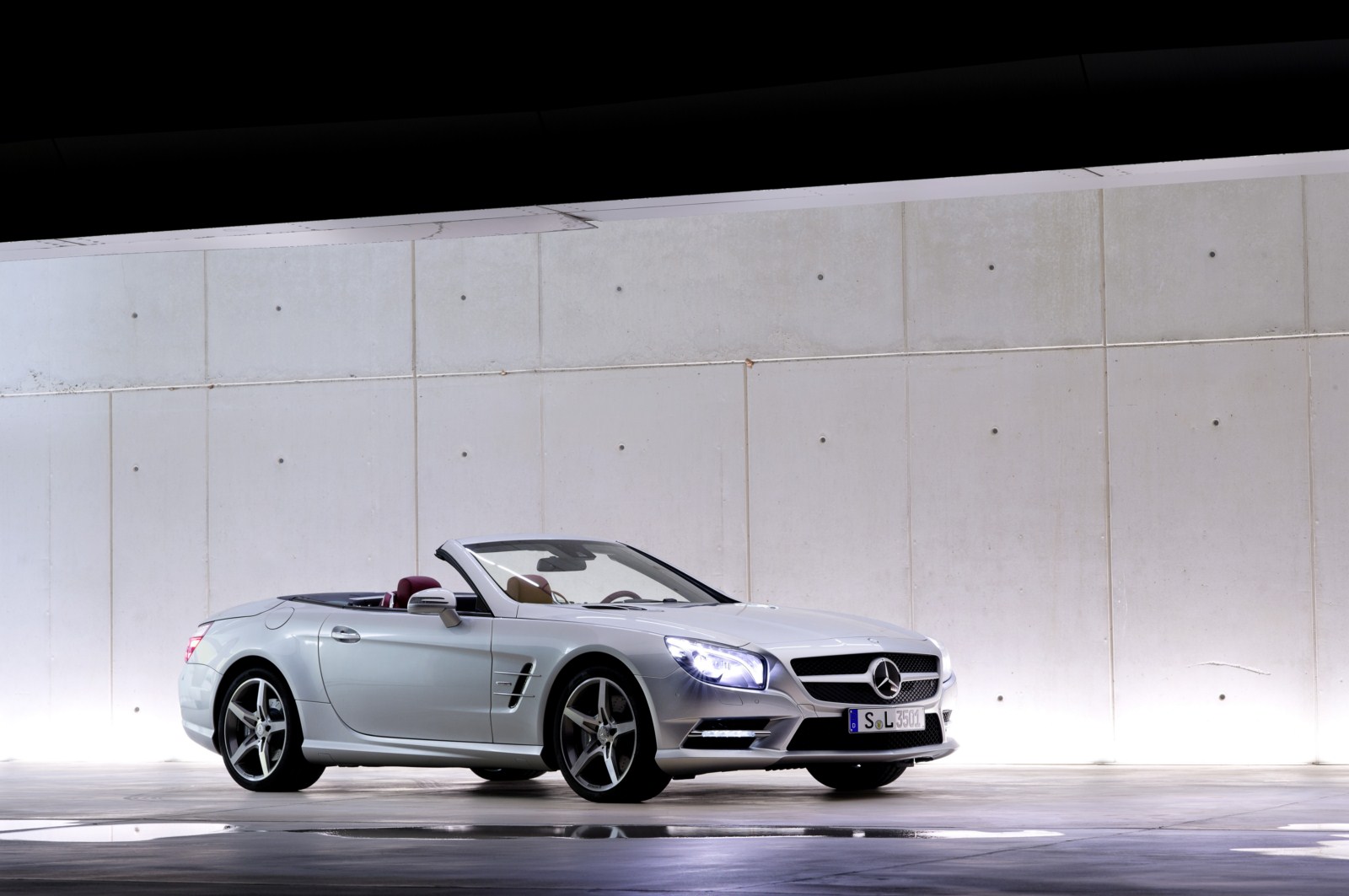
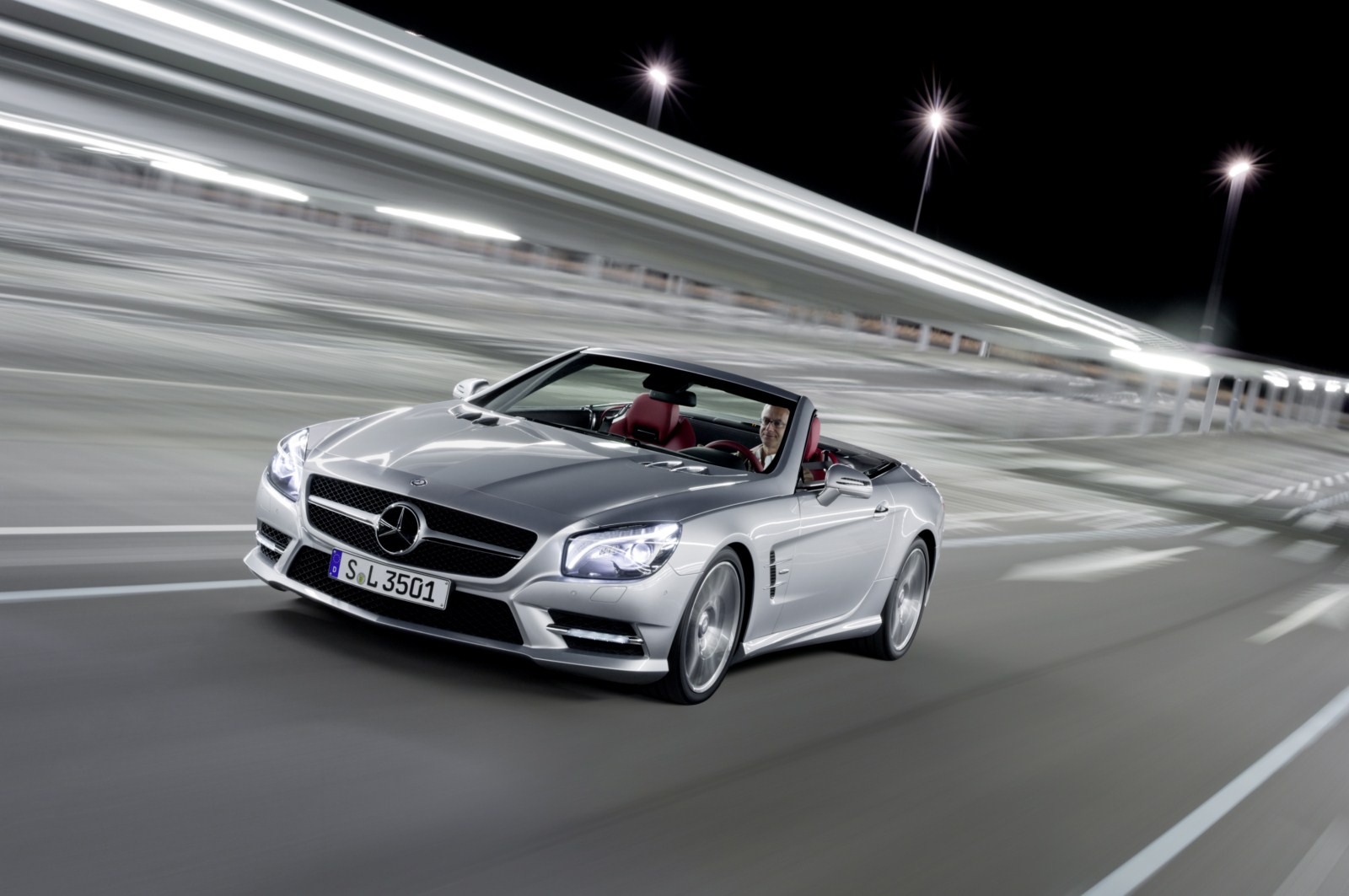
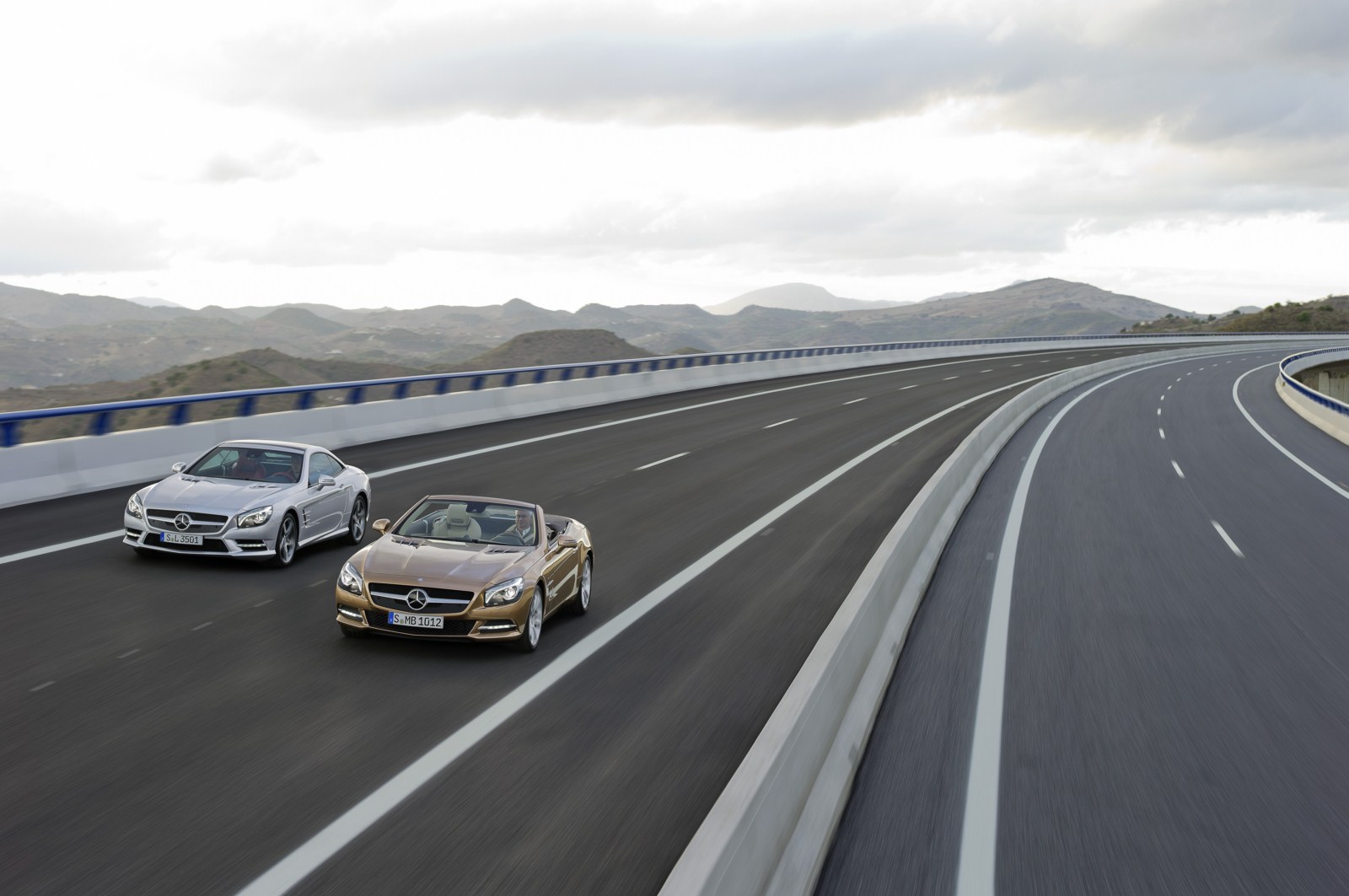
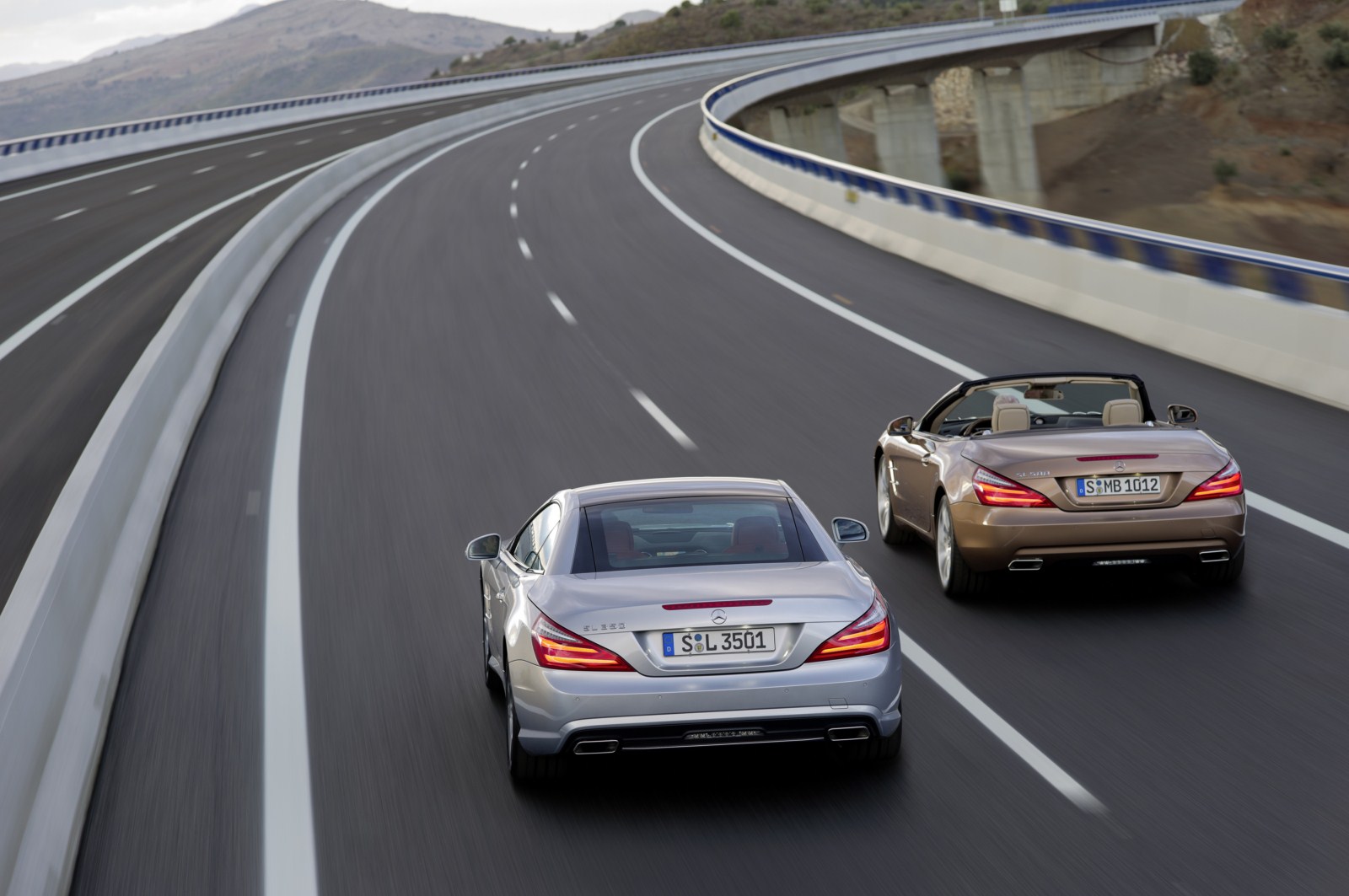
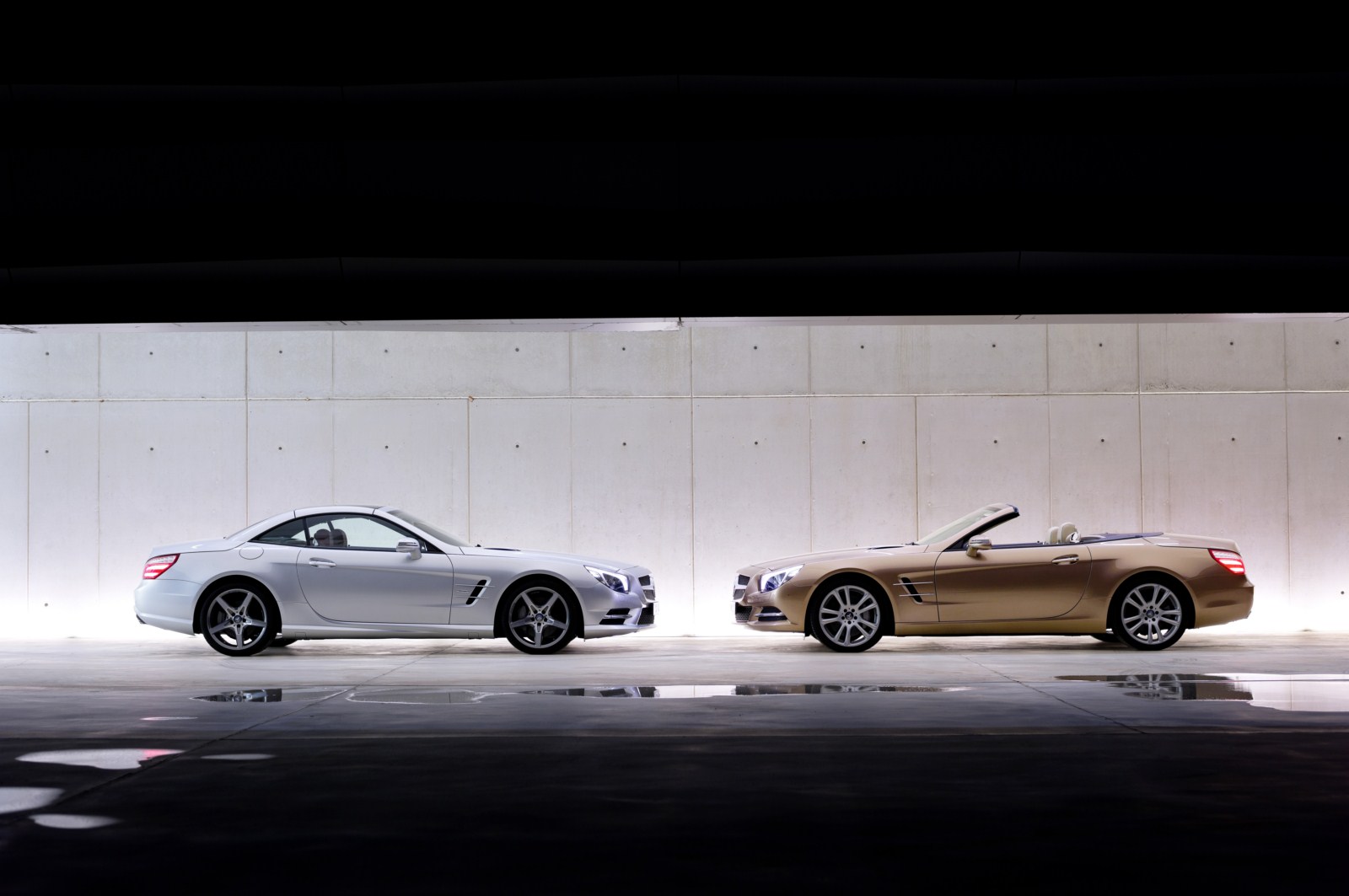
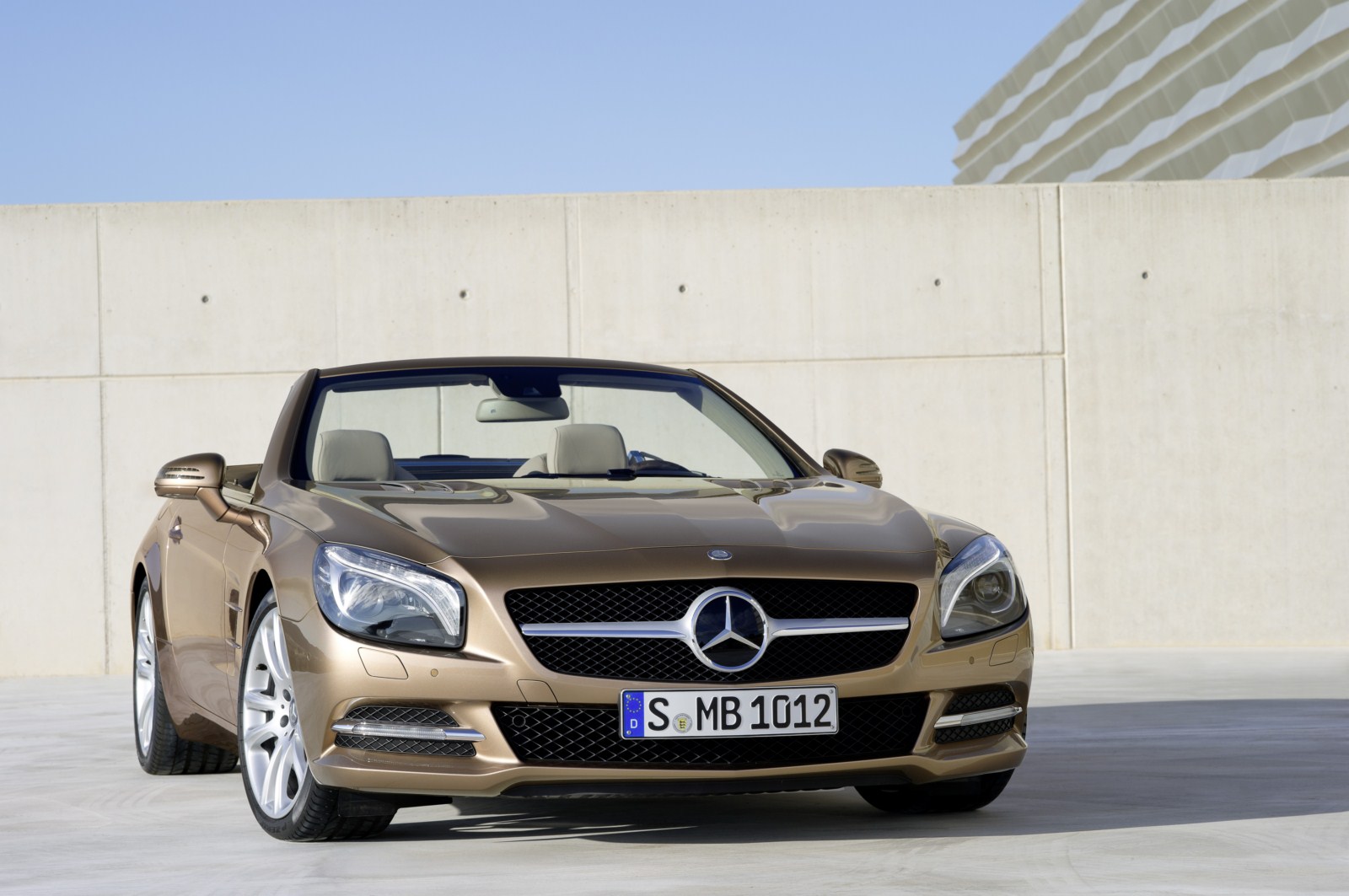
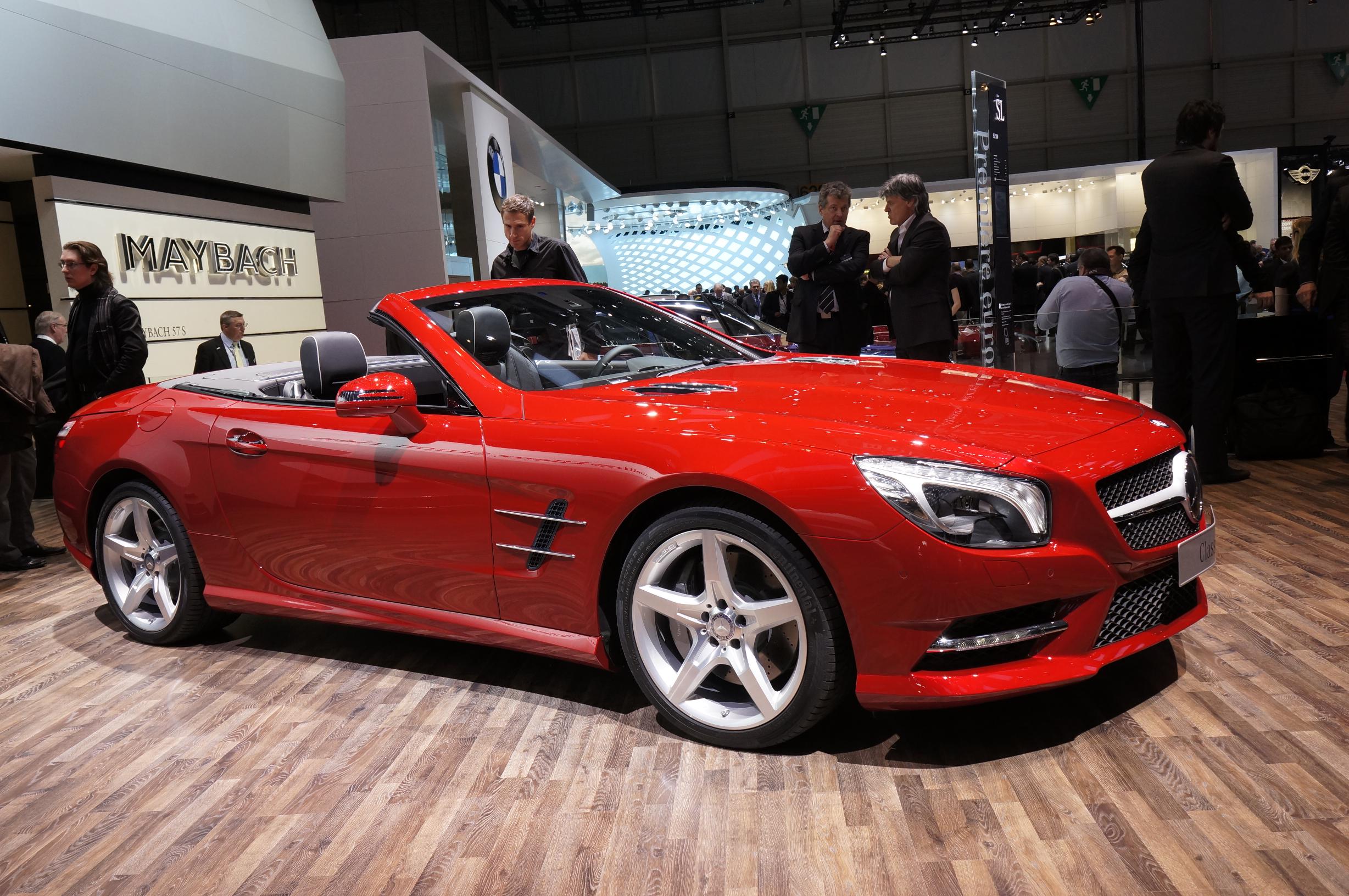
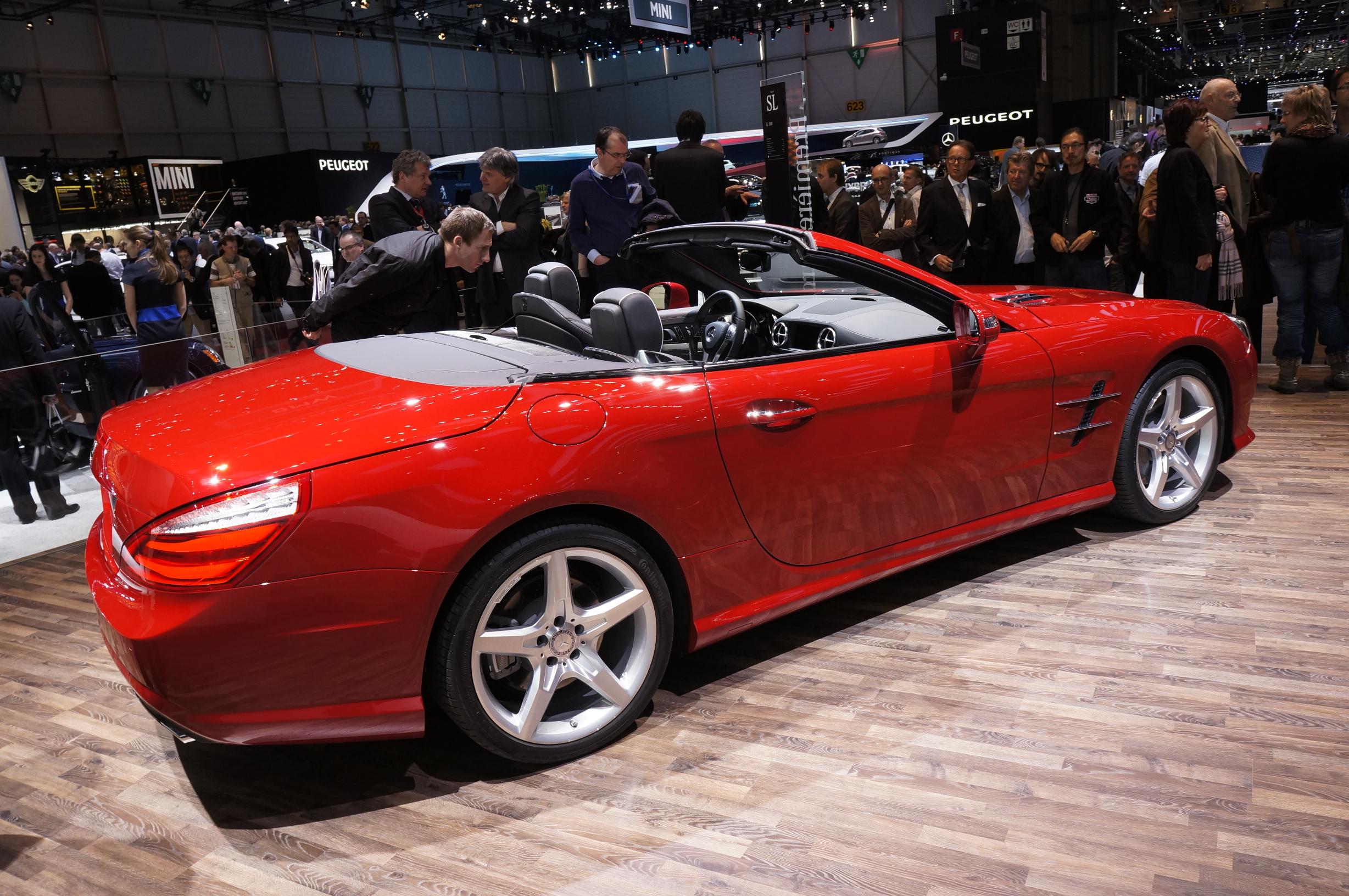
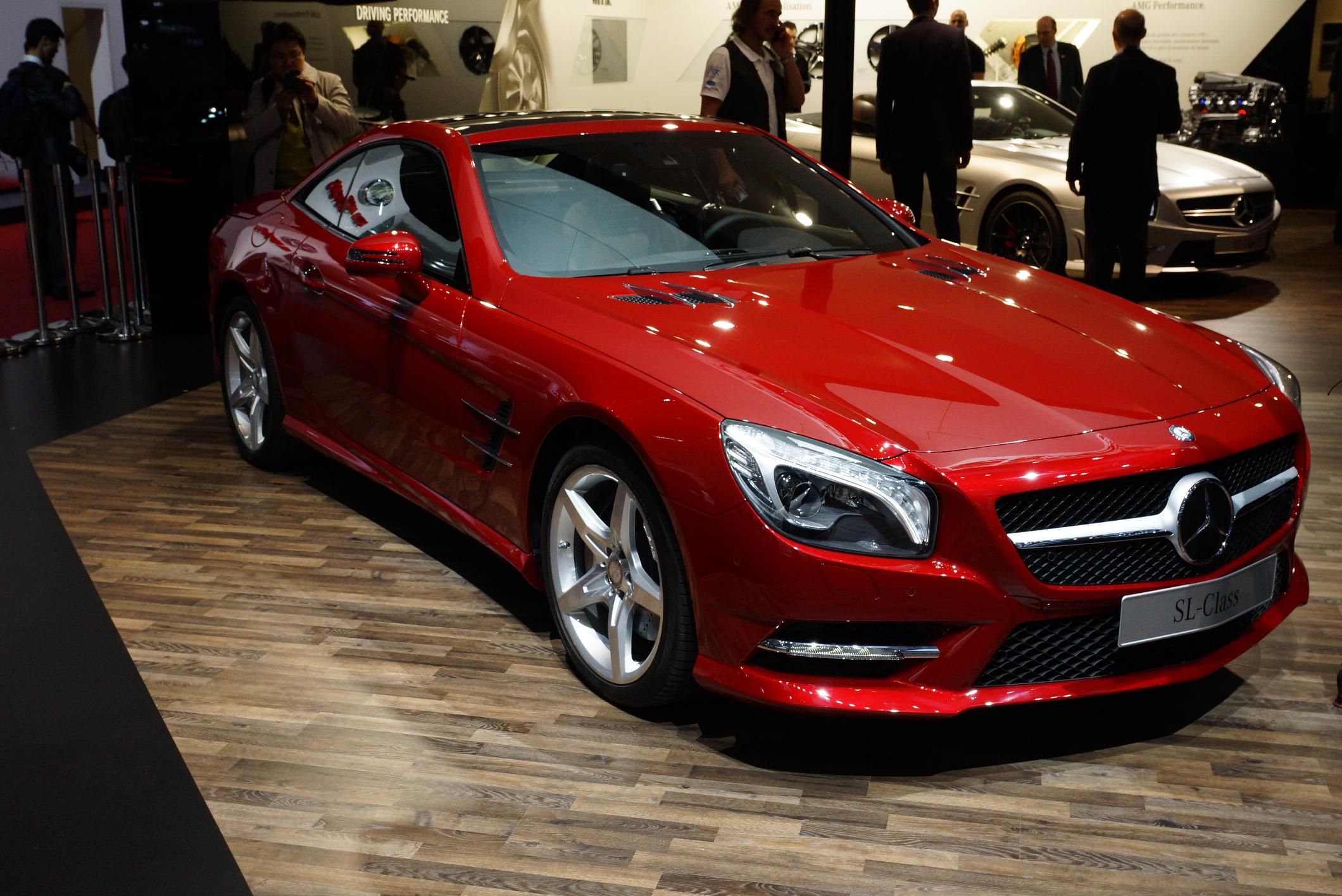
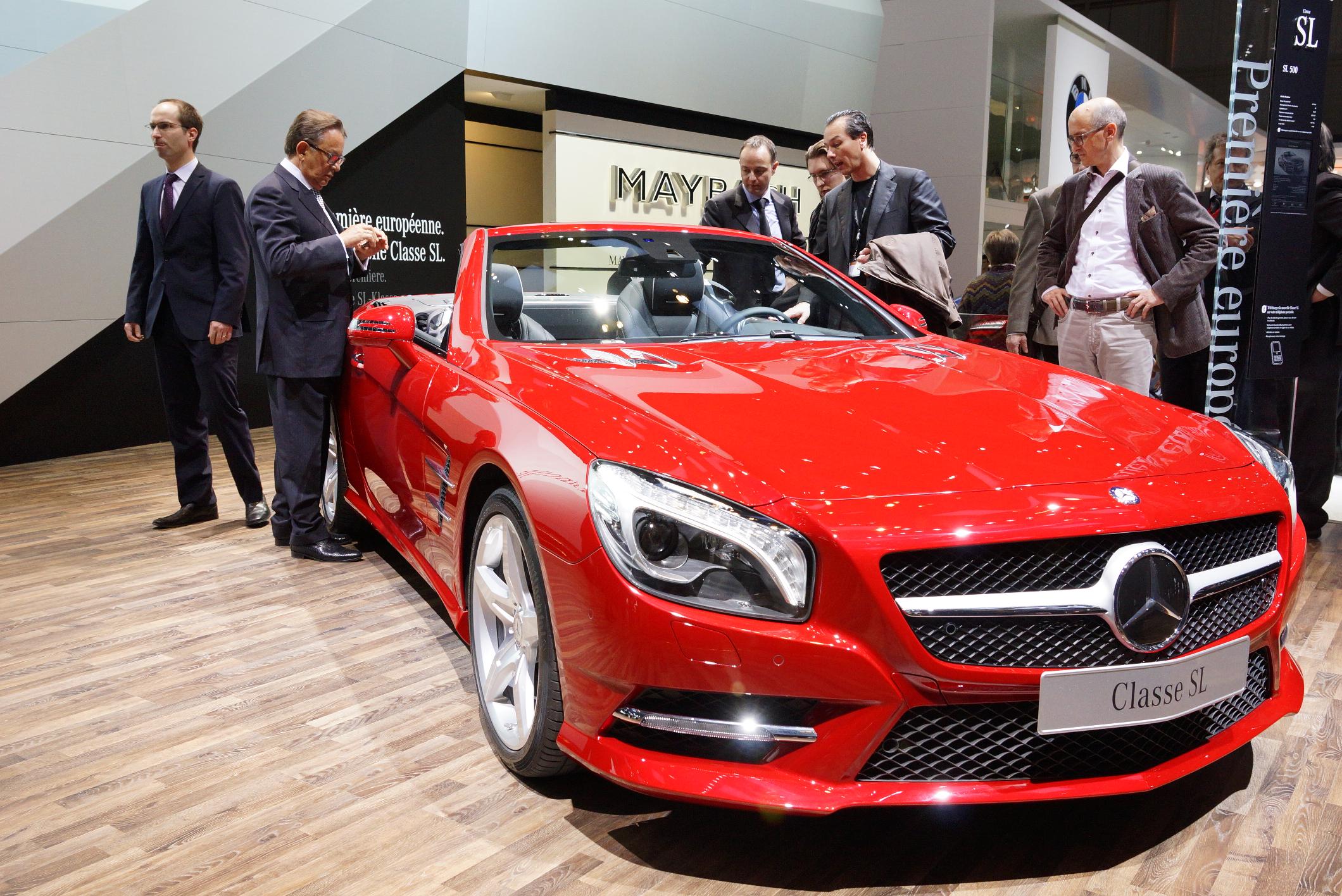
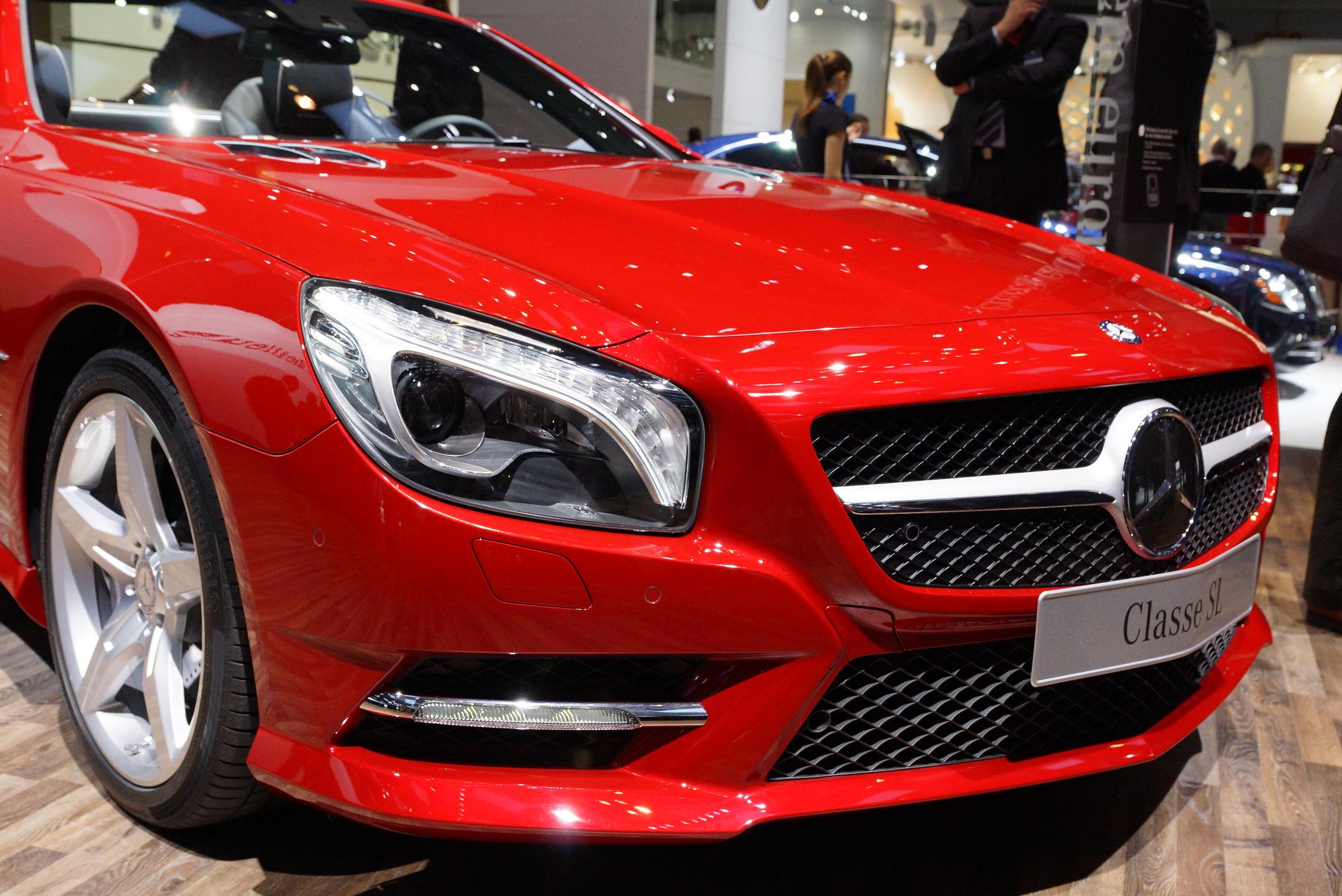
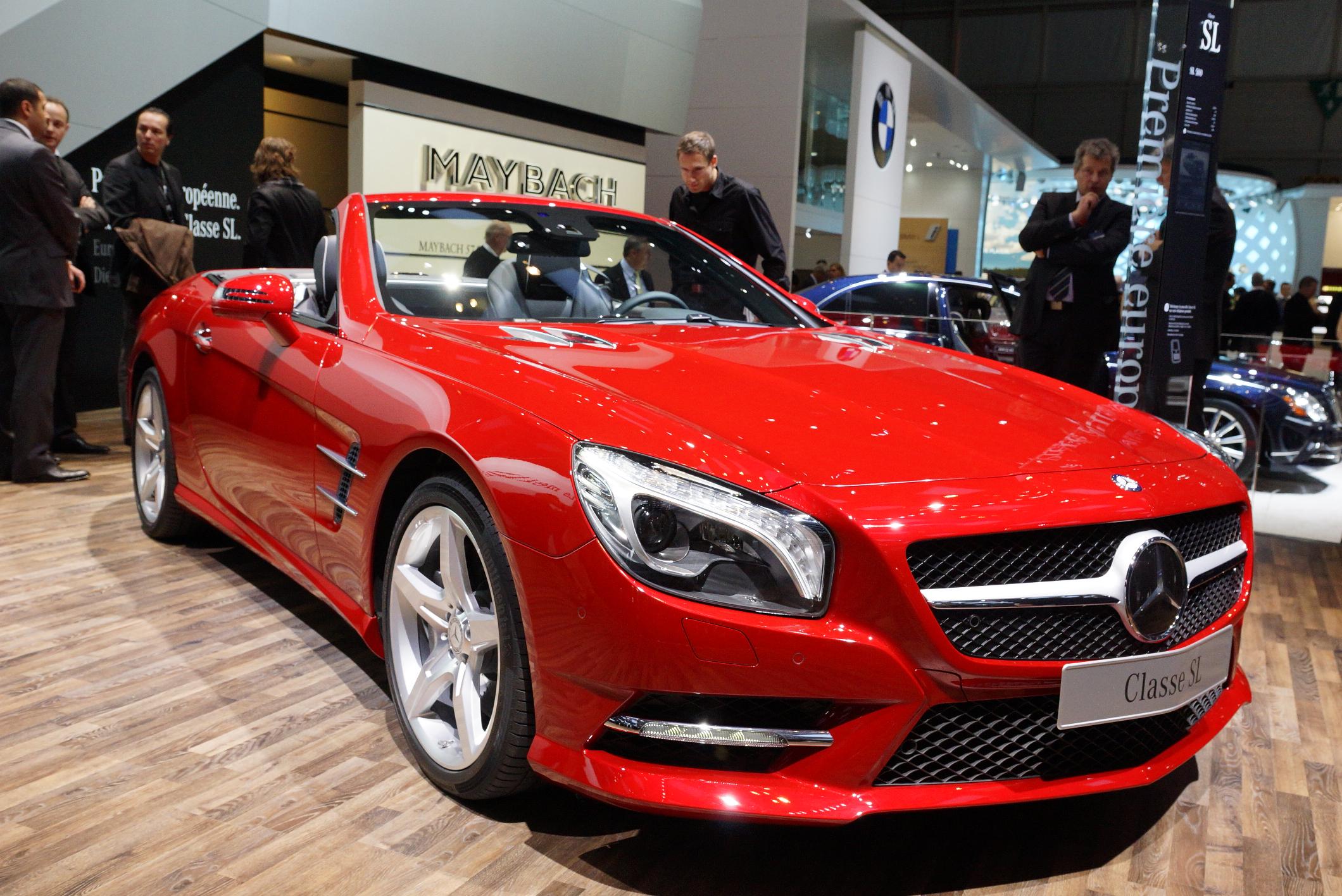
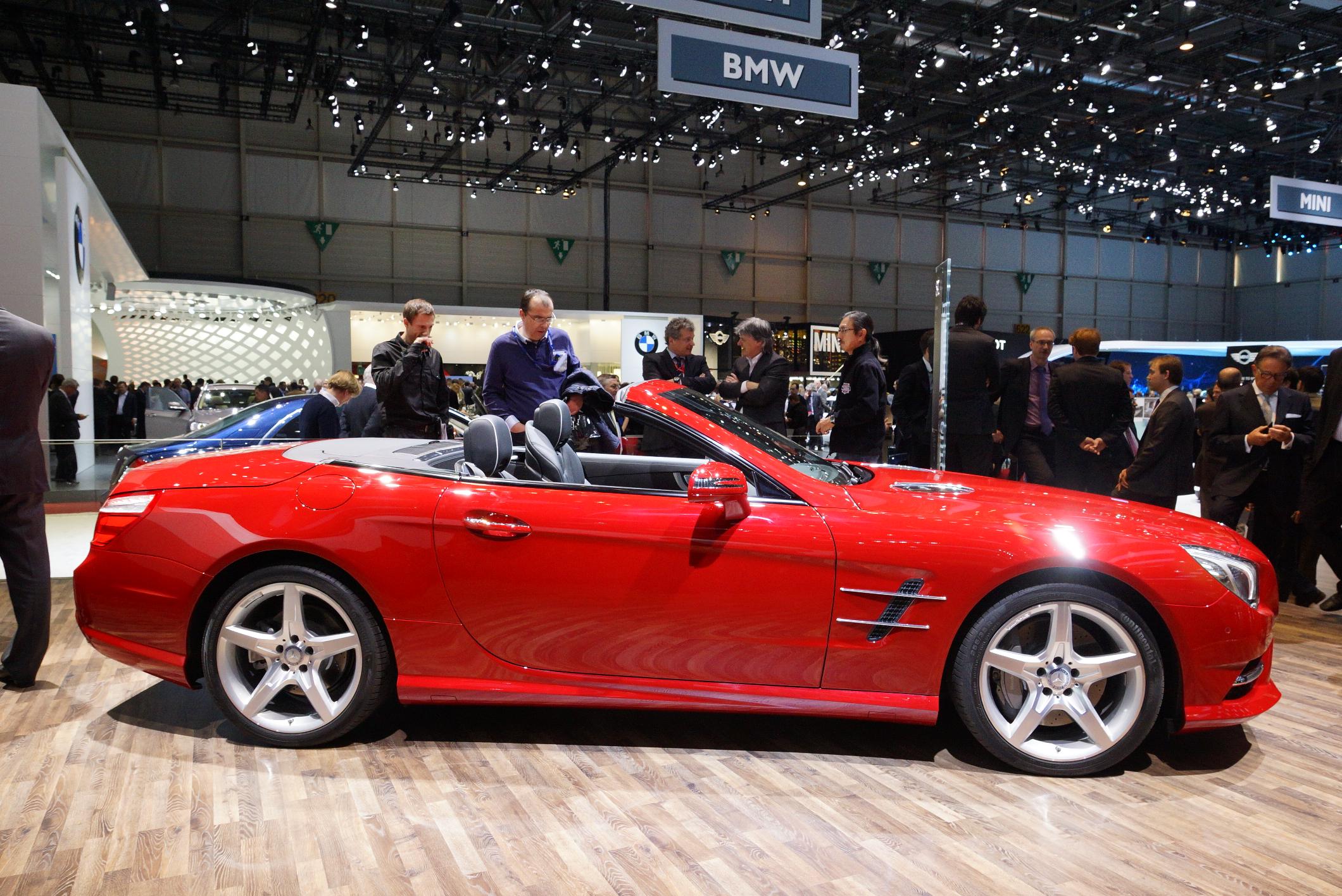
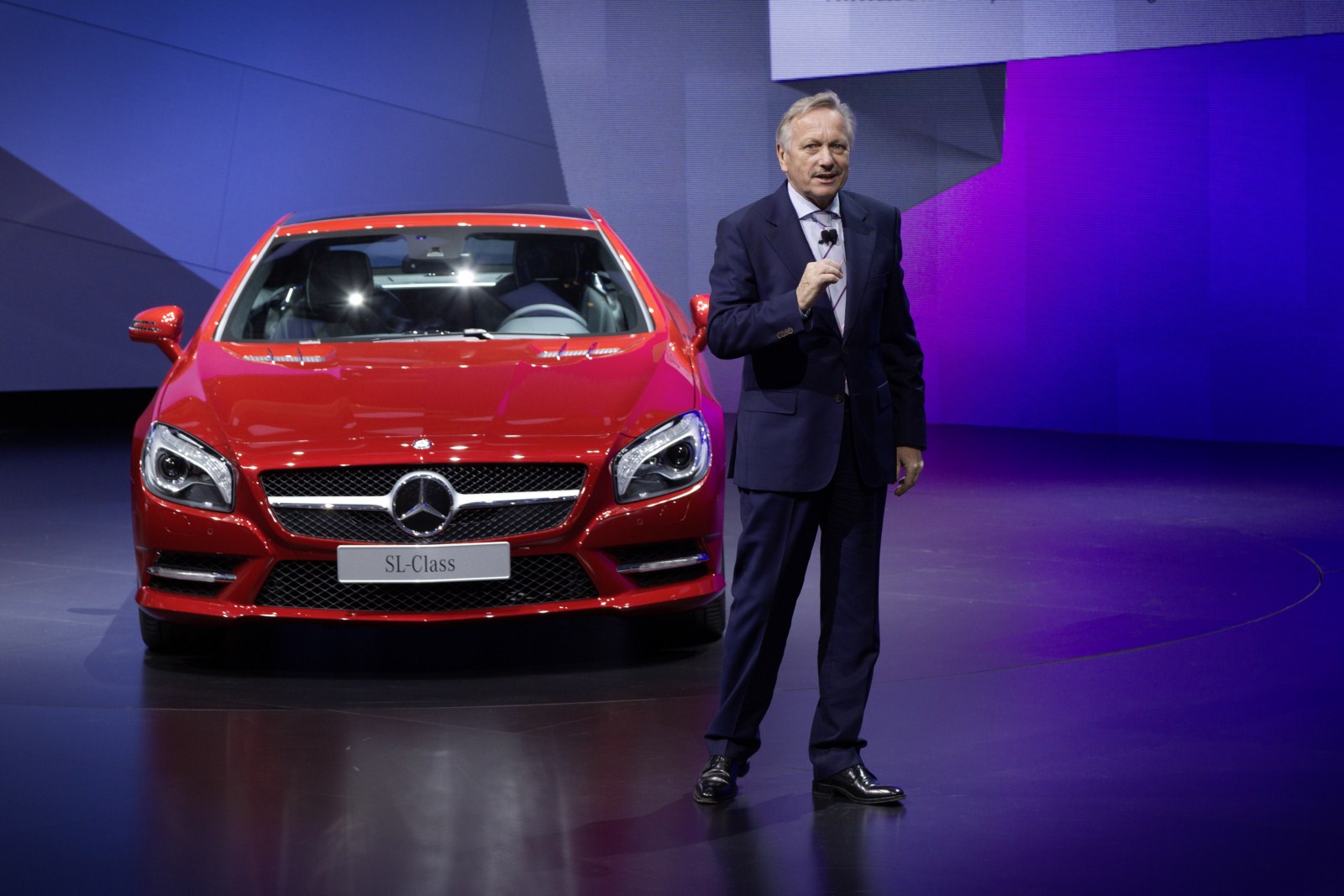
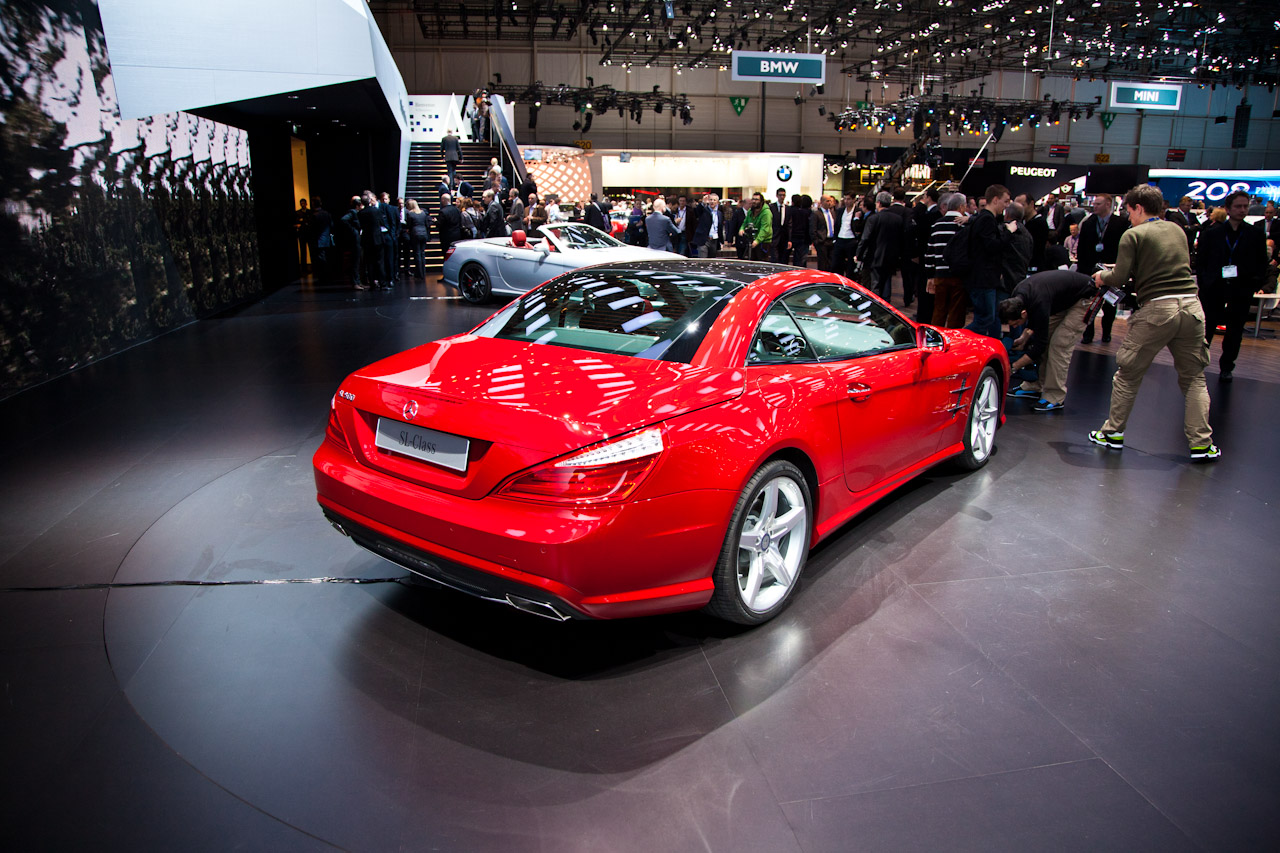
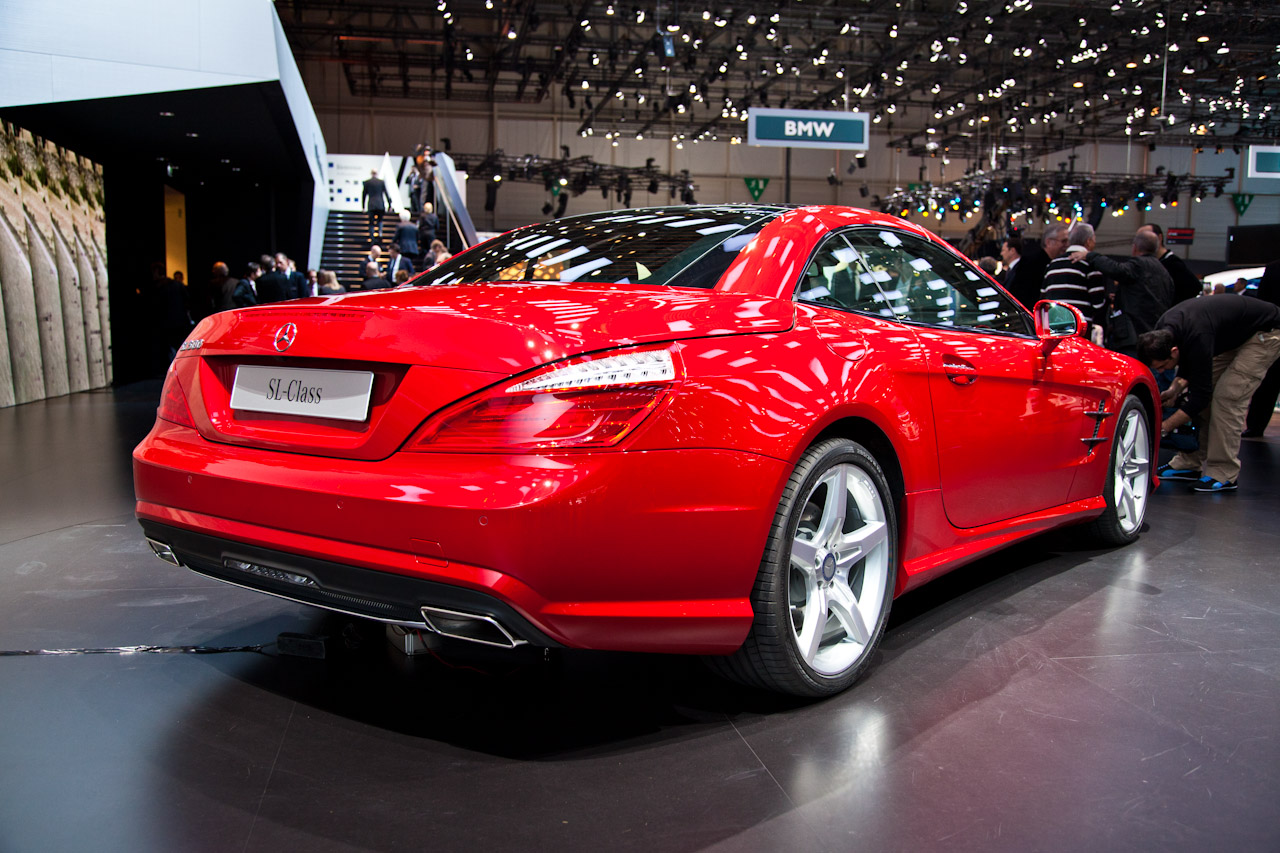
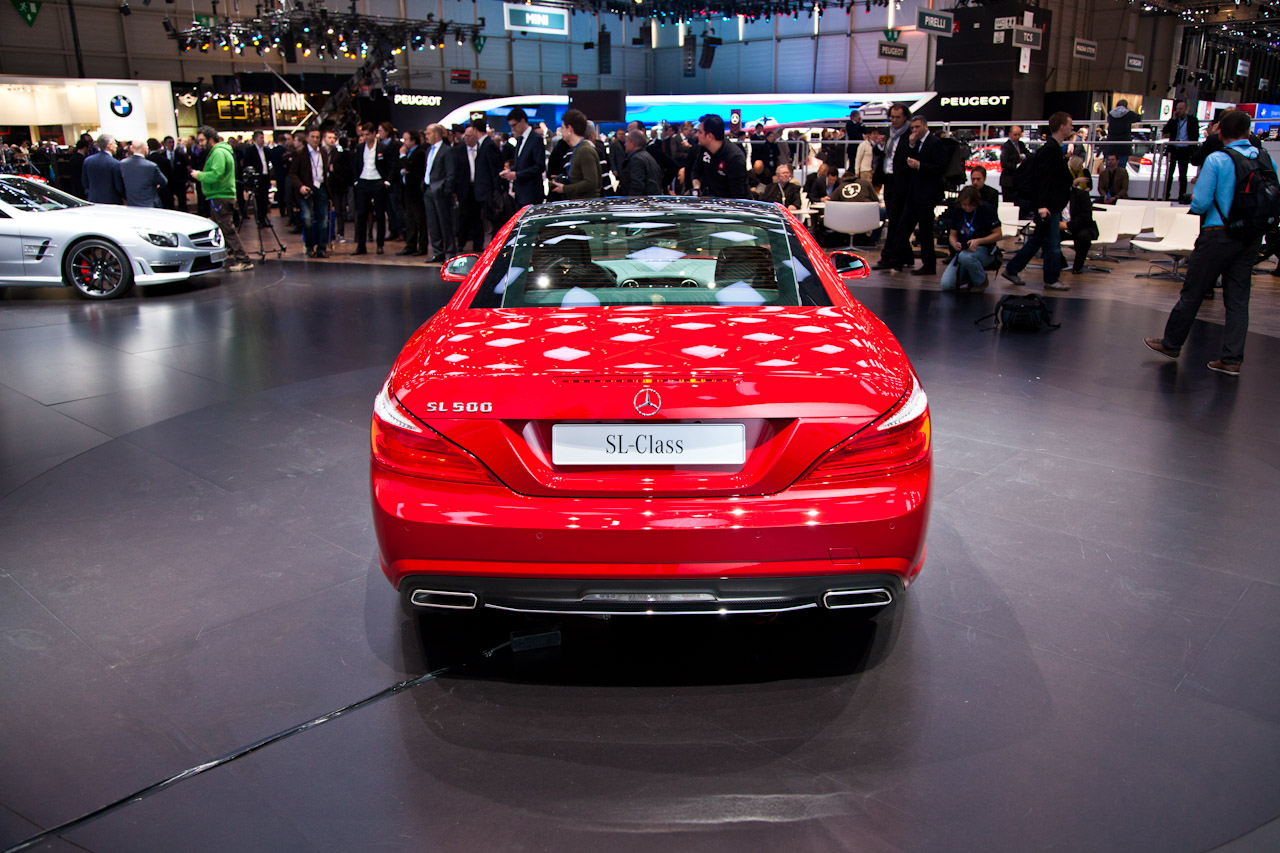
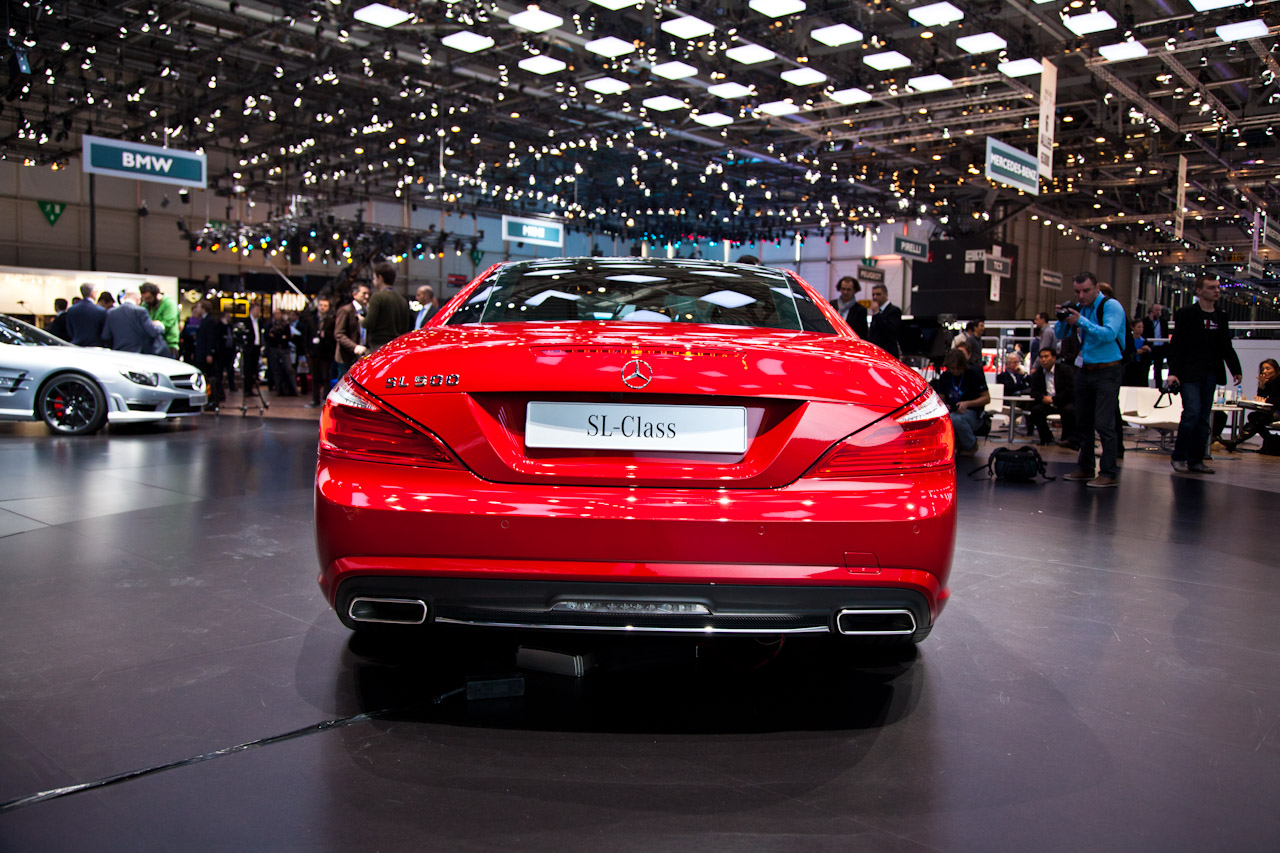
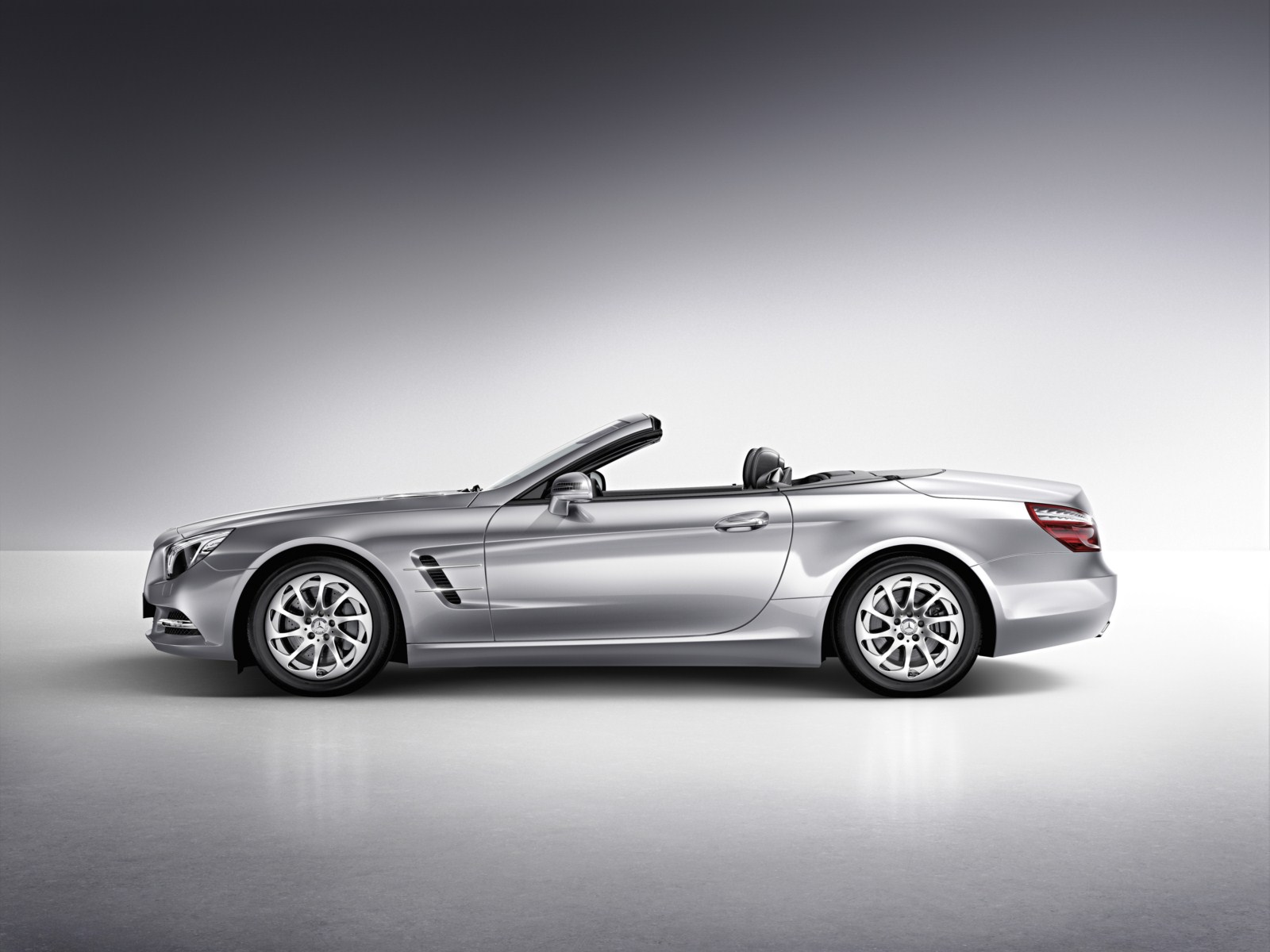
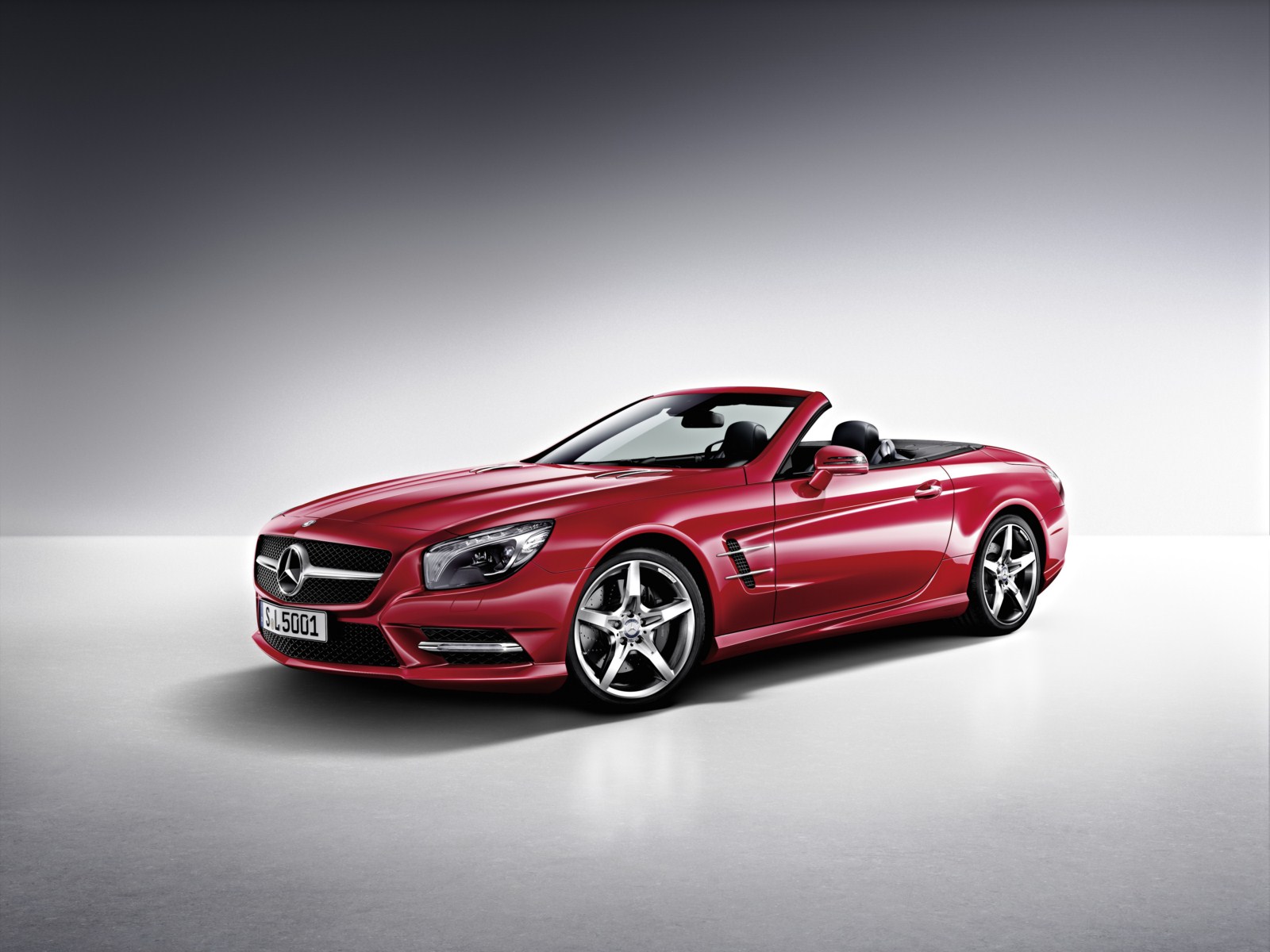
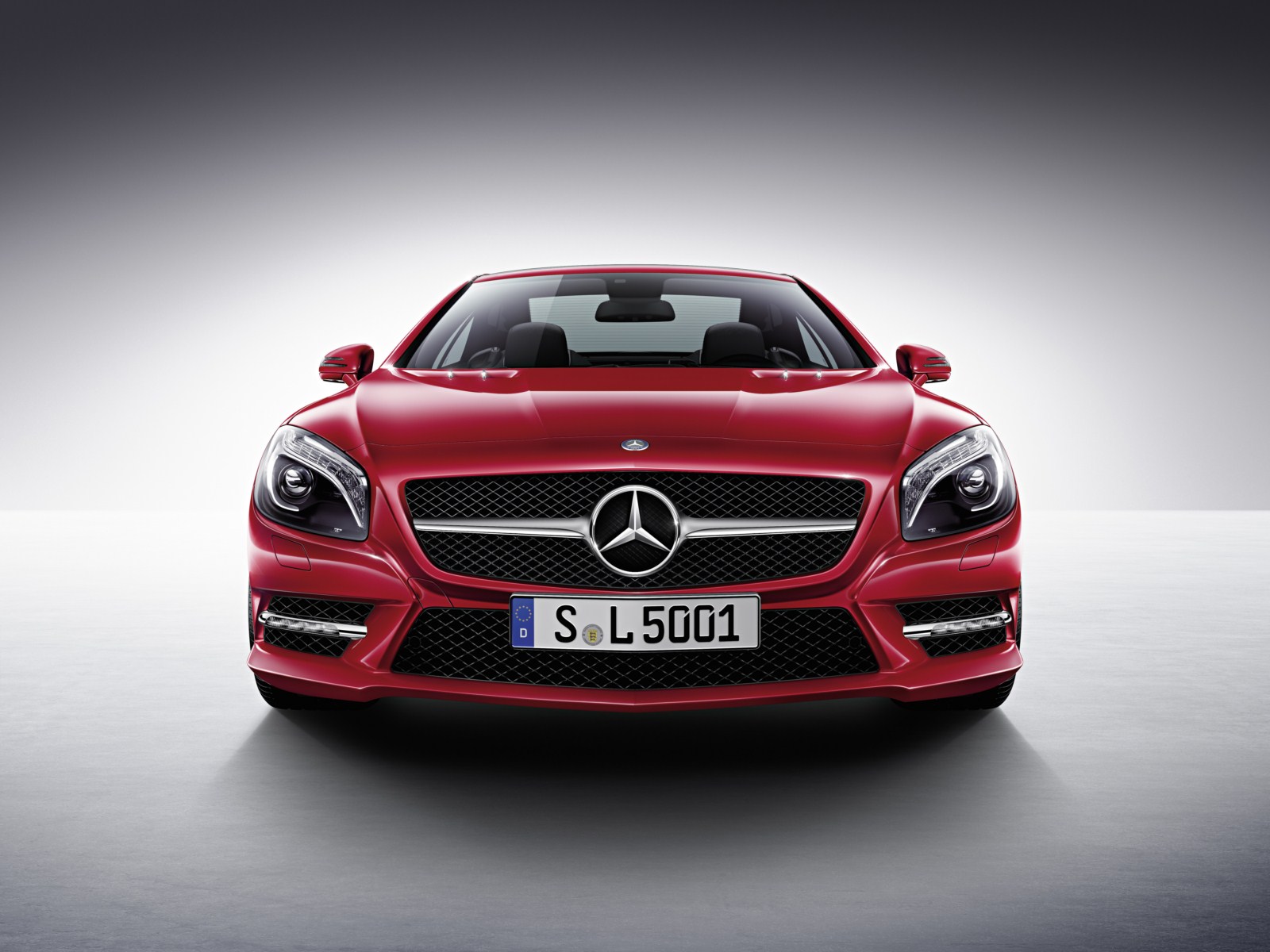
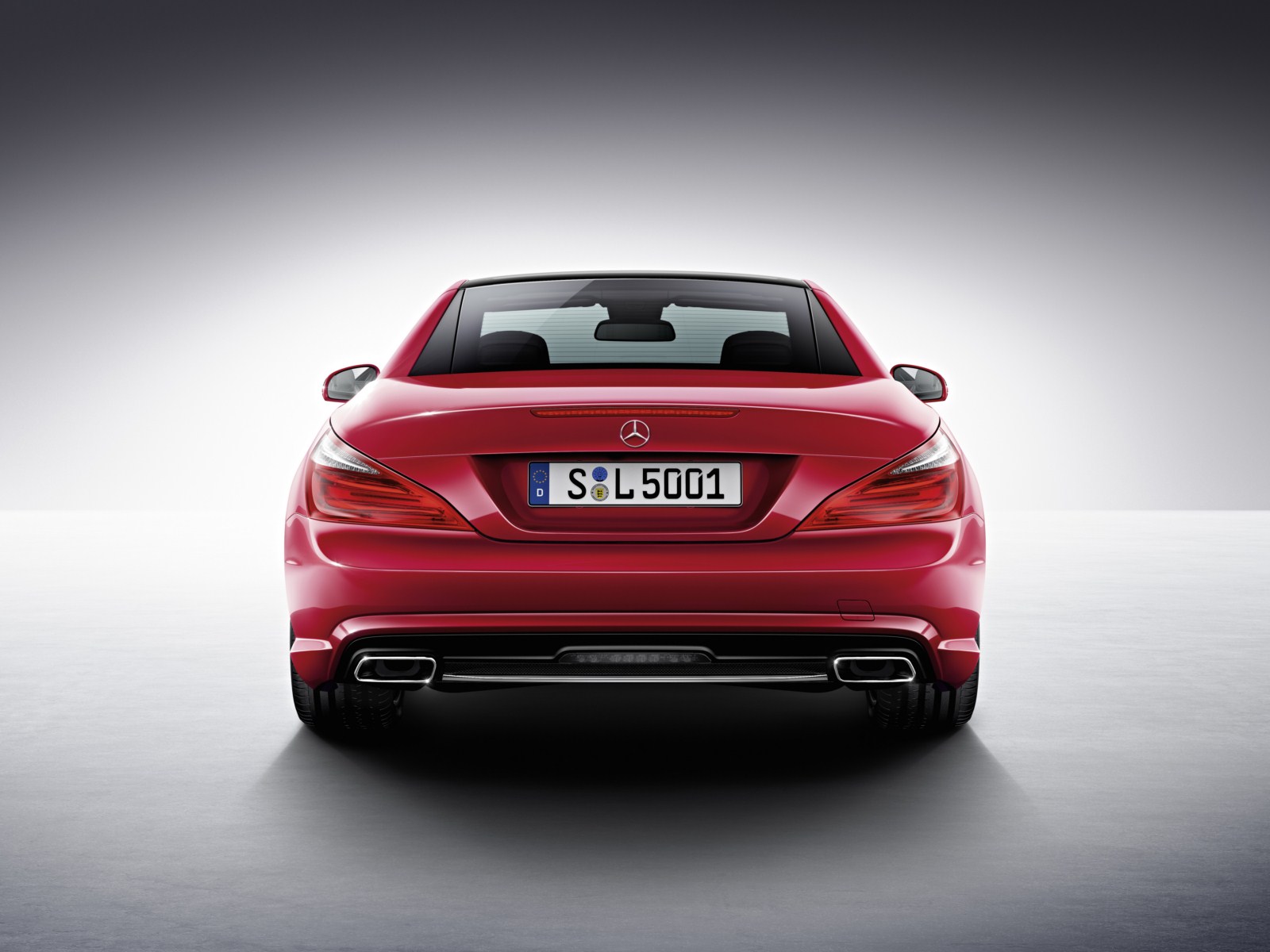
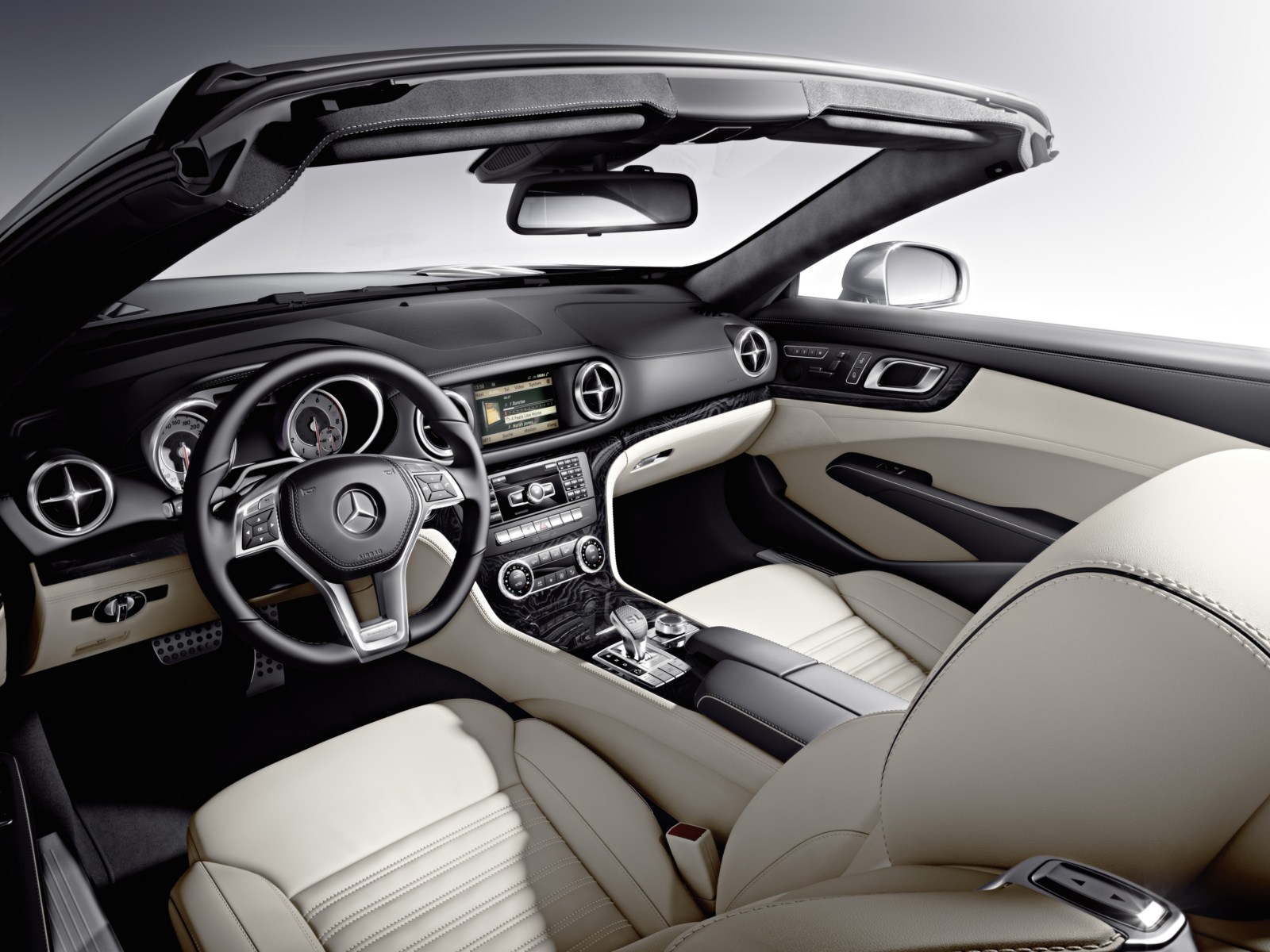
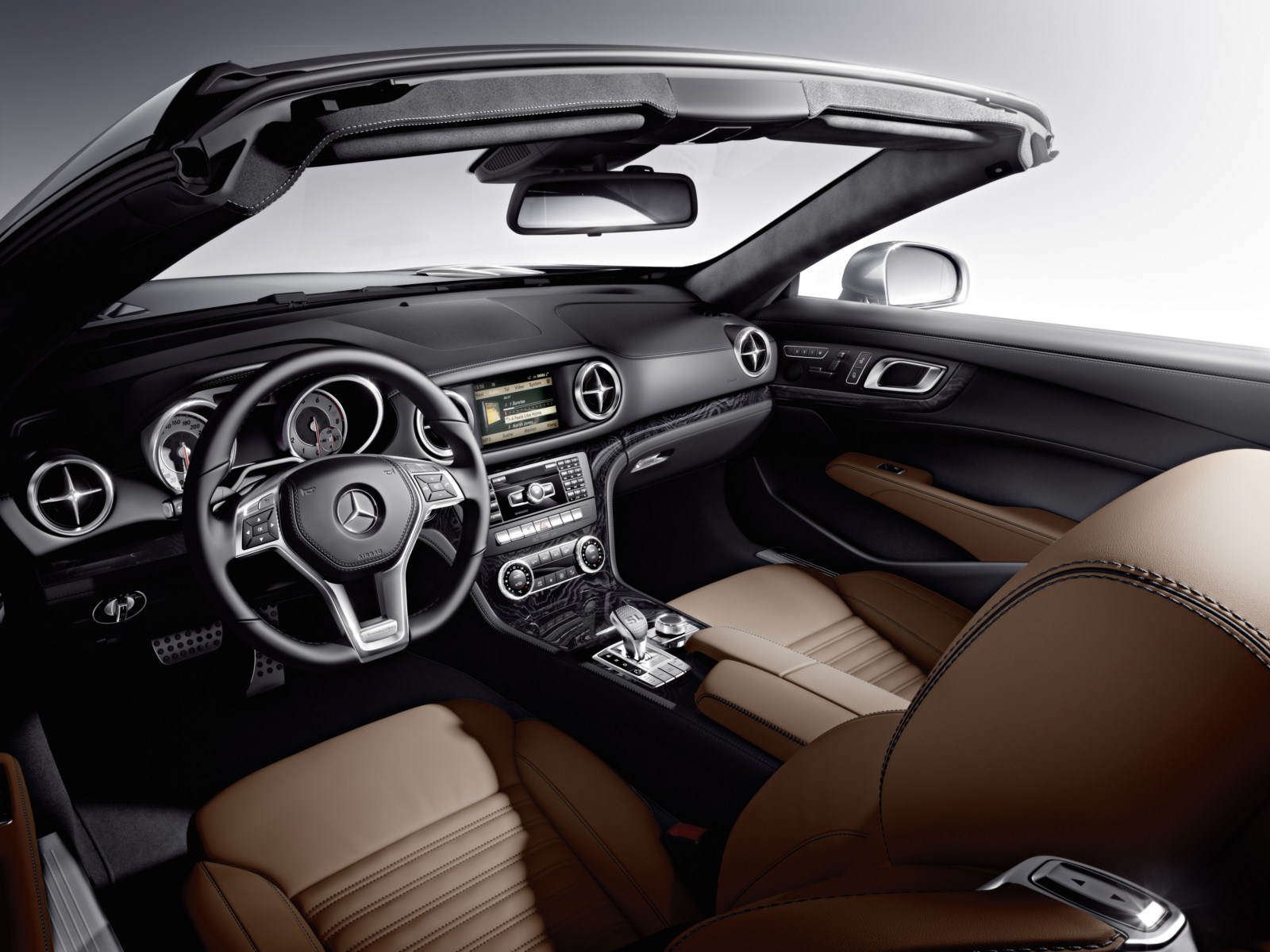
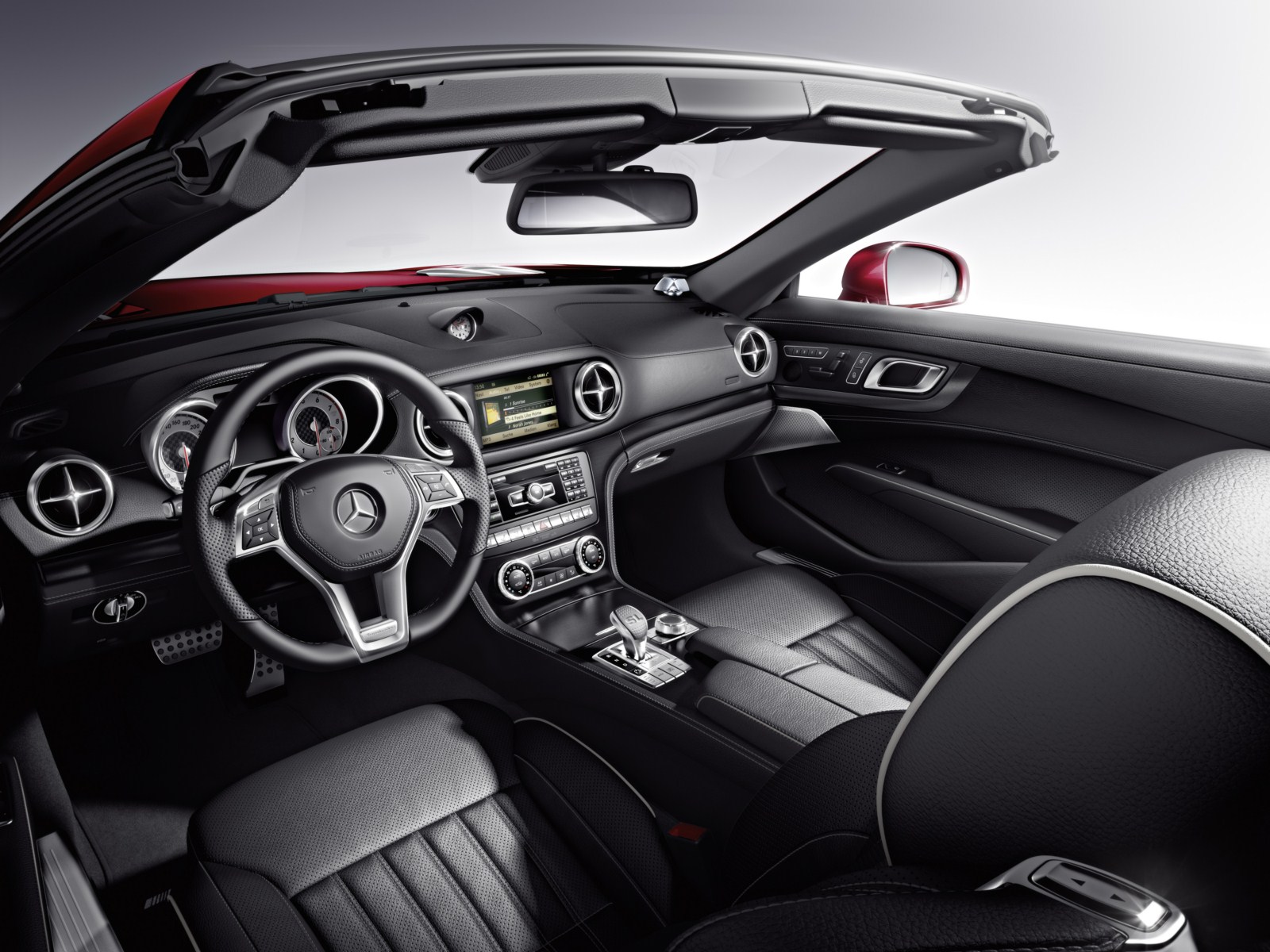
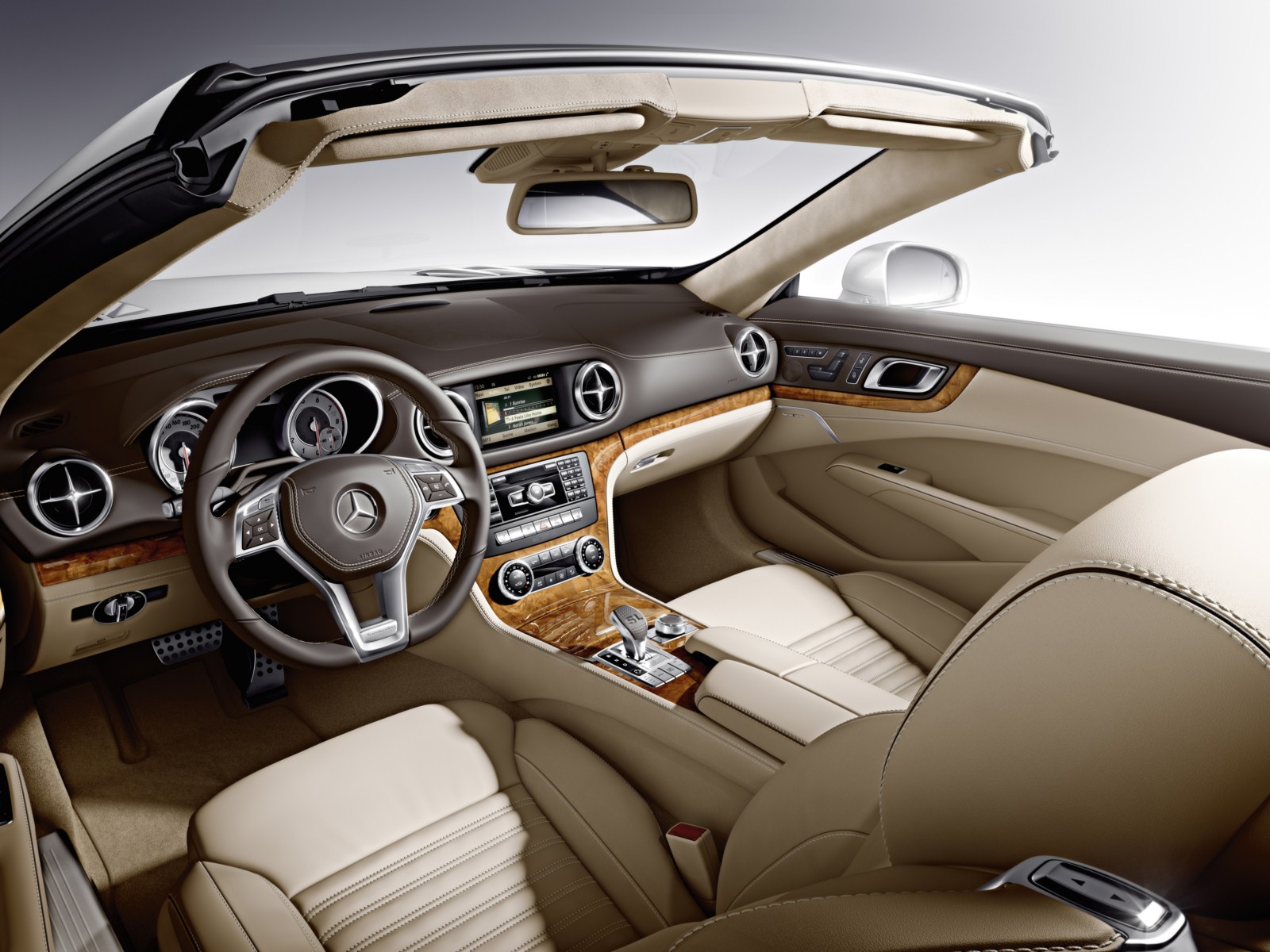
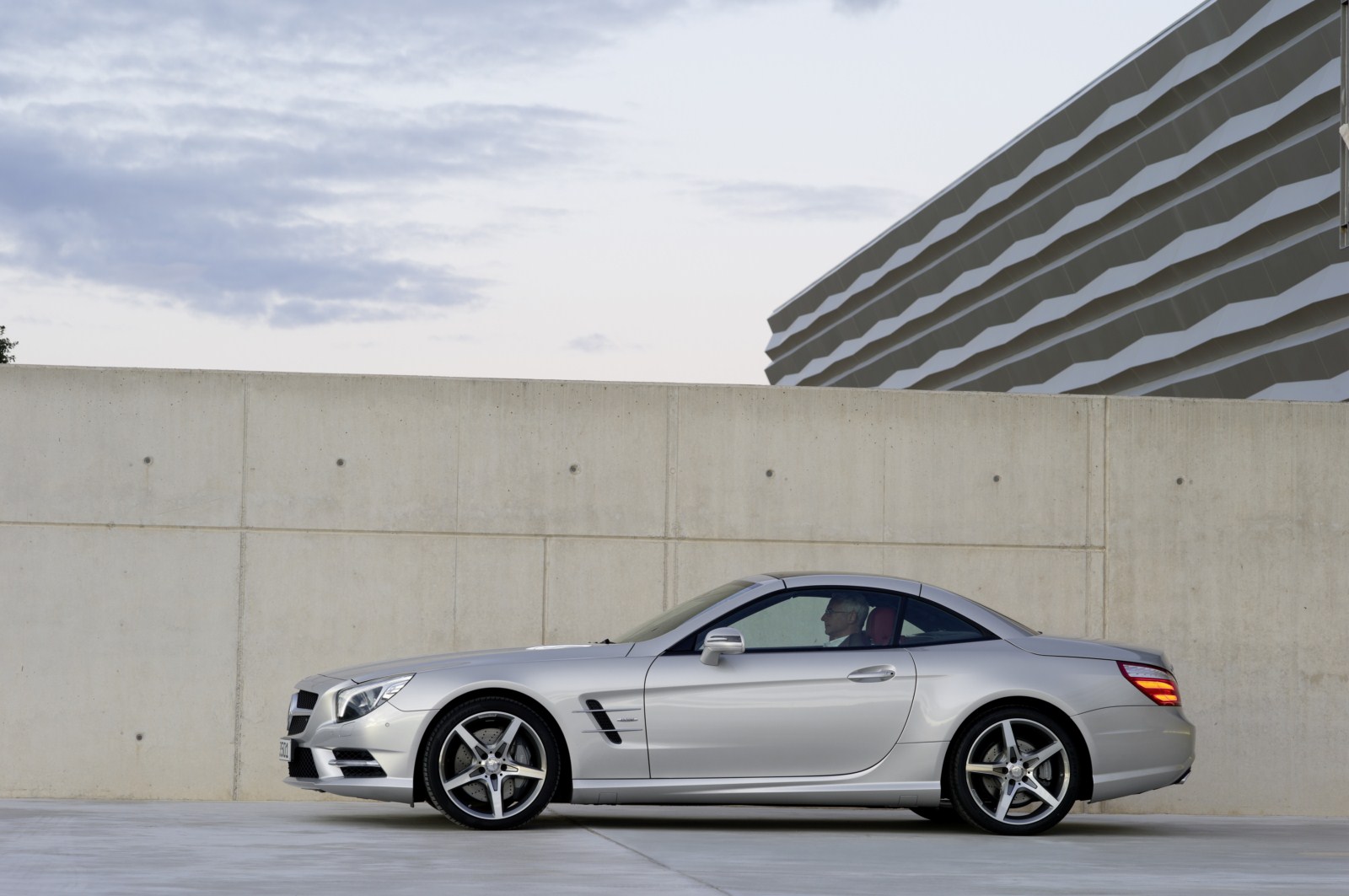
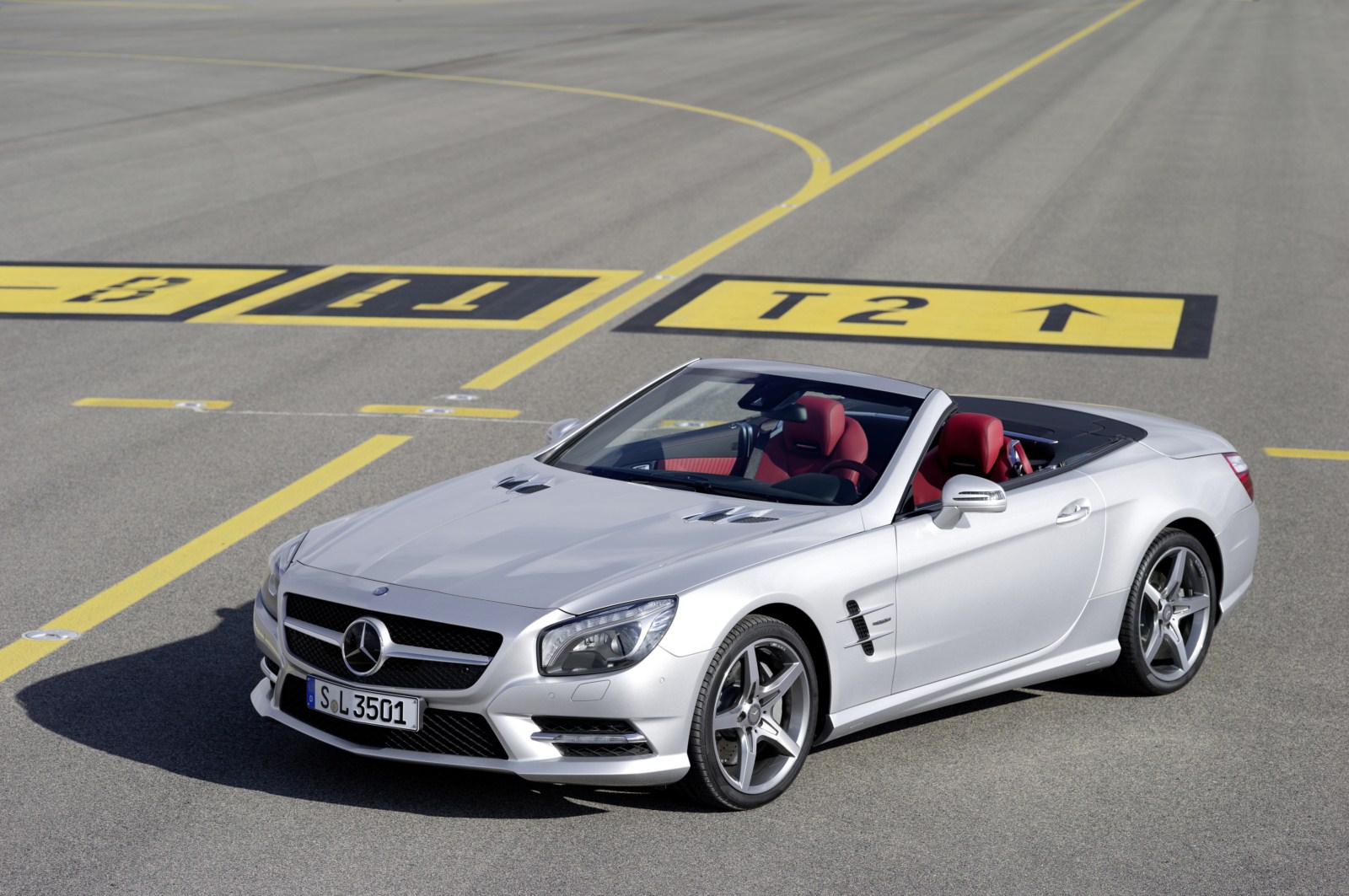
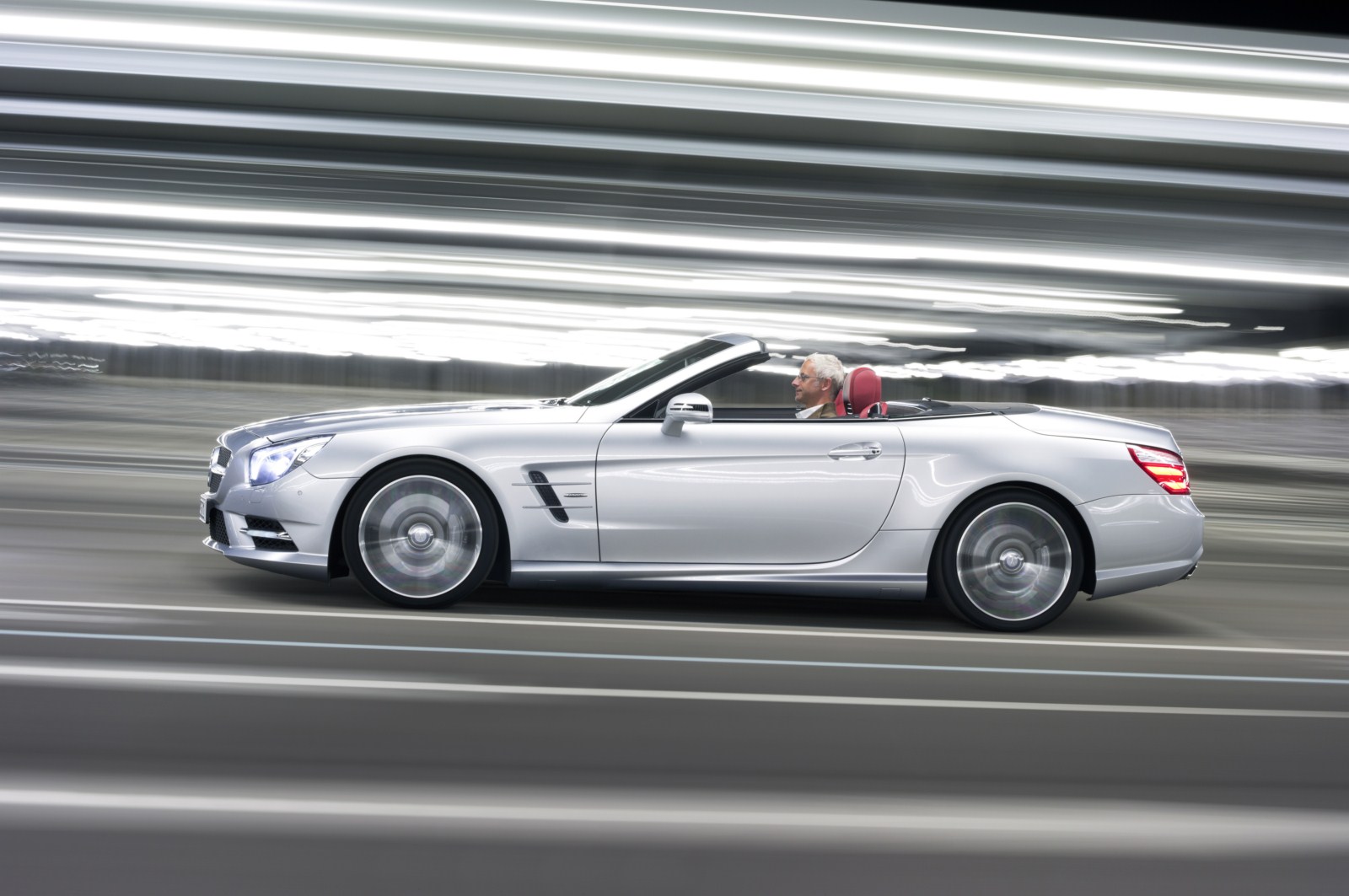
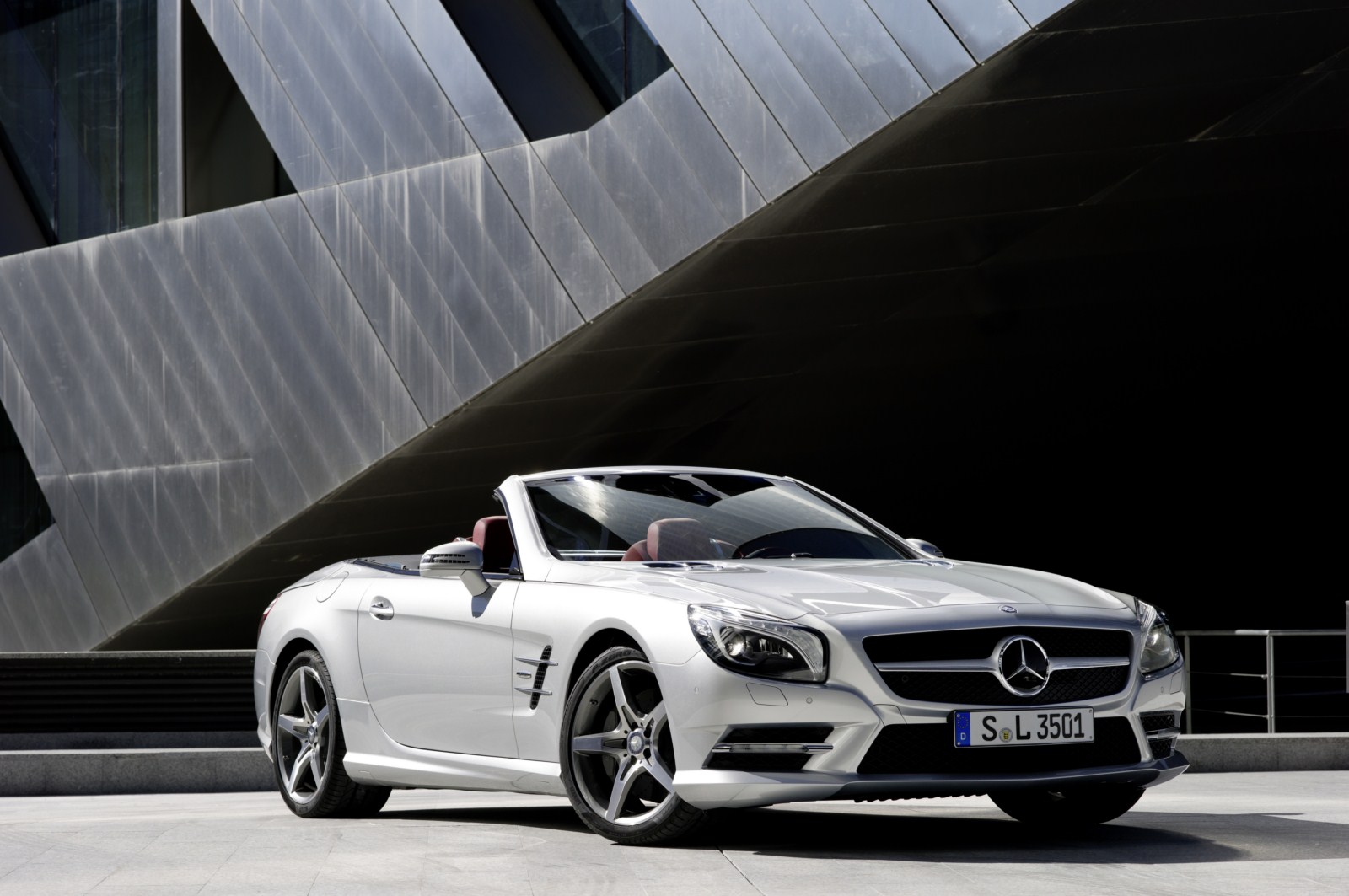
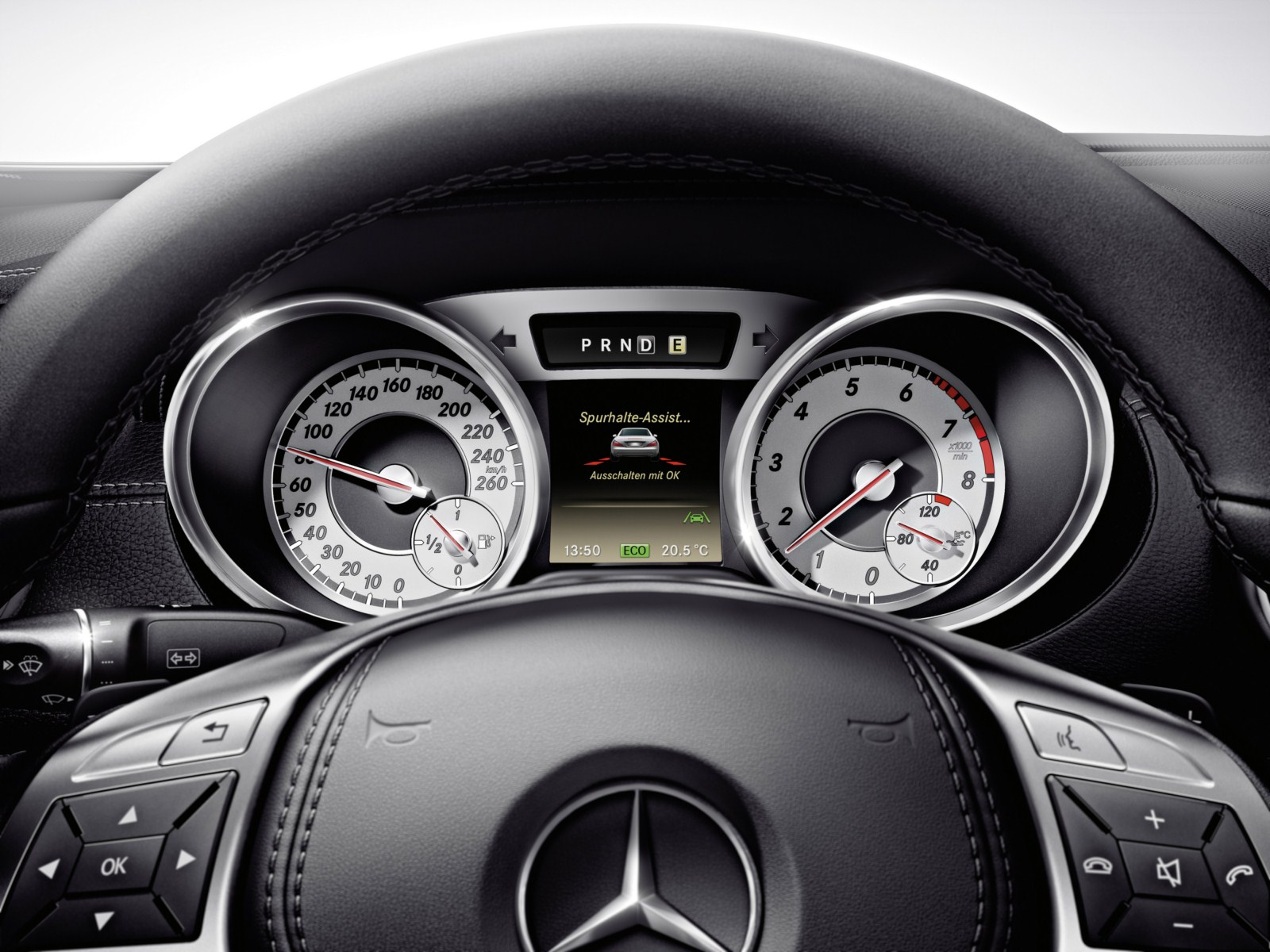
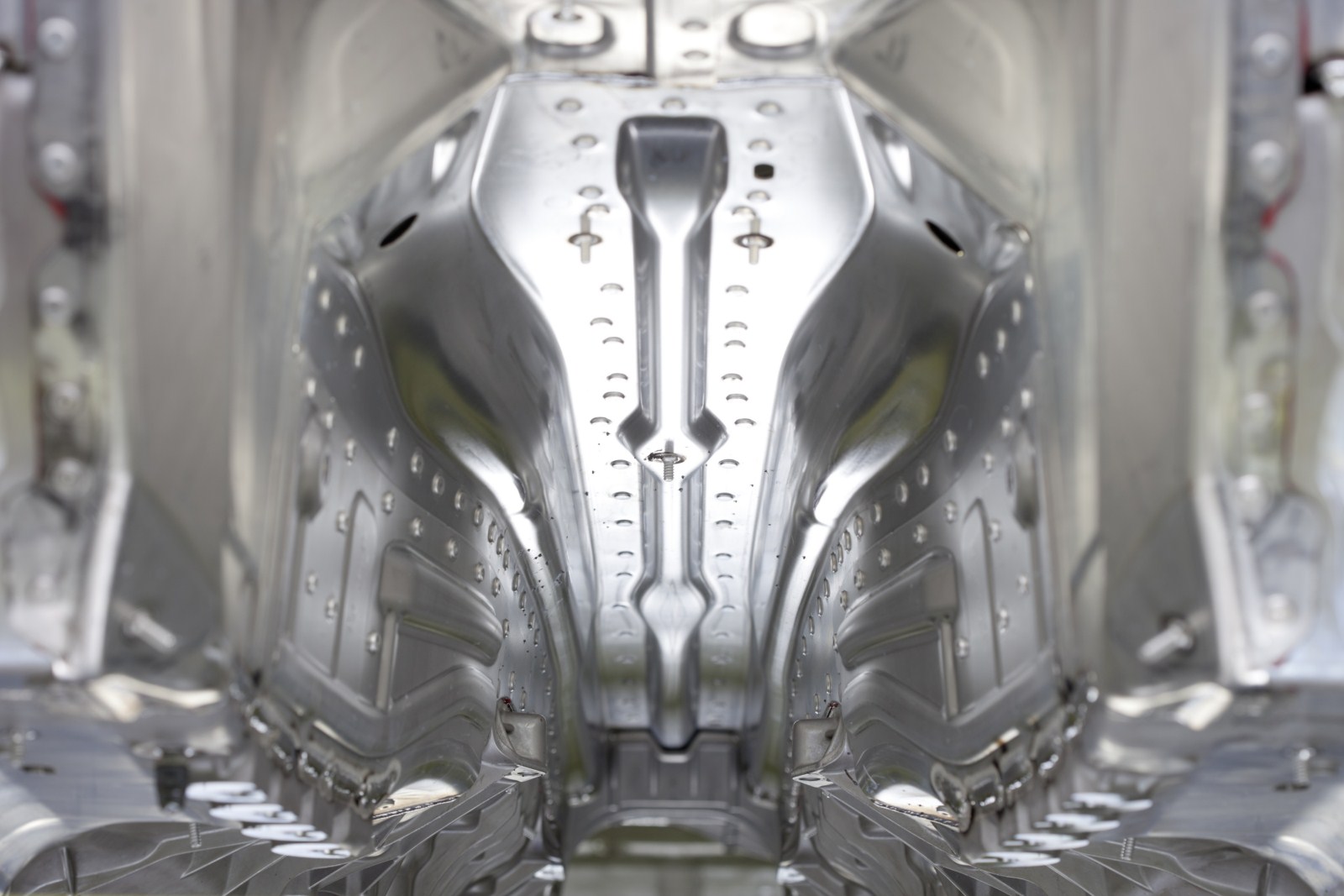
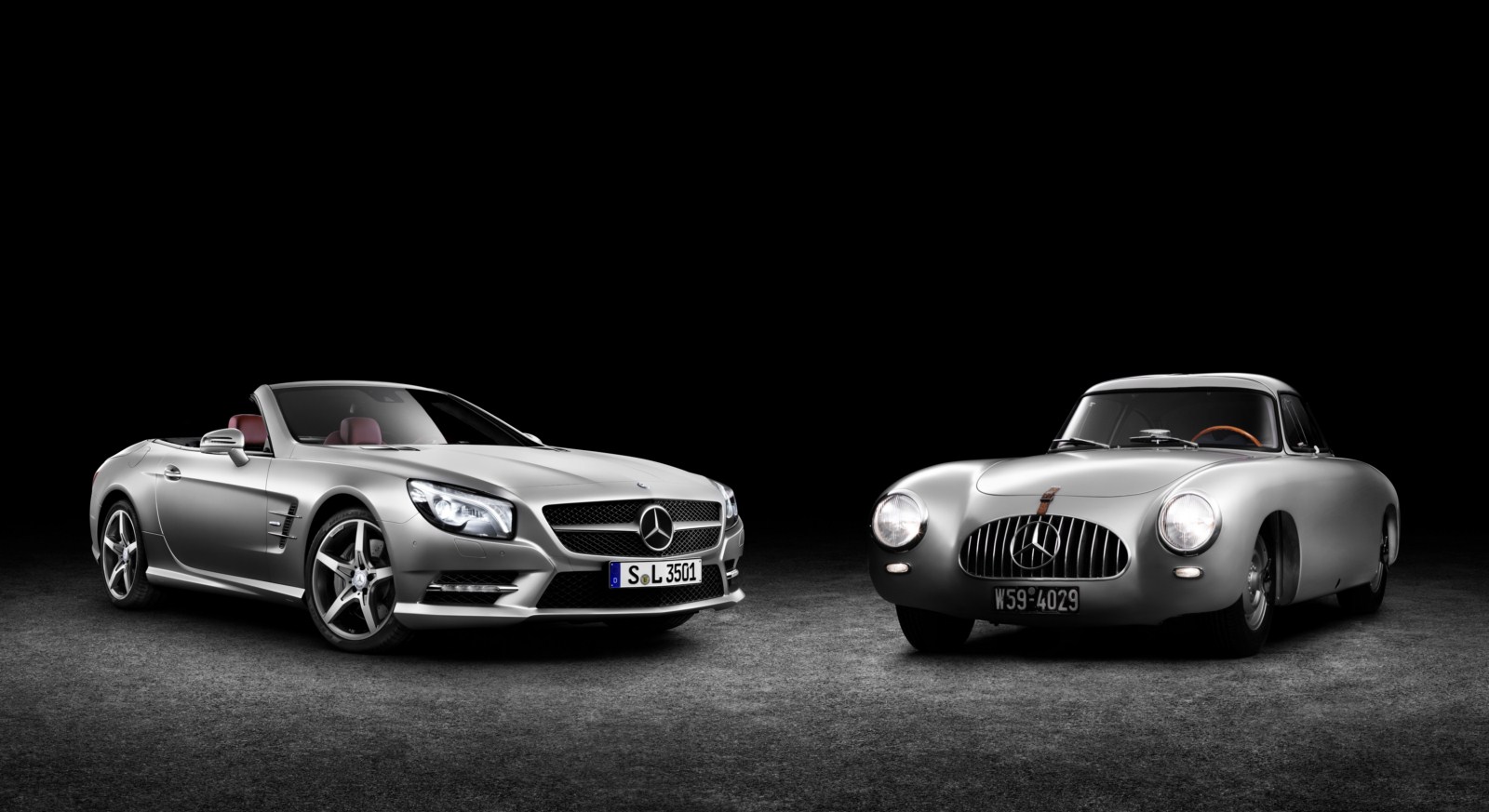
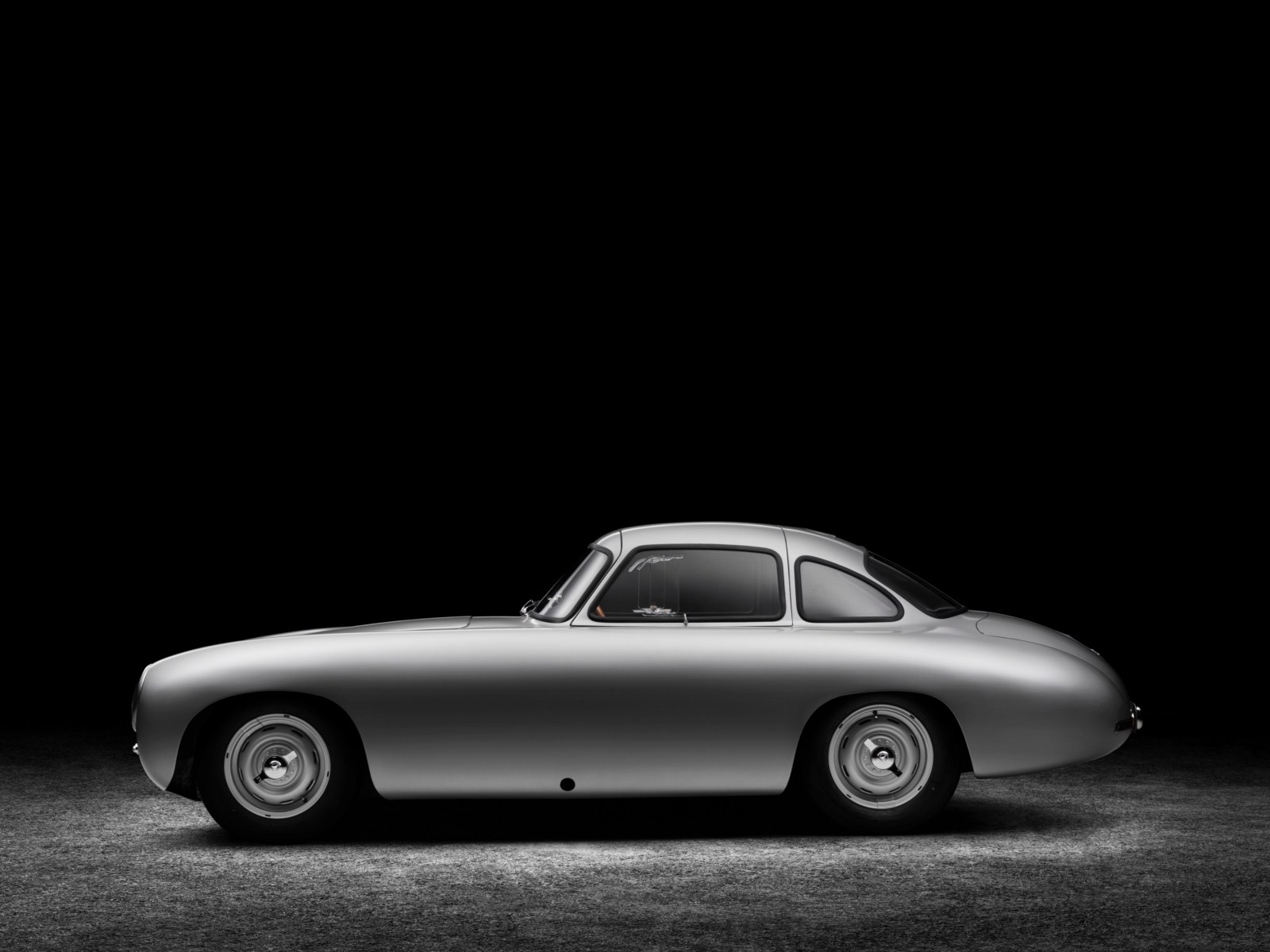
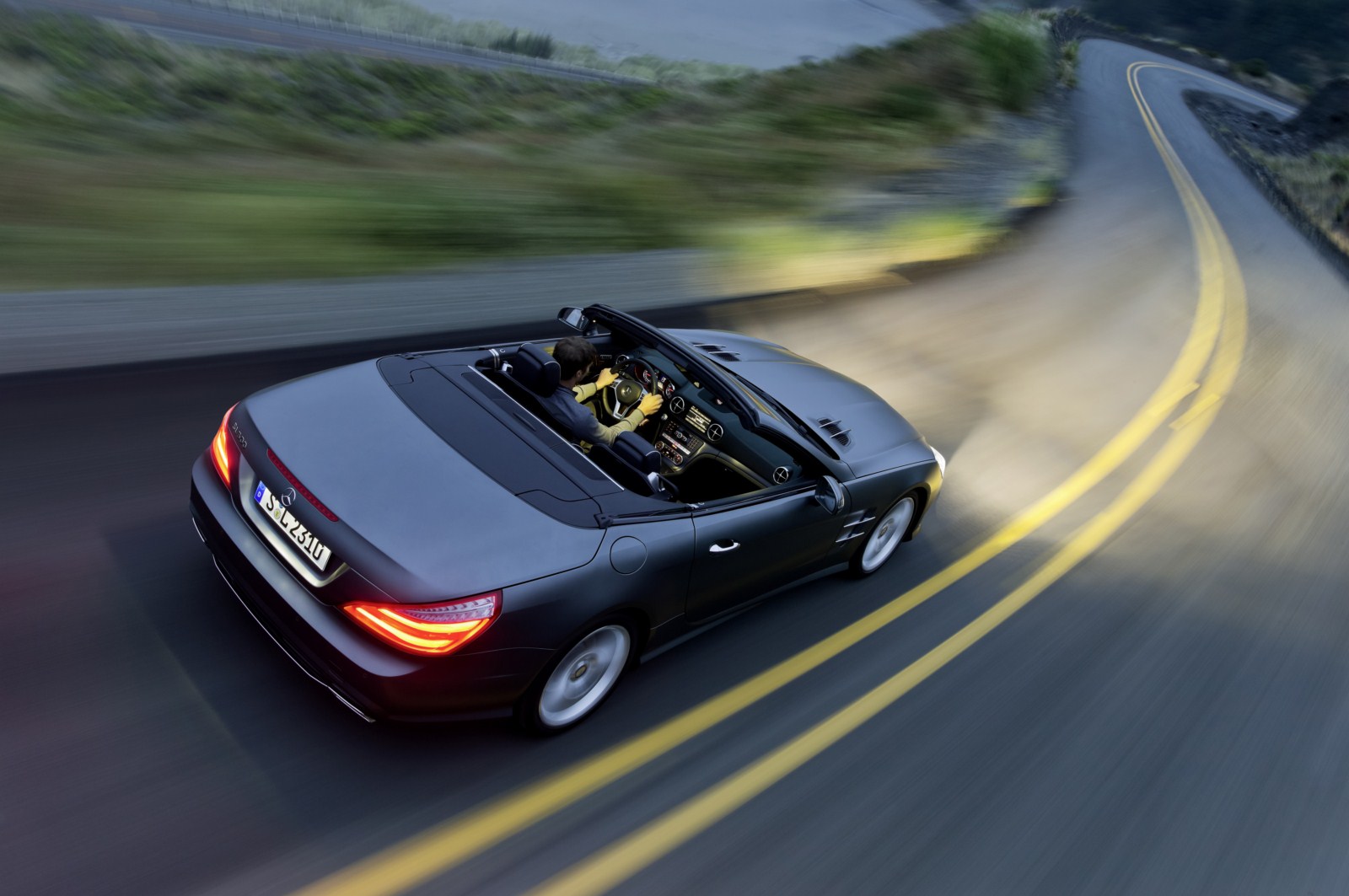
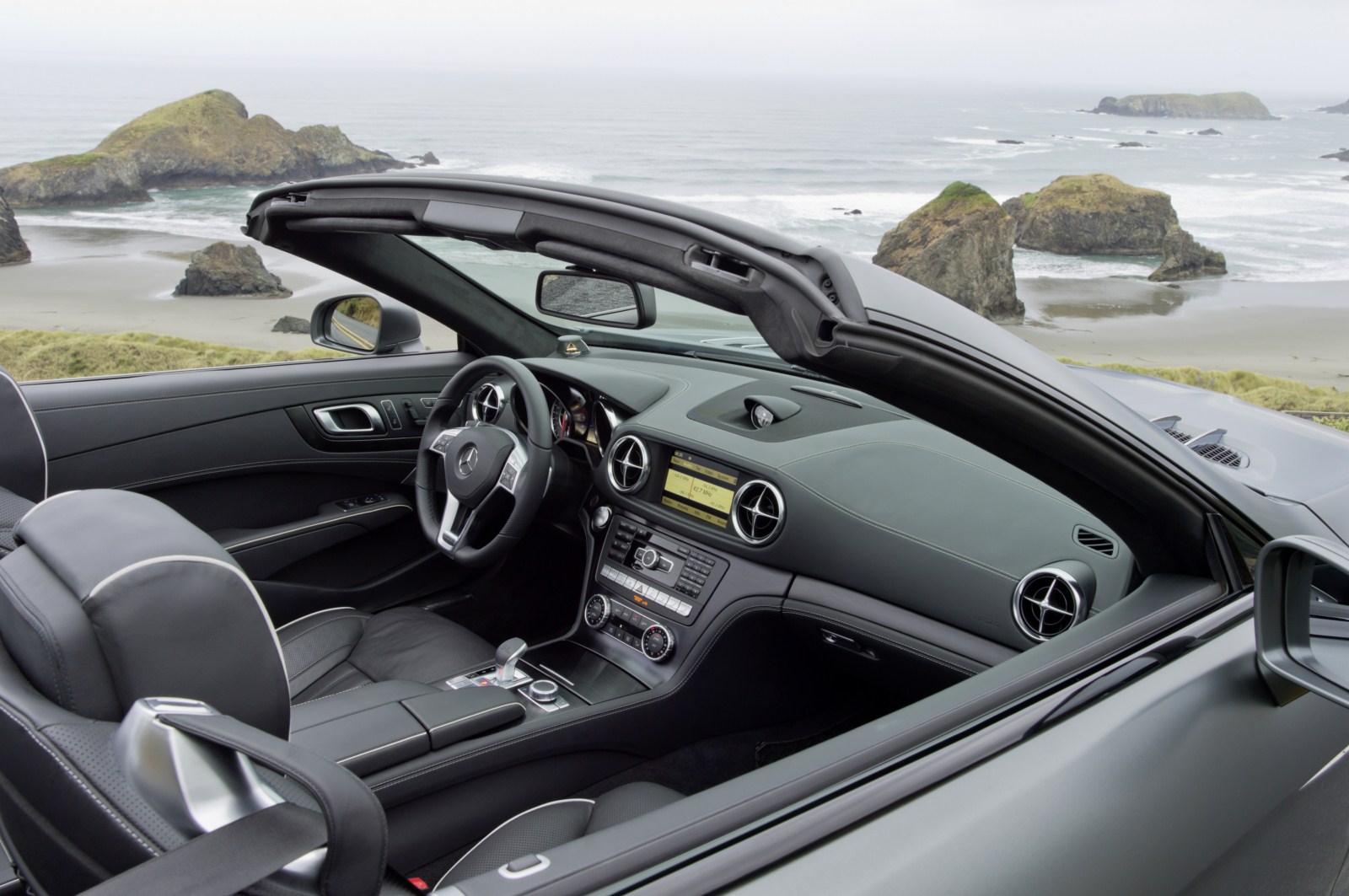
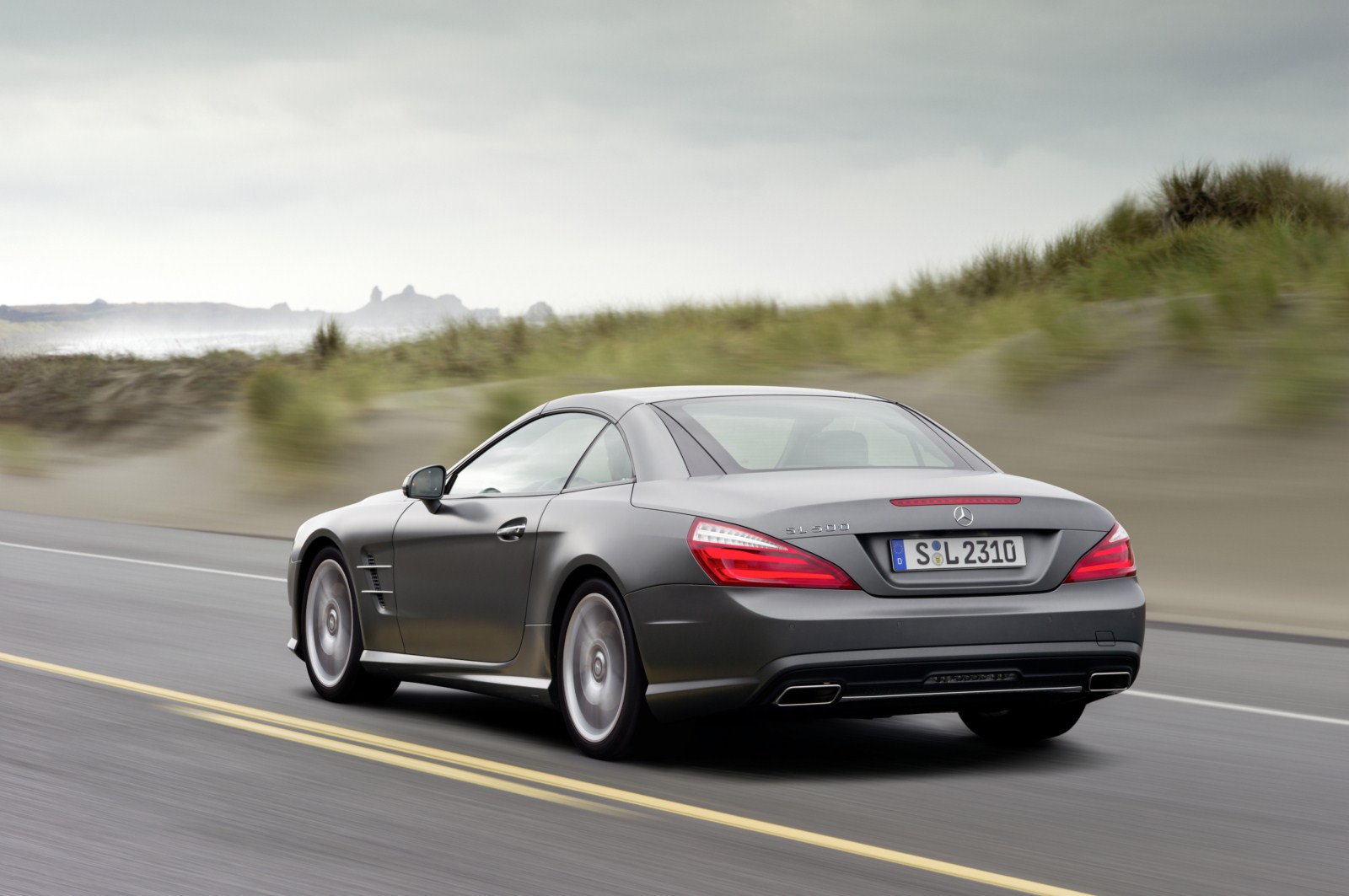
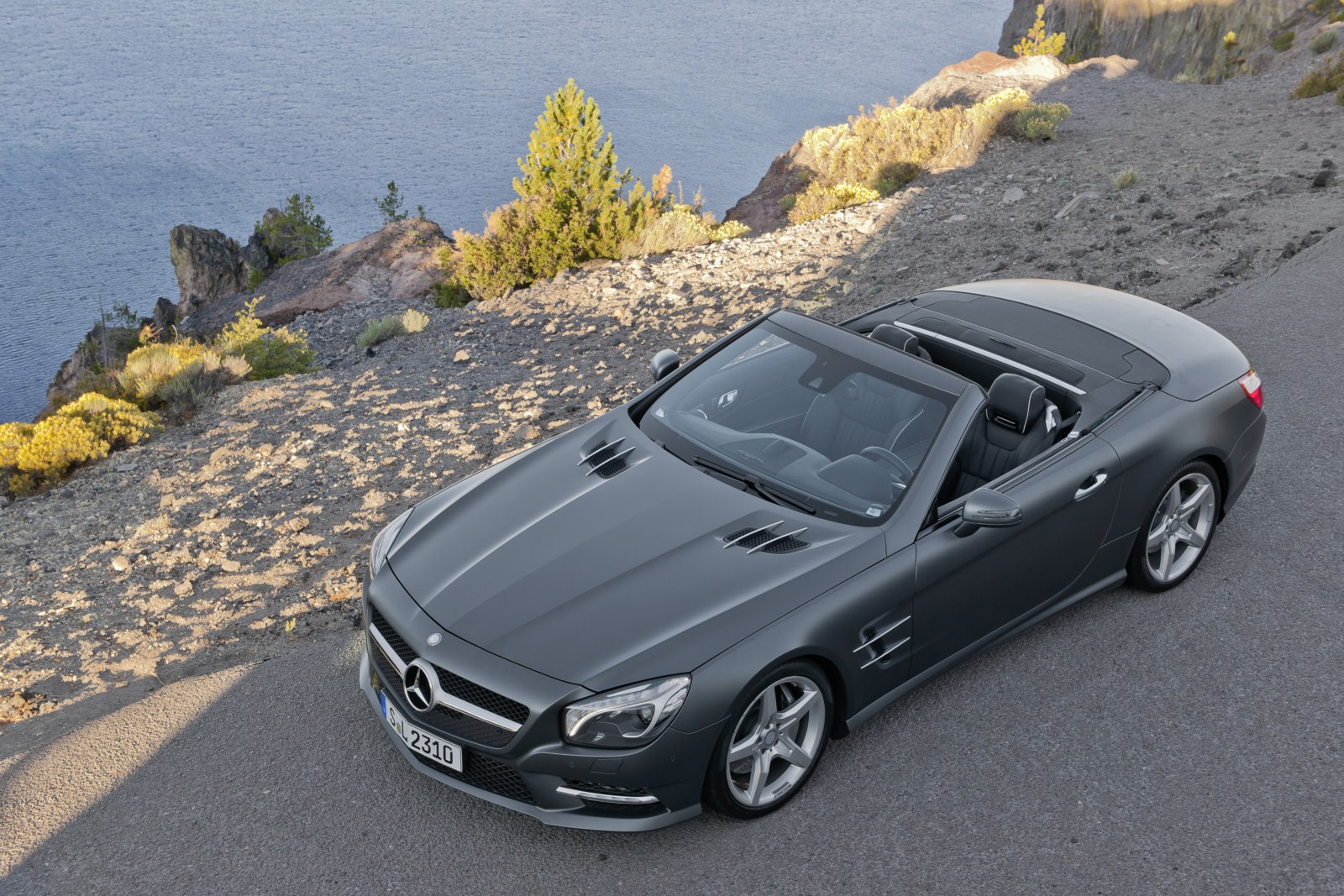
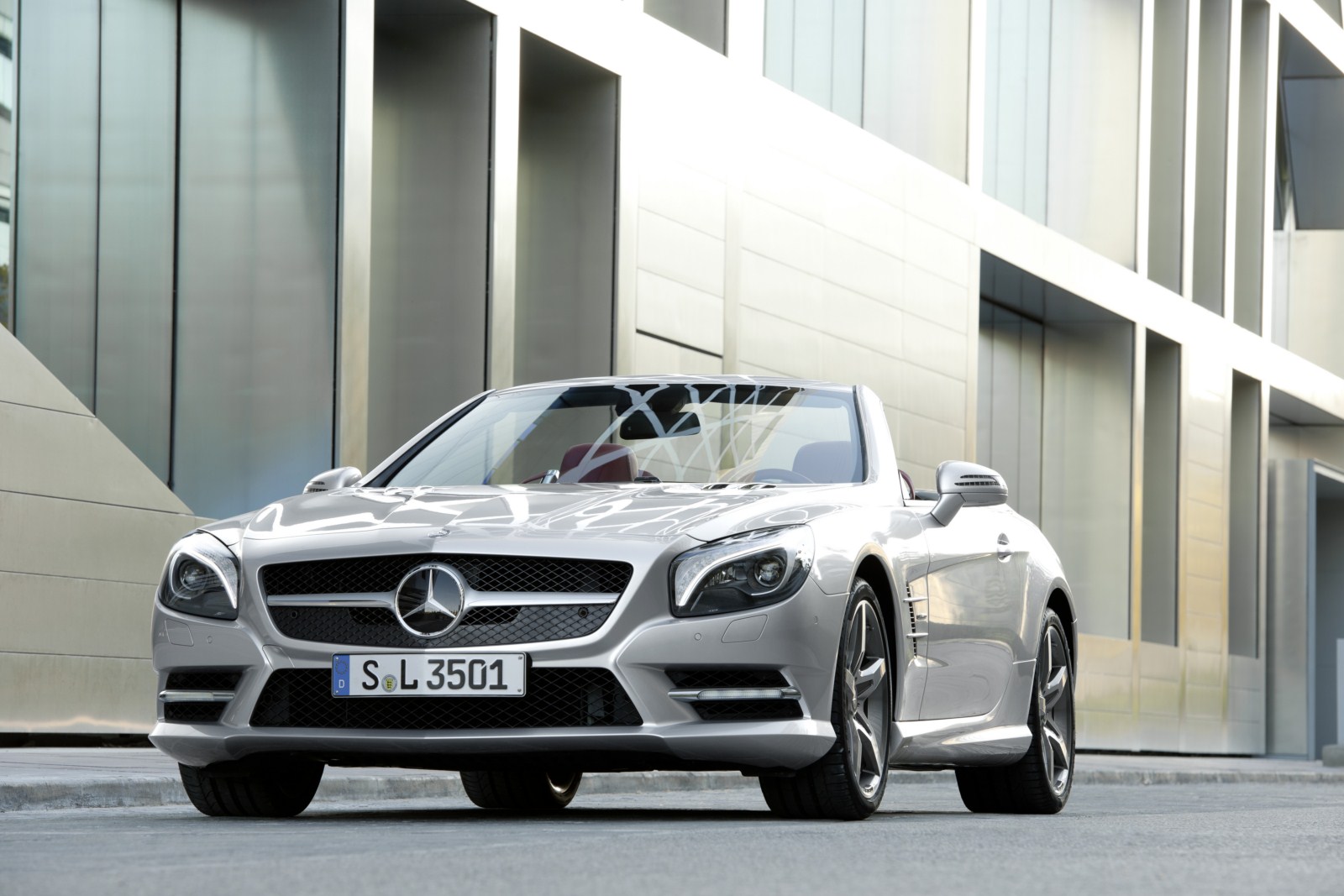
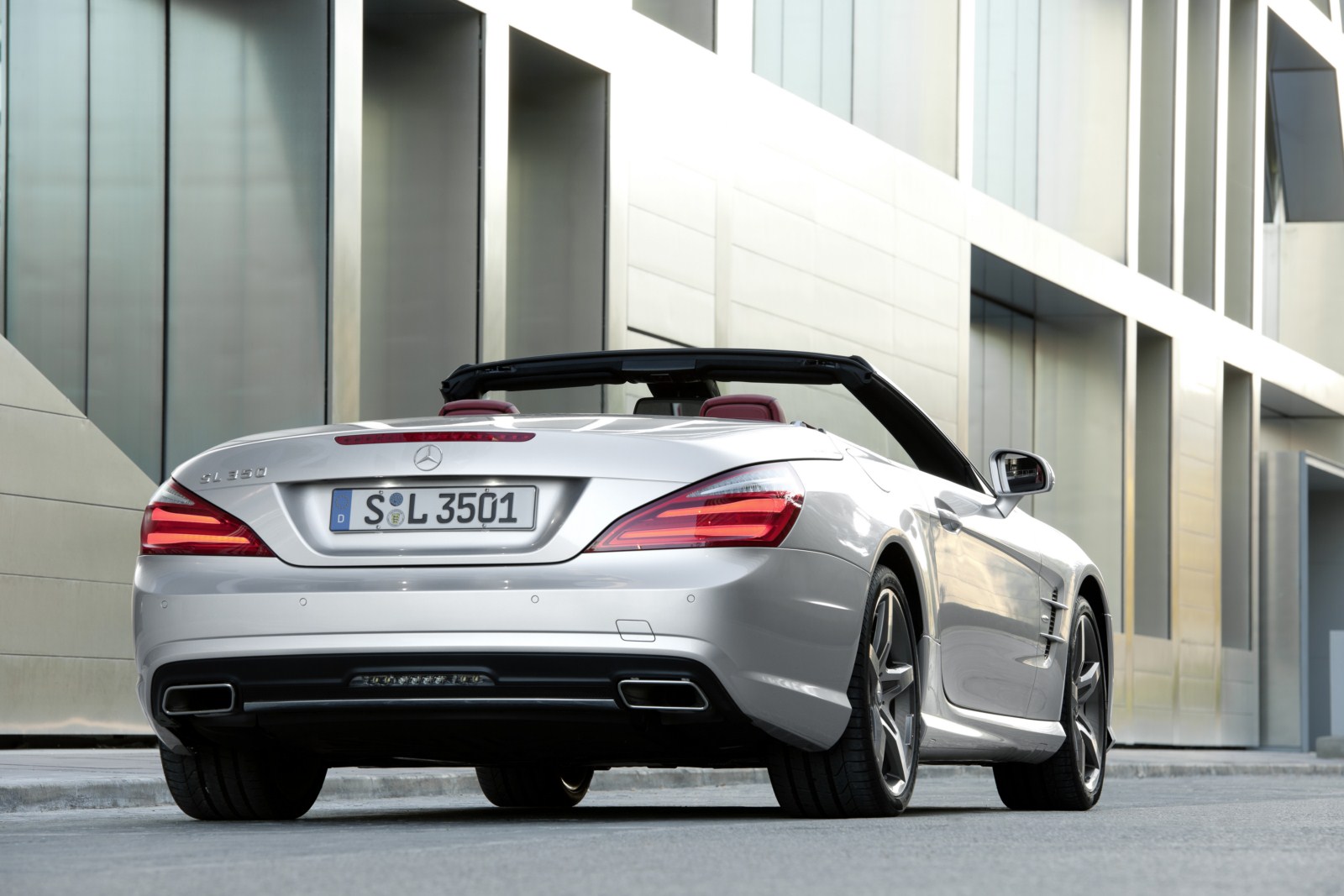
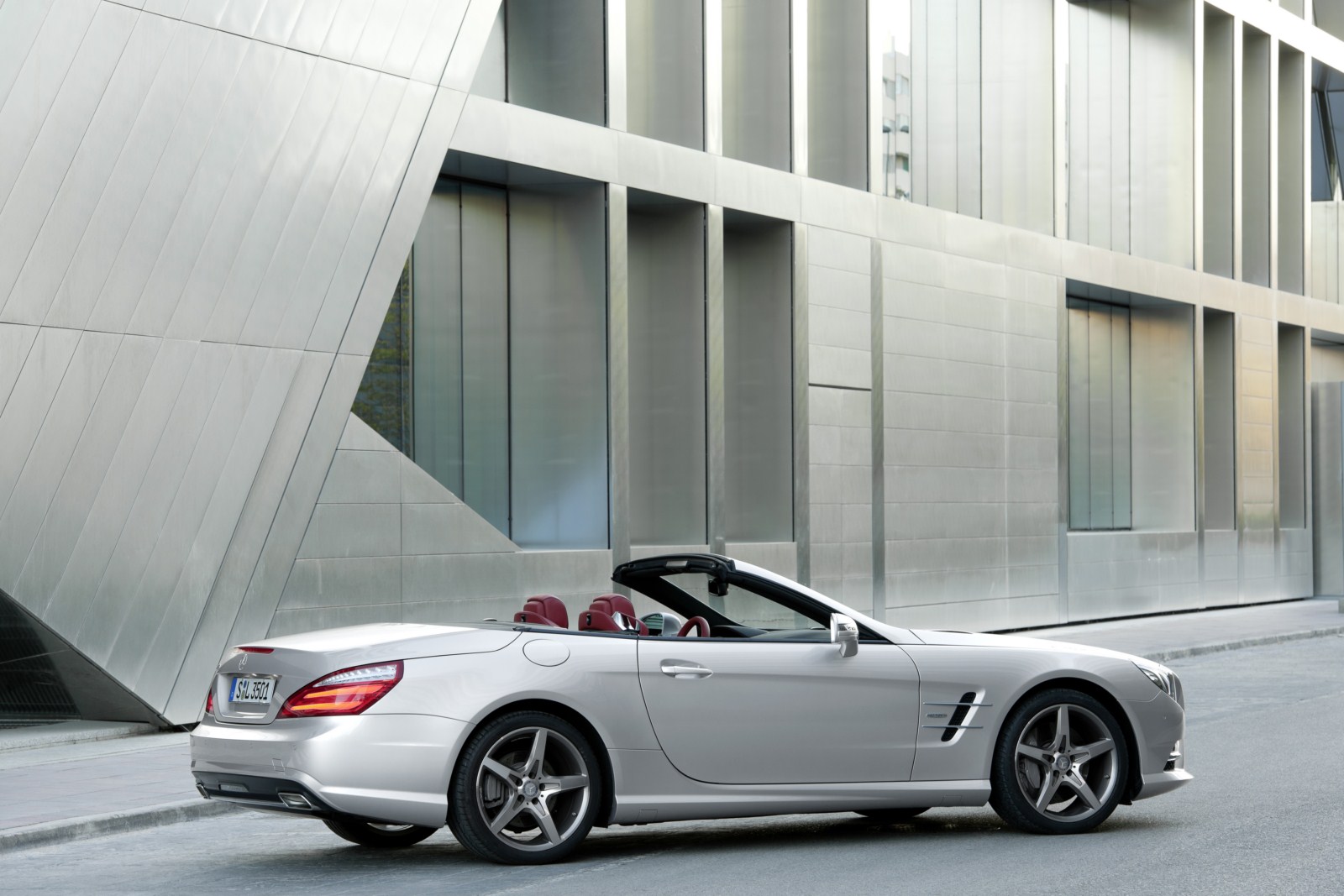
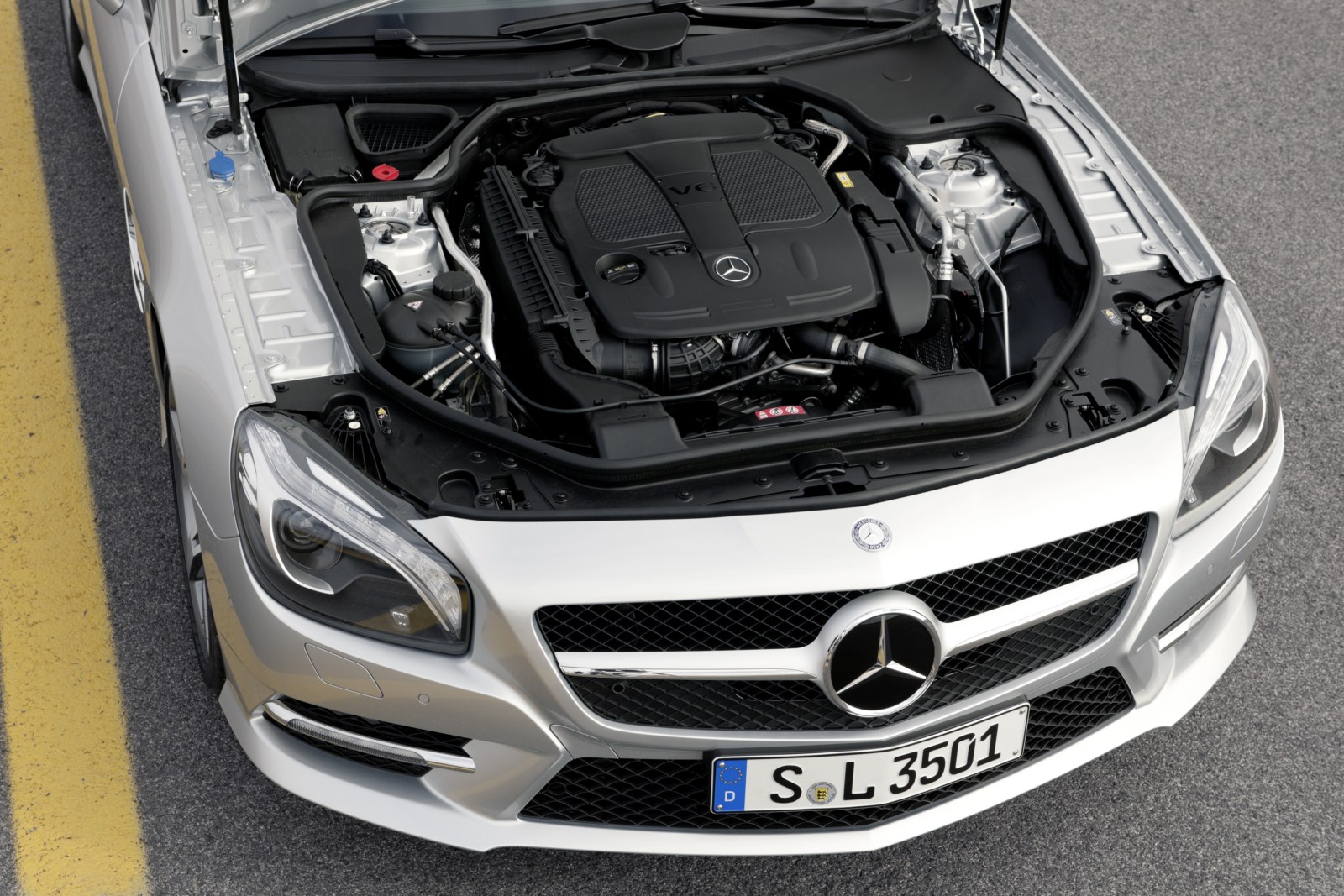
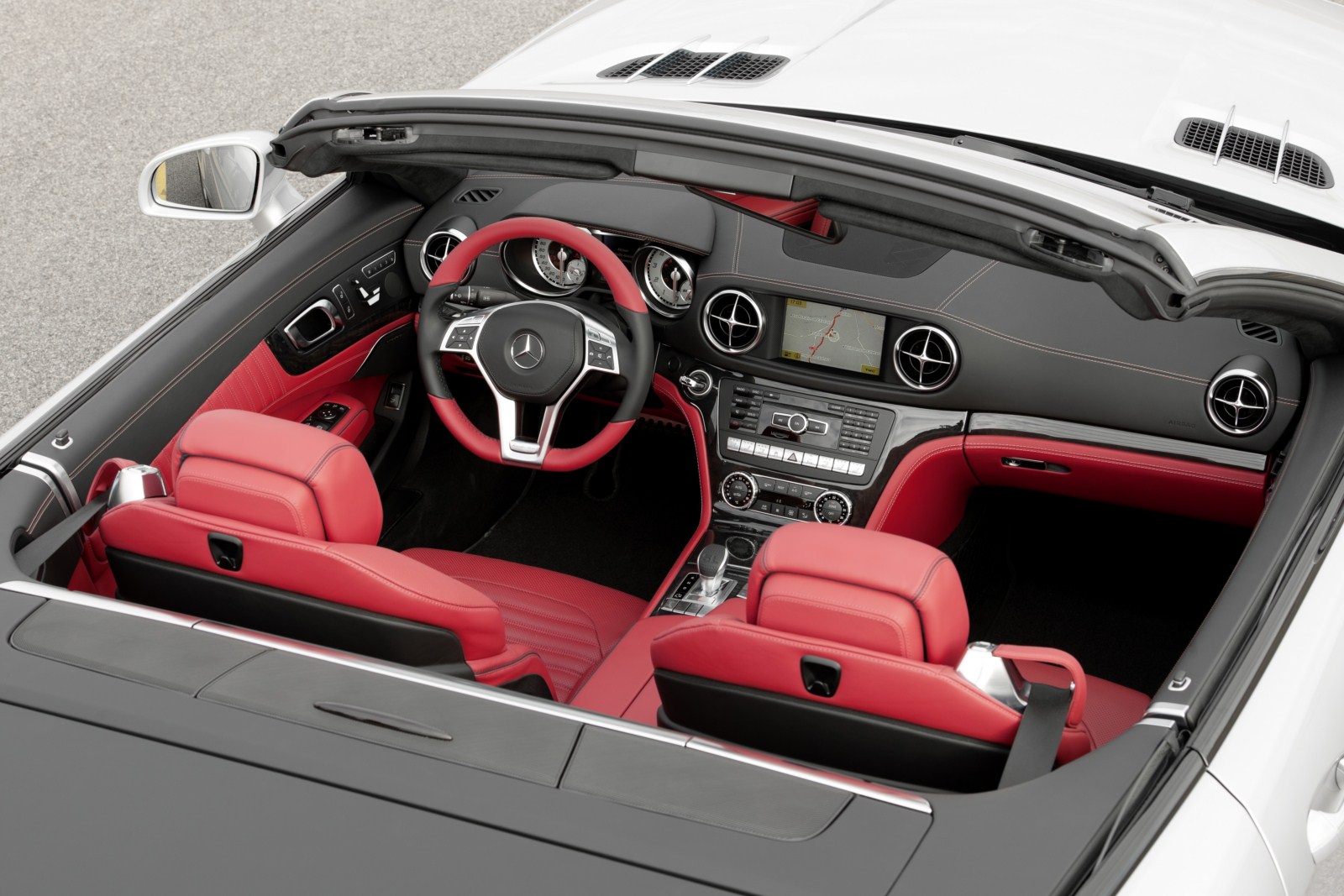
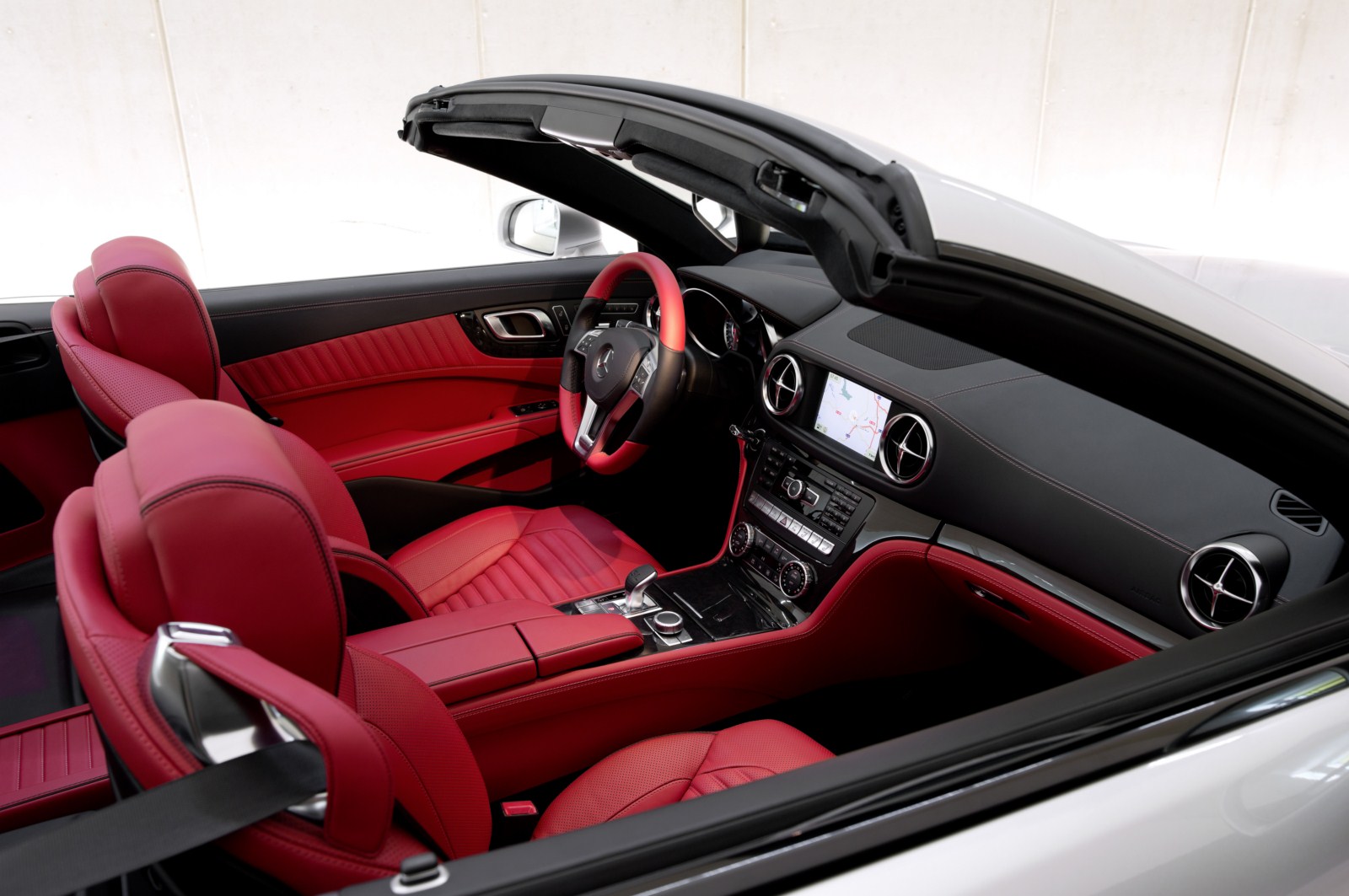
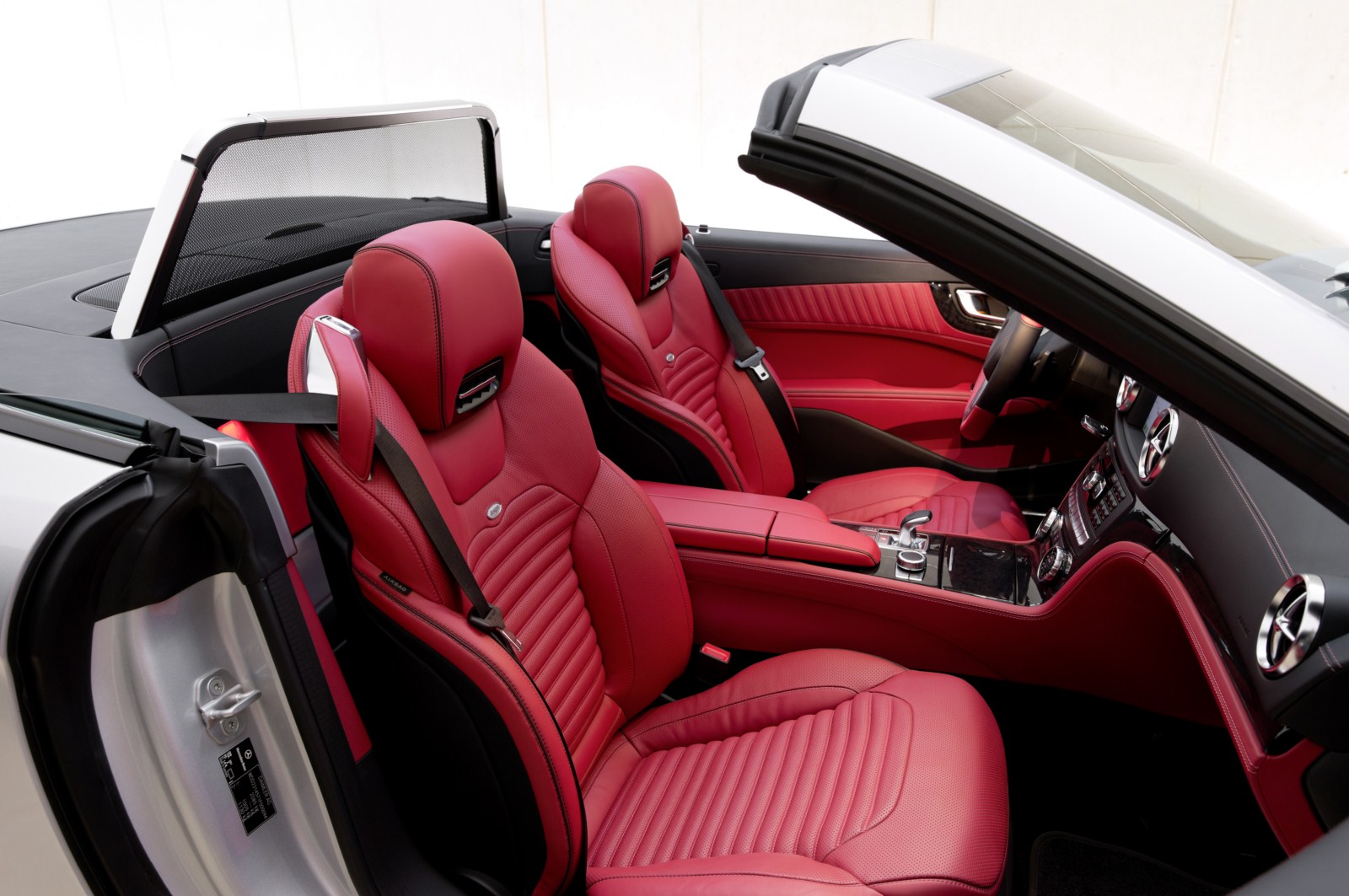
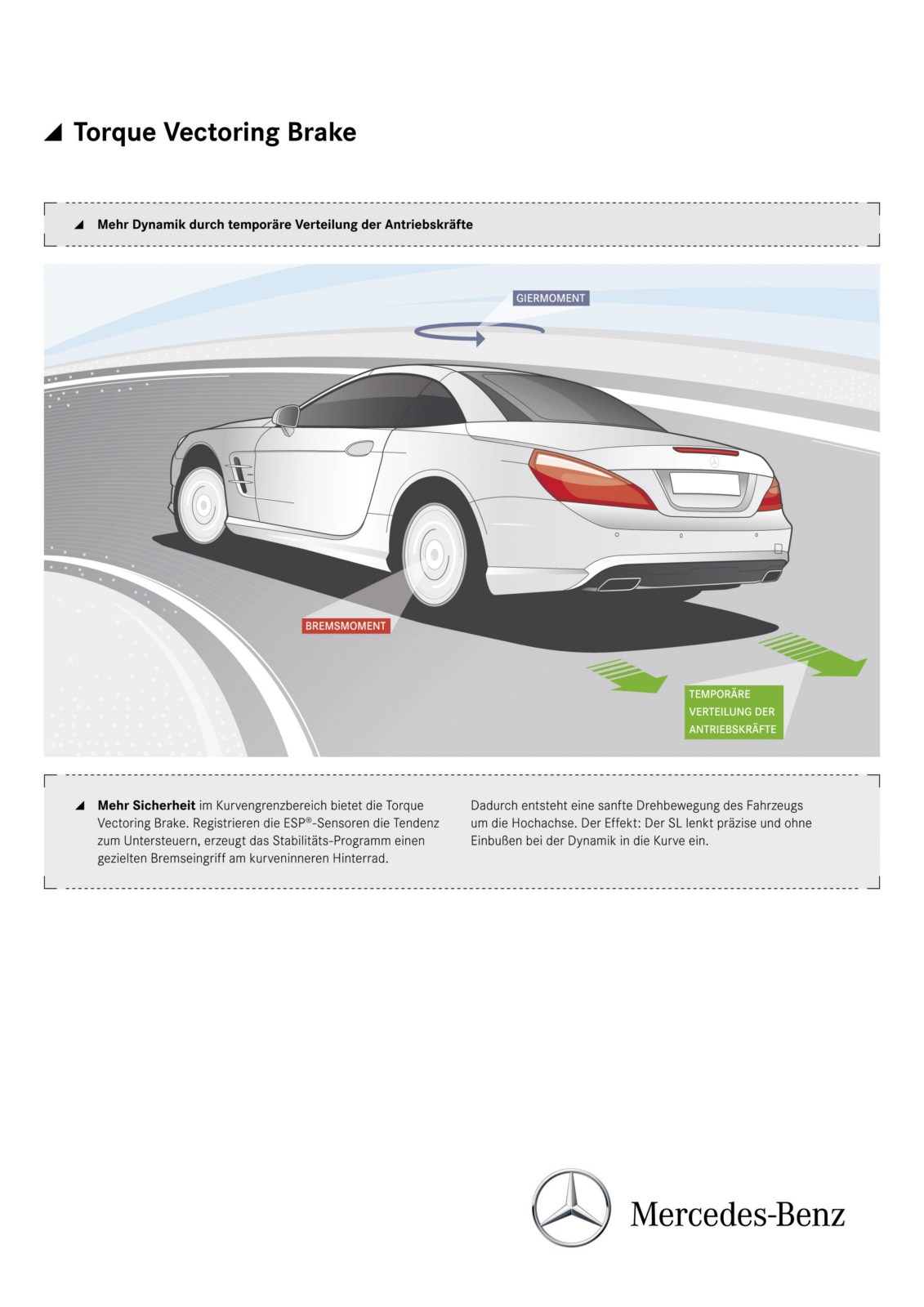
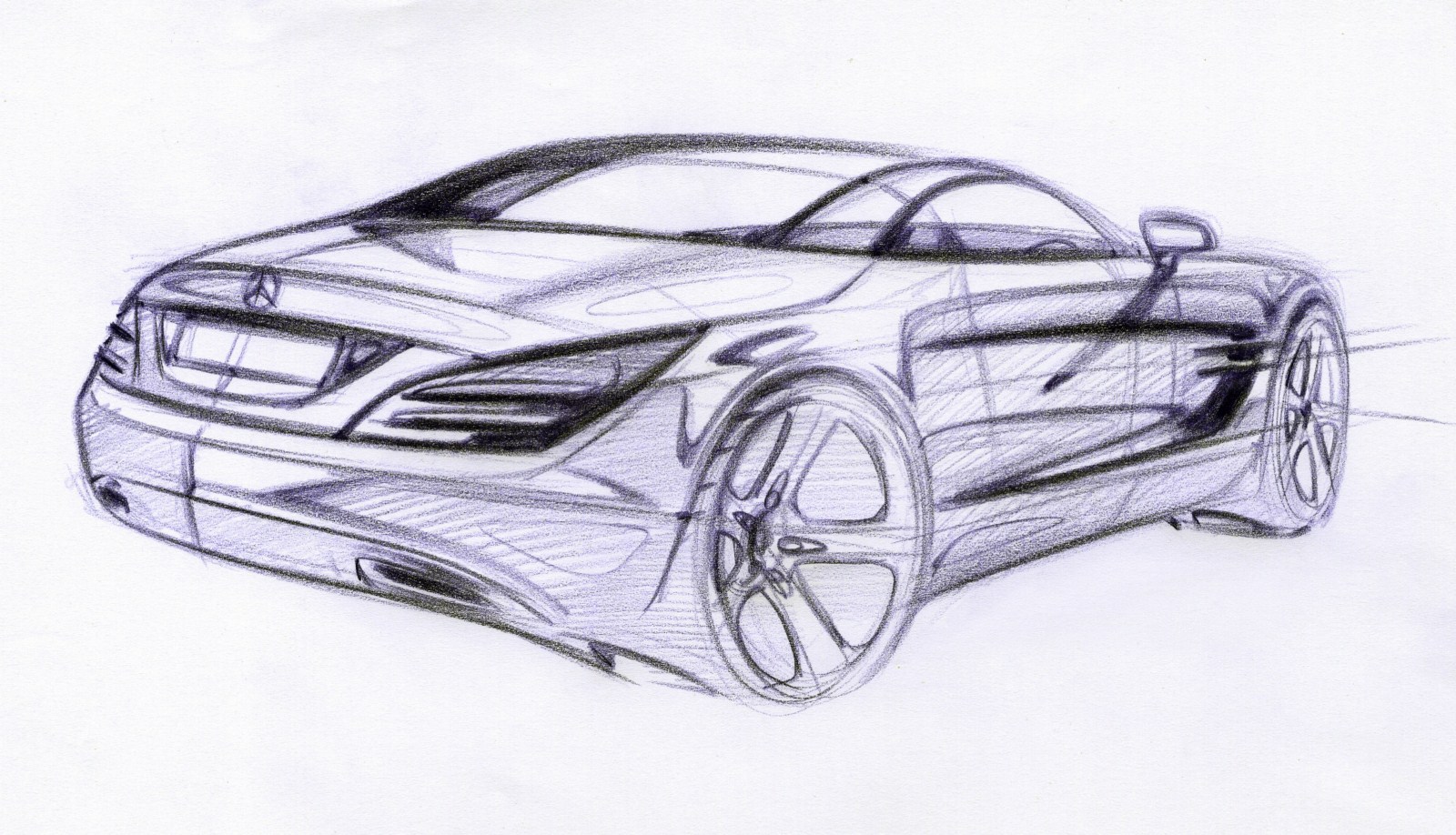
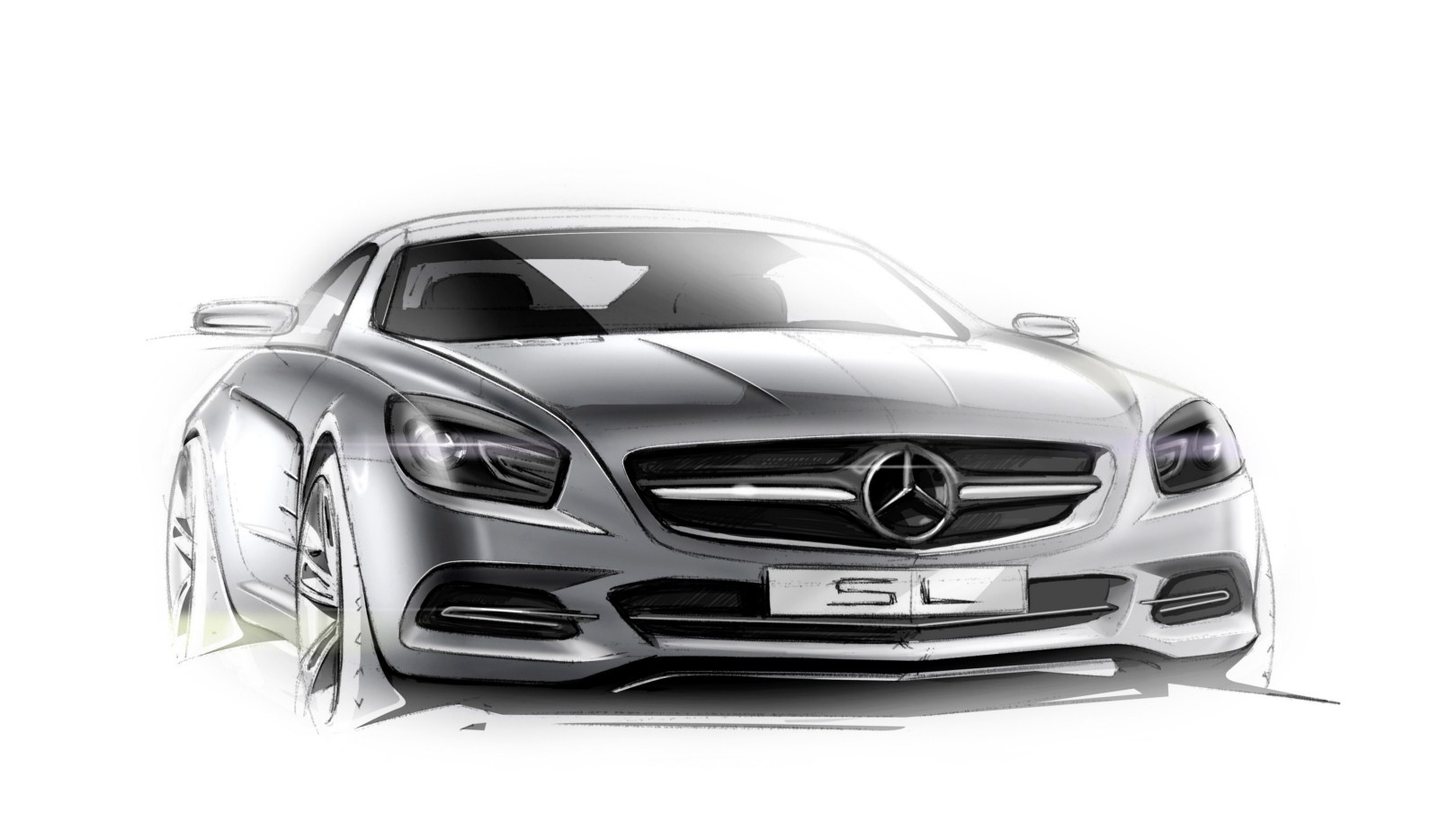
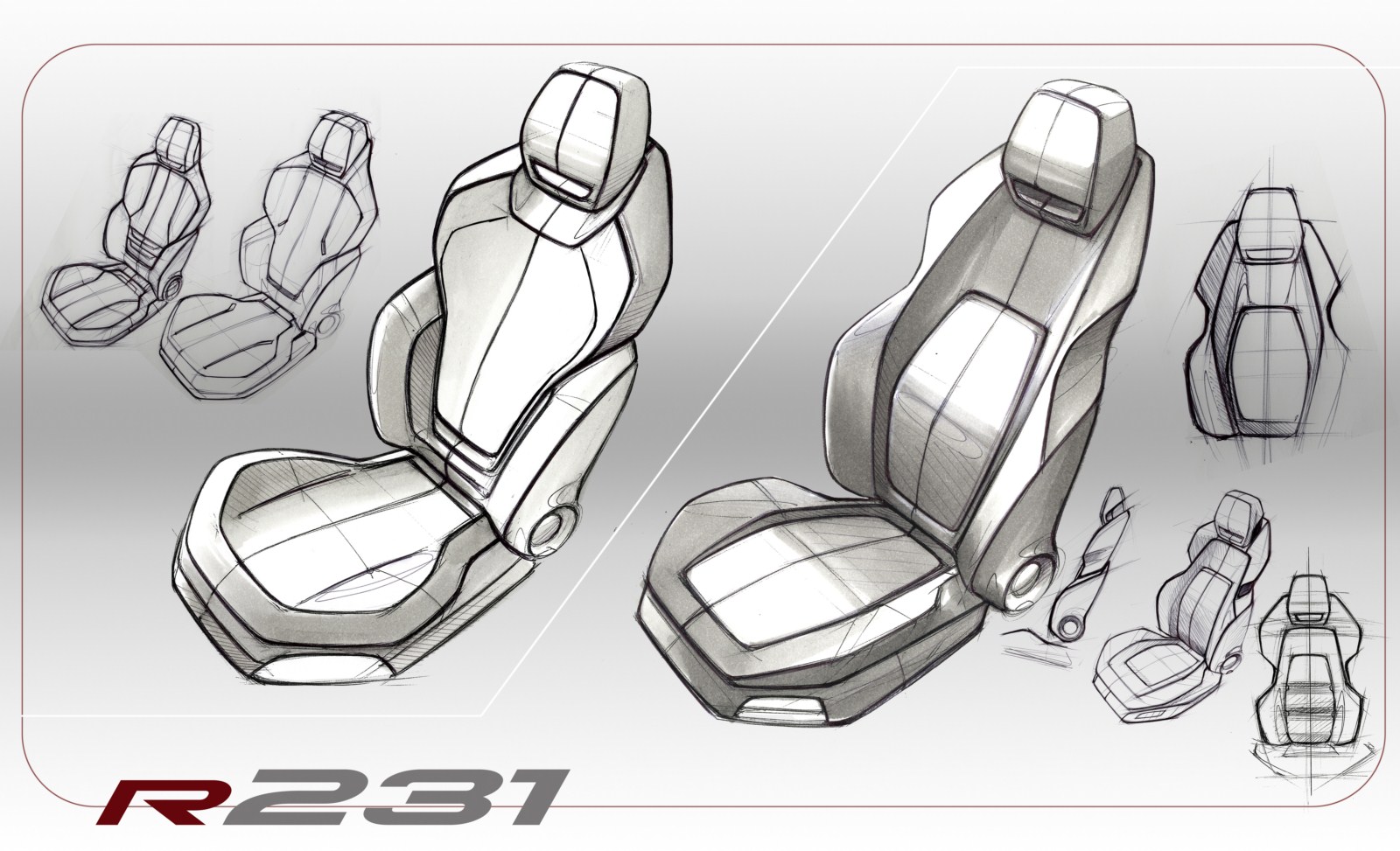
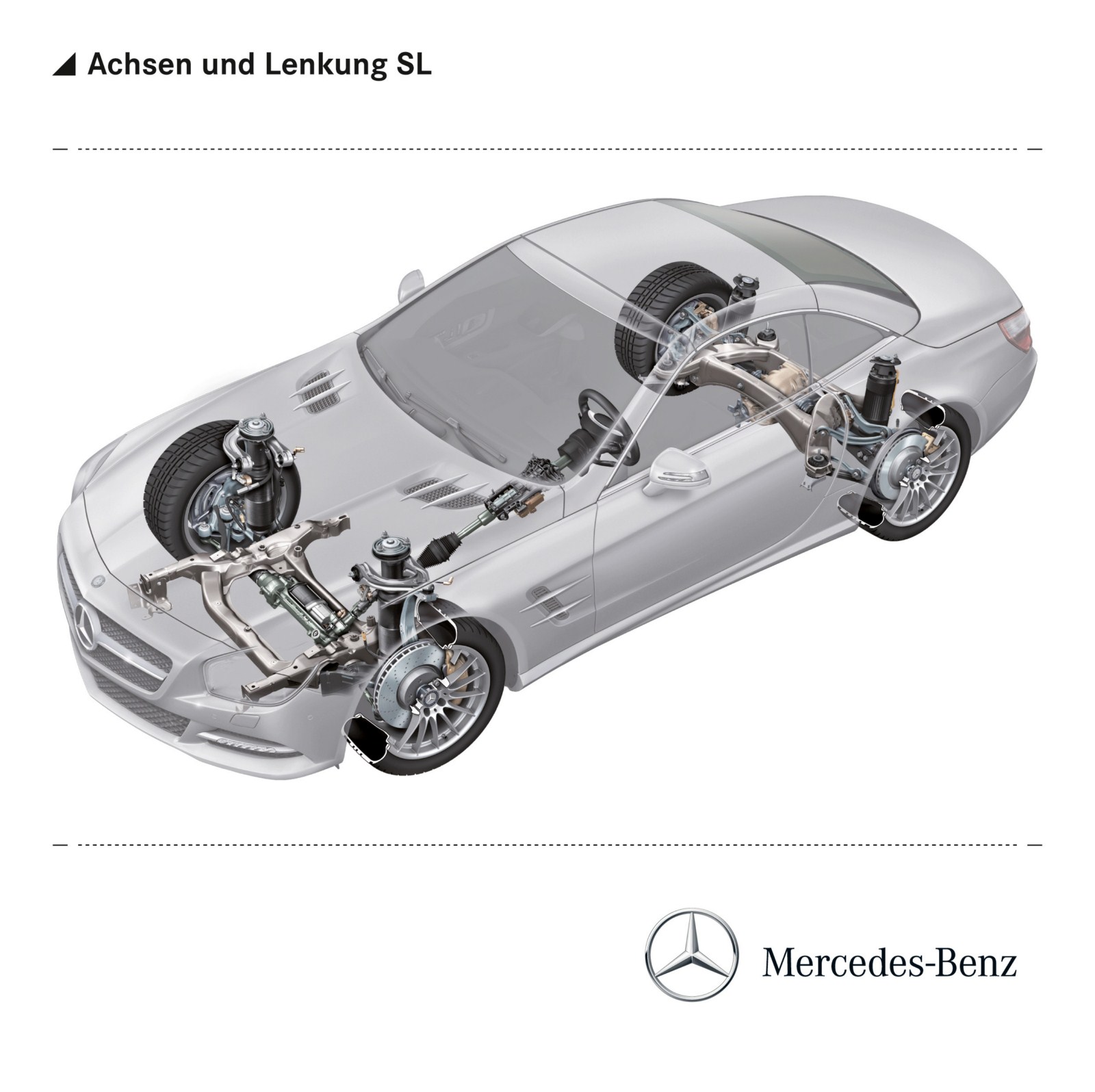
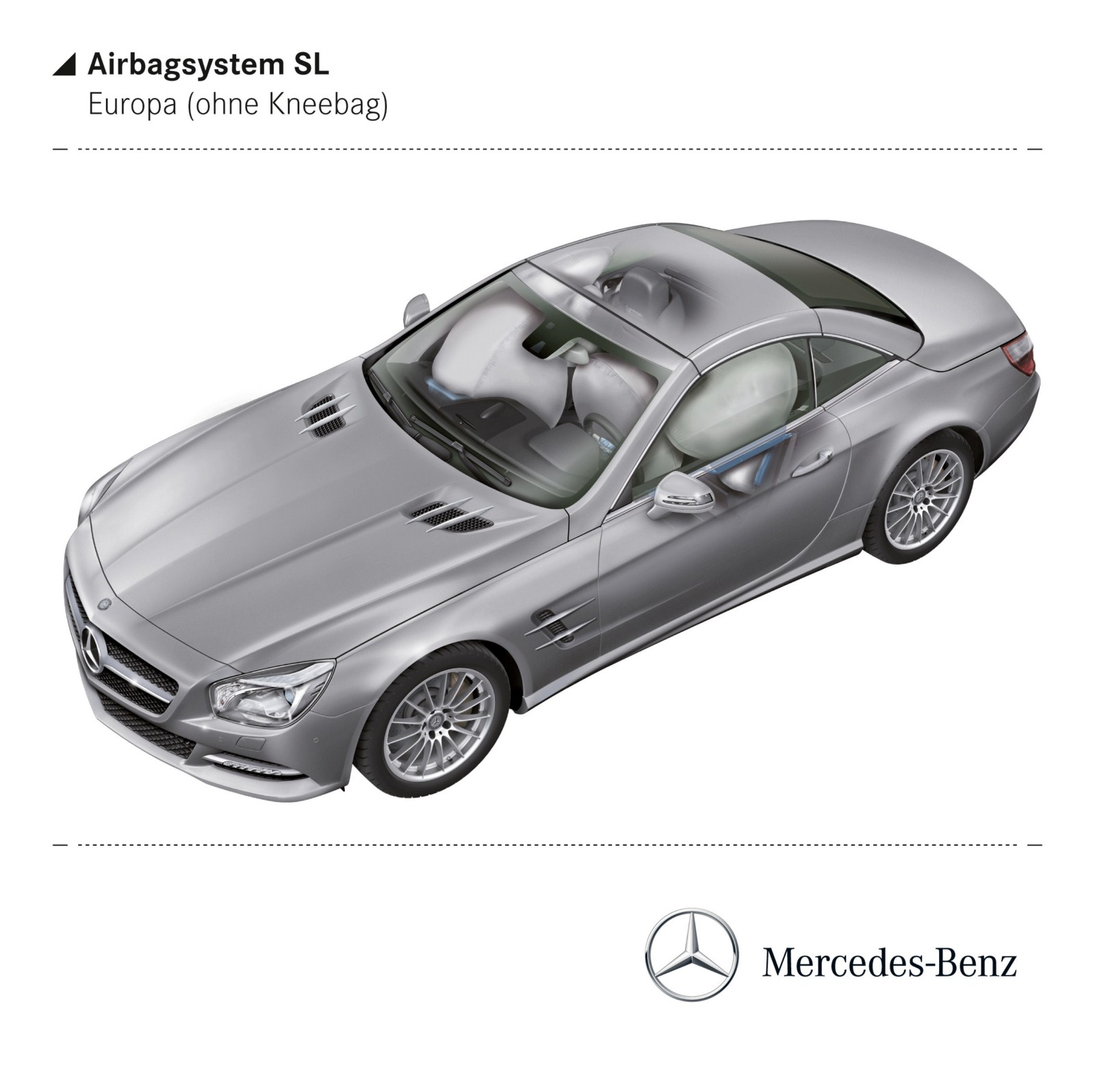
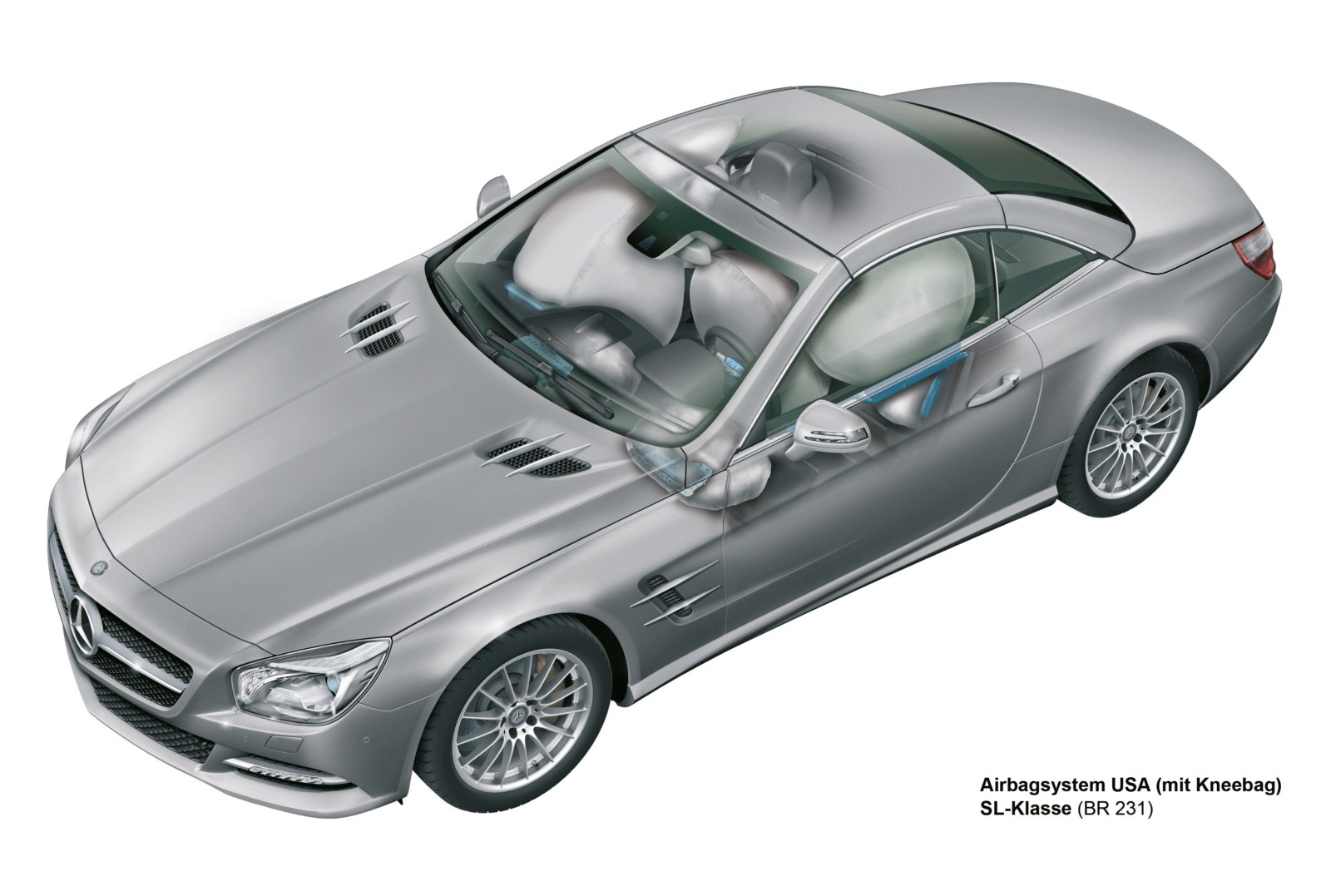
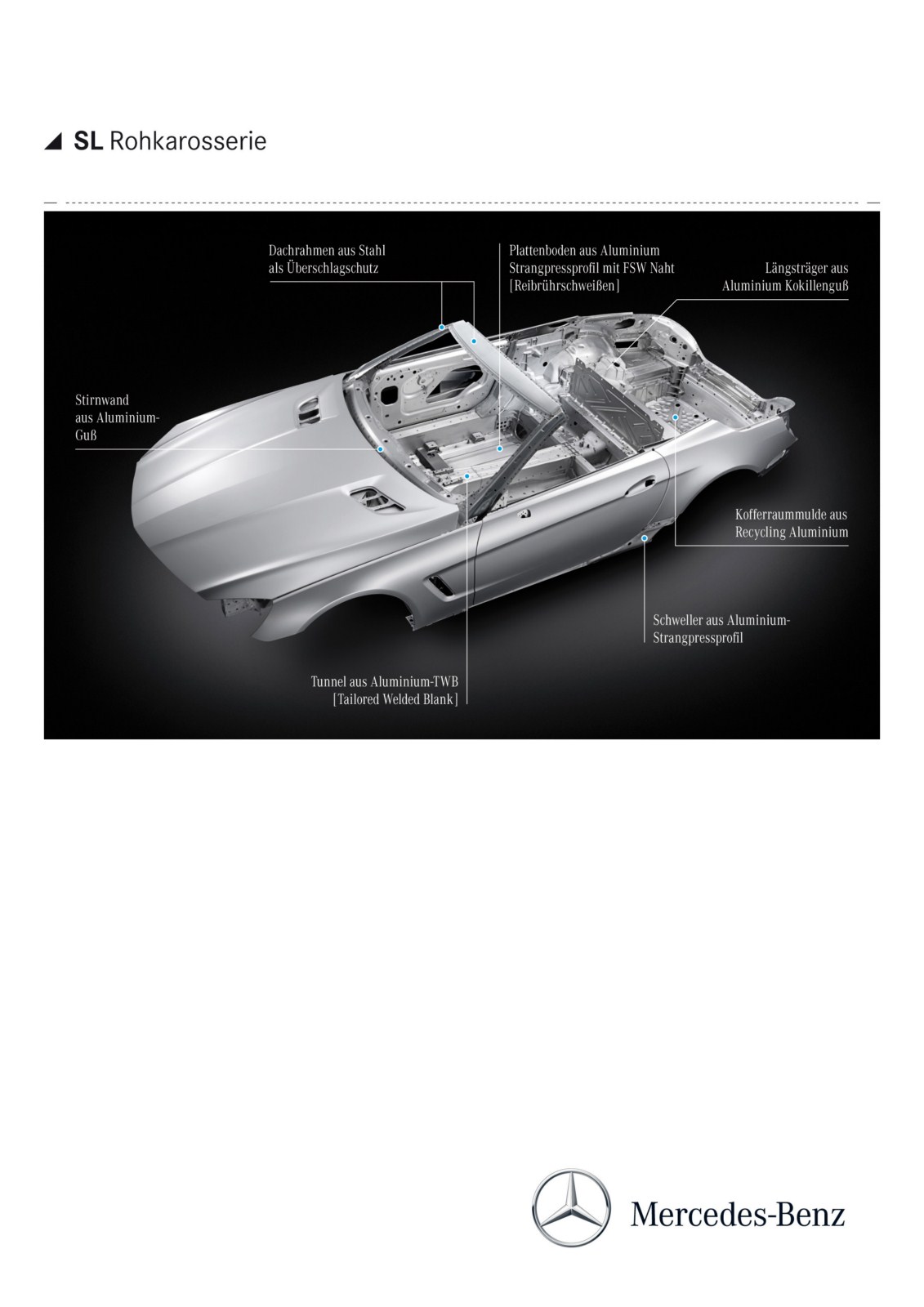
[Πηγή: Mercedes-Benz]
[learn_more caption=”Δελτίο Τύπου”]
The new Mercedes-Benz SL
Lightweight, athletic, luxurious
With the completely redeveloped SL, Mercedes-Benz continues a tradition that began 60 years ago. The letters “SL” have ever since been synonymous with a symbiosis of sportiness, style and comfort – and with groundbreaking innovations. The new SL has been produced for the first time almost entirely from aluminium and weighs up to 140 kilograms less than its predecessor. Its highly rigid all-aluminium bodyshell provides the basis for agile, sporty handling that has been taken to an entirely new level, coupled with exemplary roll characteristics and ride comfort. Even better driving dynamics come courtesy of the new BlueDIRECT engines; they are more powerful yet at the same time up to 29 percent more economical than the engines in the outgoing generation. Other new features include the unique Frontbass system, which turns the luxury sports car into a concert hall regardless of whether the top is open or closed, and the highly efficient adaptive windscreen wipe/wash system MAGIC VISION CONTROL; it supplies water from the wiper blade to the windscreen – as required and depending on the direction of wipe.
The new SL from Mercedes-Benz offers considerably more sportiness and
comfort than‑its successful predecessor, setting new benchmarks in the luxury roadster segment. Add to this absolute suitability for everyday use – making it an unparalleled all-rounder amongst sports cars. In short: anyone who talks about the new SL is talking about passionate, refined motoring of the highest calibre.
Dr Dieter Zetsche, Chairman of the Board of Management of Daimler AG and Head of Mercedes-Benz Cars: “There are around 900 million cars in the world and thousands of models. But there are only a handful of automotive icons. Our SL is one of them: it has class, it has style, it oozes comfort and luxury. But it blends all of this with unbelievable sportiness and dynamism. Virtually no other car can meet Gottlieb Daimler’s standard as perfectly as our SL: the best or nothing.”
Lighter and more rigid: sophisticated all-aluminium bodyshell
The new-generation Mercedes-Benz SL takes the meaning of the famous letters “SL” – super-light – literally. Consistent weight reduction is one of the most outstanding design characteristics in the new SL – as was the case in its
namesake, the original SL of 1952 with its lightweight tubular frame. For the first time Mercedes-Benz has implemented an all-aluminium bodyshell in a series-production model. Only very few components consist of other materials. The designers use the even lighter magnesium for the cover behind the tank. High-strength steel tubing is integrated in the A-pillars for safety reasons.
The new aluminium bodyshell weighs around 110 kilograms less than it would using the steel technology from the predecessor. “The effect is rather as if a heavyweight-class passenger had got out of the car” says Dr Thomas Rudlaff, responsible for the aluminium bodyshell at Mercedes-Benz. “The result is
perceptible and measurable. Less weight means more dynamism and less
consumption. In other words: the motoring enjoyment increases, the
environmental burden decreases.”
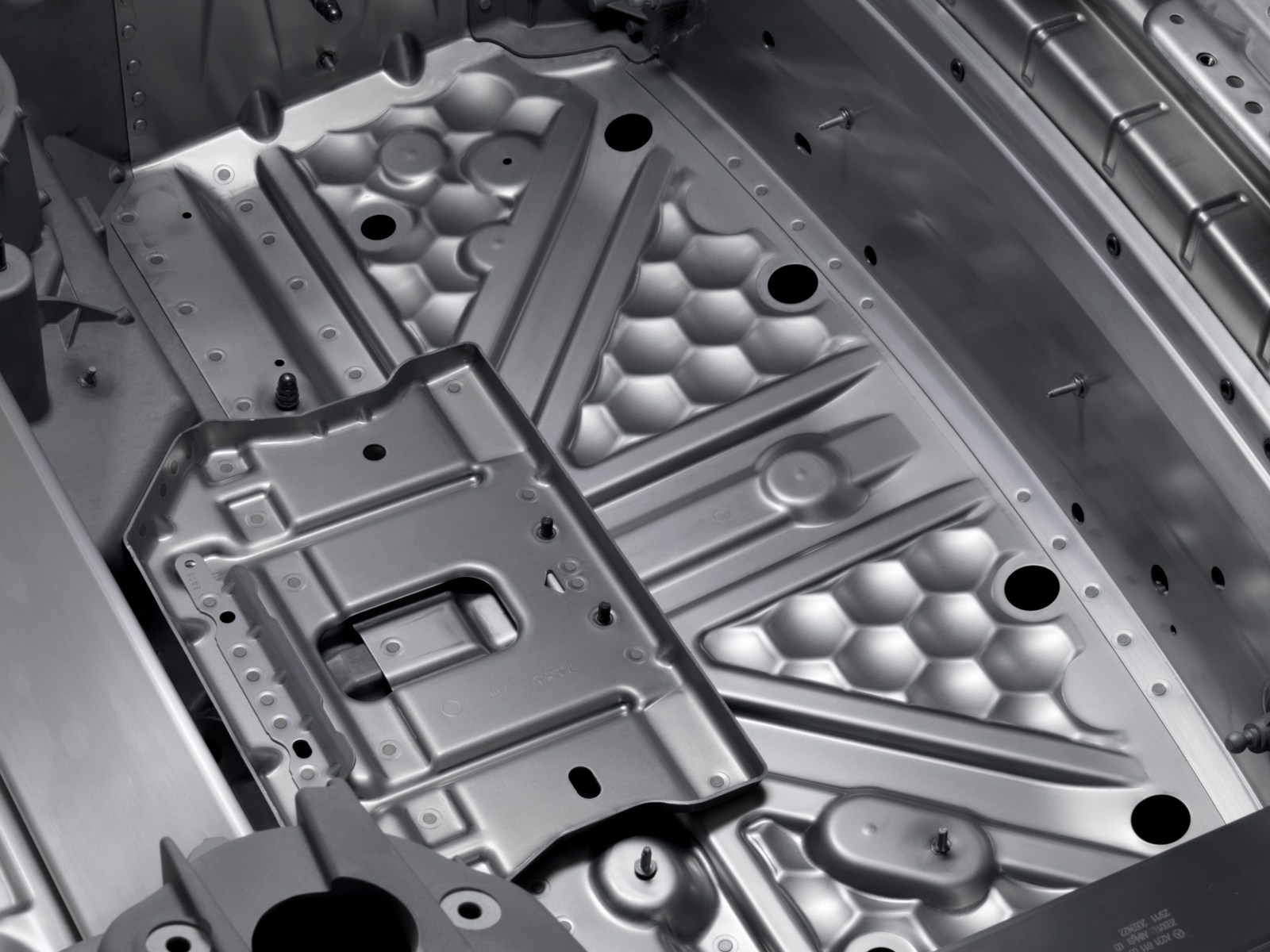
The aluminium structure is not only lighter but also proves superior to the predecessor’s steel construction in terms of rigidity, safety and comfort. This is achieved thanks, among other things, to its intelligent lightweight construction with components optimised for their specific task. Thus, diverse processes
are used to make different kinds of aluminium depending on the use the
component is to be given: the parts are made by chill casting or vacuum
die-casting, worked into extruded aluminium sections or into aluminium
panels of different thicknesses. The result: high rigidity, high safety levels
and better vibration characteristics.
Although the new SL is even more comfortable and has more safety devices on board than its predecessor and therefore does actually sacrifice some of the weight saved through the aluminium bodyshell, the scales show some
astonishing figures: the new SL 500 (1785 kg) weighs around 125 kilograms less than its predecessor bearing the same name. On balance, the SL 350 (1685 kg) is even 140 kilograms lighter – all thanks to a host of other intelligent enhanced details to reduce weight, which Mercedes-Benz has
also implemented in the new SL in addition to the aluminium bodyshell.
Driving pleasure: frugal, powerful engines and agile suspension
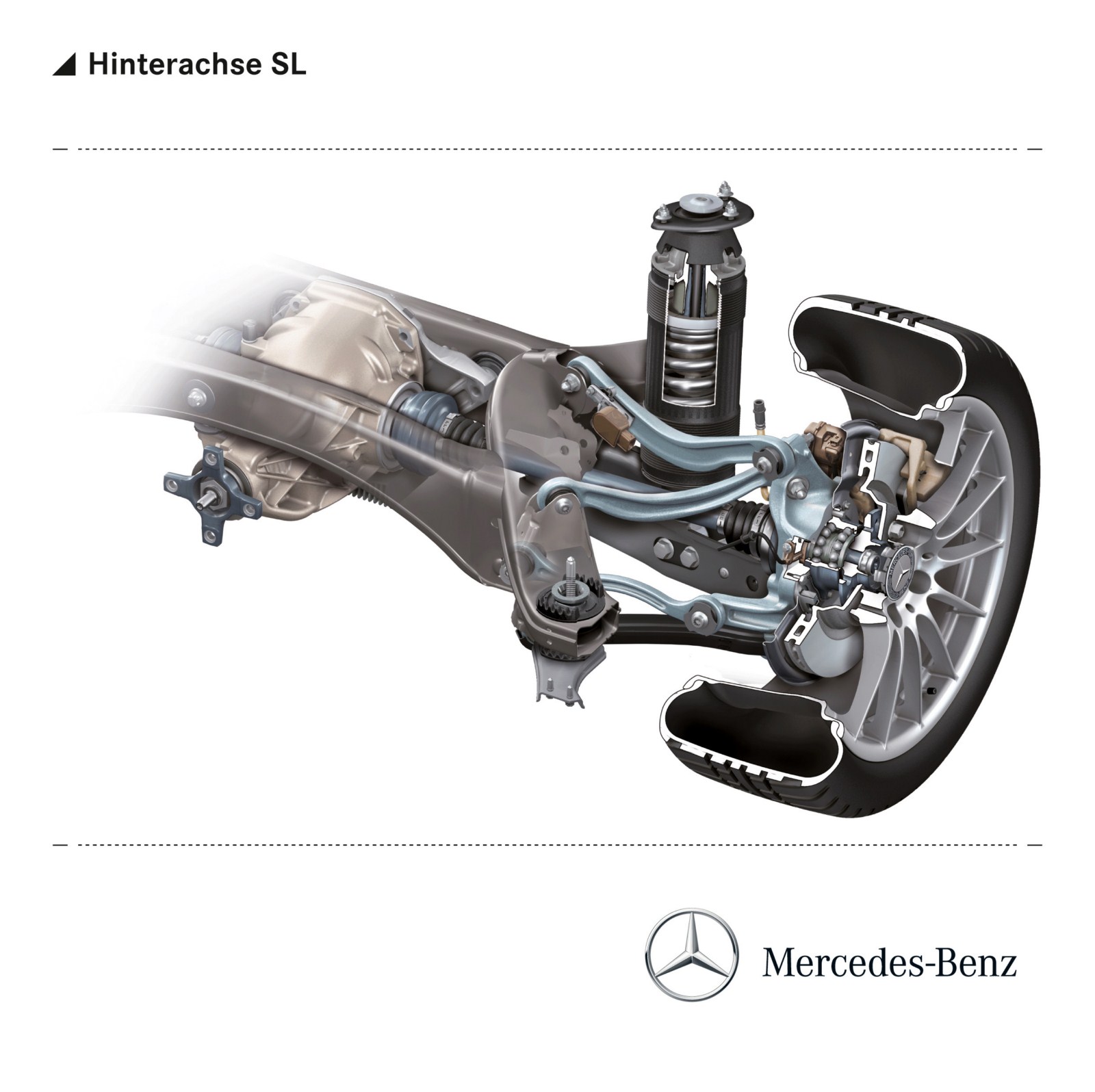
Powerful while accelerating, effortlessly superior across all speeds, nimble on winding roads – the new SL provides no end of driving pleasure. Apart from the powerful engines, the sportily tuned yet comfortable suspension, which also boasts an intelligent lightweight construction, proves outstanding. For instance, the steering knuckles and spring links on the front axle are also made out of aluminium to reduce the unsprung masses. The same also applies to virtually all the wheel location components on the rear axle.
The new SL is available with two different suspension systems: the SL features semi-active adjustable damping as standard. The optional active suspension system ABC (Active Body Control) is available as an alternative.
Both suspension variants are combined with a new electromechanical Direct-Steer system featuring speed-sensitive power steering and a ratio that can be varied across the steering wheel angle. This ensures excellent straight-line
stability and, therefore, a high degree of assuredness when travelling at
motorway speeds and makes the SL very agile. It also reduces the amount of steering required when parking and manoeuvring.
The new V8 in the SL 500 develops 320 kW (435 hp) from its displacement of 4663 cc and thus around 12 percent more than its predecessor despite some 0.8 litres less displacement. The fuel consumption has been reduced by up to 22 percent. At the same time, the torque has increased from 530 Nm to
700 Nm – a gain of 32 percent. Although the displacement remains the same at 3499 cc, the new V6 engine in the new SL 350 develops 225 kW (306 hp) and delivers 370 Nm of torque. It uses just 6.8 litres of fuel per 100 kilometres, making it almost 30 percent more economical than its predecessor.
Both engine variants come with a standard-fit ECO start/stop function. The
7G-TRONIC PLUS automatic transmission, which has been optimised in
relation to fuel consumption and comfort, also contributes to the exemplary, low fuel consumption. The fuel economy of the BlueDIRECT engines takes
nothing away from the roadster’s raciness. Quite the contrary: the SL 350
accelerates from 0 to 100 km/h in 5.9 seconds, making it three tenths of a
second faster than its predecessor. The SL 500 takes just 4.6 seconds – eight tenths less than the previous SL 500.
Interior: aesthetic, stylish, sporty
The new SL combines its aesthetically honed profile, which follows the
Mercedes-Benz tradition, with a luxurious feel. Fine materials, perfectly
finished with great attention to detail, distinguish the style and character of
the interior.
Compared with its predecessor, the new generation of the SL is much longer (+50 mm to 4612 mm) and wider (+57 mm to 1877 mm), providing more room for more comfort in the interior, too. Shoulder room (+37 mm) and elbow room (+28 mm) have been increased, exceeding the dimensions normally found in this vehicle class. Clear lines create a formally coherent internal space within this comfortable interior. Generously used wood trim extends from the centre console across the dashboard into the doors, creating a pleasant wrap-around effect. Three types of wood along with two different aluminium trim finishes are available. Perfectly in tune with the roadster’s character, it combines
the unpretentious atmosphere of a high-performance sports car with the
comfortable, stylish ambience one comes to expect in a luxurious touring car.
Design: classic SL proportions
The designers have brought the latest generation of the SL unmistakably to life on the basis of tradition but added new perspectives and visions. The result is
a stylishly sporty and elegant luxury sports car with the classic hallmark SL balanced proportions: the long bonnet gives way to a compact passenger
compartment that is set well back. A wide, muscular tail end giving the
impression of raciness provides the finishing touch. A handful of elaborately styled lines define the powerfully sculpted and yet calm surfaces of the flanks. Finely worked details, a striking tail end as well as ventilation grilles with chromed fins from the dynamic traditional Mercedes-Benz design heritage visually emphasise the SL legend.
An upright classic sports car radiator grille clearly marks out the new SL
visually as a prestigious member of the current Mercedes-Benz sports car
family. The centrally positioned star is a contemporary reinterpretation of
the famous trademark, which now extends into the centre section with its
organically flowing contours.
Dynamically slanting headlamps set well to the outside flank the striking front end and give the new roadster its own unmistakable face. The headlamps come as standard with the Intelligent Light System (ILS). With five different lighting functions that are tailored to typical driving and weather conditions, and are activated depending on the driving situation, they offer the driver a much
better illuminated field of vision. The striking curved sidelights and the
horizontal strip of the daytime running lamps in the far ends of the bumper feature LED technology.
Vario-roof: MAGIC SKY CONTROL as an option
The sixth generation of the SL also offers a vario-roof that can be retracted into the boot using an electrohydraulic mechanism to save space, which converts the SL in a few seconds into a roadster or a coupé, depending on the driver’s wishes and the weather. Unlike its predecessor, three versions are available for the new SL: painted, with a glass roof or with the unique panoramic vario-roof with MAGIC SKY CONTROL. The transparent roof switches to light or dark at the push of a button. When light it is virtually transparent, offering an open-air experience even in cold weather. In its dark state the roof provides welcome shade and prevents the interior from heating up in bright sunlight. The frame of the three roof versions is made of magnesium, making the roofs around six kilograms lighter than the roof on the predecessor, thus providing a lower
centre of gravity for the vehicle and, in turn, better agility.
The engineers have refined the operating mechanism for the roof and boot lid. It now takes less than 20 seconds to open or close the roof completely.
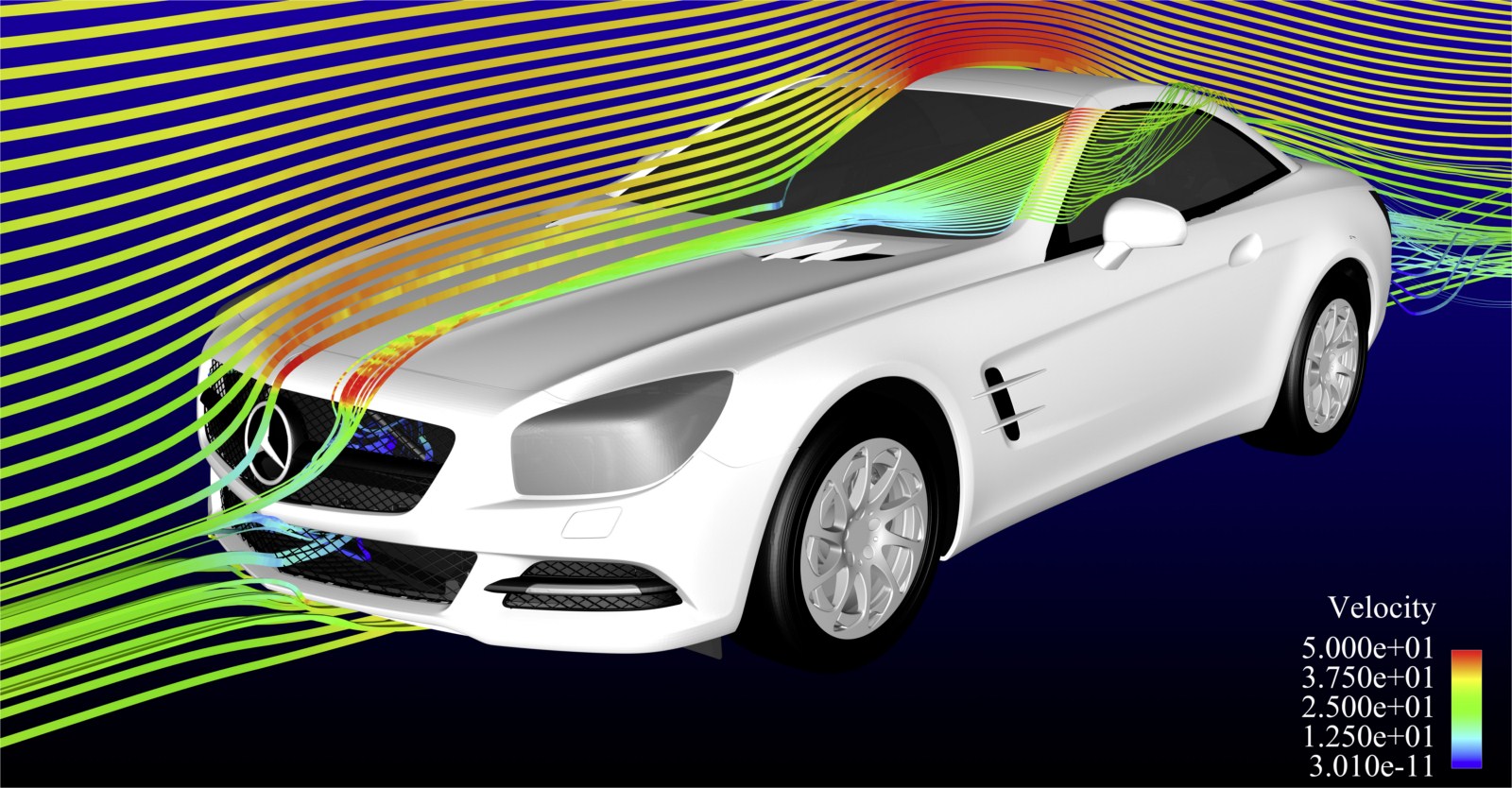
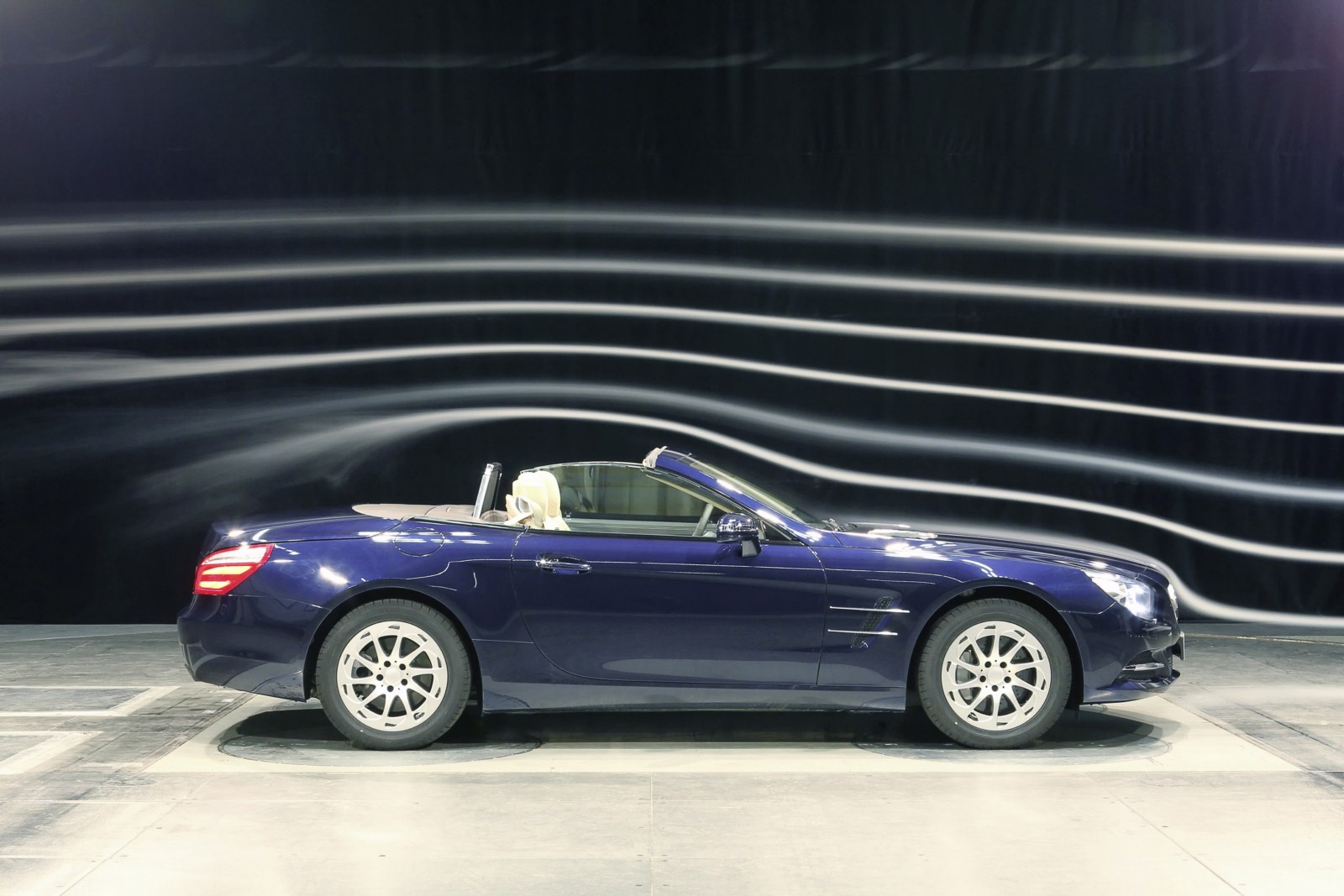
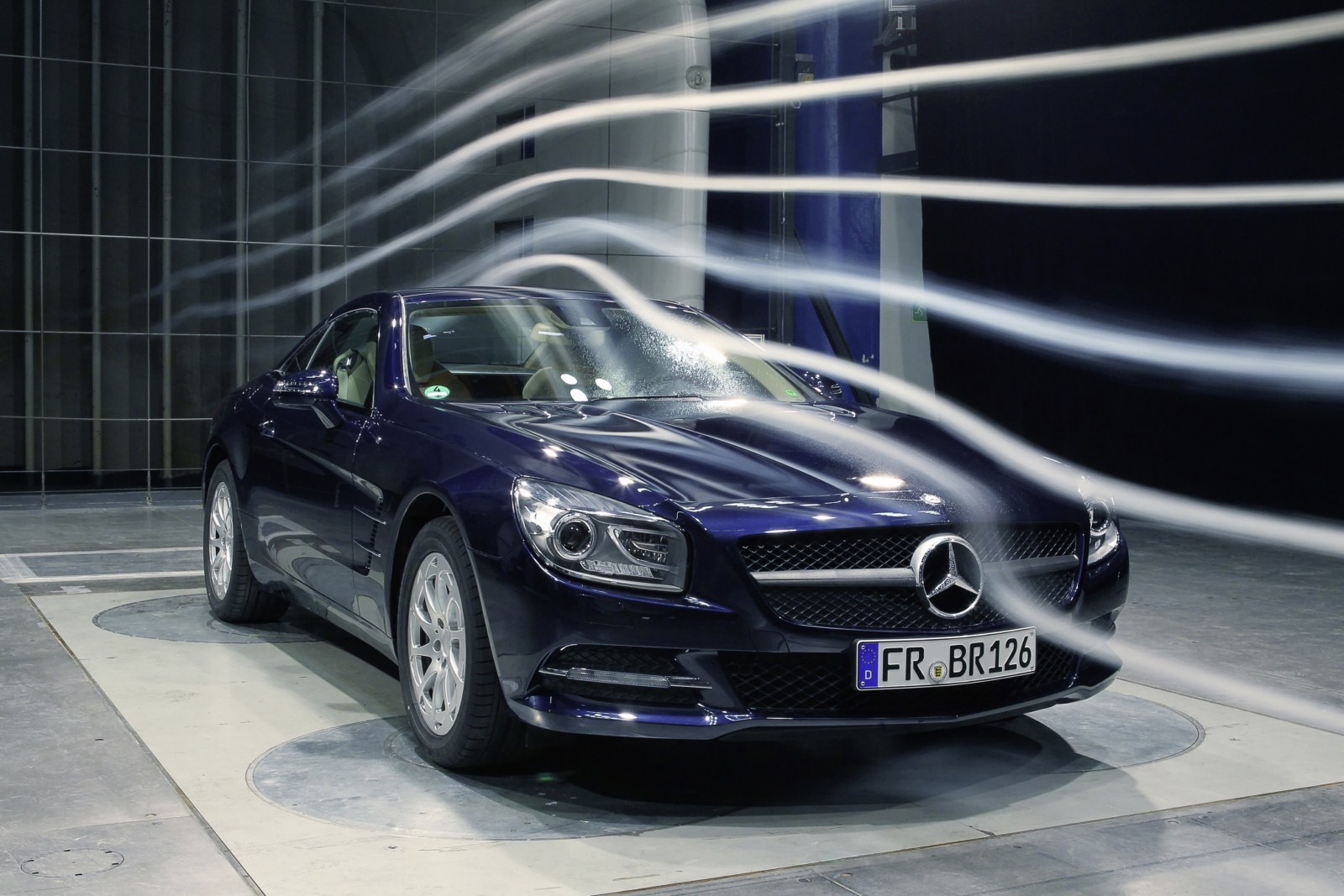
Aerodynamics: new standards
The design of the new SL not only meets high aesthetic demands – it also boasts exemplary aerodynamic qualities.
As such, the roadster merits best marks in its segment in four important
disciplines:
- With the lowest drag coefficient (cd = 0.27 in the SL 350);
- With the lowest wind noise that is virtually on a par with a closed saloon;
- With the best comfort for open-top motoring so that you can still have the roof down even at high speed;
- With virtually no accumulation of dirt on the side windows.
Two world premieres: Frontbass and MAGIC VISION CONTROL
With two innovations, the new SL remains true to its tradition as a
technological trendsetter:
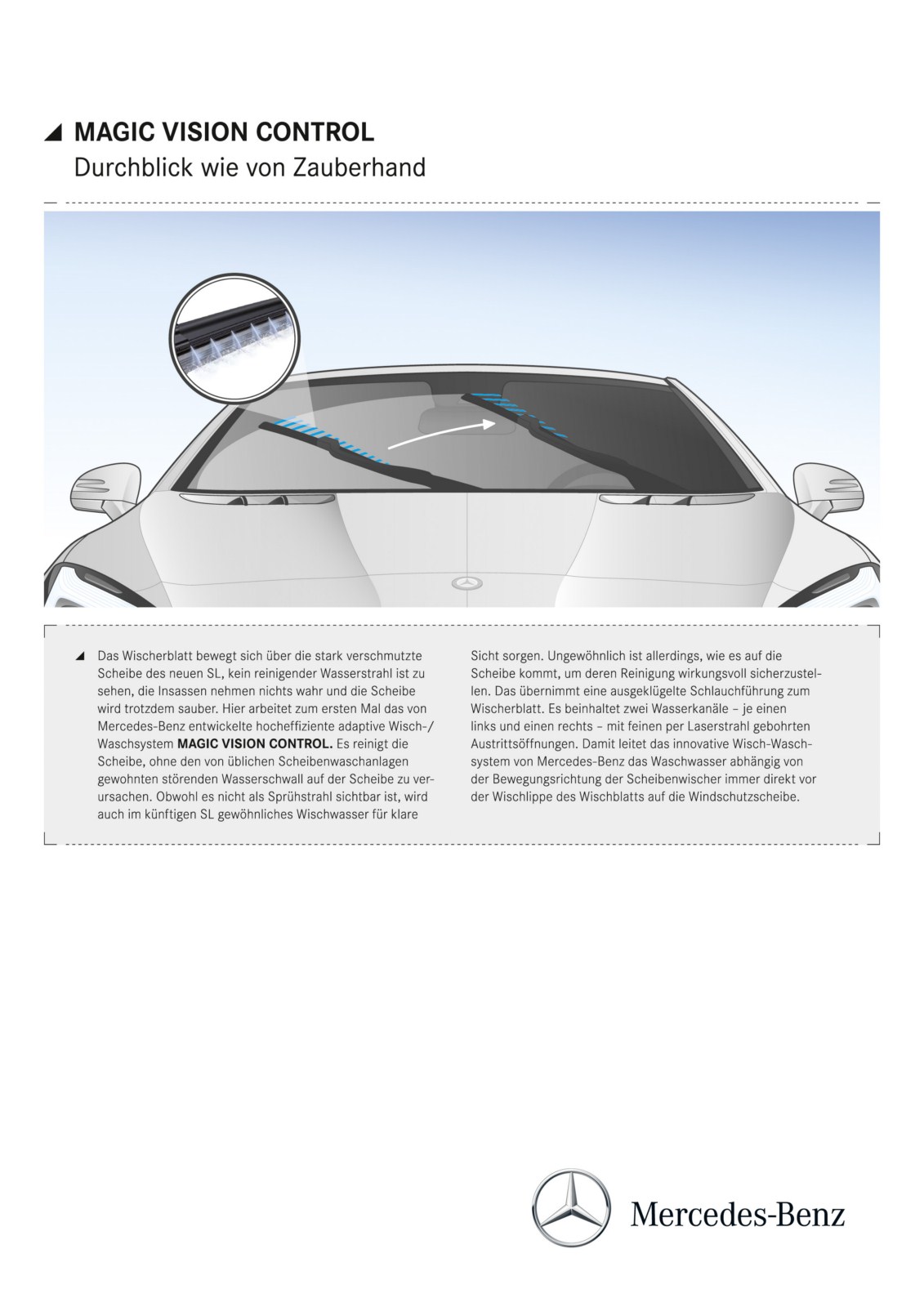
- MAGIC VISION CONTROL is a new, intelligent and highly efficient wipe/wash system. The innovative wiper blade concept always applies the washer fluid just in front of the wiper blade lip via the channels integrated into the blade – in both directions of wipe. As a result, no water is splashed onto the windscreen during spraying to disrupt the driver’s visibility, while at the same time cleaning the windscreen perfectly. The water also remains on the windscreen, thus ensuring it is cleaned without troubling the
occupants, even with the roof down. For the first time an optional fully heated wiper blade which prevents snow or ice from forming on the blade in winter is available. This heating function also allows warm water to be applied directly onto the windscreen for the first time, even in cold
temperatures.
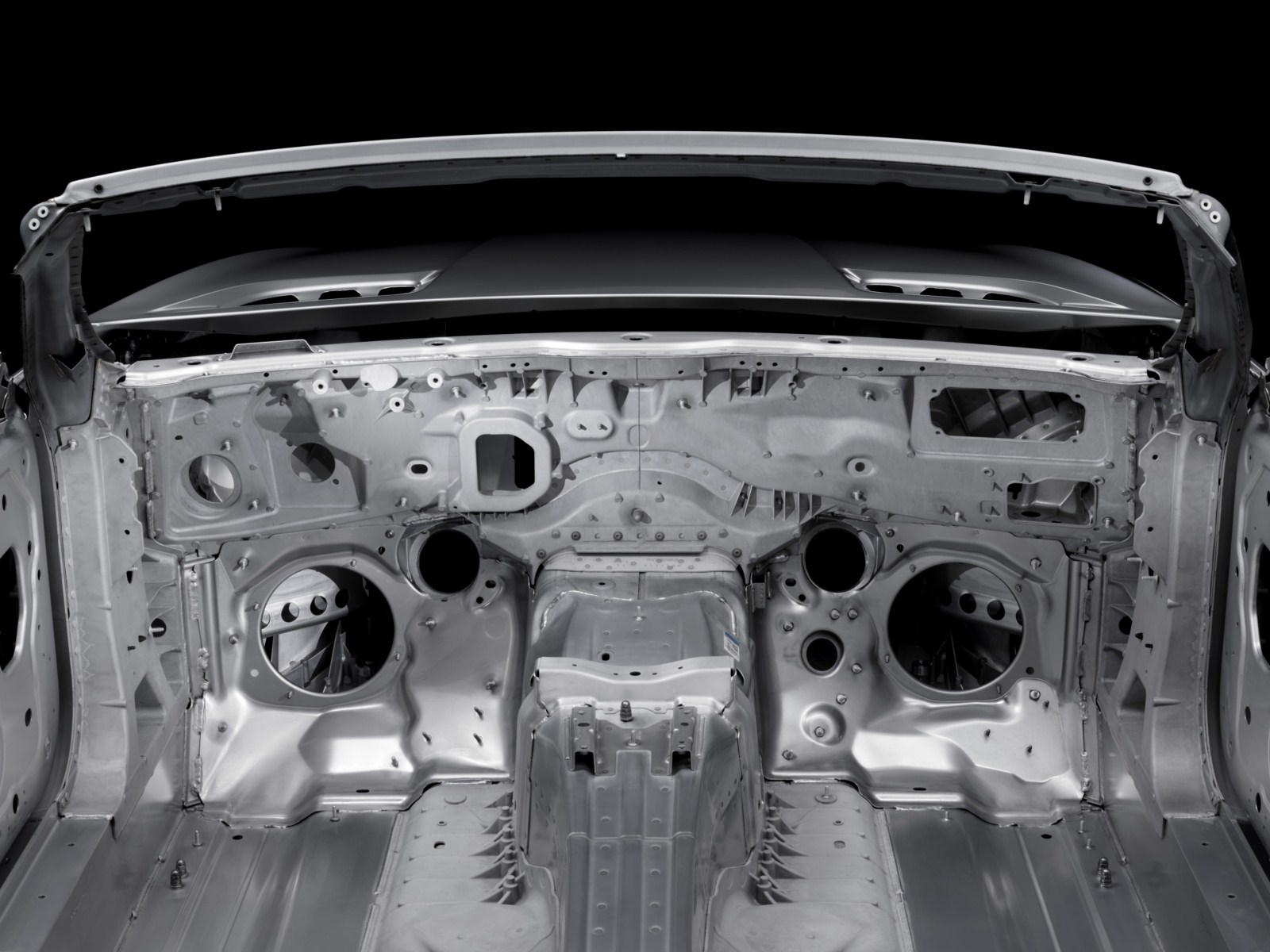
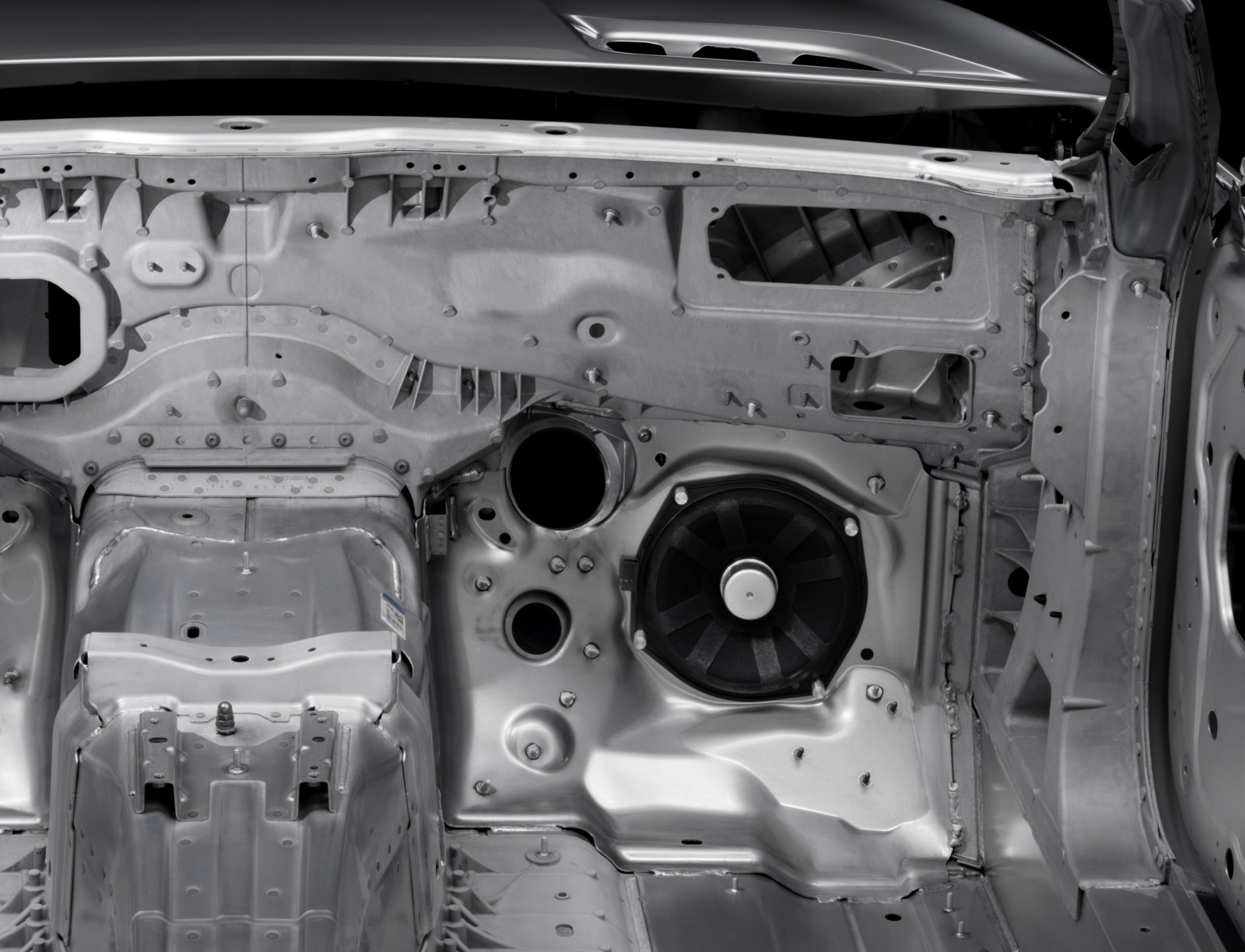
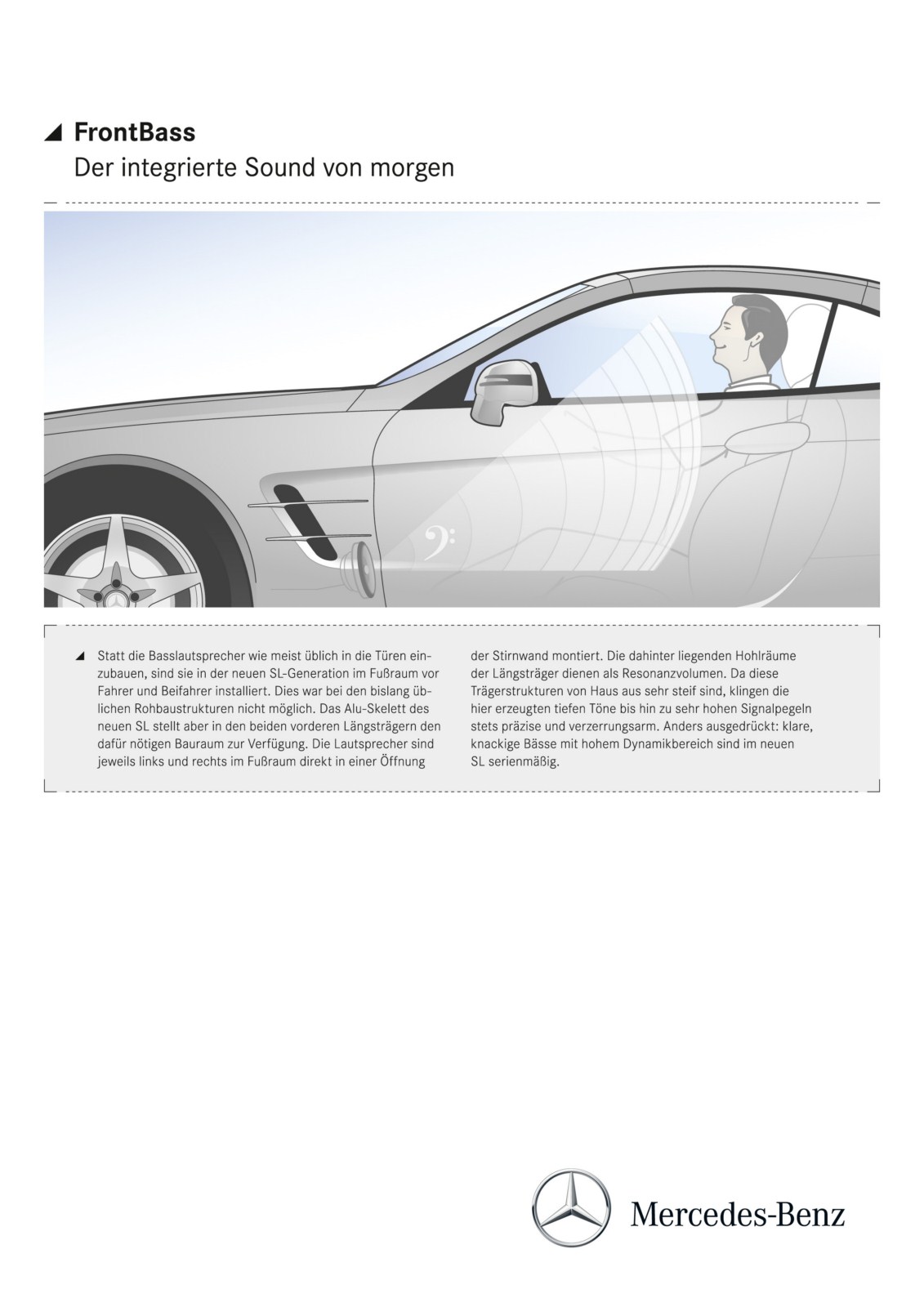
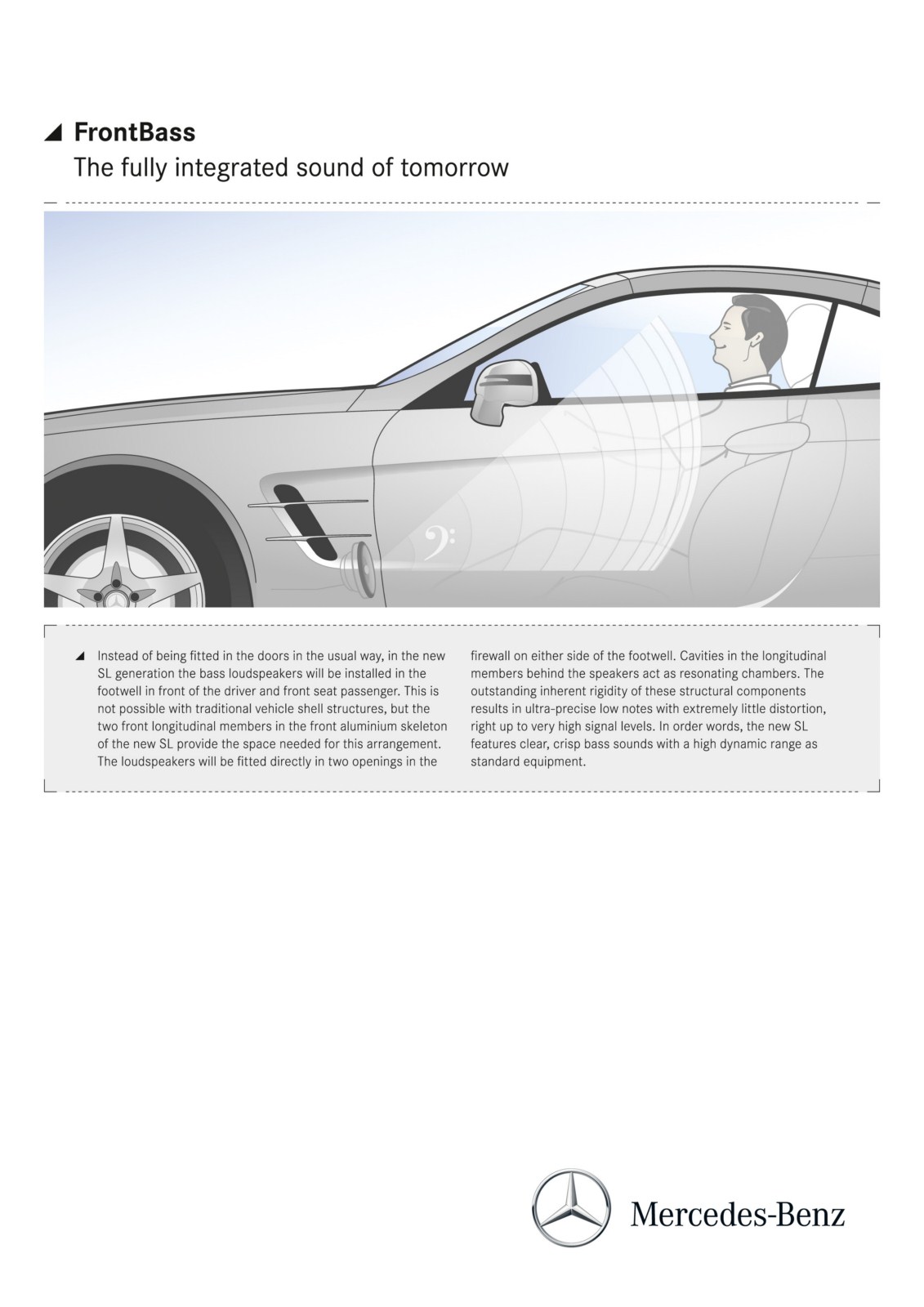
- Also unique, the Frontbass system intelligently uses the free spaces in the aluminium structures in front of the footwell as resonance spaces for the bass loudspeakers. As a result the new SL features clear, crisp bass sounds that facilitate a concert hall ambience even with the top down, and frees up space in the doors.
Both innovations are part of the extensive standard equipment of the new SL.
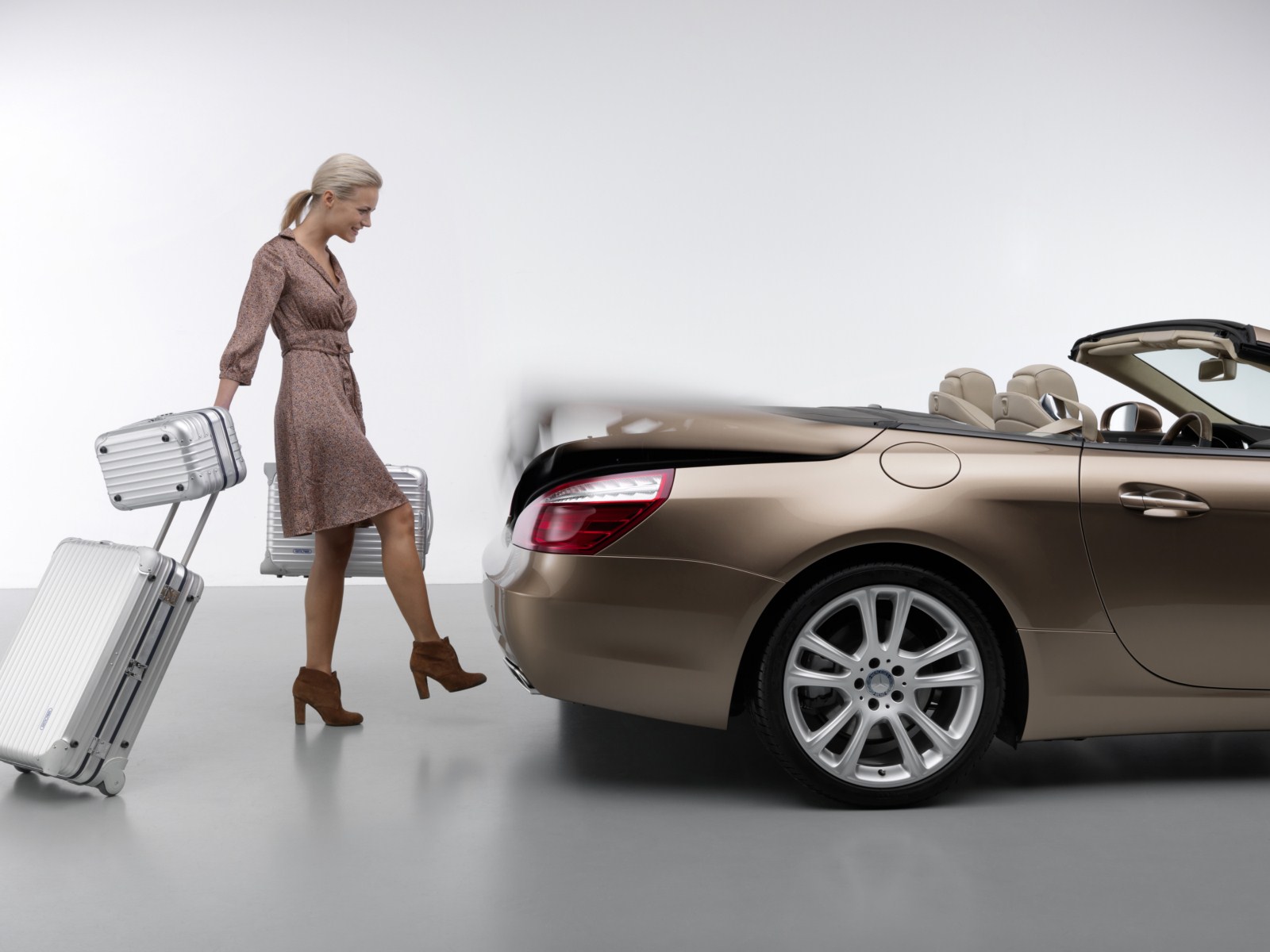
HANDS-FREE ACCESS: ‘kick’ to open
The HANDS-FREE ACCESS system is another Mercedes-Benz innovation which provides hands-free, contactless operation of the boot lid. The driver simply moves their foot in the vicinity of the rear bumper. Mercedes-Benz is the only car maker to offer a system which not only automatically opens the boot lid but closes it as well.
The safest roadster
Thanks to the crash-optimised aluminium structure, standard-fit PRE-SAFE® and assistance systems on the same high level as the S-Class, the SL is the world’s safest roadster. The rigid aluminium bodyshell forms a sturdy
passenger compartment along with precisely defined deformation zones in the front and tail ends. In the event of the vehicle overturning, A-pillars made out of a mix of steel and aluminium and two roll-over bars protect the passenger compartment. The restraint systems including the two-stage driver and
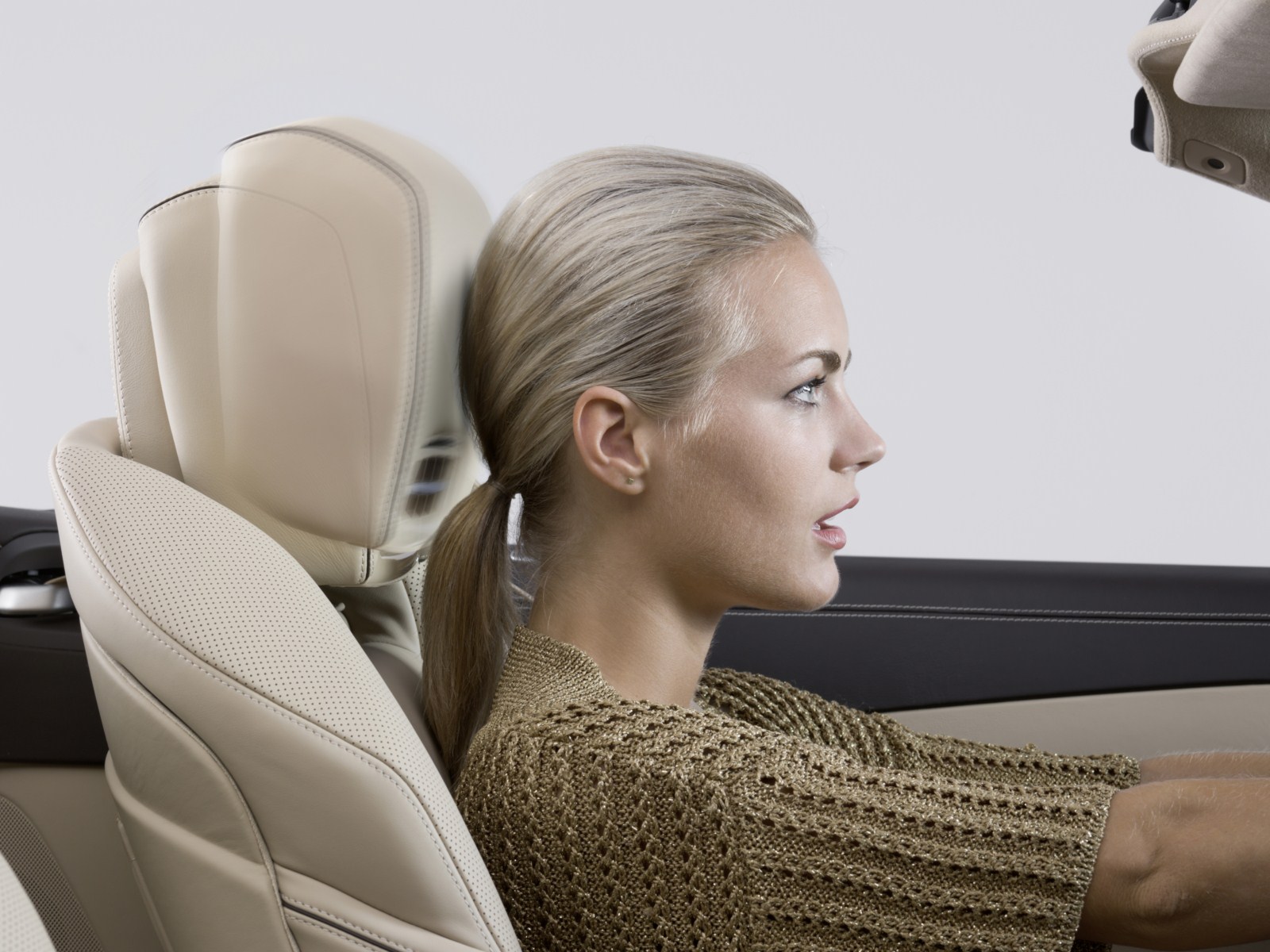
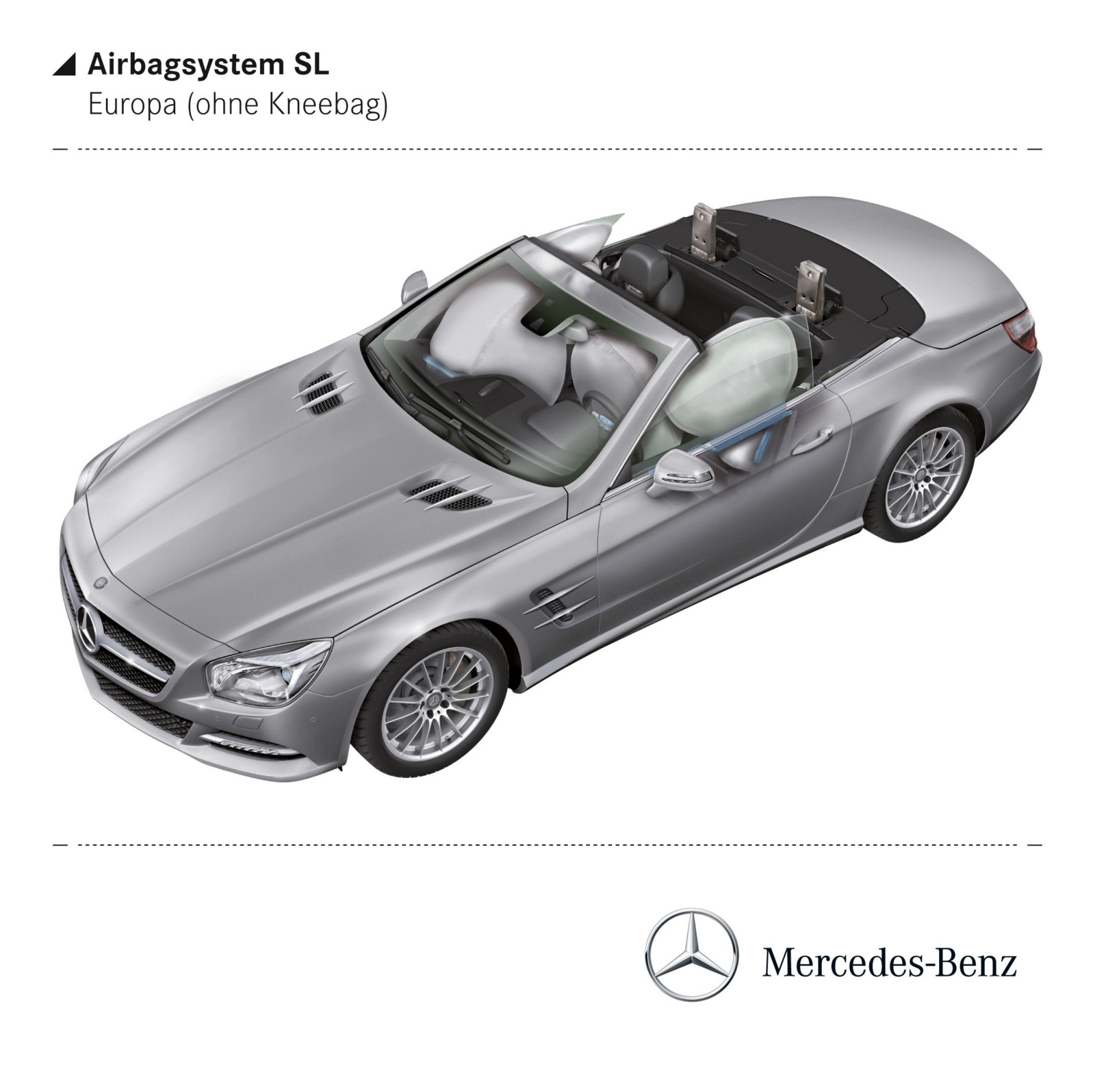
passenger airbags have been further developed. A headbag integrally covers the side head-impact area. An additional thorax airbag in the seat backrest can protect the upper body in the event of a side impact. Another new feature is the crash-responsive NECK-PRO head restraints developed by Mercedes-Benz which are fitted as standard in the SL.
An active bonnet and a front end with a large, yielding impact area help ensure pedestrian protection.
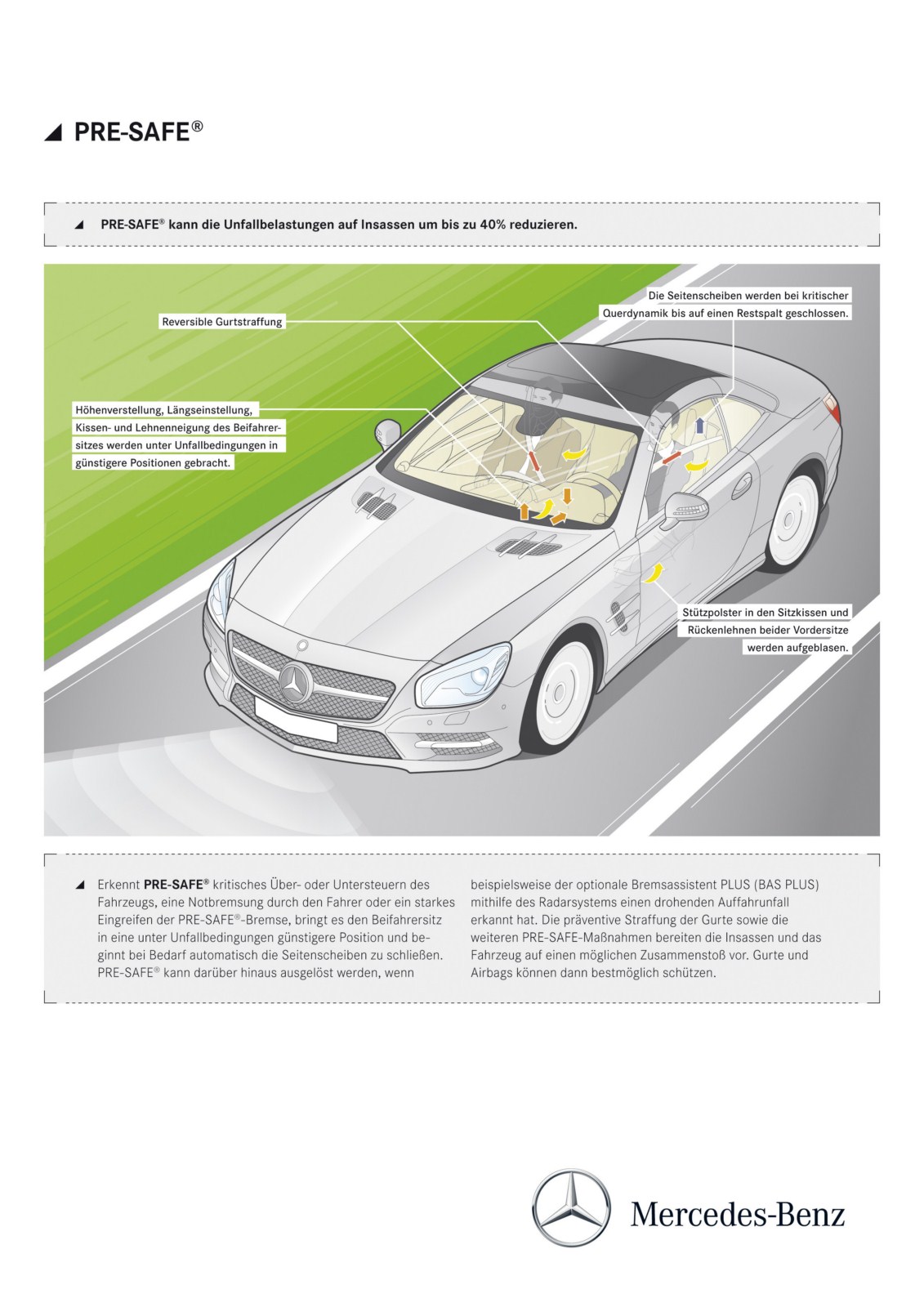
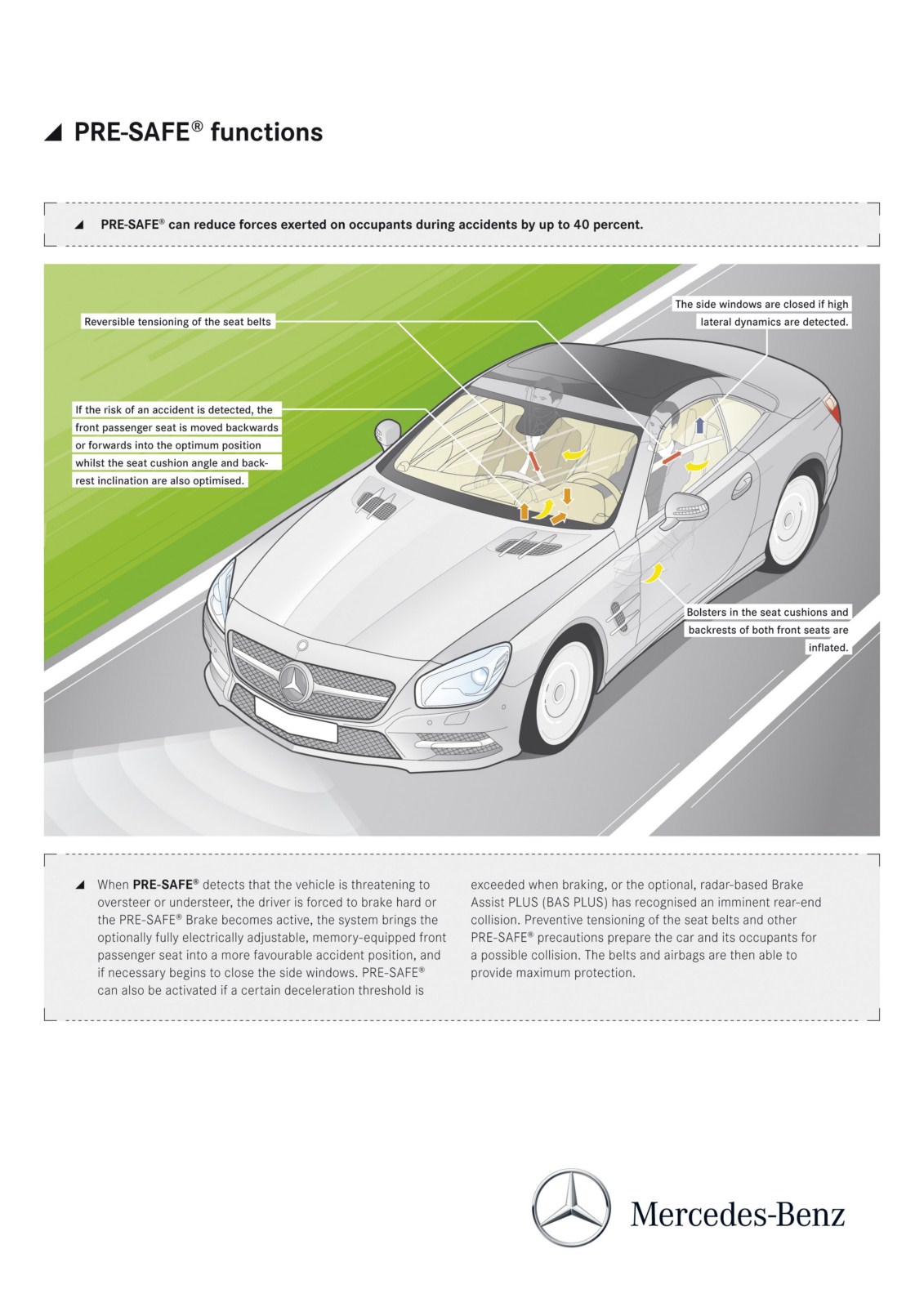
A safety highlight comes in the form of the standard-specification anticipatory occupant protection system PRE-SAFE®, developed by Mercedes-Benz and the only one of its kind in the world. If it recognises that there is an acute risk of an accident, it reacts reflexively by activating preventive measures to protect the occupants, so that the belts and airbags can exercise their protective effect optimally in the event of a subsequent impact which might ensue. Additional post-crash measures supplement the integral safety concept and facilitate
rapid assistance: regardless of the severity of the impact, the doors can be automatically unlocked after an accident, the interior lighting activated and
the side windows lowered by 50 millimetres to ventilate the interior more
effectively. The steering wheel can also be moved upwards.
Standard-specification: ATTENTION ASSIST and ADAPTIVE BRAKE
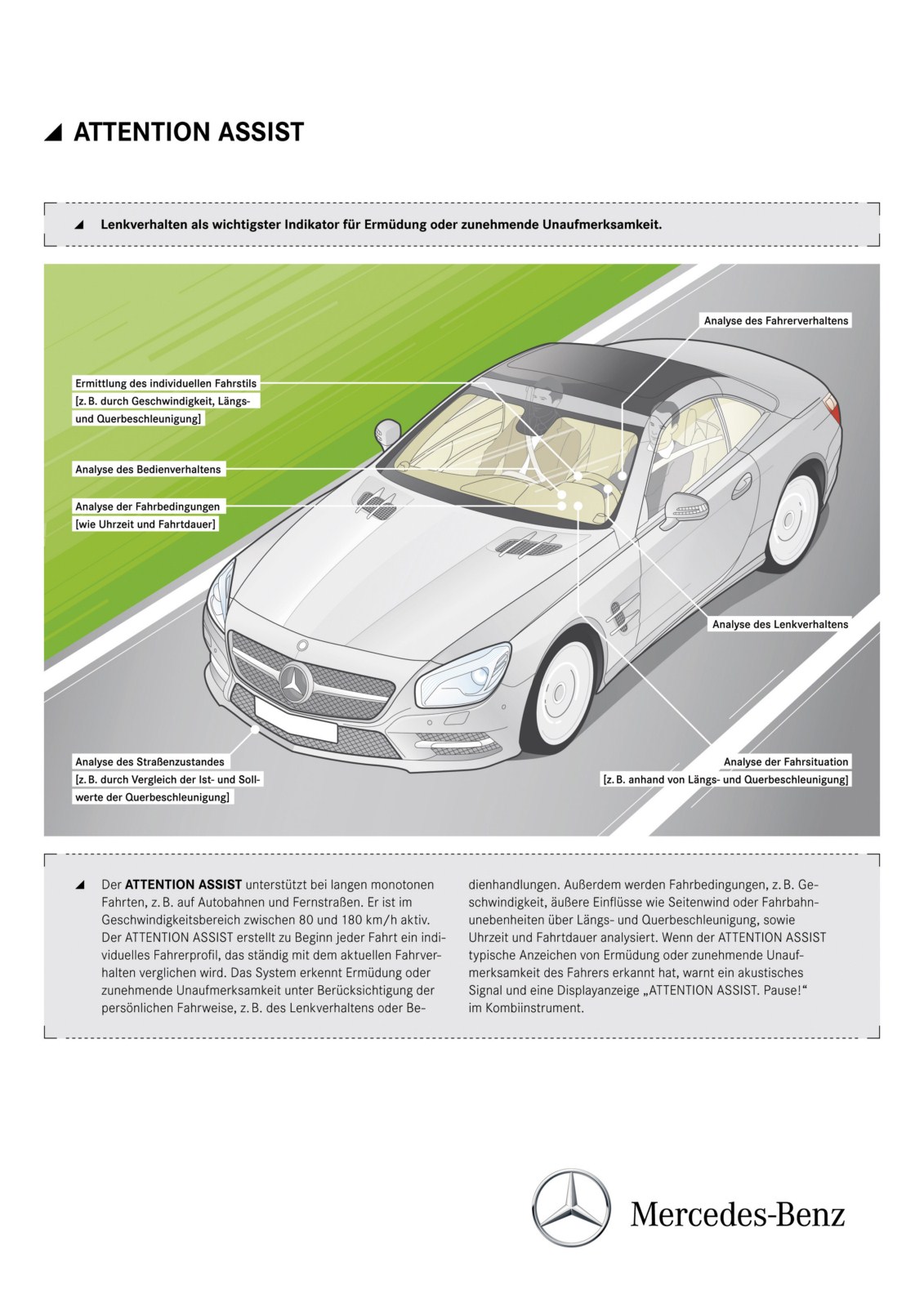
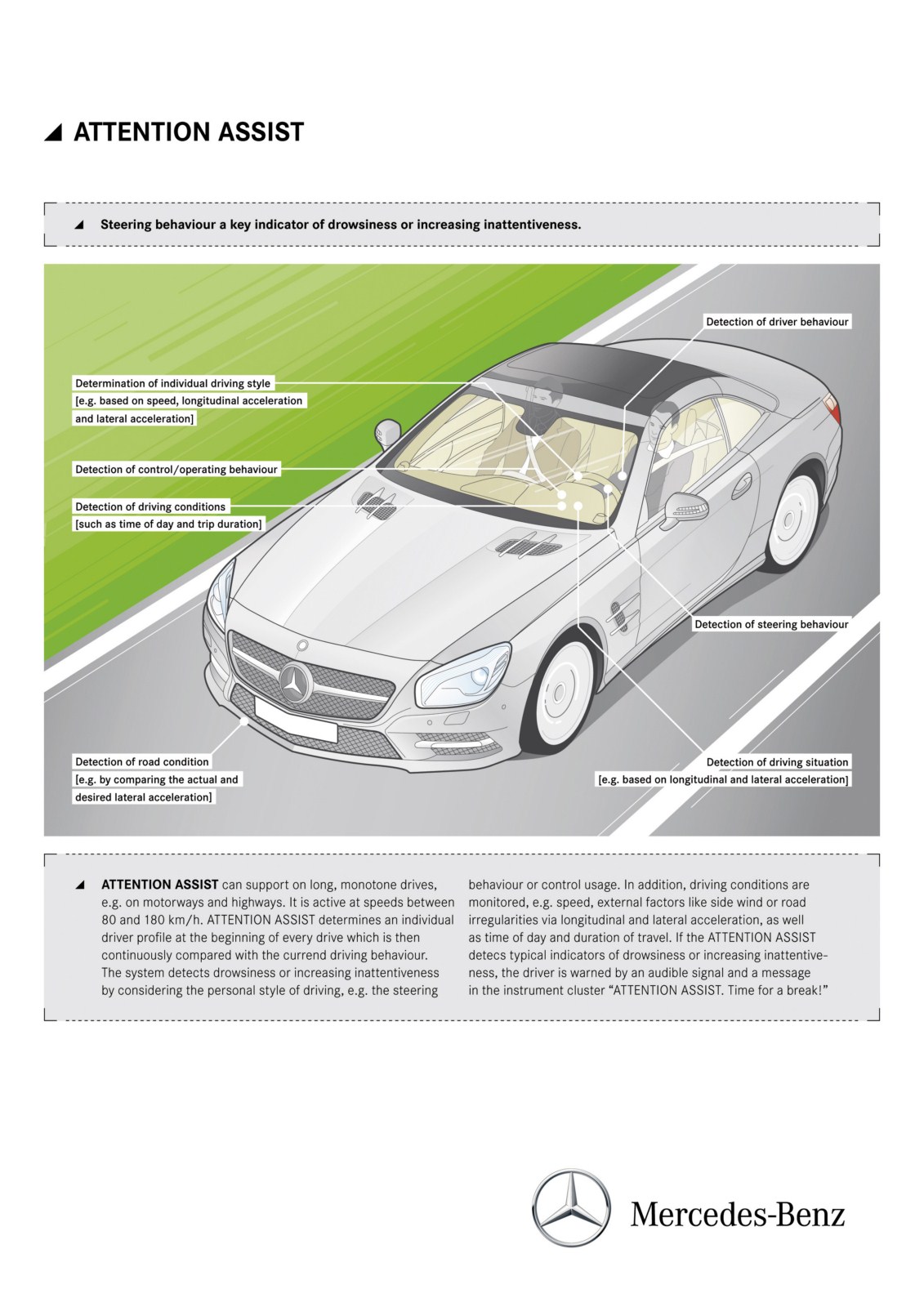
In the new SL, too, a unique combination of driver assistance systems helps prevent accidents. These include the standard-fit drowsiness detection system ATTENTION ASSIST and the ADAPTIVE BRAKE. The latter features ABS,
acceleration skid control (ASR) and active yaw control, and offers comfort
and convenience functions in addition to safety functions.
The ADAPTIVE BRAKE works in conjunction with the equally adaptive brake lights. In emergency braking situations, it uses flashing brake lights to warn vehicles behind.
PRE-SAFE® Brake: autonomous partial and emergency braking in
response to a serious risk of a rear-end collision
As an option DISTRONIC PLUS proximity control and PRE-SAFE® Brake, which is already well proven in other Mercedes-Benz models, are available. Both work on the basis of the same radar sensors. Once a serious risk of a rear-end collision is detected, the PRE-SAFE® Brake warns the driver initially and can initiate autonomous braking if the driver fails to react, and so either prevent the accident or at least mitigate its severity. PRE-SAFE® can also activate occupant protection measures.
Active Parking Assist: automatically manoeuvres into a parking space
The Active Parking Assist is new in the SL. Using ultrasound sensors it can
identify parking spaces and automatically steer the vehicle into the space while parking.
Infotainment: COMAND with internet access
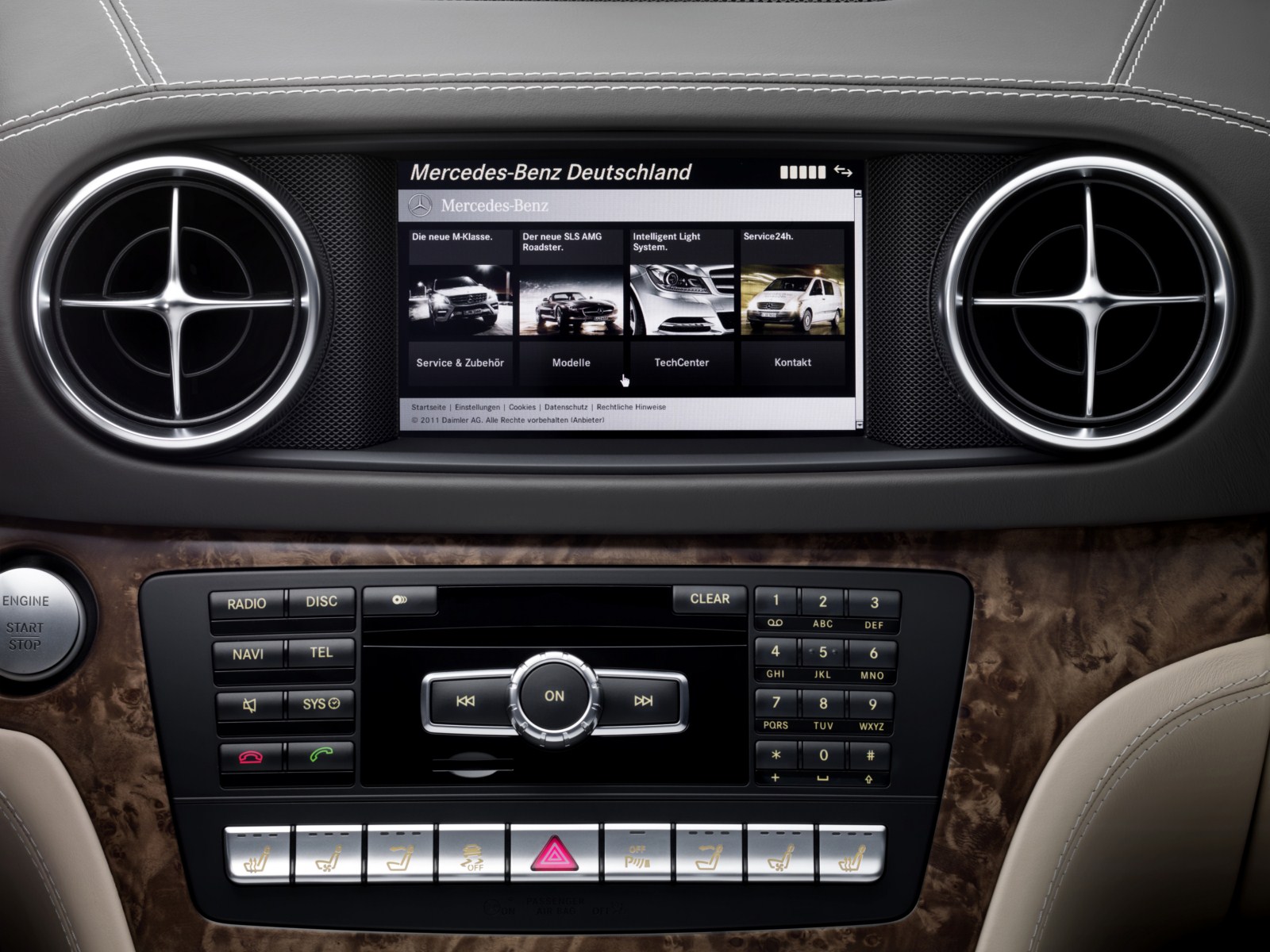
Even in the entry-level variant, the new Mercedes-Benz SL comes with the “Cockpit Management and Data System” COMAND. Functionality includes Bluetooth telephony along with simpler operation of the car phone. COMAND Online with internet access and a DVD changer is also available as an option (whilst it comes as part of the standard specification for the SL 500). It
provides unlimited web browsing while the vehicle is stationary, along with high-speed access to a Mercedes-Benz online service – for instance requesting a weather report or a special destination search. There is also the option of sending individual destinations and routes via Google Maps to the vehicle.
For the first time, Mercedes-Benz is also offering new apps for the new SL:
in addition to a free news app and a Facebook app, there are optional
Mercedes-Benz Apps for share prices and a car park finder. A Yelp app
to look for restaurants is available for the US market.
Both COMAND versions feature a high-resolution TFT colour display with a 17.8 cm diagonal (800 x 480 pixels) at the side next to the instrument cluster. This screen arrangement prevents the driver from being distracted as far as possible.
The prices inclusive of 19% VAT:
SL 350 93,534 euros
SL 500 117,096 euros
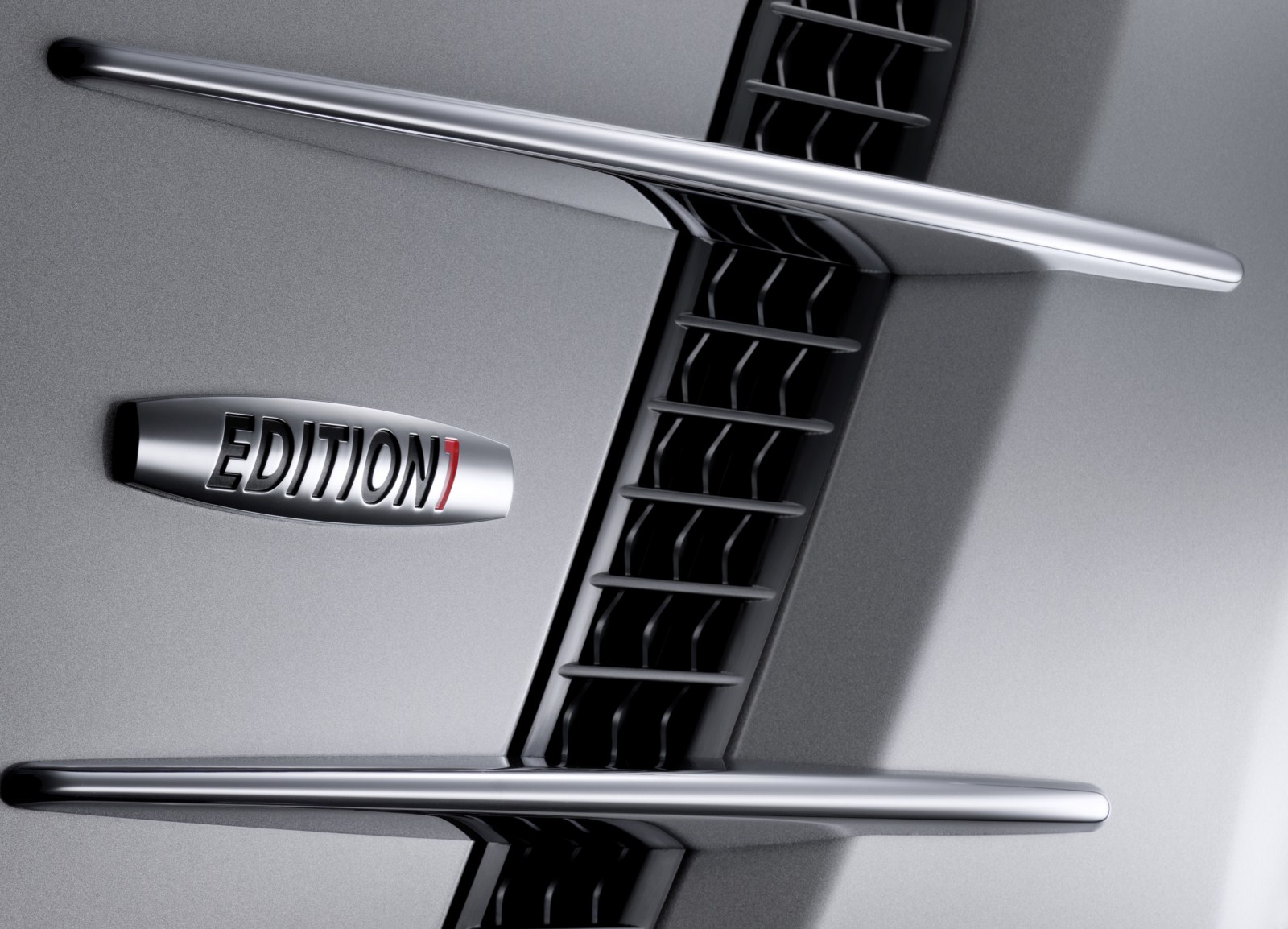
To coincide with the launch of the new SL, Mercedes-Benz will also be offering a special-edition model, the “Edition 1”, for a limited period. The “Edition 1” is superbly equipped and comes as standard with a panoramic vario-roof, AMG bodystyling, sports suspension, AMG 19-inch light-alloy wheels, designo nappa leather with contrasting topstitching, AIRSCARF, heated seats, an electric draught-stop, ambient lighting and the Harman/Kardon® Logic7® surround sound system, plus much more. The designo crystal silver magno special paintwork along with trim in wave or deep white aluminium are available exclusively for the “Edition 1”. Depending on the base model, the extra charge is between 19,028.10 euros and 22,598.10 euros.
Model range
Essence of refined sportiness
- Limitless motoring pleasure: sharpened athletic profile
- Powerful and economical: new BlueDIRECT engines
- Less is more: up to 140 kilograms lighter
- Individual choice: three roof and two suspension variants
- World premieres: MAGIC VISION CONTROL and Frontbass system
For 60 years the two letters “SL” have had a mystical resonance among
automotive enthusiasts. They stand for powerful sportiness, exciting design, effortlessly superior style, technical innovations and the ultimate in
engineering artistry. The SL inherited these genes from its forefather, designed as a racing car. In 1952 it came to the international race tracks, saw and
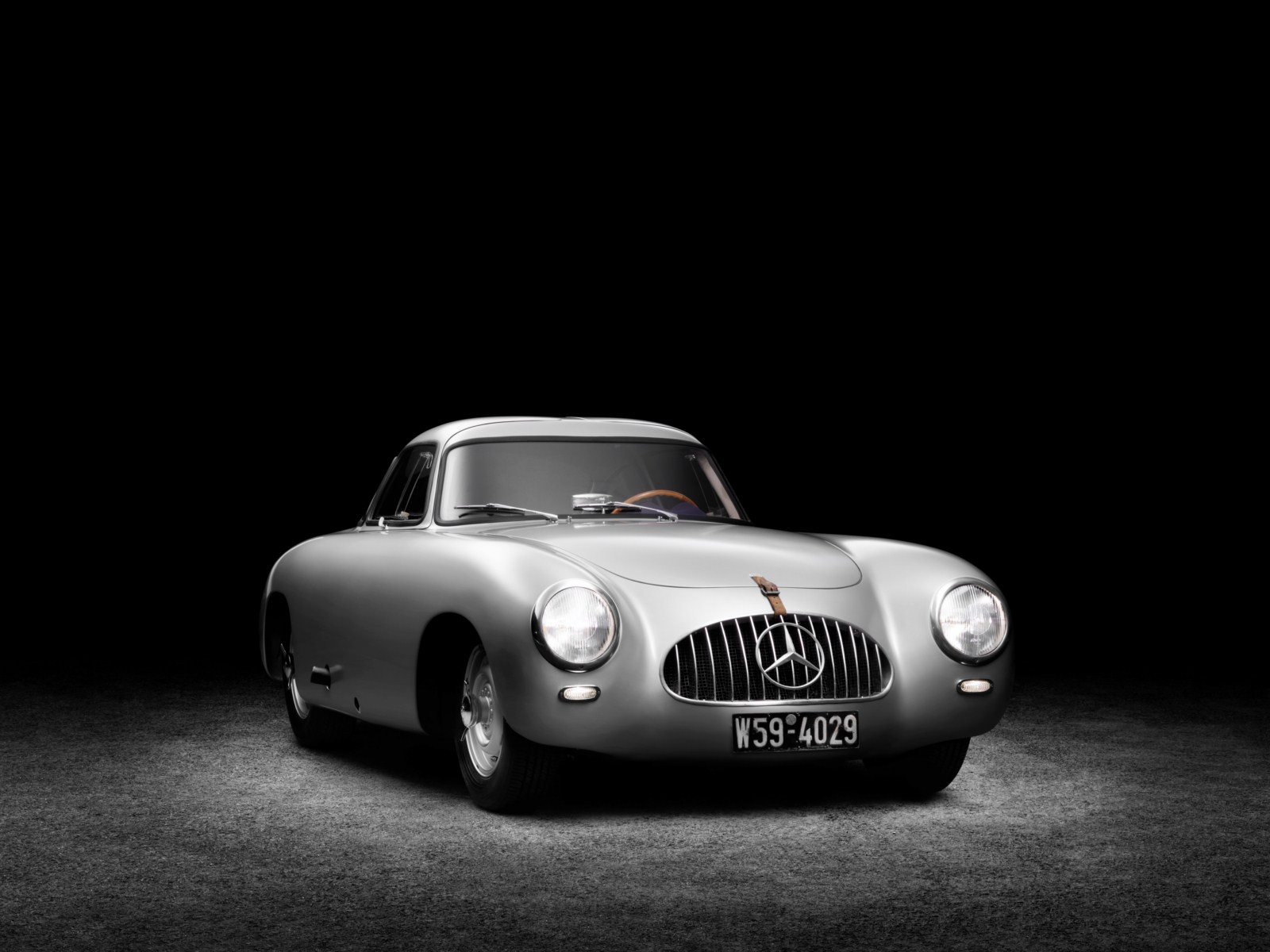
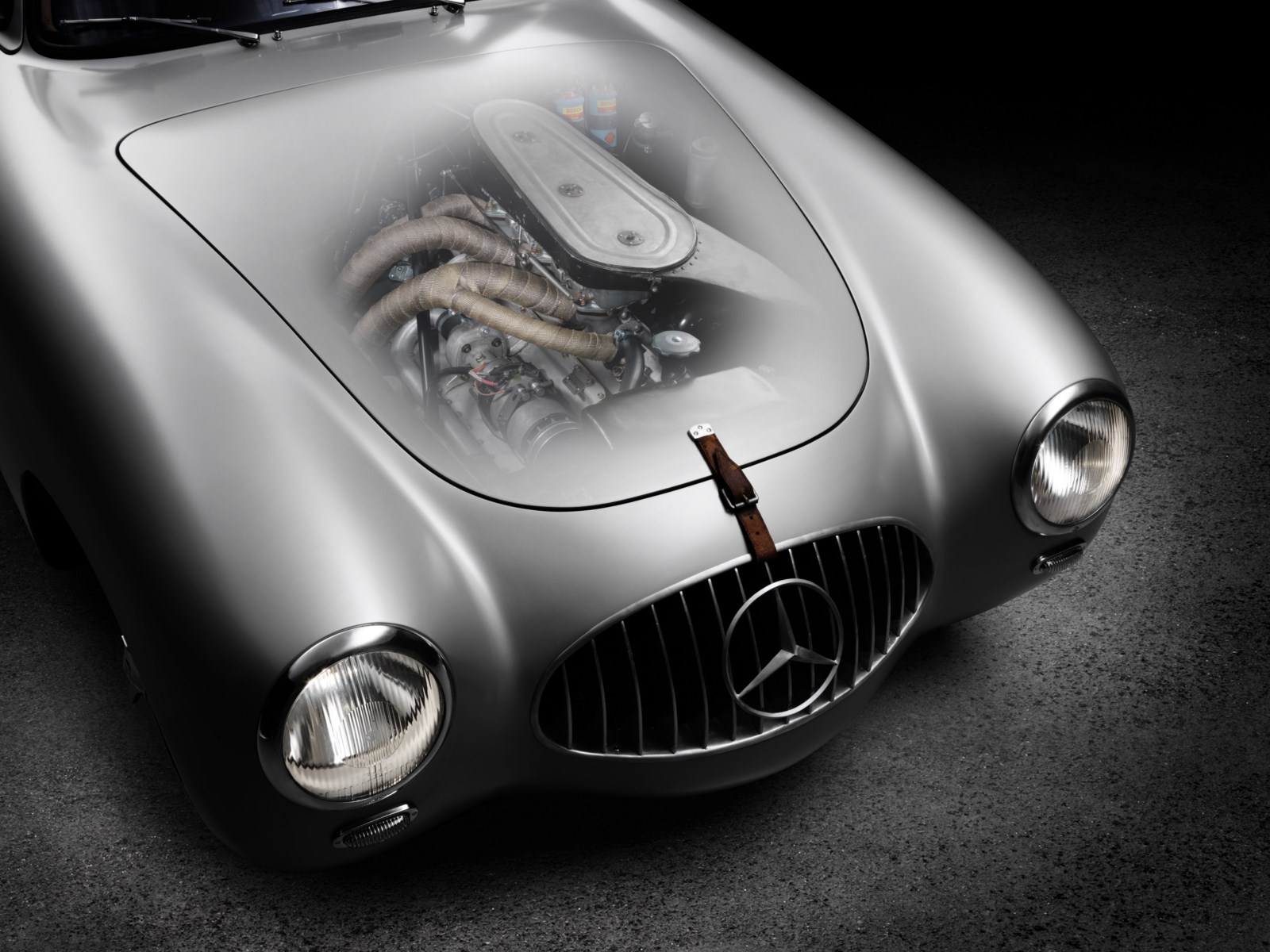
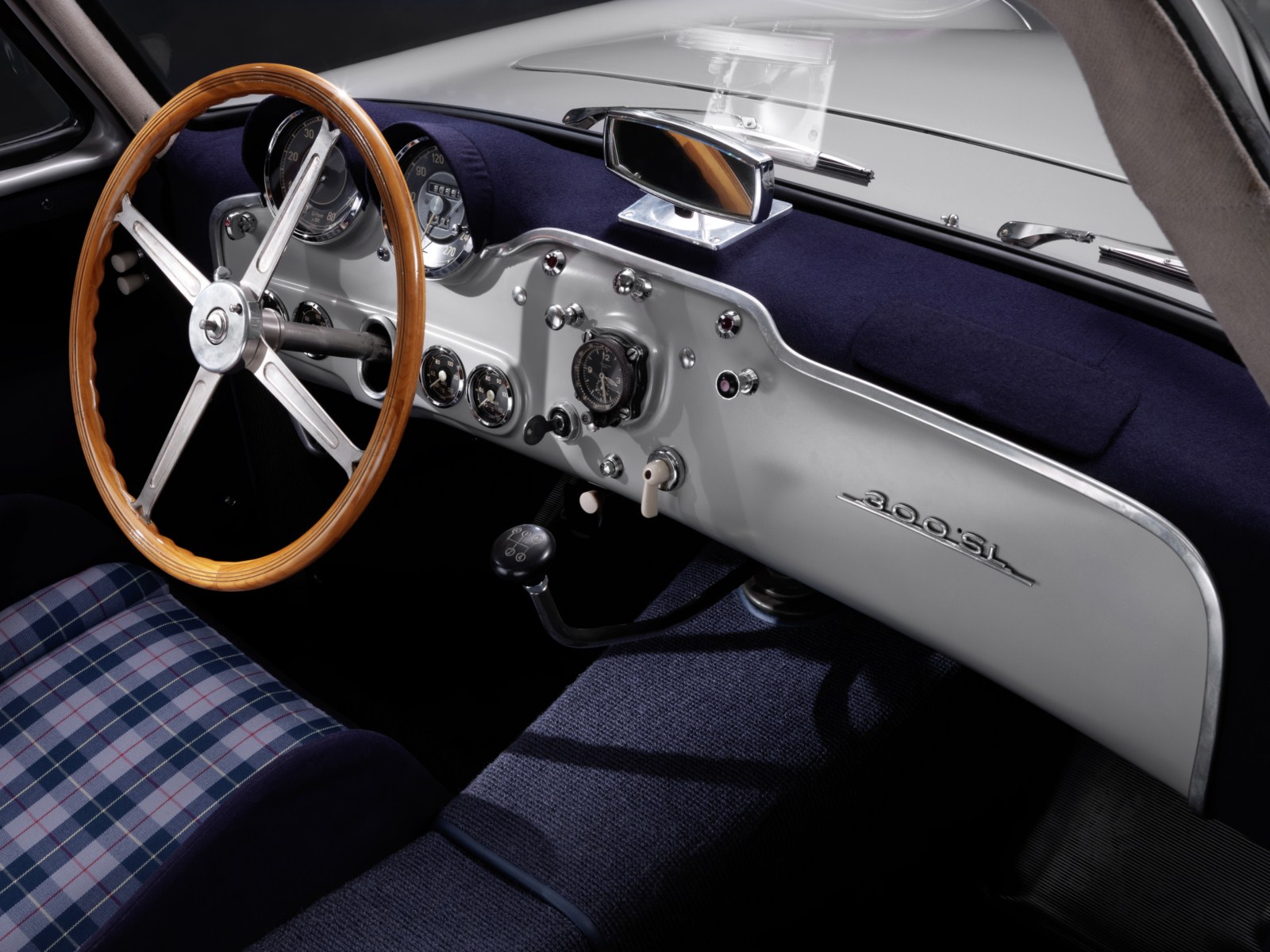
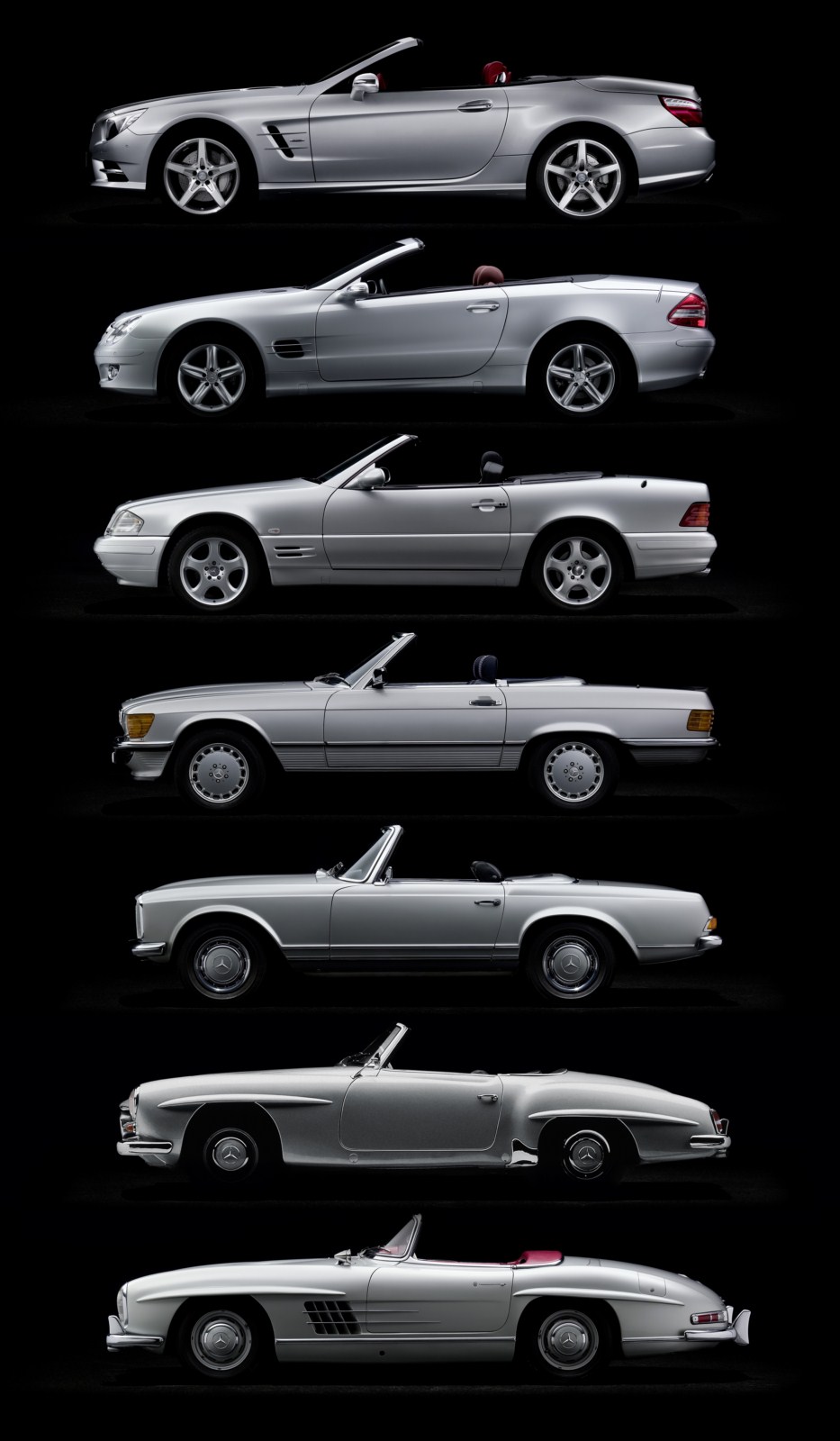
conquered. It was from this car that Mercedes-Benz derived the first series-production model in 1954, the legendary 300 SL gullwing. And ever since, Mercedes-Benz has been setting the bar high in the luxury sports car segment with the SL over five model generations.
The unique combination of systematic sportiness, refined luxury and yet
unrestricted suitability for everyday use at the same time is what makes the Mercedes-Benz SL the dream car it is – and it is also what lies behind its
success where sales are concerned. The SL was always ahead of its time
technically – even when it was rolling off the production line for 18 years at a time, as was the case with the SL bearing the internal code R 107 (from 1971 to 1989). Over 650,000 SL vehicles have left the production halls in Sindelfingen and Bremen since 1954, and from the last model generation alone – which celebrated its premiere in 2001 – nearly 170,000 specimens found their way into the hearts of the enthusiasts amongst fans of high-calibre sports cars.
The new generation of the Mercedes-Benz SL now being presented is the sixth to follow the 1952 racing car. In the unique tradition of the SL it is entering
its era as an athlete, refined aesthete and innovative trendsetter with an
extraordinarily high utility value. Mercedes-Benz is initially offering the new SL with two engines – as the SL 350 with a V6 engine and as the SL 500 with
a V8. The new BlueDIRECT engines have an output of 225 kW (306 hp) in the
SL 350 and 320 kW (435 hp) in the SL 500 (a 12-percent increase over the predecessor).
Moreover, the new SL breathes new life into the meaning of the famous
abbreviation “SL” – super-light – through systematic weight reduction. For the first time ever, Mercedes-Benz is implementing an all-aluminium bodyshell
in series production. The newly developed vehicle weights approximately
110 kilograms less than a comparable bodyshell made of sheet steel.
Nevertheless it is even more rigid – and safer – than its predecessor.
Mercedes-Benz has achieved this through a systematic intelligent material mix of aluminium alloys and aluminium components which are tailor-made for the respective requirements, combined with just a few portions of high-strength steel and magnesium.
Although the new SL is even more comfortable and has more safety devices on board than its predecessor and therefore does actually sacrifice some of the weight saved through the aluminium bodyshell, the scales show some
astonishing figures: the new SL 500 (1785 kg) weighs around 125 kilograms less than its predecessor. On balance, the SL 350 (1685 kg) is even
140 kilograms lighter – all thanks to a host of other intelligent enhanced
details to reduce weight, which Mercedes-Benz has also implemented in the new SL in addition to the aluminium bodyshell.
And these measurement results do not just impress as figures on the page; they are very much perceptible and tangible in practice, too. The resulting
increase in longitudinal and lateral dynamics facilitates superb performance with a decided passion for cornering. The greater track width at both the front (+ 38 mm) and rear (+ 77 mm) axle serves the handling which is at once sporty and agile and keeps the car under safe control. Drivers will find the new SL even more agile than its predecessor – sheer pleasure for those of a sporty orientation.
There are two suspension variants from which to choose. The SL is supplied as standard with semi-active adjustable damping (lowered by ten millimetres in the AMG sports package). The active suspension system ABC (Active Body Control) is available as an optional extra. Unique the world over, it has been enhanced especially for the new SL.
In keeping with the Mercedes-Benz tradition, the new SL couples its sharpened athletic profile and agile nimbleness with a luxurious ambience. Its high-quality equipment and appointments contribute to the exquisite motoring pleasure that can be experienced every kilometre of the way. Fine materials, finished with great attention to detail, shape its style and character. The levels of comfort here – unique in the segment of luxury sports cars – blend with high everyday practicality, for the new SL shines with top marks where
open-top motoring, suspension comfort and comfort on long journeys are
concerned – plus its exemplarily low background noise, which is comparable with that of a saloon. This all adds up to the fact that this vehicle is a Gran
Turismo in the very best sense of the word.
The safest and the most sparing
Thanks to the crash-optimised aluminium structure, standard-fit PRE-SAFE® and assistance systems on the same high level as the S-Class, the SL is the world’s safest roadster.
What’s more, it is the most frugal one in its class. The SL 350 consumes
6.9 litres over 100 kilometres, which is virtually 30 percent less than its predecessor (CO2 159 g/km). The SL 500, too, posts a persuasive set of
efficiency figures: 9.1 litres per 100 kilometres (minus 22%) correspond to 212g/km CO2.
The design, meanwhile, displays all the classic proportions so characteristic of the SL. Right from the first glance the masculine-looking roadster with a broad tail end is immediately identifiable as a member of the current family of sports cars from Mercedes-Benz. It emphasises its autonomy through a multitude of details created with loving care.
The sixth generation of the SL also offers a vario-roof that can be retracted into the boot using an electrohydraulic mechanism to save space, converting the SL into a roadster or a coupé, depending on the driver’s wishes and the weather. Unlike its predecessor, three versions are available for the new SL: painted, with a glass roof or with the unique panoramic vario-roof featuring MAGIC SKY CONTROL. The transparent roof switches to light or dark at the push of a
button. When light it is virtually transparent, offering an open-air experience even in cold weather. In its dark state the roof provides welcome shade and prevents the interior from heating up in bright sunlight.
With two innovations, the new SL remains true to its tradition as technological trendsetter:
- MAGIC VISION CONTROL is a new intelligent, high-efficiency
windscreen wiper/washer system. Its system of channels supplies
water to the windscreen just in front of the laser-cut wiper blade lip.
As a result, when spraying, there are no gushes of water on the
windscreen to disrupt visibility, and yet the windscreen is kept clean.
- Also unique, the Frontbass system uses the free spaces in the
aluminium structures in front of the footwell for housing the bass
loudspeakers. As a result, the new SL features clear, crisp bass sounds that facilitate a concert hall ambience even with the top down.
Both innovations are part of the extensive standard equipment of the new SL.
Equipment
Safer, more convenient, more individual
Added value: the new Mercedes-Benz SL offers a considerably extended range of standard equipment. With a wide range of optional extras available,
individual requirements can also be met.
New standard equipment over and above that of the predecessor
- Active bonnet
- ATTENTION ASSIST
- Spectacles compartment
- Cup holder and shift-by-wire module in the centre console
- ECO start/stop function
- Electric parking brake
- Electromechanical steering
- Suspension with adjustable damping
- Frontbass system
- Intelligent Light System
- NECK-PRO head restraints
- PRE-SAFE®
- Tail lights with LED technology
- Shift paddles
- Windscreen wipers with MAGIC VISION CONTROL
- Umbrella holders in the doors
- LED daytime running lamps
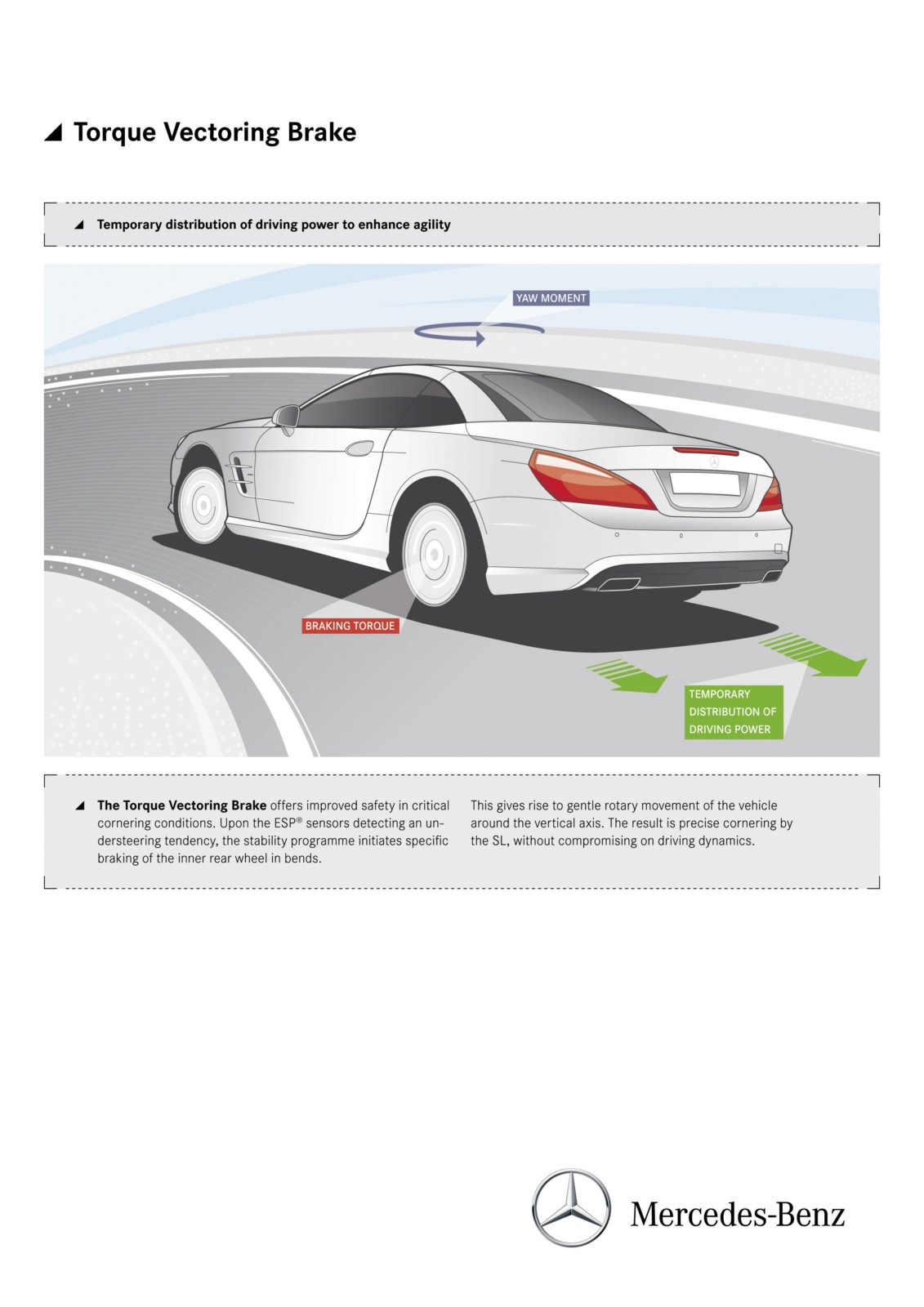
- Torque Vectoring Brakes
- All aerials stowed out of sight
New optional equipment over and above that of the predecessor
- Active Parking Assist with a function to aid entering and exiting
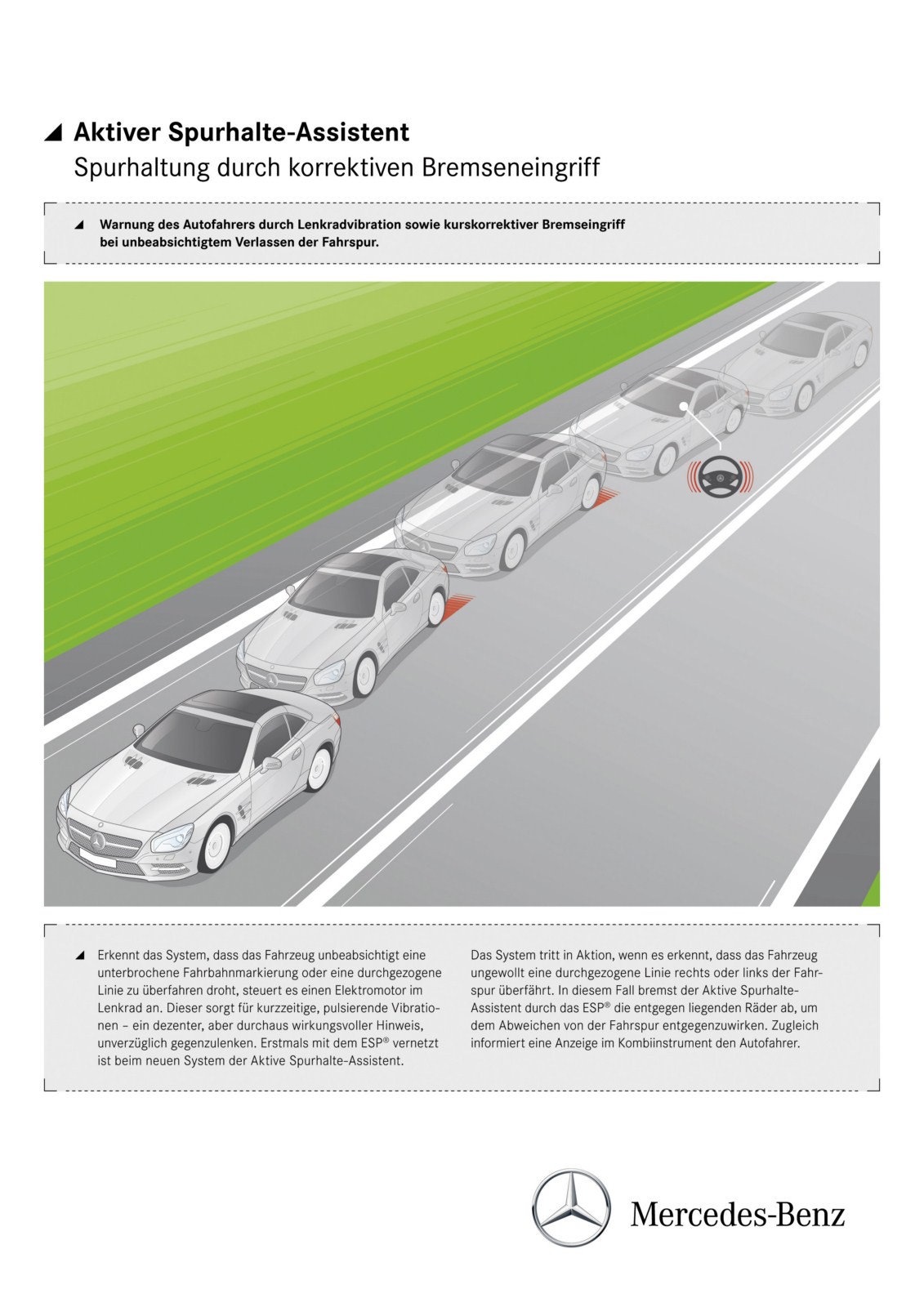
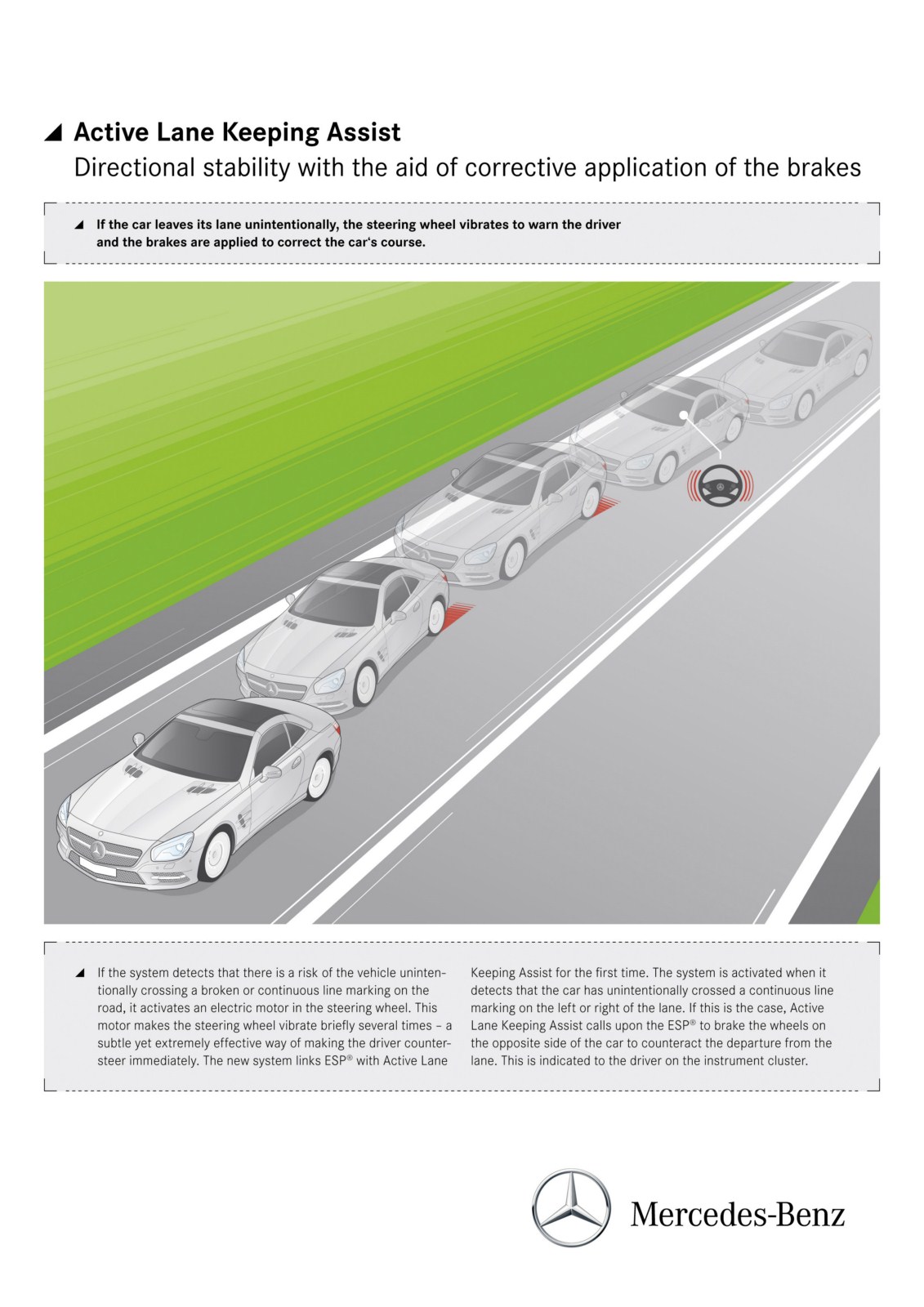
parking spaces - Active Lane Keeping Assist
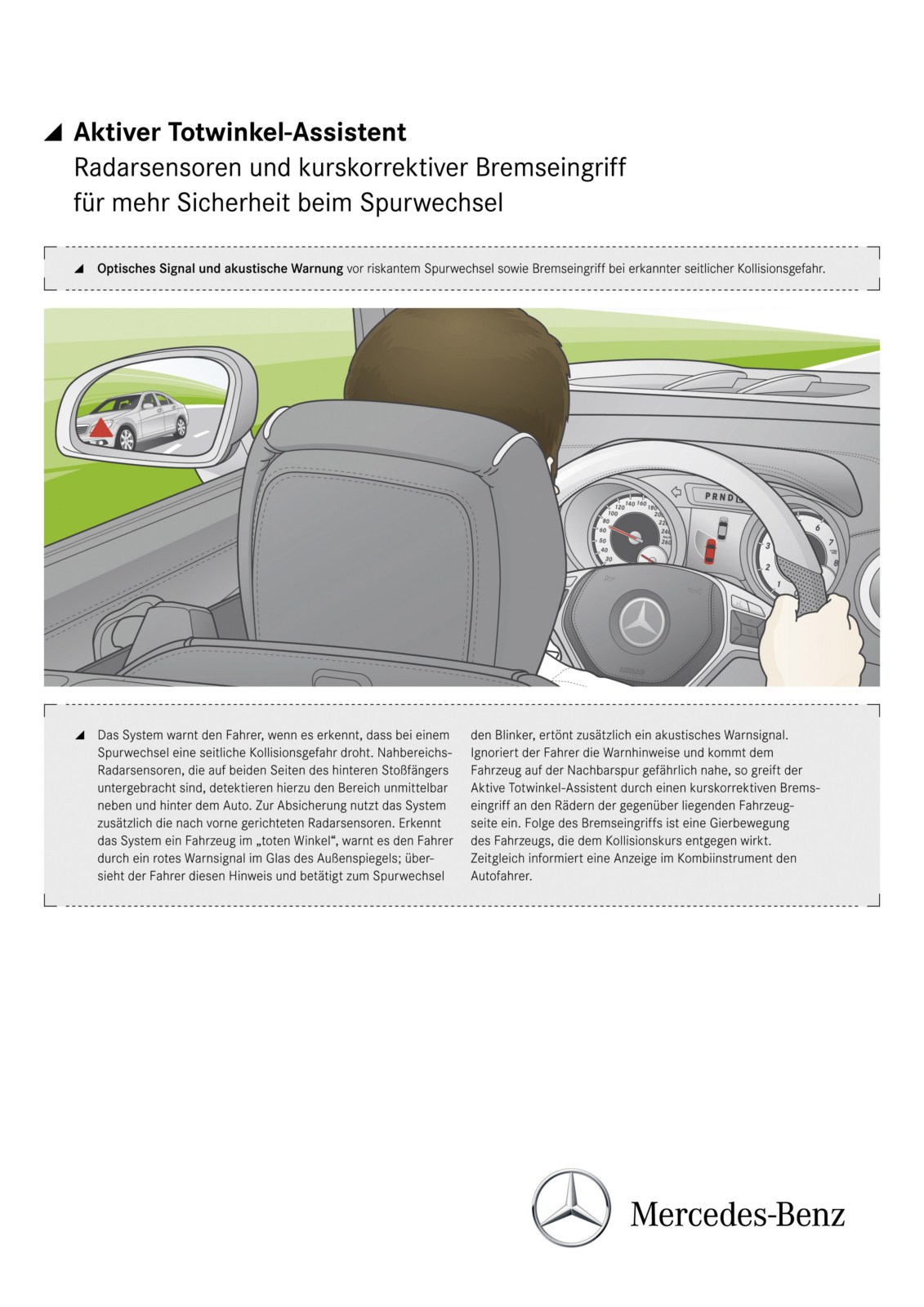
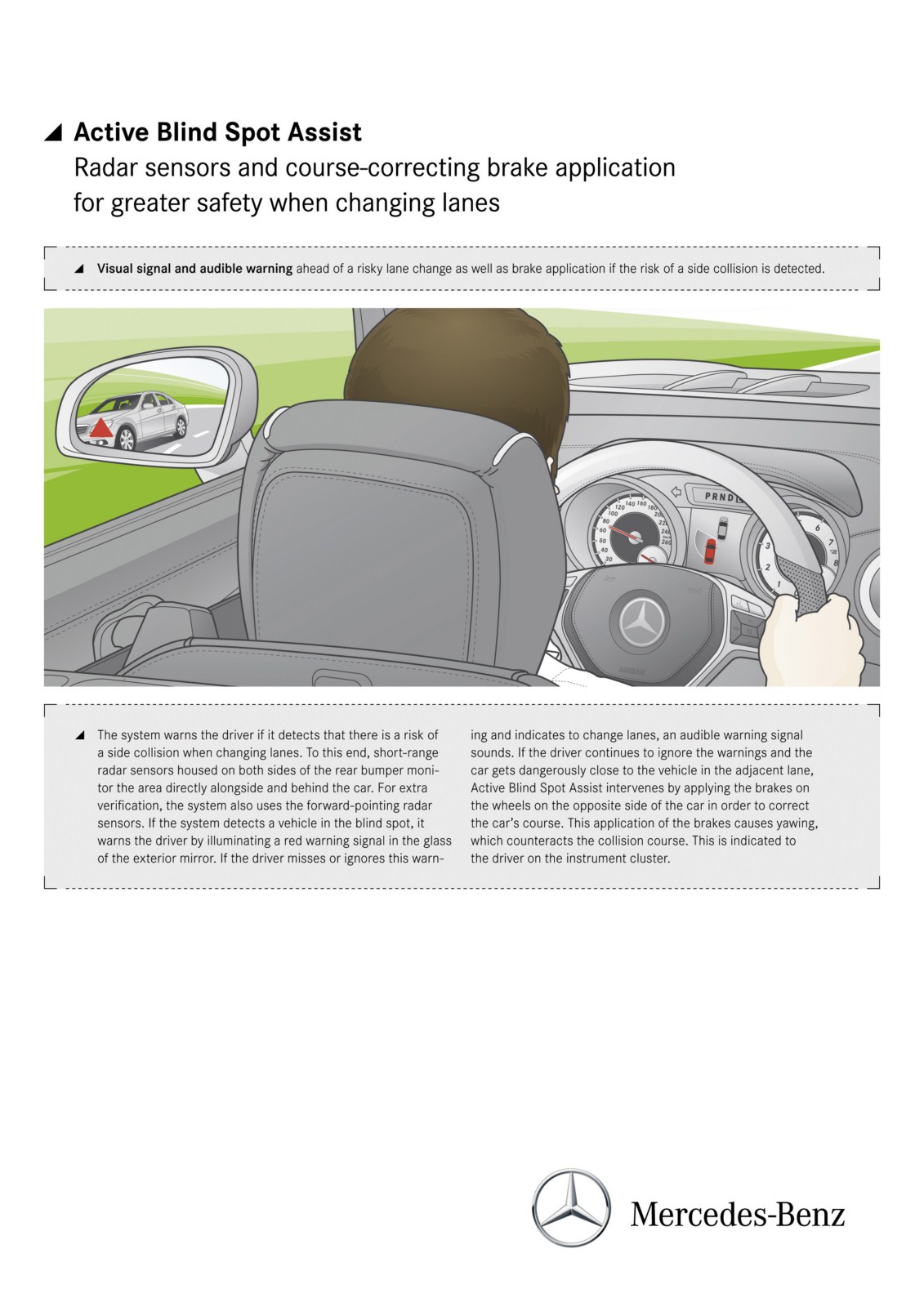
- Active Blind Spot Assist
- Active multicontour seat package
- Ambient lighting, 3 colours selectable
- AMG Sports package
- Analogue clock on the dashboard
- Bang&Olufsen sound system
- Driving Assistant Package with DISTRONIC PLUS, Brake Assist PLUS (BAS+), PRE-SAFE® Brake, Active Lane Keeping Assist and Active Blind Spot Assist
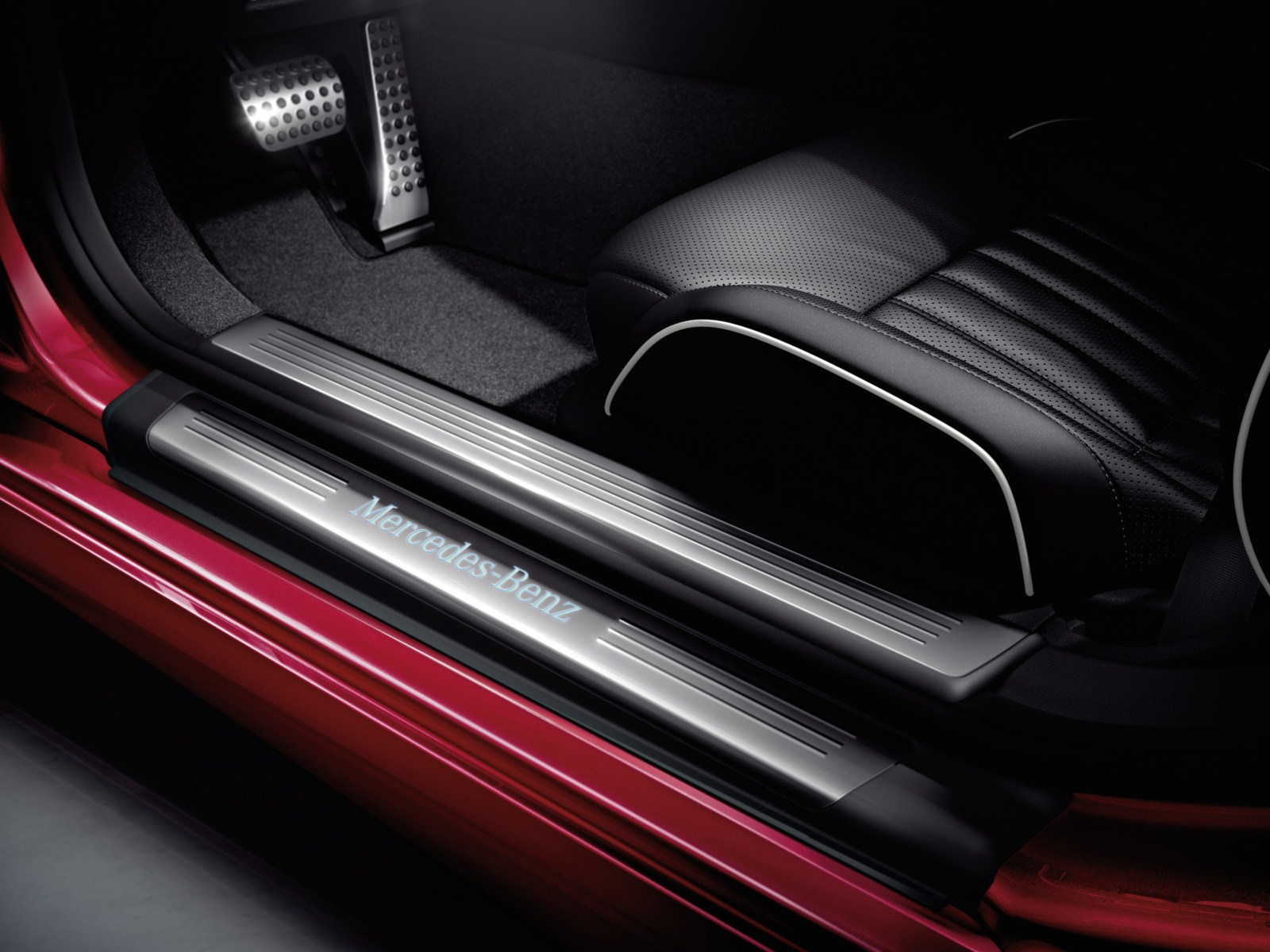
- Door sill panels illuminated
- Electrically operated draught-stop; fully integrated
- Speed Limit Assist
- Glass roof with selectable transparency, MAGIC SKY CONTROL
- ISOFIX attachment system
- KEYLESS-GO package with HANDS-FREE ACCESS
- Reversing camera
- Seat covers with heat-reflecting leather, for reducing the extent to which the interior heats up in bright sunlight
Statements
Quotations on the new SL
Dr Dieter Zetsche, Chairman of the Board of Management of Daimler AG and Head of Mercedes-Benz Cars: “There are around 900 million cars in the world and thousands of models. But there are only a handful of automotive icons. Our SL is one of them: it has class, it has style, it oozes comfort and luxury. But it blends all of this with unbelievable sportiness and dynamism. Virtually no other car can meet Gottlieb Daimler’s standard as perfectly as our SL: the best or nothing.”
Dr Joachim Schmidt, Member of Management, Mercedes-Benz Cars, Sales and Marketing: “The new SL can be described with two words: it is an aesthete and an athlete. That’s why I’m convinced that this sixth edition of the SL will be a great success, for it offers qualities which are unique in this combination – even amongst luxury sports cars: spirited sportiness, high comfort, a luxurious yet sporty ambience, reliability and high practicality for everyday use. It is exemplarily frugal and therefore environmentally friendly.“
Professor Dr Thomas Weber, Member of the Board of Management of Daimler AG, responsible for Group Research and Mercedes-Benz Cars Development: “With its intelligent hybrid lightweight construction concept with almost 90 percent aluminium, its new engines which combine power and economy, as well as two suspension variants, the SL takes its place at the cutting edge of technical progress. Besides all of this, two new world premieres are celebrating their debut in the new roadster – the Frontbass system ensures impressive sound experiences, the MAGIC VISION CONTROL system cleans the windscreen effectively and inconspicuously. And this is merely a small extract from the list of technical delights which the new SL holds in store.”
Design boss Professor Gorden Wagener: “The athletic, sports star’s physique with its masculine, muscular character says a great deal about the new SL and confidently emphasises its status as the high-performance heart of our brand. At the same time, discerning athletic standards are met by powerfully sculpted surfaces formed by just a few lines and beautifully crafted details. The
traditional design elements from our rich history are more than visual
quotations. They tell of the courage and the pioneering spirit which have shaped our brand, and reflect these properties in a contemporary way – with enthusiasm and passion. Alongside top technical performance and innovations, it is also this which makes the new SL an unmistakable character.”
Design
Masculine, muscular athlete’s physique
- Classic SL proportions
- Organically interpreted central star
- Striking sidelights and daytime running lamps
- Forwards thrust even at a standstill
- Elegant, racy tail end
The design of every Mercedes-Benz SL has an obligation to a great legend,
and yet it is always very clearly looking to the future. The designers have
unmistakably showcased the youngest generation of the style-defining roadster on the basis of tradition, but also with new perspectives and visions. This has resulted in a formal identity and the high overall aesthetic quality.
In the interplay between innovation and tradition we have created a stylish, sporty and elegant luxury sports car with the classic, well-balanced hallmark SL proportions: the long bonnet is followed by a compact, set-back passenger compartment. A broad, muscular, racy-looking tail end completes the picture.
Design boss Professor Gorden Wagener: “The athletic, sports star’s physique with its masculine, muscular character says a great deal about the new SL and confidently emphasises its status as the high-performance heart of our brand. At the same time, discerning athletic standards are met by powerfully sculpted surfaces formed by just a few lines and beautifully crafted details. The
traditional design elements from our rich history are more than visual
quotations. They tell of the courage and the pioneering spirit which have shaped our brand, and reflect these properties in a contemporary way – with enthusiasm and passion. Alongside top technical performance and innovations, it is also this which makes the new SL an unmistakable character.”
The front signals a self-confident presence
Visually, the new SL is clearly marked out as a prestigious member of the
current Mercedes-Benz sports car family. At first glance this is evident from the very upright classic sports car radiator grille which has featured on all the Mercedes-Benz vehicles with a sporty character – right from the initial
generation of the SL. The central star in the radiator grille points the way to the future: it is a contemporary reinterpretation of the famous trademark, which now runs into the centrepiece with organically flowing contours.
What’s more, on the new roadster the designers have waived the classic
separation of the bumper and the radiator grille. The lower edge of the grille now dips into the bumper, supporting the pronounced V-shape and resulting in more formal presence. In addition to this, the steeply positioned radiator grille lengthens the bonnet in visual terms. Two air outlet grilles, each with two chromed fins, have their roots in Mercedes-Benz’s traditional, dynamic design repertoire. A succinctly sculptured edge – developing from the upright radiator grille – draws across the long bonnet in a taut arch and flows organically into the A-pillar.
Dynamically positioned at an angle, headlamps located far on the outside flank the distinctive front and the broad air intake, giving the new roadster its own inimitable look. It appears masculine and it does also radiate a certain
restrained aggressiveness.
The standard-specification ILS headlamps are characterised by very high-quality tubes for the low and main beam which have been styled with great attention to detail, plus a chrome bracket surrounding the main headlamp and the flared arrangement of the indicator lamps and sidelights. All the further functions feature LED technology – such as the distinctively curved sidelights and the horizontal band of the daytime running lamps in the outer sections of the bumper.
The silhouette displays muscles with character
A minimal amount of artistically styled lines define the athletic yet smooth surfaces of the flanks. The shoulderline rises from the headlamps and stretches like a tensed muscle over the entire length of the vehicle and into the tail lights. Side grilles with fins in the front wings stylishly cite the classic SL
legend and form the starting point for a feature line. This structures the
proportions and lends the vehicle a visual forwards thrust even at a standstill. It tapers out in the tail light as a discreet line.
Free-standing exterior mirrors located on the beltline not only support the modern character of the side view; thanks to this position they also improve vision of the road.
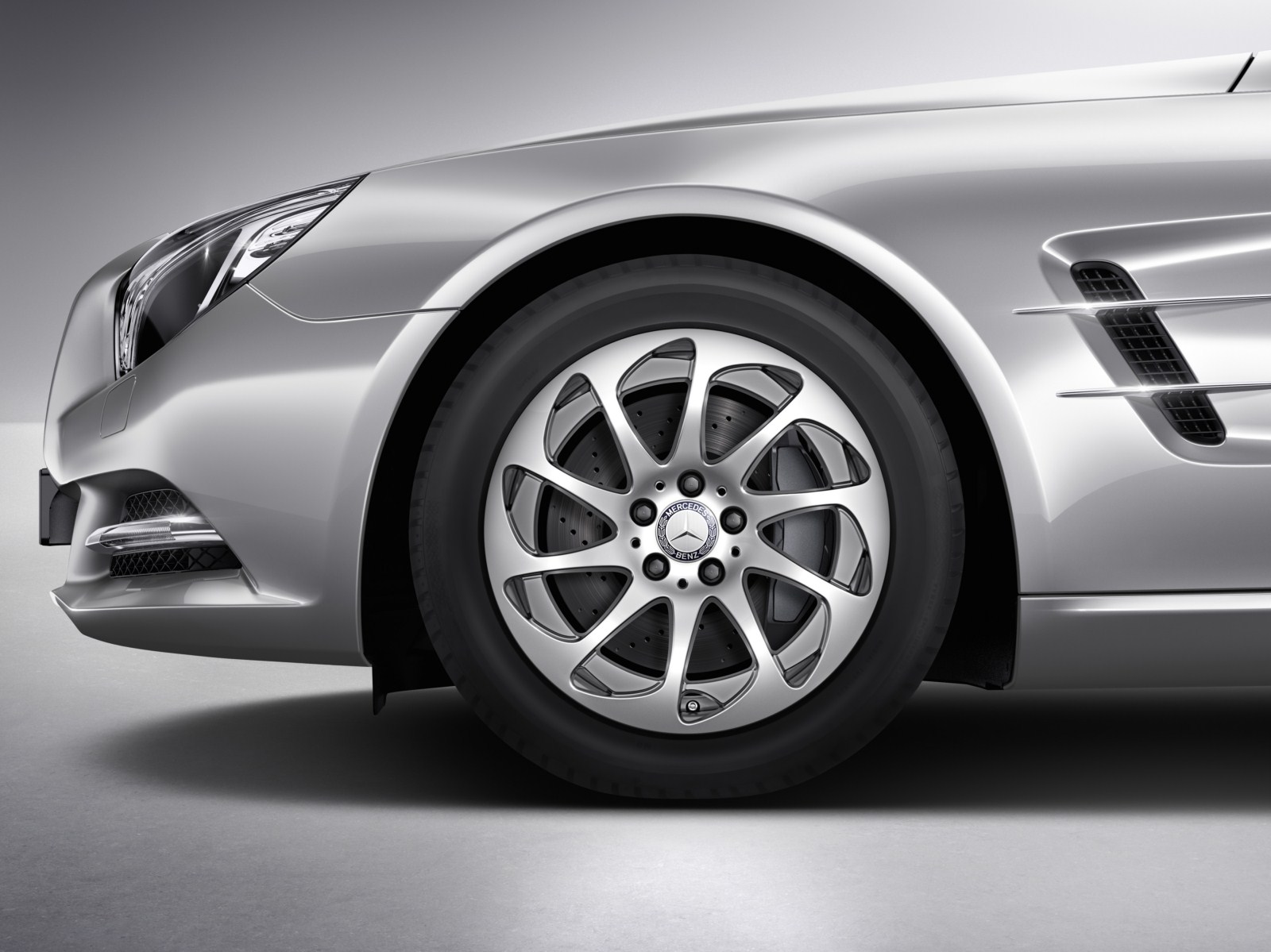
Depending on the engine variant, various light-alloy wheels are available in
17-inch and 18-inch versions. The exquisitely bordered wheel arches are
designed for a maximum size of 19 inches at the front and 20 inches (only
in the case of AMG) at the rear.
Muscular tail end
A small number of sweeping lines shape the broad, clearly defined tail end. Elegantly flowing and at the same time racy and muscular, it forms the
roadster’s distinguished finishing flourish that is so full of character. Thanks to the boot lid with its steel interior and plastic panelling, it has been possible to stow the aerials out of sight inside the vehicle so that they do not interrupt the flowing lines in the rear area. This is also the case with the roll-over protection, which lies hidden from view in the body and is only activated in case of
danger.
Tail lights with LED High Performance technology highlight the width of the tail end. They taper inwards to a point and have a discreet kink in the contour. The rear fog lamp is located centrally between two trapezoidal exhaust
tailpipes. A horizontal swage line in the lower area of the bumper provides added emphasis of the broad effect.
The colour range for the exterior encompasses twelve different paints. These include the BRIGHT paint diamond white and the special colour cerussite grey metallic SHAPE – the first matt paint in the standard-specification paint range for a Mercedes-Benz model series.
Interior and appointments
Luxurious comfort and sporty precision
- Stylish ambience and high-quality materials
- Ergonomically optimised seats
- The very essence of everyday practicality
The interior of the new SL impresses with its generous amount of space, high-quality materials, high sense of perceived value and lovingly crafted details displaying tangible and visible precision.
Compared with its predecessor, the new generation of the SL is much longer
(+ 50 mm to 4612 mm) and wider (+ 57 mm to 1877 mm), providing more room for more comfort in the interior, too. Shoulder room (+ 37 mm) and elbow room (+ 28 mm) have been increased, exceeding the dimensions normally found in this vehicle class. Clear lines create a formally coherent internal space within this comfortable interior. Perfectly in tune with the roadster’s character, it combines the unpretentious atmosphere of a high-performance sports car with the comfortable, stylish ambience you come to expect in a luxurious
touring car.
The wrap-around effect has class
In conjunction with the beltlines on the doors and the parcel shelf, the upper section of the dashboard creates a formal unity and – with the exception of the black interior – it is always styled in a contrasting colour. Generously used wood trim extends from the centre console across the dashboard into the doors, creating a pleasant wrap-around effect. Three types of wood along with two different aluminium trim finishes are available (high-gloss brown walnut, satin-finish light brown poplar, high-gloss black ash), plus two differently treated longitudinal-grain aluminium trim parts (light or dark). The links
between the dashboard, centre console and door trim panels have been styled so that they are continuous and they support the wrap-around effect. Minimal gap dimensions please the eye and represent the high precision with which
the SL is manufactured.
High-quality instruments add emotionally appealing flourishes
In the area of the dashboard, four circular ventilation outlets provide some striking eye-catching touches. Set in metal, these air vents are reminiscent
of jet engines and are a contemporary, emotively interpreted way of paying
homage to the history of Mercedes-Benz sports cars.
Inside two tubes the sporty instrument cluster boasts classic round dials
with three-dimensional graduated rings, back-lit dials in the centre of the
tachograph and rev counter, plus high-quality needles. In the centre between the two round dials, a colour display provides information from the on-board computer and indicates vehicle functions. The system is operated via a three-spoke sports steering wheel with shift paddles and twelve function buttons. The steering wheel featuring a flattened bottom section has an ergonomic grip area and galvanised spokes, and is covered with nappa leather – in the airbag section, too.
A large COMAND colour display in the centre of the vehicle takes care of
the numerous display functions for the entertainment, communication and navigation facilities. A particularly eye-catching feature on the tunnel of the centre console is a new DIRECT SELECT shift lever. Small and fine, it is a true visual highlight. Like the central rotary knob for operating the COMAND
system, it is optimally positioned from an ergonomic point of view. Located in front of these controls is the lidded compartment for the two cup holders.
Spotlight on the stylish ambience
Making dynamism visible is what it’s all about where the ambient lighting in the SL is concerned. The fibre-optic cables with three colour options to choose from stretch between the beltline and the door centre panel in one tier over virtually the entire length of the door, behind the trim on the dashboard and
in the front panelling.
Seats with a noble, sporty character
The new SL’s fully electric seats with a memory function meet discerning and wide-ranging standards regarding seating comfort, ergonomics, safety and sportiness. The ergonomically optimised seats themselves are more slender than in the predecessor and emphasise the noble, sporty character. This is underlined in visual terms by sophisticated stitched seams and by a layout which varies depending on the choice of leather. Alongside excellent lateral support, the seats also offer high levels of comfort.
The superstructure of the seat cushion and backrest is formed by a weight-optimised welded construction of steel and sheet metal panel parts. This
structure also makes a significant contribution towards transverse support for the sidewall in the event of a lateral collision. In addition, a thorax-sidebag is installed in the backrest. A newly developed combination of a sine spring core principle with rubberised matting and a foam layer as damping ensures
support and comfort.
Both the driver and the passenger can adjust their seats precisely according to their requirements and body measurements. Even in the standard equipment there are extensive electrical adjustment options available for doing so,
enabling fore-and-aft and height adjustment to be made just as easily as the seat cushion angle, cushion depth and backrest angle adjustment. The crash-responsive head restraints are also adjustable for height. The range of
equipment also includes 4-way lumbar support adjustment – this feature is housed in the centre section of the backrest cover. The occupants can operate it via the central control panel and the head unit. Using the memory buttons, the current seat position can be stored, and on the driver’s side this also applies to the positions of the steering wheel and exterior mirror.
A very attractive solution has been found for convenient access to the rear compartment for easy loading – in both visual and functional terms. A button on the shoulder of the backrest operates the backrest lock electrically and
enables the seats to be moved forwards and backwards in order to create
sufficient room to manoeuvre.
Also part of the standard specification is a seat occupancy sensor with
automatic child seat recognition on the front-passenger side – for child
seats with a transponder specially approved for Mercedes-Benz.
For enhancing comfort even further, in the case of the leather appointments the seats are covered with sun-reflecting leather. This specially coated leather reflects the heat of the sun and, in particular where the appointments colours are dark, it reduces the extent to which the surface heats up. In combination with the optional active ventilation the thermal seat comfort is tangibly
improved.
The following seat variants can be selected as an optional extra:
- Luxury heated seats with active seat ventilation: it ensures a pleasant seating climate. Leather appointments are a prerequisite for this option
- Active multicontour seat package: three air chambers in the lumbar area can vary the contour of the seats in order to prevent fatigue.
Elongated air chambers in both of the side cushions on the backrest ensure optimum lateral support
- Dynamic multicontour seat: the dynamic multicontour seat is an
enhanced version of the multicontour seat. It automatically adjusts the lateral structure of the backrest in accordance with the current driving situation. In order to do this it varies the air pressure in the seat
bolsters on the backrest electropneumatically, depending on the
steering angle, lateral acceleration and speed
Health and comfort-conscious climate
The control panel for the standard-specification luxury automatic climate
control THERMOTRONIC featuring separate temperature adjustment for the driver and passenger has been redesigned and revised. Mercedes-Benz has placed particular emphasis on new technologies for saving energy. They
include a window demisting sensor integrated in the base of the interior
mirror. It measures the window temperature and interior humidity and
transmits these data to the climate electronics. They can use them to
determine whether the windscreen has misted up. If this is not the case, in
A/C operation it can continuously adjust the compressor in the background if no dehumidification is necessary. In other words: thanks to the sensor, the compressor can be operated as required, saving drive energy. The A/C function can remain permanently active. A further advantage is that, as the air
conditioning only dehumidifies and cools as much air as necessary, dry eyes are prevented – a tangible gain in terms of comfort.
The air conditioning is also linked to the ECO start/stop function and can therefore also regulate the climate during the stop phases.
So that SL drivers can enjoy an open-air experience even when the weather is cool, the innovative neck-level heating system AIRSCARF is available as an optional extra – as was the case with the predecessor. Warm air flows through a nozzle at the front of the head restraints, and the system directs it around the head and neck area of the occupants.
Room for luggage and lots of equipment
Suitability for everyday use is a key word which is traditionally taken
extremely seriously at Mercedes-Benz – even in the case of vehicles designed to be very sporty. This is why the occupants in the new SL will find plenty of stowage facilities for larger and smaller items alike. In addition to the glove compartment, the centre console offers three stowage compartments within easy reach:
- One of these is at the front beneath the air-conditioning control panel, which can be optionally fitted with two cup holders or with an ashtray and one cup holder
- A large stowage compartment beneath the armrest can be used for the safe storage of a telephone, iPod® or similar, for example
- A centrally located rear box with a retractable luggage cover completes the range. A bottle holder is fitted here as part of the standard
specification, whilst a fire extinguisher is available as an optional extra
A lockable rear box behind the driver’s seat creates additional stowage space. Its catch is automatically closed when the vehicle is locked.
In the lower section of the door trim, a long, open door pocket offers further, easily accessible stowage space. As no bass loudspeakers have to be fitted in the door thanks to the Frontbass system, Mercedes-Benz makes sensible use of the space gained here by adding an extra stowage compartment, which can be used for an umbrella, for instance.
The designers have also thought the details through: smaller but useful items can be fixed in place by a net on the centre tunnel of the passenger’s footwell.
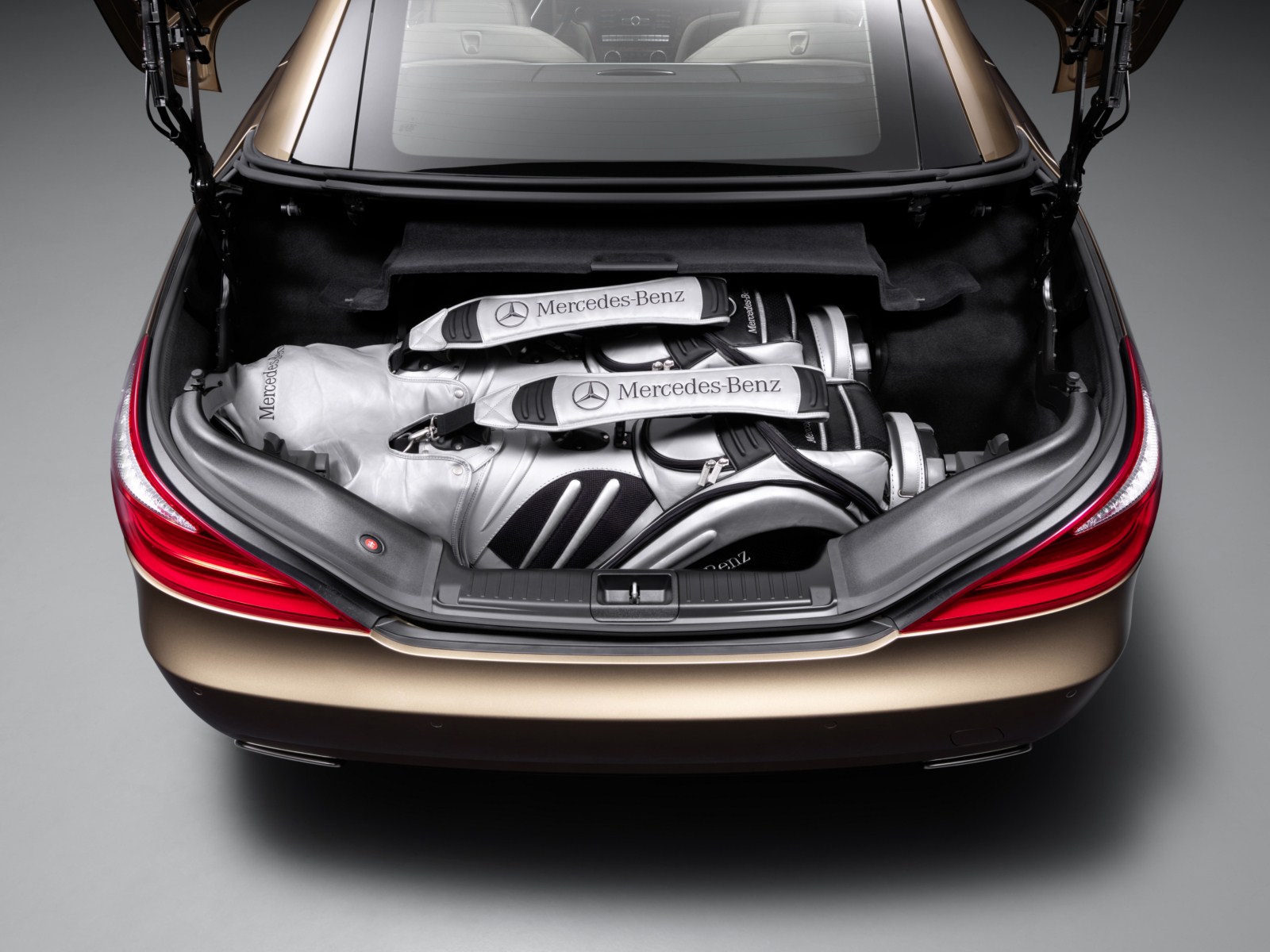
The design of the boot is largely determined by the vario-roof, which has to be housed in the upper part of the boot when the roof is open. In total the new SL offers luggage capacity of up to 504 litres – 364 litres with the roof stowed. There is always room for stowing luggage or two golf bags without any
problems at all, thanks to the optimised boot design.
A luggage cover which can be adjusted lengthwise with a handle prevents pieces of luggage from colliding with roof elements in the boot when opening the roof. Only when the cover is adjusted to the rear can the vario-roof be opened. Anyone wanting to use the entire boot capacity when the roof is closed can adjust the cover to the front or remove it completely.
At the press of a button, the roof elements stowed in the boot can be tilted
upwards by about 25 degrees to make loading and unloading easier – as was the case in the predecessor (Easy-Pack system).
The compressor and the TIREFIT filler bottle are housed in a stowage
compartment in front of the recess which can be accessed by lifting up
the boot floor.
HANDS-FREE ACCESS – ‘kick’ to open
One of the new products and features from Mercedes-Benz is a system known as HANDS-FREE ACCESS, which is included in the KEYLESS-GO package. It is available on request for the new SL for the first time anywhere in the world, and it allows drivers to operate the boot lid without using their hands. This work is taken care of by a hydraulic drive system, for which the control signals are given by the SL owner without touching anything, but by making as though to kick the area of the rear bumper with their foot; doing so activates this fully automatic comfort-increasing equipment. Mercedes-Benz is the only
manufacturer to offer a system which not only opens but also closes the boot lid automatically.
With the innovative convenience function HANDS-FREE ACCESS there is no longer any need for drivers to have to get annoyed by having to put their
purchases and other objects down on the – often dirty – ground when out
shopping and when they literally have their hands full, in order to reach for the handle. Should an unintentional ‘kick’ result in the boot lid opening or closing without the driver wanting this to happen, a second kick will correct it. When this occurs, the automatic system interrupts the procedure and reverses the effect of the signal given in error by actuating the boot lid against the original direction of movement – in the case of unintended opening, the second kick closes the boot lid again.
An appropriate safety program facilitates unhindered use of the HANDS-FREE ACCESS system. An acoustic signal provides the information that an opening or closing procedure has been initiated, and an automatic reversing function stops the boot lid as soon as the system recognises that there is an obstacle blocking the boot lid.
For the HANDS-FREE ACCESS system to be included, the vehicle must be fitted with KEYLESS-GO – this allows non-contact access to the vehicle In addition to this the correct KEYLESS-GO vehicle key has to be in the vicinity of the vehicle, so in order to open the doors it can, for example, stay in the driver’s coat pocket or handbag. In order to activate the HANDS-FREE ACCESS system for the boot lid, the KEYLESS-GO key must not be further than 1.5 metres away from the rear end of the vehicle.
Body and bodyshell
Aluminium comes up trumps
- Lots of technical innovations
- Torsional stiffness increased by around 20 percent
- State-of-the-art joining methods for high loadability
- Exemplary NVH comfort
- Three roof variants from which to choose
Cars are becoming increasingly safer, more comfortable, but often heavier as well. The new Mercedes-Benz SL not only stops this trend, it turns it around. In spite of increased comfort, performance and safety, it is 140 kilograms lighter than its predecessor.
The greater part of the weight-reduction “diet” is hidden from the eyes of the observer of the SL. Under the aluminium outer skin there is a bodyshell made almost entirely from aluminium, only very few components being made from other materials. The even lighter magnesium is used in part for the cover
behind the tank. The A-pillars and the roof frame are of steel sheet metal
incorporating high-strength steel tubing. For these elements steel is the best solution to provide survival space for occupants in the event of the vehicle overturning.
The bodyshell of the SL is the first all-aluminium bodyshell to be produced
in large series at Mercedes-Benz. This entirely new development weighs
254 kilograms and is thus 110 kilograms lighter than a comparable steel
bodyshell. Further extensive lightweight design features compensate the
additional weight unavoidably caused by the increased comfort, the new
assistance systems and other technical features. Under the bottom line an enormous weight advantage remains for the new SL. As the SL 500 it
weighs 125 kilograms less than its predecessor, while the SL 350 weighs
140 kilograms less than its previous version. And its preceding model
already had a lightweight aluminium bonnet and doors.
“The effect is rather as if a heavyweight-class passenger had got out of the car and taken their heavy flight luggage, too” says Dr Thomas Rudlaff, responsible for the aluminium bodyshell at Mercedes-Benz. “The result is perceptible and measurable. Less weight means more dynamism and less consumption. In other words: the motoring enjoyment increases and the environmental burden decreases.”
For the roadster the aluminium bodyshell is superior to a steel
construction
The developers at Mercedes-Benz did not rest content achieving weight
benefits alone. The aluminium structure had to be superior to a steel
construction in terms of rigidity and comfort as well. In order to attain this high objective, developers consistently went for an intelligent lightweight
construction, and explored many new paths to do this. Every single component of the aluminium bodyshell was specifically optimised for its particular
function and expected loads. Thus, diverse processes are used to make
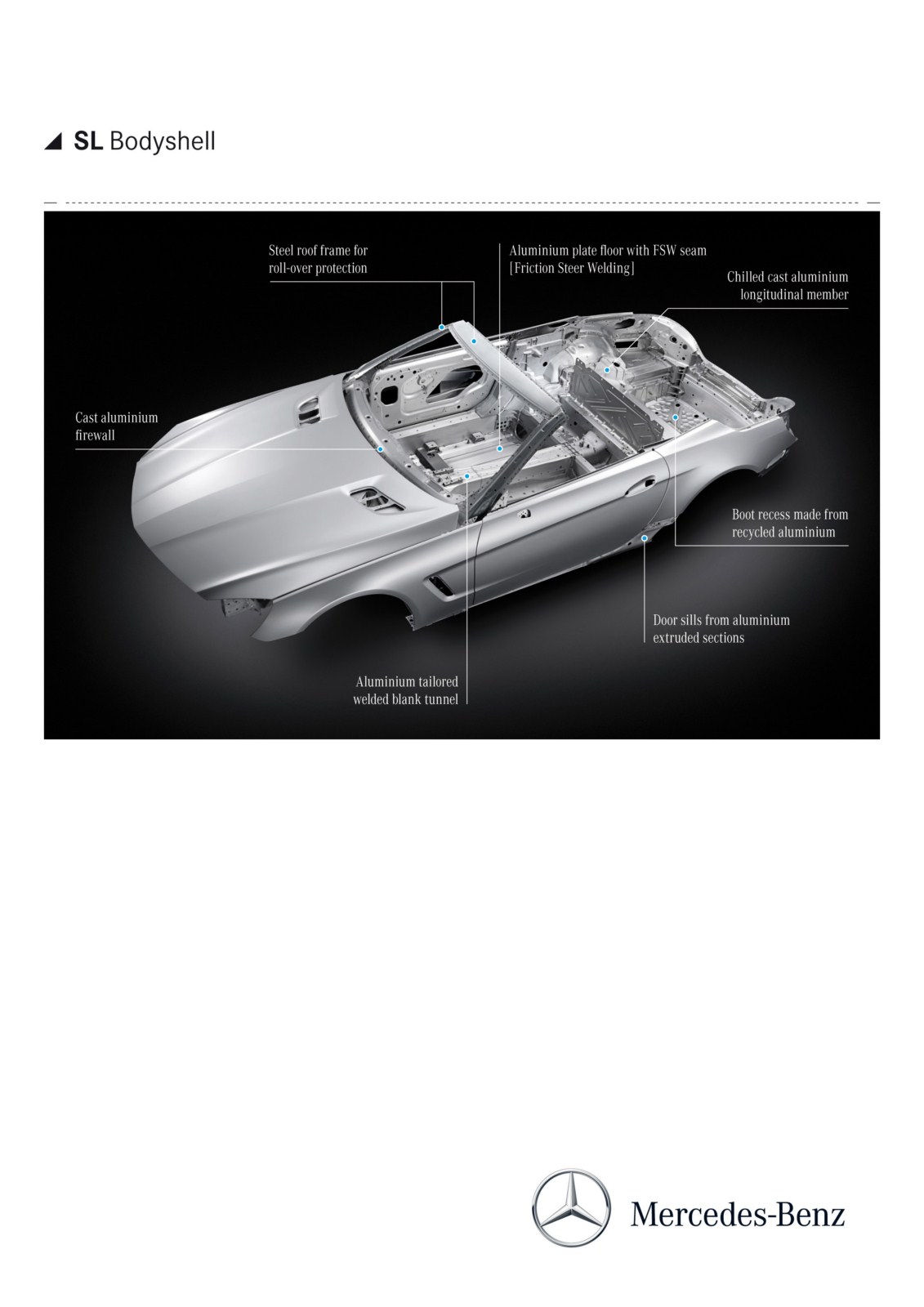
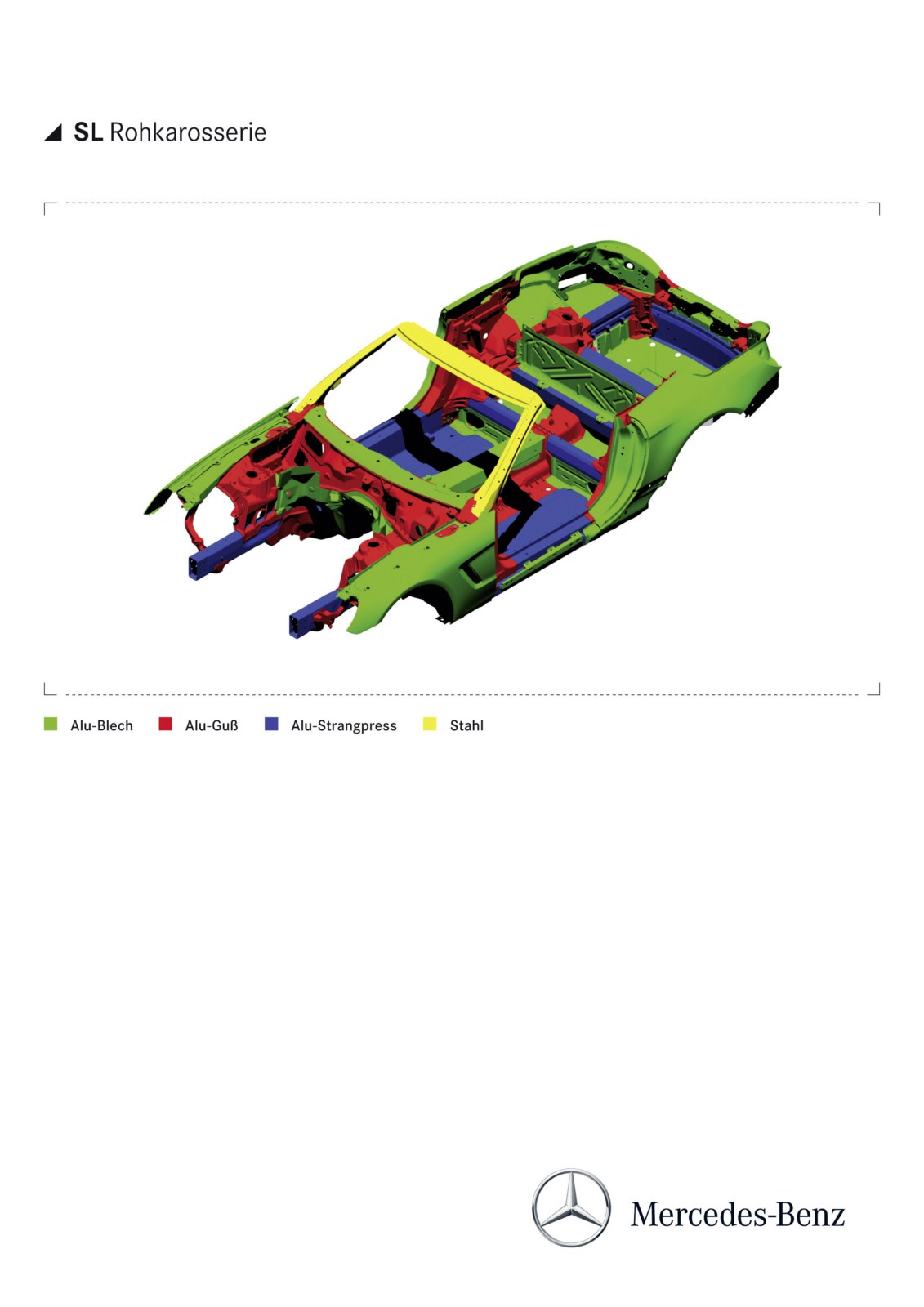
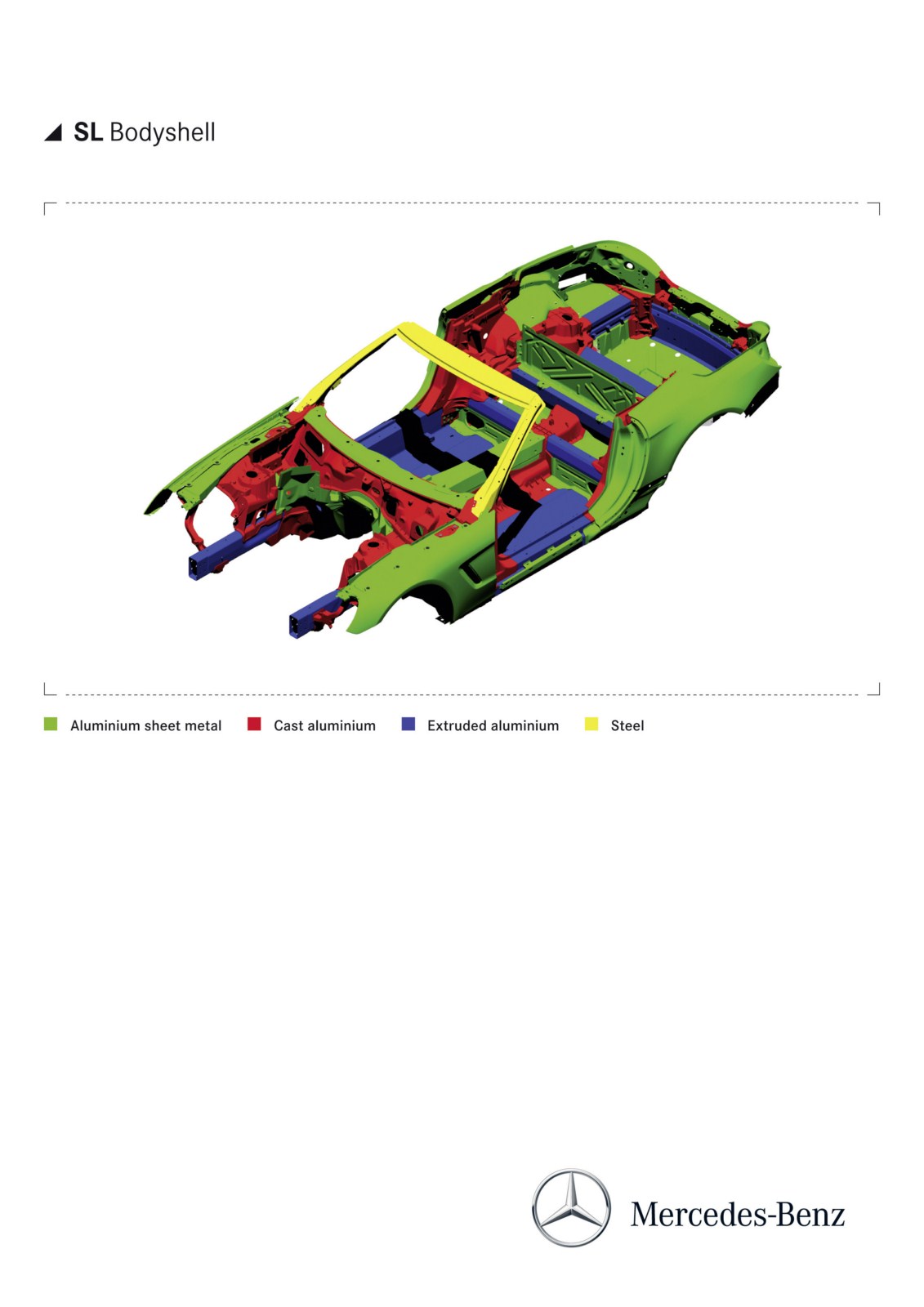
different kinds of aluminium depending on the use the component is to be given: the parts are made by chill casting or vacuum die casting, worked into extruded aluminium sections or into aluminium plates of thicknesses that vary within one and the same component; these are what are known as the tailored welded blanks. Expressed in numbers, the bodyshell weight is made up of:
44 percent cast aluminium, 17 percent aluminium sections, 28 percent
aluminium sheet metal, 8 percent steel and 3 percent of other materials.
At the Bremen production facilities the parts are assembled using diverse
load-adequate joining methods, some of which are innovative processes. Secure joints are ensured, for example, by MIG welding, hemming, bonding, self-piercing rivets, flow hole bolting, or friction stir welding – a joining method by which a highly resistant weld seam is produced by means of friction heat; a method particularly well-suited to aluminium on account of its low melting point.
Particular highlights of the bodyshell:
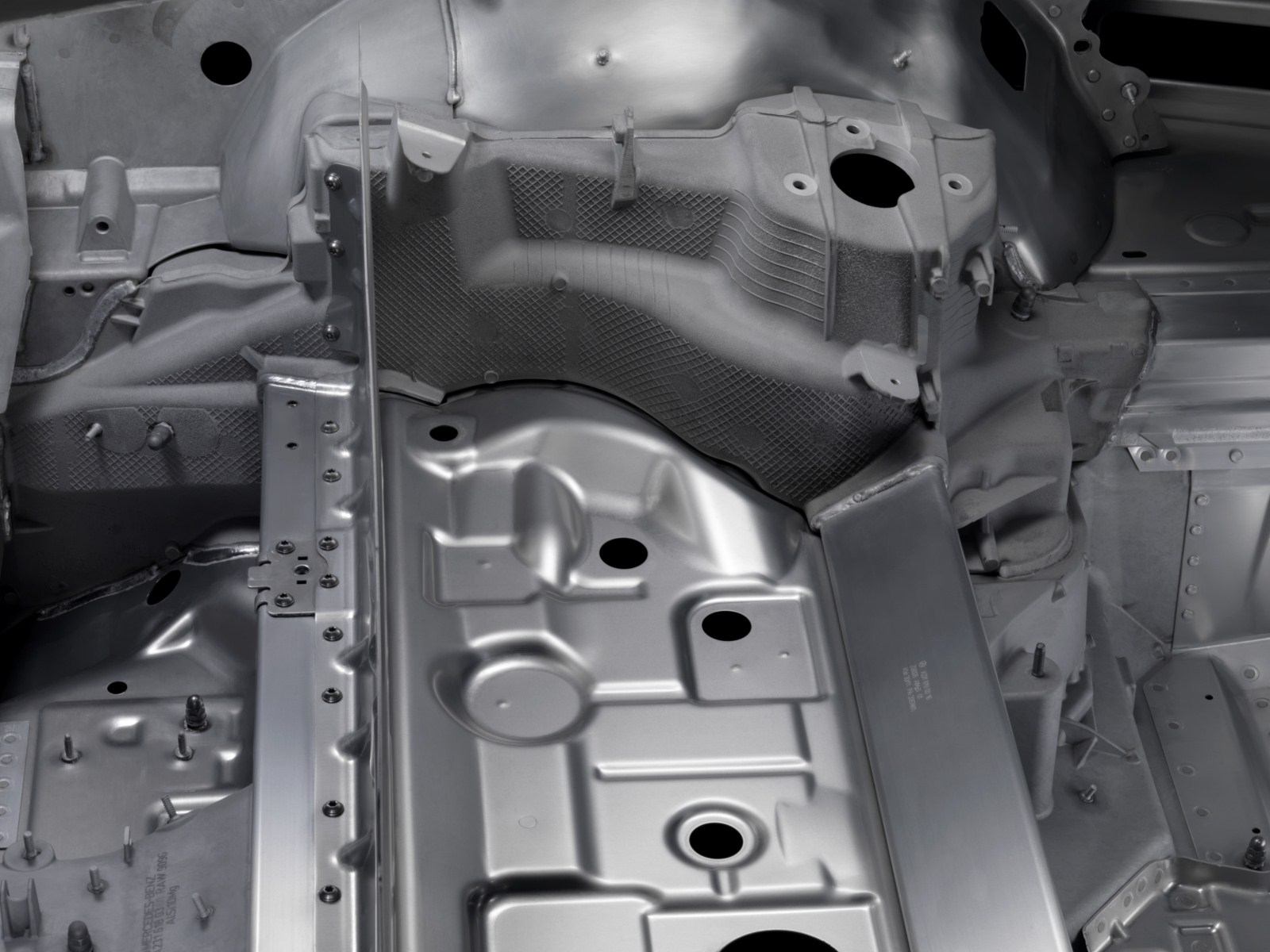
- The firewall is at present the largest aluminium cast component made in large series for vehicle bodywork
- Many sheet metal parts are designed in such a way that for the first time they can be made from 100-percent recycled aluminium, saving 80 percent of the energy used in their production.
- The main floorpan consists of a 3-layer shaped panel made from thin, extrusion-moulded hollow sections, welded together by friction stir welding.
- The longitudinal members in the vehicle front end are made using high-pressure hydroforming (IHU) technology, which enables the
creation of highly complex and robust components, permitting
optimum use of reduced installation spaces. - The door sills (longitudinal members) consist of 1.7 metre-long,
7-chamber extrusion-moulded aluminium sections; these provide
rigidity in the lateral sectors and safety in the event of a collision. Flexible chamber distribution makes possible a minimum component weight coupled with optimum characteristics. - The tunnel is made of aluminium sheet metal with a reinforcement of varying thickness (3 different thicknesses depending on the sector, a so-called tailored welded blank, TWB).
- The rear sector floor is a MIG welded frame with a hollow chilled
cast longitudinal member as its central element. This technique is
employed in the SL for the very first time in automotive bodyshell
construction. - The rear sector floor frame structure is closed by floor sheet metal
panels and the boot tub made by vacuum die-casting. - The boot recess is made from recycled sheet metal.
- The central member connects the front end with the rear sector floor. The mounting points for the drive shaft, the transmission cross beam, the transmission tunnel braces and the seat bolting points on the
tunnel side are all integrated into a single element. The wall
thicknesses and rib distribution are oriented bionically towards the
requirements and loads. - Many other components were optimised bionically, i.e. based on
examples from the natural environment. These structures reduce the vehicle weight compared to a classic design even further.
The sum total of all the design measures leads to a lightweight, torsionally
and flexurally rigid bodyshell with an optimum rigidity/weight ratio. It was possible to increase the bodywork’s torsional rigidity by more than 20 percent over the already highly rigid preceding model series. This is confirmed by measurements of the new SL’s torsional strength – at 19400 Nm per degree
the roadster achieves an absolute top value (its predecessor already reached 16400 Nm per degree).
Meets the highest safety standards
At the same time the high-strength structural elements of the aluminium
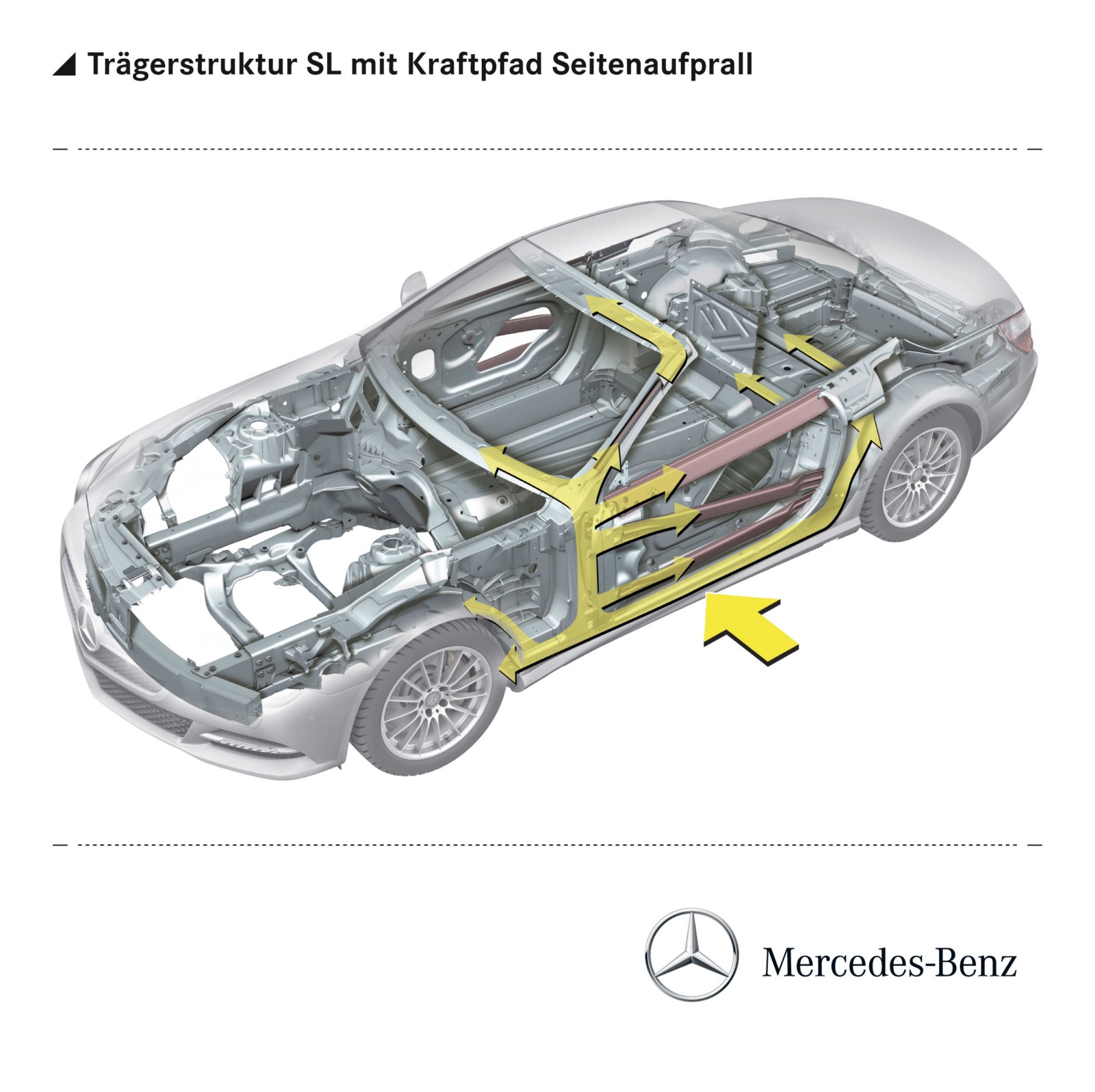
bodyshell make the new SL even safer than the preceding model in the event of a collision. Extrusion-moulded sections, connecting cast nodes and a double-thickness plate floor form a passenger compartment that is just as lightweight as it is sturdy. Two aluminium sections in each door together with the side sills (very rigid thanks to their internal chamber structure) and crash-resistant seats provide the greatest possible survival space in the event of a side
collision.
A front end deformation zone acting on several levels and in which the
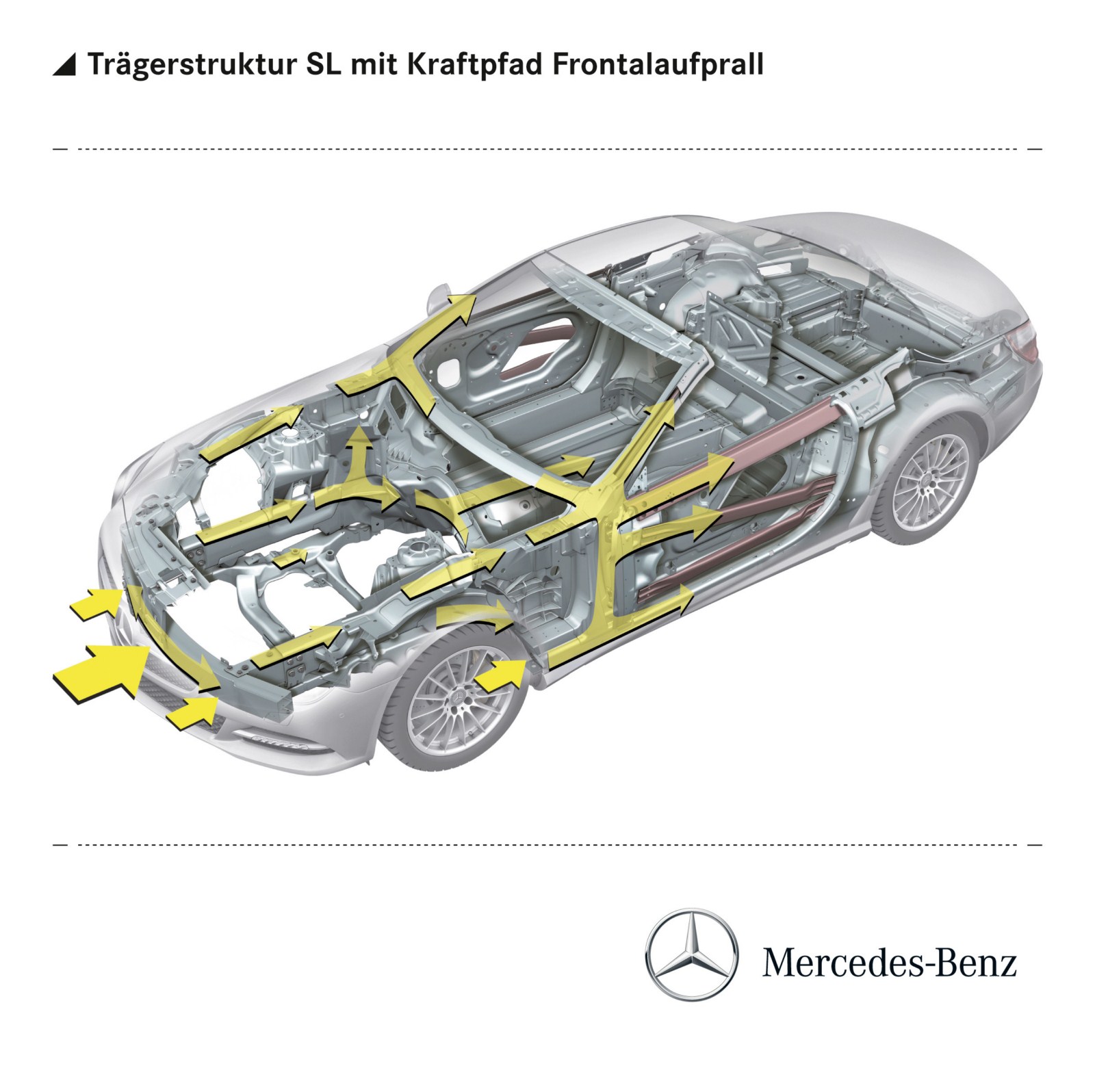
aluminium front axle subframe is integrated as an additional third longitudinal member, distributes collision forces to a large area, conducting them past the passenger compartment. And in the rear, too, there is sufficient energy-absorbing deformation potential. A structural cage made from chilled cast
longitudinal members, transversal sections and a cast magnesium tank
separation bulkhead also contribute to this. This is also where the fuel tank is nested in a crash-protected manner above the rear axle. This way all the
statutory safety requirements are met as well as the even stricter ones from Mercedes-Benz.
Best marks for NVH comfort
Thanks to its innovative aluminium bodyshell concept, the new SL is also unique among the roadsters in terms of NVH comfort (noise, vibration,
harshness). One contributing factor towards its optimum vibration and road roar characteristics is a very rigid connection between the front section and rear floor, allowing relaxing travel even over long distances, and at the same time offering impressive driving dynamics.
Although aluminium features a higher sound emission and radiation level
than steel, the new SL is the quietest vehicle in its class. Mercedes-Benz
compensates for the acoustic disadvantages of aluminium by means of a
consistent sound insulation concept with targeted adaptation of the sound damping materials to each problem zone, and through the use of innovative sound-insulation materials:
- A special firewall damping with variable mass distribution and a
significant heavy layer proportion attenuates engine noise. - In conjunction with the plate floor, single-piece, foam-backed carpeting with virtually no seams reduces the roll noise of the vehicle in the
interior. - A spray-on lining attenuates the structure-borne sound in the vehicle interior and exterior.
- Textile wheel arch linings, acoustically absorbing shield plates and bodyshell foam elements for critical sectors also contribute towards a smooth ride.
- Damping in the rear wall transversal cross member and boot lateral elements as well as in the forced ventilation openings prevent
disruptive tyre and wind noises from making themselves unpleasantly noticeable in the vehicle interior.
A further contribution to the good interior acoustics is the laminated glass windscreen with acoustic film. The transparent, highly resilient film absorbs the vibrations of the windscreen and reduces the perceptible sound level in many frequency ranges.
The precision workmanship on the acoustics goes so far as to ensure that the hydraulic pump for the electrohydraulic vario-roof is encapsulated and
decoupled from the bodyshell. In addition to this, a newly developed insert nozzle sees to it that the pressure pulsation in the pump is reduced to a
minimum right from the outset. This means that pump noises are only barely audible for the driver and passenger.
The doors and the bonnet, too, are lightweight
The intelligent material mix is completed by the boot lid, of SMC-hybrid design (SMC = sheet moulding compound). It consists of a single-shell synthetic
material panel mounted on a steel reinforcement. Both materials have virtually identical thermal expansion coefficients and complement each other very well. The interior steel construction permits maximum rigidity with minimum use of space, while the plastic panelling allows the full integration of the aerials for navigation, digital radio and mobile telephony out of sight in the rear area
so that the SL does not need to carry a bothersome aerial stump on its
aerodynamically refined body.
The bonnet of the SL is made from aluminium, as was that of its predecessor.
It was optimised in terms of form and materials, contributing towards the
outstanding pedestrian protection.
The doors, too, are of a lightweight design and made from aluminium. They are fashioned from a combination of sheet metal, extruded sections and cast metal parts, joined by diverse methods: riveting, bonding and hemming. Their
aluminium and steel hinges are friction-based and are infinitely adjustable to any desired angle when opened, so that when getting into or out of the car they can remain securely open at any angle permitted by the space available at the side. This is particularly desirable in cramped parking conditions such as in a garage or car park.
Unique item of equipment: MAGIC SKY CONTROL
The proven electrohydraulic vario-roof – which turns the roadster into a closed coupé with a fixed roof in just a few seconds at the push of a button – has been intelligently enhanced, with Mercedes-Benz continuing to play the pioneering role here. For the new SL Mercedes-Benz is for the very first time offering
drivers the choice between three variants of the lightweight-construction
vario-roof:
- The base version is a roof painted in the vehicle colour
- As an alternative, a transparent variant with a roller blind can be
selected - The third variant from which drivers can choose is the panoramic vario-roof with MAGIC SKY CONTROL. This glass roof switches to light or dark as required at the press of a button. When light it is virtually transparent, offering an open-air experience even in cold weather. In its dark state the roof provides welcome shade and prevents the
interior from heating up when the sun’s rays are very intense. In other words: a feel-good atmosphere at the touch of a button
The operating principle is based on the physics of a plate condenser: if the glass structure is subjected to an electrical voltage, particles in the structure position themselves so that light is able to pass through the glass. If the voltage remains switched off, however, the particles position themselves randomly. This partially blocks the light, and the glass remains dark. The control unit and converter are integrated into the front section of the roof, and the switch is in the overhead control console.
In addition to the unique panoramic effect and transparency at the touch of a button, MAGIC SKY CONTROL also provides an atmosphere of wellbeing. UV and infrared light are also effectively blocked in transparent mode, while
insulation increases even more significantly in the darkened mode, thereby helping to keep the temperature on interior parts such as armrests cooler by up to ten degrees Celsius compared with conventional green glass.
Since the innovative glass also shields against the sun’s rays far more
effectively than conventional thermal insulation glass or sunblinds, the
occupants of the new SL will also enjoy the highest level of climatic comfort at the same time. When driving with the roof open would be unpleasant due to intense heat, the driver and passenger are able to remain composed under the MAGIC SKY CONTROL roof – making an important contribution towards driver-fitness safety, a concept which Mercedes is well known for promoting. Even when the vehicle is at a standstill the interior does not overheat, since
the roof is switched to darkened mode when powered off.
But MAGIC SKY CONTROL not only benefits the occupants. Some of the strain is also taken off the air conditioning, thereby saving on CO2 emissions.
The frame of the three roof variants is now made of magnesium. This makes each roof around six kilograms lighter than in the previous model, giving the car a lower centre of gravity, and therefore better agility.
The engineers have refined the operating mechanism for the roof and boot lid. It now takes less than 20 seconds to open or close the roof completely.
Sophisticated corrosion protection concept
The aluminium bodyshell of the new SL offers no point of attack for corrosion. A sophisticated surface protection concept ensures the preservation of the
brilliant look both of the outside skin and of the underside of the sheet metal panels, thus simultaneously protecting the renowned reliability and value
stability of Mercedes-Benz vehicles. The protection concept was developed and tested on the basis of the environmental burden in different climate zones of the world and the specific loads the vehicle is subjected to.
The foundation for maximum corrosion resistance is formed by corrosion-resistant aluminium alloys and design features, while the few steel vehicle components are all fully galvanised. High-quality zinc/nickel coatings or
special electrochemical insulation measures prevent contact corrosion with aluminium. All the seams are meticulously sealed, the surfaces protected through cathodic dip priming and multiple coats of paint. Sectors particularly exposed to corrosion are additionally protected with wax, to ensure that the pristine aspect of the new car is preserved for a long time.
Intelligent Light System and LED tail lights as standard
The headlamps on the new SL have been enhanced. As part of its standard specification, the new roadster is equipped with the Intelligent Light System (ILS) featuring bi-xenon headlamps. A driving direction indicator, sidelights and the daytime running lamps with LED technology complete the Intelligent Light System.
The tail lights on the new SL benefit from the advantages offered by the
LED technology. LEDs light up approximately 150 milliseconds faster than conventional bulbs, plus they have a considerably longer life and conserve current. In the SL’s tail lights, the LEDs also light up with differing intensity in a targeted manner in certain sections of the tail lights, depending on the light function. This technology ensures an unmistakable night design.
Rear reversing lights and rear fog lamps are integrated into the rear bumper. The third brake light featuring LED technology is integrated in the boot lid above the Mercedes star.
Lightweight construction under the microscope:
Progress in detail
Right from the word go the target was ambitious: the aim was for the new
Mercedes-Benz SL to tip the scales weighing five percent less than the previous model. Already declared the benchmark, the predecessor itself was a shining example boasting various lightweight design measures, even including
bonnets made of aluminium. At the same time, the specifications book
prescribed more comfort, more output coupled with considerably reduced
consumption and fewer emissions, plus a more rigid bodyshell and even more safety. These demands would render the vehicle heavier and not lighter – that was clear. The experts calculated a weight increase of at least 75 kilograms.
Only a lightweight construction on a totally new level – which included all
the vehicle components in the equation – could reconcile these contradictory requirements. In actual fact, the developers at Mercedes-Benz have succeeded in undercutting the ambitious weight targets. The new SL 500 weighs no less than 125 kilograms less than the predecessor of the same name. This
corresponds to a reduction of 6.5 percent. Meanwhile the SL 350 even manages to exceed the high expectations even further – with its weight saving of
140 kilograms – equating to 7.7-percent less.
Here is an extract from the long list of lightweight design measures:
Bodyshell. Converting the entire bodyshell to aluminium cuts its weight by
24 percent in contrast with a steel bodyshell featuring comparable properties (a weight saving of 110 kg). Even the upper door hinges consist of aluminium.
Damping. The switch from absorber foams to sprayable acoustic compositions with variable layer thicknesses which can be shaped according to
requirements, plus modified underbody panelling, results in weight savings
in the order of 2.5 kg.
The guide rails for the window lift mechanisms are now comprised of
aluminium instead of steel, amounting to a weight saving of 0.5 kg.
Vario-roof in magnesium/plastic design. The front part of the roof and
the C-pillar are produced in magnesium/plastic, plus there are additional
optimisation measures regarding the design of the tubular frame, rear shelf, rear window frame and roof frame. The weight reduction amounts to 15 kg.
Glazing. The windscreen is 0.5 millimetres thinner, with an acoustic film. The weight reduction amounts to over 1 kg.
The rear windscreen is 0.7 millimetres thinner, resulting in approximately
1 kg less weight.
Interior. The dashboard mount consists of a continuous IHP aluminium tube with magnesium struts and moulded-on polymer brackets. The weight
reduction is 2.2 kg.
With the introduction of shift-by-wire technology, the large shift lever has been replaced by a joystick-like lever. This DIRECT SELECT gearshift system weighs only one sixth as much as the automatic selector lever used in the preceding model. The weight saving is 1.4 kg.
The boot floor is in the form of a polyurethane honeycomb plate instead of the wood plate previously used. The passenger’s foot plate has been switched over to plastic from steel, saving 1.5 kg in weight.
Seat. New seat structure with new adjustment motors, but a standard-fit 4-way lumbar support and crash-responsive head restraint. Weight savings: 11 kg.
Electrics. Thanks to an intelligent dynamic load management system, two batteries are no longer necessary; one 95 Ah battery in the boot is sufficient, supported by a 12 Ah battery for the ECO start/stop function. Weight savings: approx. 4 kg.
Every vehicle is given a customer-specific wiring harness for the interior, cockpit and engine compartment. Thanks to this tailor-made cable harness, additional weight in the form of wires which are surplus to requirements can be saved – to the tune of up to 0.4 kg.
The innovative Frontbass system avoids the need for a separate woofer and door loudspeaker. Weight reduction: over 4 kg.
Axles. The four-link front axle had already undergone extensive weight
optimisation for the preceding model, featuring steering knuckles and spring links made of aluminium. The two front-axle halves now consist entirely of this material. The integral support frame for the front-axle halves, steering gear and engine is also produced in aluminium. Total weight savings: 11 kg.
The rear-axle subframe consists of high-strength steel with adapted panel thicknesses. It has been optimised in accordance with the specific engine line-up for the SL 350, resulting in a weight reduction of 2.6 kg over the SL 500.
Suspension, Damping. The standard-specification semi-active adjustable damping in the SL 350 is lighter than the standard suspension system, saving 10 kg in weight.
Brakes and pedals. Optimised brake cooling eliminates the need for large and thus heavy brake discs on the front axle. Weight savings: 3.8 kg.
Lightweight wheels. New standard-fit lightweight wheels for the SL 500 are around 15 percent lighter than cast wheels. Weight saving: approx. 4 kg
Wheel bolts with a weight-optimised head. Weight saving: approx. ¼ kg.
MAGIC VISION CONTROL adaptive windscreen washing system
Visibility as if by magic
- World premiere – wipe and wash systems folded into one
- A duct system takes the water directly to the wiper blade
- Programs for summer, winter and cabriolet operation
- Fully heated system against snow and ice
An astonishing experience: the wiper blade glides over the badly soiled
windscreen of the new SL, without a sign of a cleaning water jet, the occupants do not notice anything yet the windscreen is still cleaned! The new SL is the first vehicle to be equipped with the adaptive MAGIC VISION CONTROL wiper/washer system developed by Mercedes-Benz. It cleans the windscreen without the splash of water that usually briefly disrupts the driver’s field of view in the case of conventional windscreen washing systems – something that is especially unpleasant at night or when the sun is low in the sky and at high speeds.
In fact, the windscreen cleaning operation in the SL is still performed with washer fluid in the conventional manner. The innovation lies in the way the fluid is conducted to the windscreen in order to clean it. This is done by means of water guides integrated on both sides along the wiper blade – one on the
left and one on the right – with minute laser-cut spraying holes. Via these channels, the innovative washer/wiper system always supplies washing fluid to the windscreen discreetly, precisely where it is needed: just in front of the wiper blade lip, according to the direction of movement of the wiper. The holes are distributed along the entire length of the wiper blade, being more closely spaced towards the outside of the blade, where it sweeps a greater area, than closer in, where the area swept is smaller.
Programs for summer, winter and cabriolet operation
Mercedes-Benz controls the MAGIC VISION CONTROL system intelligently
via three partly autonomous wash programs – for summer, for winter and for cabriolet driving. It is the first windscreen wipe/wash system anywhere in
the world to operate in this way. In summer, small quantities of water are
sufficient to remove a light powdering of dust. In winter the dirt mixed with
de-icing salt requires a greater amount of water. The MAGIC VISION CONTROL system works in accordance with the outside temperature, and it also
automatically adapts the washer fluid quantity to the surrounding conditions.
A particularly interesting feature of the SL Roadster is the Cabriolet function: when the hardtop is down, the electronic control system reduces the amount
of water, apart from which it demands the required water mainly on the
downward stroke of the wiper arm. This way the windscreen can be
conveniently cleaned during the journey and with an open roof, without any
of the water spraying into the vehicle interior. Another pleasant side effect is that, since the washer fluid is directed specifically and in a well-metered
manner to the area to be cleaned, one doesn’t douse anyone else in the
surroundings with water, either, and it also doesn’t distribute any spray onto the vehicles behind. At the end of the day, a better cleaning effect is attained with up to half the amount of washer fluid. It has therefore been possible to reduce the volume of the washer fluid reservoir by 1.7 litres compared with
the preceding model. This in turn contributes to a reduction in weight and
consequently to greater efficiency.
Winter-proof thanks to the heated system
On request the MAGIC VISION CONTROL wiper blades are completely heated on the new SL, making Mercedes-Benz the first manufacturer in the world to offer a fully heated wiper/washer system. It consists of a washer fluid
container heated through coolant waste heat, electric heating for the entire hose system and, as a newly-developed highlight, a fully heated wiper blade. This effectively prevents the formation of snow on the wiper blades, so typical in winter. To do this each of the spring rails of the blade is equipped with a heater foil with an output of 35 watts per blade. It heats the spoiler and the wipe lip. Snow and ice cannot freeze onto the blade; it remains supple in
winter, too, and always cleans well.
The heating is also controlled as required according to the duration of
operation and the outside temperature. It is only below a temperature of
minus 20 degrees Celsius that the system makes use of the entire system’s maximum output, 270 watts. Between 5 degrees above and 20 degrees below zero the heating operates in an energy-saving mode and only requires the
output needed to thaw out the wiper/washer system and keep it free of snow and ice.
Aerodynamics
Breezy, but never bothersome
- Comfortable and luxurious open-air pleasure
- Best cd figure in the segment
Open-top motoring should be nothing but sheer pleasure: smelling the forests and meadows, hearing the birds singing, savouring the sound of the sea,
feeling the warmth of the sun. And in spite of this proximity to the natural world, the occupants in the new SL do not have to relinquish comfort. Even at higher speeds they are largely unaffected by any strong winds. In this respect, just like its predecessor, the new luxury roadster is unsurpassed by no other open-top two-seater.
First and foremost it is the rigid aluminium bodyshell and – one of the brand’s hallmarks – sophisticated aerodynamics which ensure excellent comfort
during open-top motoring. The designers’ intelligent and highly efficient work has resulted in superb aerodynamic properties for the SL in several respects. This means that the roadster earns top marks in no less than four important disciplines within its segment:
- Best cd figure
- Wind noise on a par with a saloon
- Open-top motoring in maximum comfort
- Best anti-soiling measures
Top-class: cd figure
The new SL shines with a cd figure of 0.27 (in the SL 350). Never before has a vehicle in the roadster segment achieved such a low cd. At the same time, the cLR value (the coefficient of lift at the rear axle), which is decisive when it comes to braking stability, is reduced by 0.01. This ensures a lower lift at the rear axle than at the front axle – which is important for comfortable, safe
handling at high speeds and/or when there is a crosswind.
The fact that not only could the cd figure be cut to a record low but that it was also possible to reduce the wind resistance as a whole is even more astounding when taking into account the fact that the new SL’s frontal area is around four percent larger than that of its predecessor – due in part to its wider track. The product of the frontal area and the cd figure is, however, smaller.
Alongside a great deal of precision work, some of the other factors which
contribute towards the low cd figure are:
- a complete engine compartment and underbody panelling concept,
- a spoiler lip on the top face of the boot lid,
- a specifically designed spoiler lip on the tail light,
- wheel spoilers in front of the front and rear wheels, and
- redesigned exterior mirrors positioned on the beltline and with
a mirror base specially optimised for the new SL.
A newly developed aero wheel which is part of the standard specification for the SL 350 also significantly reduces the wind resistance. Its rim section is largely closed, which means that the air flowing through the wheel to the
exterior disturbs the air flowing past at the outside of the wheel than is the case with a conventional wheel. Together with tyres which have been specially tuned to this end, the aero wheel cuts the frontal area – which is also a decisive factor in determining the wind resistance – by 0.01 square metres. This pays off in the form of a reduction in consumption, which results in one gram per kilometre fewer carbon dioxide emissions.
In order to minimise wind resistance even further, the six-cylinder version of the new SL also employs an adjustable radiator shutter. This consists of a large number of louvres and is positioned between the radiator and the radiator fan. An actuator fixed to the engine’s cooling module can be turned to close or open the flow path of the cooling air. In this way the flow of air through the radiator and through the engine compartment can be regulated as necessary. This means that if the engine has low-level cooling requirements, the wind
resistance falls, as do the fuel consumption and emissions.
Top-class: wind noise on a par with that in a saloon
Where wind noise is concerned, the predecessor of the new SL was already the benchmark in its segment. But its successor surpasses this high level. It is even possible to hold a conversation, listen to the radio and make a telephone call at high speeds. This is thanks in part to the new stand for the exterior
mirror. Its shape facilitates optimum flow; both when the inflow is straight
and in the case of crosswinds it causes only low wind noise.
The windscreen fitted with multi-layer foil also contributes towards the
exemplarily low interior noise, combining a low component weight with good acoustic properties. Low-frequency sounds which can arise through vibrations in the vehicle’s bodyshell can to a large extent be prevented by the new SL’s aluminium bodyshell, through design measures which were taken into account and tested at an early stage.
Top-class: maintaining a draught-free interior
Even at speeds of around 200 km/h the new SL offers extraordinarily high comfort during open-top motoring, setting new standards here. When the vario-roof is closed and the side windows are lowered, a welcome breeze can be felt during hot weather. Even putting the side windows up tangibly reduces it. The occupants in the new SL enjoy a comfortable and virtually draught-free ride as soon as they use a draught-stop. A conventional, manually operated folding-frame draught-stop comes as part of the standard specification. Covered with a finely meshed, synthetic textile fabric, this draught-stop is mounted behind the seats and folded up by hand. It covers the entire area behind the seat backrests as far as the upper edge of the head restraints. It can be taken off and stowed in the boot as necessary.
A highlight comes in the form of a new electrically operated draught-stop which is available as an optional extra. This new development can also be
extended and retracted by the driver or passenger during the journey, via a switch in the centre console. If the switch is operated, a trapezoidal frame is unfolded electrically, and when it reaches its final position a finely meshed textile fabric covers it, thus keeping the area behind the occupants virtually free of draughts. Once it has been retracted, the frame disappears completely in the rear compartment trim cover.
The innovative neck-level heating system AIRSCARF is also available as an optional extra. It emits preheated air from an orifice in the head restraint, and this warm air then wraps itself around the neck area of the occupants like an invisible scarf, therefore even making it possible to have the roof open when the temperature is cool, without any serious inconvenience.
Top-class: anti-soiling measures
Clean exterior mirrors and side windows are important factors where safety
is concerned, yet all too often drivers cannot take them for granted. In this
respect, the new SL profits from the detailed work carried out by the
aerodynamics engineers and can to a large extent ensure clear vision for
drivers – even when it is raining. This is achieved mainly through a precisely tuned package of anti-soiling measures. The A-pillar trim with a new shape features an aerodynamically and aeroacoustically tuned front edge and a water guide channel on the top edge prevent water from flowing from the windscreen to the side windows. The new exterior mirror has also been optimised for
journeys during rainy weather. Water guide runnels and additional drip edges have been integrated into its housing, and to a large extent they keep water away from the mirror glass, and shift the break-away point of the droplets to the outside. As a consequence of the aerodynamic measures the side windows soil only slightly.
Engine and drive system
The power and the economy
- BlueDIRECT reduces consumption by 30% in the V6
- ECO start/stop function for reduced consumption in urban traffic
- All the engines with an advanced automatic transmission
Rich power reserves plus modest fuel consumption – this formula describes the fundamental characteristics of the new SL models. They owe this in part to the two V6 and V8 units from the new generation of BlueDIRECT engines from Mercedes-Benz. As is already the case with the S-Class and the CLS, they now also enable the SL to achieve previously unattained marks for efficiency in its segment. The V8 in the new SL 500 has at its disposal 4663 cubic centimetres of displacement from which it achieves 320 kW (435 hp) – so in spite of
having around 0.8 litres less displacement that’s some 12 percent more than its predecessor (285 kW/388 hp). The consumption, meanwhile, falls by up
to 22 percent, with the torque increasing at the same time from 530 Nm to
700 Nm – an increase of 32 percent. The V6 engine for the SL 350 has the same displacement as its predecessor – 3499 cubic centimetres – from which
it now achieves 225 kW (306 hp). Whilst this means that its output is 7 kW
less than the engine in its predecessor (232 kW/315 hp), as the torque
simultaneously climbs from 360 Nm to the current figure of 370 Nm, there
is no perceptible loss of power – on the contrary, in fact: when accelerating,
the new SL 350 even proves superior. Plus the new V6 impresses with
its outstanding consumption figures. It is content with 6.8 litres over 100 kilometres, making it almost 30 percent more economical than its predecessor (9.7 l/100 km).
Thanks to the economy of both engines, it has been possible to decrease the volume of the fuel tank from 80 litres to 65 litres. Nevertheless a greater range is available than was the case with the predecessor.
Of a torquey disposition when sprinting
The acceleration times from 0 to 100 km/h go to prove that economy does nothing to dampen torquey spirits. Despite a nominal reduction of 7 kW, the
SL 350 covers this sprint in 5.9 seconds, which is three tenths faster than its predecessor. From a standstill the SL 500 races to the 100 km/h mark in
4.6 seconds, making it eight tenths faster than the previous SL 500.
Both engines are exemplary when it comes to in-gear acceleration, too. Proof positive can be found in acceleration from 80 to 120 km/h in 4th gear, for only good figures facilitate fast and safe overtaking on rural roads. 5.5 seconds for the SL 350 and 3.2 seconds for the SL 500 make the new SL’s excellent
characteristics in this discipline plain for all to behold.
“The new BlueDIRECT engines in the SL with six and eight cylinders form
a unique synthesis of effortlessly superior power delivery, comfort and
consumption”, comments Professor Dr Thomas Weber, responsible for
corporate research and development at Mercedes-Benz Cars on the Board
of Management of Daimler AG. “Both impress in the new SL, delivering
refinement of the highest calibre and exemplary environmental acceptability.”
The V8 is in a new league of its own
The new V8 was systematically enhanced on the basis of the very successful predecessor. Mercedes-Benz engineers primarily achieved a high output for
a lower displacement by using one turbocharger for each bank of cylinders. The turbochargers were configured to provide high torque even at low engine speeds – compared to the previous engine, the result is an increase of more than 40 percent at 2000 rpm. A superb 700 Nm are available between 1600 and 4750 rpm.
The V6 impresses with its low fuel consumption and high comfort
The new six-cylinder is a naturally aspirated engine. The most striking change between the new V6 unit and its predecessor is a reduction in the V-angle
between the cylinder banks from 90 degrees to 60 degrees. This enabled the balancer shaft counteracting primary vibrations to be omitted, and as a result the driver registers an outstanding level of comfort.
Innovative technology makes V6 and V8 engines fit for the future
Both the new V6 and the new V8 from Mercedes-Benz are derived from their predecessors. They have aluminium crankcases, pistons and cylinder heads. The crankshaft, connecting rods and valves are of special forged steel.
Practically all the details were, however, newly developed or revised with
the aim of achieving more fuel economy, more output and more refinement.
The technology package in the new engine generation includes a number of new developments that are unique in this combination:
- In combination with multi-spark ignition, a further developed,
3rd-generation direct fuel injection system with spray-guided
combustion and piezo-electric injectors offers further possibilities for fuel savings – in the V8 by means of an improved, homogeneous
combustion process, and in the V6 by a new, stratified combustion process with a considerably extended characteristic map and fuel-efficient lean-burn technology.
- In conjunction with the ECO start/stop function, shift point adjustment and systematic friction-reducing measures, improvements in
day-to-day fuel consumption of up to 30 percent are possible.
- Power consumption by ancillary units has been reduced. These include an optimised water pump with 2nd-generation thermal management, a demand-controlled oil pump, a volume-controlled high-pressure fuel pump and an intelligent generator management system.
The key data for the new SL
| SL 350 | SL 500 | |
| No. of cylinders | V6 | V8 |
| Displacement cc | 3498 | 4633 |
| Output kW at rpm | 225 at 6500 | 320 at 5250 |
| Torque Nm at rpm | 370 from 3500-5250 | 700 from 1800-3500 |
| Consumption litres (NEDC) | 6.8 | 9.1 |
| CO2 g/km | 159 | 212 |
| 0-100 km/h s | 5.9 | 4.6 |
ECO start/stop function with direct-start
The standard-specification ECO start/stop function operates with starter-supported direct-start. This means that when the engine is switched off,
the attitude of the crankshaft is registered by a new crankshaft sensor so
that the engine control unit knows the positions of the individual pistons.
On restarting, it can then select the cylinder that is in the most suitable
position for first ignition. After the starter has briefly turned over the engine, reliable injection, ignition and combustion is immediately possible there.
An additional, demand-controlled electric transmission oil pump supplies
the clutches of the automatic transmission with oil pressure prior to starting, so as to enable a swift resumption of the journey after direct starting of the
combustion engine via the ECO start/stop function. The starter motor (starter) has also undergone thorough modification: it is now designed to be highly
durable, ensuring that it will last a car’s lifetime in continuous urban driving involving frequent auto-starting. In addition, the on-board electrical system is supported by a second battery. As is the case with the starter battery (95 Ah), the “auxiliary battery” (12 Ah) also features maintenance-free AGM technology (AGM = absorbed glass mat).
Intelligent alternator management
Its intelligent alternator management also contributes to the luxury roadster’s sensitive treatment of energy. When the battery is charged to more than
80 percent, the alternator is governed to take load off the engine. The energy required in this operating state is supplied by the battery. If the driver removes their foot from the accelerator pedal or applies the brakes, kinetic energy is recovered and fed to the battery.
Automatic transmission for less consumption and more fun at the wheel
All SL models come with the 7G-TRONIC PLUS automatic transmission as standard. Now in its sixth generation, the multi-ratio automatic transmission was developed by Mercedes-Benz and has been produced since 1960. The new version has once again been thoroughly revised to optimise consumption and comfort compared with its predecessor. The new generation of the torque
converter provides an improved dynamic response and reduced noise and
vibration levels thanks to a new hydraulic circuit, as well as enhanced
dampers and an optimised torque converter housing. The extreme wheel-slip reduction of the torque converter housing, combined with
- larger mechanical damper de-coupling, helps to reduce consumption significantly;
- in addition, the gearshift program in ECO mode has been changed in favour of lower engine rpm at cruising speeds;
- friction-optimised bearings and seals plus a new automatic
transmission oil (FE-ATF) with reduced viscosity in conjunction with an optimised additive package.
This results in more driving enjoyment than was the case with the predecessor transmission – and also improved smoothness, not to mention an average of seven percent less consumption (in the NEDC).
What’s more, the increased durability of the new oil also brings with it new
oil-change intervals from 50,000 (old) to 125,000 kilometres (new).
DIRECT SELECT gearshift with designer chic and athletic allure
Mercedes-Benz is equipping the new SL with the newly developed DIRECT SELECT gearshift in the centre console – the first vehicle with an automatic transmission to receive this honour. In so doing, the premium brand is
establishing a completely new generation of central gearshift for vehicles
featuring shift-by-wire (ShW) transmission technology. Its small control lever, reminiscent of a high-calibre joystick, has a driver-oriented position, being installed on the centre console. Its striking design not only underlines the sporty character of the roadster; it also emphasises the high quality of the SL with its exquisite touch and feel, superb ergonomics and unique look.
In addition to an Eco program, the 7G-TRONIC PLUS in the new SL also offers
a sports-oriented automatic program. Over and above this, the driver can also select a manual shift program which they operate via the paddles on the
steering wheel – which also come as part of the standard specification.
The two automatic programs automatically adjust on a continuous basis in line with the driver’s behaviour. By way of example, if they step on the accelerator pedal more dynamically than before, the shift points automatically move
towards more sportiness. In the ECO mode, the shift program is configured differently for lower engine speeds during cruising, thus saving fuel.
In the sportily oriented automatic program, the output is available more
spontaneously and it shifts faster. The double-declutching function and active downshifts have been systematically enhanced. During heavy braking, the transmission shifts down considerably earlier, so higher engine speeds make the acceleration which follows easier. The double-declutching function, in which the engine speed is actively raised with an abrupt acceleration, ensures faster and more comfortable downshifting. The concomitant acoustic response underlines a sporty driving style and enhances the unique roadster feel.
In the manual transmission mode controlled using shift paddles on the steering wheel, the engine responds to the throttle over a steeper characteristic pedal curve. Selecting the gear via the steering-wheel gearshift buttons facilitates minimal shift times and emphasises the sporty double declutching. In manual mode, the gear indicator in the instrument cluster moves to a separate section of the colour display, where it shows the seven available gears plus the gear currently selected.
Chassis and suspension
Best contact with the road
- Two suspension variants from which to choose
- Suspensions made of aluminium
- Electric Direct-Steer system with Steer Assist
- Electric parking brake as standard
- Torque Vectoring Brakes for agility and safety
Powerful when accelerating, effortlessly superior at every speed, zappy on winding stretches – the new SL is a shining example, displaying perfect
manners on all the world’s roads and in all driving situations. What’s more,
it also pampers all the senses with any amount of fun at the wheel. For these emotive experiences SL drivers can thank the potent engines – and above
all the sporty, agile tuning of the suspension – which is nevertheless very
comfortable, being offered in the form of two different systems for the SL:
The SL features semi-active adjustable damping as standard. The optional
active suspension system ABC (Active Body Control) is offered as an
alternative.
The spring struts which come as part of the standard equipment combine a steel spring with a continuously adjustable damper. Its damping properties
can be varied via an electrically controlled valve.
Continuous adjustment of the damping in accordance with the respective
driving situation is taken care of fully automatically by control electronics which record the driving condition in question via sensors. The control unit uses the sensor data to determine the necessary damping forces for optimum comfort and handling. On this basis it steplessly regulates the damping valves at every wheel within a broad damping characteristic so that sprung mass
vibrations such as lifting, rolling and pitching are minimised on uneven roads. As a result, the new SL gives its occupants a smooth ride even on poor roads, without relinquishing any driving dynamics.
The semi-active adjustable damping also rapidly counteracts sprung mass
vibrations caused by the driver, by adjusting the damping characteristics. By way of example, the dynamic anti-roll and anti-pitch support compensates for pitch ensuing from braking and accelerating, and quickly and effectively stems rolling motion which is initiated above all by cornering or jerking the steering wheel during a dynamic evasive manoeuvre. Torsion bars at the front and rear axle help to reduce wide roll angles when cornering, and positively influence the understeer/oversteer characteristics.
Setting the basic characteristics of the suspension is still left to the driver, however, using a switch that enables them to choose from a broad spectrum ranging from comfortable to sporty damping characteristics. At the touch of a button they can therefore have a chassis and suspension set-up available which places more emphasis on comfort, for instance, whilst if they choose the sports setting, they are opting for a driving experience with a very high level of
dynamic response.
Sports suspension in the AMG Sports package
A variant of this suspension is offered in the AMG Sports package. This sports suspension lowers the roadster by ten millimetres, the spring strut and torsion bars are configured to be ten percent more rigid and the parameterisation
of the adjustable damping is selected in such a way that the sprung mass
vibration is dampened more strongly – all measures which underline the
vehicle’s sporty character.
ABC suspension for high levels of comfort
As an option the new SL is available with the unique active suspension system ABC (Active Body Control) as an alternative. It has been further improved for the new SL by the Mercedes-Benz chassis and suspension specialists. This system’s highly effective control elements are spring struts with a hydraulic steel cylinder arranged in line with the steel spring. When this cylinder
retracts and extends, it actively adjusts the length of the spring and therefore the spring force in the spring strut. This eliminates the need for torsion bars
at the front and rear axle.
With this technology an automatically controlled electronic system
permanently adjusts the suspension to suit the driving situation and the road condition without any perceptible delay. This means that the active suspension system ABC can raise comfort to a high level, whilst simultaneously improving the roadster’s driving dynamics. This is possible as it almost completely
compensates the vehicle body’s rolling and pitching movements when
accelerating, braking and cornering. In addition to this, at the touch of
a button it offers a unique, further increased spread of suspension settings between sports and comfort.
As the vibrations initiated by irregularities in the road surface are greatly
reduced, the occupants in the SL experience a vehicle with perfect absorption capacity on poor roads. Above all it is alternating sprung mass vibrations (“cross-pitching”) which are extremely minimal.
Sprung mass vibrations which arise through the driver’s influence are also almost entirely ironed out – this is the case, for instance, when the body rolls during steering or when there is pitching during braking and accelerating.
The occupants experience a vehicle which drives “as if on rails”, but without having to pay for this with the usual reduction in ride comfort which is typical of sports suspensions.
As the ABC system modifies the roll torque distribution depending on the
driving speed, the driver experiences handling which changes with the driving speed. It varies from motoring pleasure where one can afford it in driving
dynamics terms to directional stability where it is most needed. In other
words, on winding rural roads the roadster moves with nimble agility, and on motorway stretches it stays safely on track and does not worry the driver with any nervous reactions.
The ABC system is also fitted with a hydraulic all-round level control system, thus ensuring a constant vehicle level irrespective of the load. When the
engine is running, the driver can raise the level of the vehicle at the touch of a button, both when the vehicle is at a standstill and during the journey. Thanks to a new feature in the SL, if the level is raised by 50 millimetres in this way, the ground clearance for rough roads or ramps is increased. In addition, the SL fitted with ABC is automatically lowered by up to 13 millimetres at high speeds, thus lowering the centre of gravity and wind resistance – and therefore also the fuel consumption.
More track, less unsprung weight
The track and wheel suspension are the same in the case of both suspension variants. In favour of sporty, agile and handling which can be safely kept under control, the new SL has a considerably wider track than the predecessor (front axle plus 38 mm, rear axle plus 63 mm).
At the front axle, the tried-and-trusted principle of the 4-link front suspension has been adopted from the previous model series. It achieved superb results where comfort, dynamism, agility plus active and passive safety are concerned. Most importantly they are characterised by two individual links (a torque strut and a spring link), which are included in place of a lower wishbone. In
conjunction with the ABC suspension no torsion bar is necessary.
In order to optimise the front axle even further in terms of weight, in the new SL the steering knuckle and the spring link are also made of aluminium. The lower front axle elements, the steering gear and the engine mounts are linked with an aluminium assembly carrier which is directly bolted to the body.
A lightweight construction was also systematically implemented at the rear axle, too. In order to reduce the unsprung masses, virtually all the suspension parts are made of aluminium, as is the subframe with load-matched panel thicknesses. The weight-reduced rear axle carrier consists of high-strength steel.
But the focus was not just on saving weight when developing the rear axle; the engineers have also optimised the kinematics and elastokinematics, with the objective of achieving more agility. Other results of the new configuration are lower forces, which considerably increases comfort. An additional support
linking the rear subframe bearing to the bodywork also has a positive effect on the new SL’s ride comfort. It increases the introduction rigidity – a parameter whose properties include excellent road roar characteristics where NVH (noise, vibration, harshness) qualities are concerned. Thanks to these constructive measures relating to materials technology, the new luxury roadster offers a chassis with outstanding comfort coupled with excellent driving dynamics.
Like its predecessor, the new SL with adjustable damping also has an anti-roll bar, which is mounted directly at the rear axle and assembled together with the subframe, and serves to reduce the connection points with the bodyshell.
The chassis has a virtually neutral configuration, pleasing sporty drivers. In particular in the range from 60 to 130 km/h it reacts with enormous agility, and therefore facilitates a great deal of fun at the wheel on rural roads. In so doing the SL allows lateral accelerations which are impressive even for
a sports car. Two different programs can be selected for the ESP®. The control
interventions from the more sportily tuned variant allow side-slip angles
during accelerated cornering – offering adept drivers plenty of motoring
pleasure. At the same time it can be driven more easily and safely at higher speeds.
Electric Direct-Steer system for more driving dynamics
The broad spread of suspension settings is supported by a new
electromechanical Direct-Steer system with speed-sensitive steering power assistance and a variable steering ratio that changes according to the steering angle. The ratio is very indirect when the steering is centred, which ensures good straight-line stability and therefore a high level of safety. In contrast to other variable steering systems, the ratio of the Direct-Steer system decreases rapidly after a steering angle of 5 degrees, becoming extremely direct from a steering angle of just 100 degrees. Only relatively small steering movements are then needed to make course corrections.
In contrast to the predecessor, the Direct-Steer system optimises the ratio course. This enables the new SL to shine with yet more agility, making
cornering even more fun as a result. At the same time, through the new ratio course the maximum steering effort required when parking or turning is
reduced by about 15 percent. This means that only 2.2 turns of the steering wheel from limit to limit are now necessary.
This has the following effect in practice: even at urban driving speeds, the driver needs to perform less pronounced steering movements, making changes in direction possible more rapidly and with less effort. The effect of the Direct-Steer system is even more impressive on winding country roads, where only small steering movements are sufficient to steer the vehicle. Even on tighter bends, the driver’s hands hardly need to change their grip on the steering wheel. Rapid sequences of bends can be mastered safely and precisely, and with enormous enjoyment.
Despite its remarkable effect, the key component of the Direct-Steer system
is a simple steering rack. Its secret lies in the teeth cut into it. In the mid-area these are slightly wave-shaped, with varying flank profiles. To both sides the teeth are spaced at varying distances apart. The change in steering ratio is therefore produced by purely mechanical means. With this ingenious solution, Mercedes engineers have been able to dispense with the elaborate actuators and complex sensor systems used by other variable steering systems. The
advantages of the Direct-Steer system therefore include very low susceptibility to faults and low weight. Moreover, the system always responds predictably and in the same way at each steering angle, while other variable steering
systems sometimes require rapid adaptation by the driver in rapidly changing situations.
Instead of hydraulically, as is the case with the familiar speed-sensitive
steering from Mercedes-Benz, the Direct-Steer system in the SL regulates
the steering force electrically. This is taken care of by an electric motor –
positioned axially parallel to the toothed rack – which transfers its power to the ball screw as a rotary movement via a toothed belt. The electric motor, drive unit, control unit and sensor system are integrated in a compact unit.
The control unit evaluates a large number of input variables in order to
configure the steering torque optimally in accordance with the situation in question. A torque sensor determines the necessary assistance required at the steering-gear input shaft. In so doing the electronics take into account, for
example, different vehicle axle loads. Due to the different engine weights,
the characteristic maps for six-cylinder and eight-cylinder models are proof
positive of the engineering artistry that lies behind the system.
Further advantages of the electric steering
- More active response: the electronics support the steering return, meaning that drivers hardly need to steer in order to return to the
centre position. - Lower consumption: as output is only called up when the driver is
actually steering, the consumption falls by up to 0.3 l/100 km
compared with the hydraulic Direct-Steer system. - Active parking: with the electromechanical Direct-Steer system the Automatic Parking Control (APC) system can be offered in the SL
for the first time.
Assistance for critical road surface conditions
A further assistance function has been realised in the new SL thanks to the electromechanical steering power assistance – the Steer Assist system: it
can support stabilisation of the vehicle if the vehicle brakes on a road surface with different friction (µ-split) on the left and right, making it pull to one side.
Drivers can find themselves confronted with this situation, for example, on a road surface which is covered with ice on one side. When braking, the vehicle then turns in the direction of the high friction – referred to by experts as a yaw impulse.
In this case the steering assistance system indicates to the driver via the
steering wheel that they should countersteer in the correct direction in order to compensate for the yaw impulse caused by the difference in friction – until the vehicle has stabilised again. In order to do this the control unit evaluates the difference between the ABS pressures on the right and left, giving an
indication of different road surface friction coefficients, and it also includes
the ESP® data which register oversteer in this sort of situation.
By way of indication, the electric steering power assistance impresses a
steering torque which supports the driver’s own reaction like a suggestion. This steering torque, which causes the driver to steer correctly through a light impulse, is hardly perceptible, and most of the time it is not even noticed
at all. Nevertheless the assistance function is effective. However the steering
assistance system merely provides an indication of the direction in which the driver should steer in order to stabilise the vehicle; it does not overrule the driver.
Brakes for sporty driving enjoyment
The new SL has adopted the proven braking system with a dual-circuit brake and the split of the two braking circuits between the front and rear axle from the predecessor model. At the front all the variants are equipped with newly developed 4-piston fixed-calibre brakes with an aluminium monobloc design and perforated brake discs. 1-piston combined floating brake callipers are
fitted at the rear.
In order to be able to provide the required output from the braking system, the heat arising at the brakes must be removed as quickly as possible. This is why special attention was given to aerodynamically favourable and highly effective brake cooling. On the basis of different wind tunnel and road tests, the
aerodynamics engineers developed a system comprising several components for targeted air ducting in the front axle area. A brake air channel has been integrated into the front engine compartment trim in order to guide the air over the front wheel spoiler in a targeted manner and steer it onto a guide blade. The guide blade fixed to the front suspension link diverts the air coming from the brake air channel over the brake discs to the exterior. Together with a front matched wheel spoiler, this has achieved effective cooling of the brakes. The newly developed brake cover plates consist of steel at the front axle and aluminium at the rear axle.
Brake disc dimensions
| SL 350 | SL 500 | |
| ø/thickness (mm) | front, internally ventilated and perforated342/32 | front, internally ventilated and perforated360/36 |
| ø/thickness (mm) | rear, internally ventilated320/24 | rear, internally ventilated320/24 |
Electric parking brake with emergency braking function
As a new feature in the SL, the electrically operated parking brake helps in the design of a generous interior. Its switch is located in the dashboard, under the rotary light switch. Pressing this engages the electric parking brake, and
pulling releases it. It is also released automatically as soon as the engine is running, the transmission is in the D or R position, the driver has a fastened seat belt and the accelerator is operated.
Under normal circumstances, irrespective of the duration of operating, the electric parking brake only closes the responsible combined floating brake calliper at the rear axle fully and for a sustained period when the vehicle is
at a standstill or at speeds below 4 km/h. Provision has also been made for an emergency braking function: if the driver pressed the electric parking brake at a speed higher than 4 km/h, the SL brakes to a safe stop with the aid of the service brake. In this case, the emergency braking function is taken care
of by the hydraulic unit of the ESP®, with the brake lights also lighting up.
The emergency braking is interrupted as soon as the control element is no longer kept depressed.
Torque Vectoring Brakes: ESP® helps with the steering
The new SL includes the Torque Vectoring Brakes system as part of its
standard specification. This ensures an additional safety margin at the
physical limits, makes the roadster even more agile and therefore enhances
its sportiness. The system achieves this with targeted, one-sided braking
intervention by the Electronic Stability Program ESP® at the inside rear wheel when cornering. If ESP® detects a tendency to understeer, the Torque
Vectoring Brakes generate a defined turning or yawing moment around the vehicle’s vertical axis within fractions of a second. Thanks to the different torque distribution that results, the SL turns into the bend under precise
control without any loss of handling dynamics. The advantage of this solution over complex mechanical components such as an active steering rear axle, additional multi-disc clutches or an active differential is that the Torque
Vectoring Brakes can be implemented without an increase in vehicle weight and therefore no disadvantages in terms of fuel consumption.
Wheels and tyres – a broad base for the SL
As part of its standard specification the SL 350 is fitted with 17-inch light-alloy wheels with 255/45 R17 tyres – options ranging up to 19-inch wheels are available for selection on request. The SL 500 is shod as standard with 18-inch wheels with mixed-size tyres (8.5 J x 18 ET 35.5 with 255/40 R 18 tyres at the front, and 9.5 J x 18 ET 47.5 wheels with 285/35 R 18 tyres at the rear).
Optional equipment
AMG Sports package
The AMG Sports package available as an option renders the SL even more
dynamic. It comprises:
Exterior:
- Front and rear skirts as well as side skirts in an AMG design
- 19-inch AMG 8.5 J x 19 light-alloy wheels with 255/35-sized tyres
at the front, and 9.5 x 19 wheels with 285/30 tyres at the rear
Technology:
- A sports suspension lowered by ten millimetres if the ABC suspension is not fitted
- Perforated rear brake discs; all brake callipers are more eye-catching with the “Mercedes-Benz” lettering
- Larger braking system from the V8 also for the V6
- Special S shift identification
Interior:
- Seats with a special vertical piping design, covered with perforated black leather
- Steering wheel, covered with black leather in the area of grip, with
silver-coloured shift paddles - Contrasting topstitching on the seats, steering wheel, dashboard,
door trim and centre console - Trim parts in black haematite
- AMG floor mats made of black velour with the AMG logo
- Door trim with perforated leather
- Instruments with a start/finish chequered flag design
Safety
Top technology for the greatest possible safety
- Lots of driver assistance systems
- PRE-SAFE® Brake as an “electronic crumple zone”
- Unique PRE-SAFE® occupant protection system
Mercedes-Benz drivers are safer than drivers of other brands when out on the roads. This is the result of an investigation carried out by Mercedes-Benz
accident research on the basis of official, anonymised random data checks
by Germany’s Federal Statistical Office. It underlines the efficacy of the
comprehensive Mercedes-Benz safety philosophy. This involves the experts not contenting themselves with achieving rating targets, but working intensively on attaining a level of safety which far exceeds the standards stipulated by the world’s legislators. An important measure of their work is not the laboratory or crash test facility, but actual accident incidents. The results of the work carried out by the safety experts at Mercedes-Benz is known as Real Life Safety, a
concept which is based on research into thousands of accidents. Using this irrefutable evidence, for their holistic safety concept they have developed or initiated most of the assistance systems which today effectively support drivers and have been adopted by many of the company’s competitors.
“The new Mercedes-Benz SL sets new standards for roadsters and can
confidently be referred to as the safest roadster in the world”, remarks
Professor Dr Rodolfo Schöneburg, Director of Passive Safety at Mercedes-Benz. “The rigid aluminium bodyshell offers superb preconditions for a stable
occupant cell, as well as for precisely defined deformation zones. This provides optimum protection for the occupants in the event of an accident. But we do not just think about those inside the vehicle – we also consider the other road users, for instance through effective pedestrian protection measures or
assistance systems which also protect other motorists.”
During the development process for the new SL the requirements of Euro NCAP and other rating institutes were taken into account. The basis for this is a new light-alloy bodyshell which is formed mainly by extruded sections and cast nodes made of aluminium. It facilitates a light yet stable cell compound for a highly rigid occupant cell. In conjunction with this the tail end and front are designed in such a way that in the event of an accident they can absorb high forces through deformation, thus considerably reducing the strain on the
occupants in a crash in accordance with the principle of the crumple zone. The crash boxes behind the bumper trim and an exchangeable front module ensure that the damage sustained during a front impact at up to 15 km/h can be
limited.
Protection in the event of an overturn
The occupants in the new SL enjoy good protection in the case of a potential overturn, too. A-pillars in a steel/aluminium material mix and two roll-over bars can protect the passenger compartment. Normally the two roll-over bars are completely recessed, so they do not interrupt the look of the elegant, luxury roadster’s flowing lines. They are located in two cartridges fixed to the
bodyshell in the area behind the seat backrests. If the system of crash sensors detects a potential overturn, the airbag control unit emits a signal and the
deployment mechanism is activated. Two preloaded pressure springs per
cartridge see to it that the roll-over protection shoots to the support position
in fractions of a second.
Headbag and crash-responsive head restraints
The restraint systems with two-stage driver and front passenger airbags have been enhanced. A headbag provides generous lateral protection for the head impact area. An additional thorax airbag in the seat backrest can protect the upper body in the event of a side impact. The seat belts, with inertia-reel
tensioners and belt force limiters, serve to highlight the high safety standards of Mercedes-Benz.
Another new feature finding its way into the standard equipment of the SL comes in the form of the NECK-PRO crash-responsive head restraints, developed by Mercedes-Benz. They can support the driver’s and passenger’s head in the event of a rear impact and reduce the risk of whiplash. Also fitted as standard is automatic child seat recognition. The ISOFIX system is available as an optional extra.
Protection for pedestrians
The new SL-Class Roadster uses the latest technology in the area of pedestrian protection, too. A sensor system is able to register an impact with a pedestrian and can ensure that the bonnet is immediately raised by 85 mm in the rear section. This creates additional space between the bonnet and the components in the engine compartment. This in turn results in comparatively lower
acceleration values for the head of a pedestrian during the impact, thus
reducing the overall risk of injury.
The deformation properties of the bonnet have also been specifically designed to meet the requirements concerning pedestrian protection. It consists of
aluminium with a homogenous reinforcement on the inside of the bonnet and can therefore further reduce the loads in case of an accident. The SL’s “soft nose” also provides a large impact area, whilst the foam density and geometry in the front bumper have been optimised for reduced loads during leg impact with the pedestrian.
Only available from Mercedes-Benz – the anticipatory occupant protection system PRE-SAFE®
An additional safety highlight is the standard-specification anticipatory
occupant protection system PRE-SAFE®, a system developed by Mercedes-Benz and unique throughout the world. If it detects an acute risk of an accident,
it reflexively activates precautionary protective measures for the vehicle
occupants, also including the reversible, electromotive belt tensioning function which ensures that the occupants are better secured so that the seat belts and airbags are able to perform their protective function to the full during an
impact. Mercedes-Benz developed PRE-SAFE® on the basis of research into actual accidents, and is the only manufacturer in the world to offer such a
system.
Following an accident – optimally prepared
Mercedes-Benz’s holistic safety concept involves considering the phase after
an accident. This is why the new SL has numerous post-crash measures
incorporated on board which facilitate rapid assistance should the worst come to the worst: depending on the type of accident and the impact severity, the doors can be automatically unlocked, the interior lighting activated and the side windows opened by 50 millimetres to provide better ventilation in the interior. In addition to this, the steering wheel can be slid upwards. The
concept is completed by the Guidelines for Rescue Services and the rescue cards which can be downloaded from the internet free of charge and which
can serve as a valuable support for fire brigades.
ATTENTION ASSIST and ADAPTIVE BRAKE as standard
The new SL also features a unique combination of driver assistance systems which help to avoid accidents. These include the drowsiness detection system ATTENTION ASSIST, for example. Thanks to this system, the roadster develops a precise feeling for the level of attentiveness of the driver and can provide an early warning of overtiredness.
Also making up part of the standard equipment specification is the ADAPTIVE BRAKE. It comprises ABS, the acceleration skid control system ASR and also active yaw control (GMR). In addition, it features the following functions:
- it supports the driver when moving off uphill, by preventing the vehicle from unintentionally rolling back;
- it also keeps the vehicle stationary without having to keep the brakes applied continuously – for example when waiting at traffic lights;
- as soon as the driver abruptly steps off the accelerator, it brings the brake pads into light contact with the brake discs as a precautionary measure, so that the necessary braking pressure can be attained quicker in the possible event of emergency braking;
- in wet conditions it applies light brake contact, without the driver
even noticing, to dry the brake discs.
The ADAPTIVE BRAKE works in conjunction with the equally adaptive brake lights. In emergency braking situations, it warns vehicles behind with rapidly flashing brake lights.
PRE-SAFE® Brake: autonomous partial and emergency braking in
response to a serious risk of a rear-end collision
Available as optional extras are the DISTRONIC PLUS proximity control
as well as the PRE-SAFE® Brake, already tried and tested in other Mercedes-Benz models. The two systems together and can initiate emergency braking
automatically on detecting an acute risk of an accident.
In normal driving conditions, the radar-based DISTRONIC PLUS proximity
control adjusts the distance to the vehicle in front automatically. If necessary, it can apply the brakes, even bringing the SL Roadster to a stop, and accelerate it again. This takes some of the strain off the driver, particularly in bumper-to-bumper driving conditions. If the distance starts to narrow too quickly, the system gives the driver visual and acoustic warnings, thereby prompting the driver to take action, at which point they are also supported by Brake Assist PLUS (BAS PLUS).
If the systems detect the acute danger of a rear-end collision and the driver fails to respond to visual and acoustic warnings, the electronics activate the PRE-SAFE® Brake in preparation for autonomous braking. This happens in
two stages:
Around 1.6 seconds before the calculated impact point, the car initiates autonomous partial braking with around 40 percent (approx. four m/s²) of the maximum braking power, gives the driver an additional, haptic warning of the impending impact and as a precaution activates the reversible PRE-SAFE®
occupant protection systems.
If the driver still fails to react, the PRE-SAFE® Brake activates the maximum braking power around 0.6 seconds before the now unavoidable collision – this emergency braking can greatly reduce the severity of the impact. The system therefore acts like an “electronic crumple zone”, offering the car occupants even greater protection.
The PRE-SAFE® Brake is active at speeds of between 30 and 200 km/h when moving vehicles are detected in front of the car. The system also reacts if the car approaches a stationary queue of traffic, providing the car’s speed is below 70 km/h.
The functionality of DISTRONIC PLUS has been enhanced even further. It now reacts earlier to vehicles which cut in, and the car accelerates quicker when changing lanes itself and where the overtaking lane is clear. Thanks to the incorporation of information from digital maps (navigation mode), automatic control has also been further refined.
Intelligent Light System – good vision at all times
The Intelligent Light System also comes as part of the standard specification. It offers variably controllable headlamps with five different light functions which are adapted to suit driving and weather situations commonly encountered. They switch themselves on depending on the prevailing driving situation,
offering the motorist a considerably greater field of vision:
- The country mode distributes the light from the low-beam headlamps in such a way that the left edge of the carriageway is illuminated more brightly and across a larger area.
- The motorway mode switches on from a speed of 90 kilometres per hour and enlarges the field of vision by as much 60 percent.
- The cornering light function is automatically activated when the main headlamps are on and if the driver operates the indicator or turns the steering wheel at a speed below 40 km/h. The low-beam headlamps and fog lamps then illuminate the side area ahead of the vehicle to a range of around 30 metres at an angle of up to 65 degrees.
- The active light function improves illumination of the road on bends
by up to 90 percent. - The enhanced fog light function works by pivoting the left-hand
bi-xenon headlamp outwards by several degrees and lowering its beam. This provides brighter illumination of the inner half of the road.
Adaptive Highbeam Assist is also on board as part of the standard
specification: when vehicles are detected ahead of or approaching the vehicle, this system automatically dips the beams and adjusts the range of the
headlamps according to the distance.
The assistance systems spring into action
Those wanting to can choose to extend the potpourri of assistance systems in the new SL even further. They provide extra doses of both safety and comfort. As an option Mercedes-Benz can equip the roadster with the following helpful features:
- Speed Limit Assist: it is able to detect speed limit signs using a camera on the inside of the windscreen and indicate the respective detected speed limit on a display in the instrument cluster and in COMAND. (Standard-fit in conjunction with COMAND online).
- Active Blind Spot Assist: it warns the driver when changing lanes if a risk of collision is detected due to another vehicle in the neighbouring lane being in the blind spot of the exterior mirror. If the driver ignores the warning and nevertheless initiates the lane-changing manoeuvre, the Active Blind Spot Assist intervenes. A brake actuation counteracts the collision course. (Part of the driver assistance package with
DISTRONIC PLUS including the PRE-SAFE® Brake and Active Lane Keeping Assist).
- Active Lane Keeping Assist: this system kicks into action if the
Mercedes-Benz vehicle inadvertently drifts over a solid line to the right or left of a lane. In such a case, a warning sign in the instrument
cluster and vibrations in the steering wheel warn the driver. If the driver does not heed the warning in the case of a solid line, Active Lane Keeping Assist can use the ESP® to brake the opposite wheels and thereby prevent the vehicle from crossing the solid line. (Also part of the driver assistance package – please see above).
Hands off the steering wheel when parking
Active Parking Assist will answer the prayers of many drivers in the
chronically congested traffic areas of Europe: the SL can not only detect
parking spaces, but also help with the parking itself. This is made possible thanks to a combination of the new electromechanical Direct-Steer system (please see the chapter on the chassis and suspension) and a series of
ultrasonic sensors. This convenience system features the following functions:
- Measurement of potential parking spaces lengthwise to the direction
of travel – even in slightly curved bends – up to a drive-by speed of
30 km/h. The parking spaces must be at least one metre longer than the vehicle. - Calculation of a suitable parking manoeuvre in order to park the
vehicle parallel to the kerb. - Automatic steering in order to perform this parking manoeuvre.
- Automatic steering in order to exit the parking space. This is only
possible if the parking space was entered using Active Parking Assist.
Two ultrasonic sensors take care of the search for suitable parking spaces lengthwise in the direction of travel. They are integrated in the front bumper, on the left and right. If the speed falls below 30 km/h, a “P” symbol in the
instrument cluster signals to the driver that the active search for a parking place has been started automatically. If the system has found a potential
parking space, an arrow indicates this alongside the “P” symbol. As standard, the arrow shows parking spaces on the passenger side. If the indicator on the driver’s side has been activated, it shows potential parking spaces on the driver’s side.
It is up to the driver to assess whether the free area designated by the system is indeed actually a parking space. Even during the parking procedure the
responsibility remains with the driver. They activate the accelerator and brake pedals during parking. The Active Parking Assist takes care of the steering and for orientation it uses the two front ultrasonic sensors as well as four further sensors in the rear bumper. During parking, the roadster must not move faster than 10 km/h. The automatic parking manoeuvre is configured for a maximum of five turns (backwards-forwards-backwards-forwards-backwards). Once the vehicle is standing correctly in the automatically selected parking space, the system aligns the wheels.
The Active Parking Assist switches itself off as soon as the driver intervenes in the automatic turning of the steering wheel, if the system is turned off via the PTS button (Parktronic sensor), both if the driver’s seat belt buckle or the driver’s door is open, or if there is a system error. Nevertheless the familiar PARKTRONIC function remains available without any restrictions.
Infotainment
The fully integral sound of tomorrow
- Frontbass – open-air enjoyment with listening pleasure
- Crystal-clear sound with high dynamism, even with the top down
- The bass system uses the support structures of the vehicle as resonance spaces
- Precisely defined sound characteristics for a concert hall
ambience
As a rule, those gifted with a sensitive sense of hearing cannot expect much listening enjoyment in a roadster. Even good car radios and CD players are disappointing under these arduous acoustic conditions. Instead, in open-top cars, the music flies away with the wind; it frays and breaks up in all
directions without its acoustic base – passengers generally have to be satisfied with a woolly “sound carpet”, or close the roof. Open-air pleasure and musical enjoyment could hardly be expected in a roadster. A great part of the blame for this lies with the location of the bass loudspeakers in the doors or under a seat. Mercedes-Benz now presents a solution to this conflict: the unique Frontbass system, which at last creates the conditions for a concert hall ambience in a roadster too. In the new SL, the Frontbass system is celebrating its world
premiere.
Crisp bass sound from the footwell
The principle sounds simple: Instead of being placed in the doors in the usual way, in the new SL generation the bass loudspeakers are installed in the
footwell in front of the driver and passenger. This is not possible with
traditional vehicle shell structures, but the two front longitudinal members
in the front aluminium skeleton of the new SL provide the resonance space needed for this arrangement. The loudspeakers are fitted directly in two
openings in the firewall on either side of the footwell. Cavities in the
longitudinal members behind the speakers act as resonating chambers.
The outstanding inherent rigidity of these structural components results in
ultra-precise low notes with extremely little distortion, right up to very high signal levels. In order words, the new SL features clear, crisp bass sounds
with a high dynamic range as part of its standard equipment.
The position of these two independent closed woofers in the footwell permits the creation of ideal acoustic conditions, because the firewall, the vehicle floor and the underside of the dashboard form a sort of funnel that focuses and
concentrates the sound – a better sound performance is the result. The acoustic effectiveness improves significantly. The formula ‘low energy plus lots of sound volume’ saves energy on top of it all. This way, the Frontbass system also contributes towards a CO2 reduction.
Precise, brilliant sound
With the new Frontbass system, Mercedes-Benz is not only revolutionising
in-car bass sound reproduction – and in particular aboard an open-top roadster – it is also creating the conditions for exceptional listening enjoyment. Since the bass loudspeakers now do not need to be installed in the doors, the
disruptive acoustic vibrations typical of this configuration no longer occur. In addition to this, the sound experts have placed the mid-range and high-tone loudspeakers in the doors, the dashboard and in the vehicle rear optimally close to the beltline and thus almost at the same height as the SL occupants’ ears. This way they produce a precise, brilliant sound quality. The experts speak of an exact stage reproduction with precise instrument representation and an equally precise spatial graduation.
Even the standard entry-level Frontbass system creates a pronounced
encircling sound feel and an emotive sound experience, independently of whether the vehicle roof is open or closed. As Norbert Niemczyk, responsible for the new Frontbass system at Mercedes-Benz, explains: “Our objective was not mere sound volume – although in this respect, too, the system performs amazingly – but a clear sound instead, one that never becomes “mushy”. We have achieved this. All those who experienced the sound with the Frontbass system for the first time got out of the car with a big smile on their face –
in-house we call that the Frontbass smile.”
Friendly to the surroundings: focused sound
Acoustic enjoyment of the highest level is part of the programme in the new SL both with a closed and with an open top. As the Frontbass system focuses the sound, the powerful sound is concentrated on the vehicle occupants – the
surroundings are significantly less disturbed than is the case with
conventional sound systems. Apart from this, the amplifier automatically
controls the loudspeakers in a different manner depending on whether the passenger compartment is closed or open, according to the acoustic conditions, in order to create the best possible sound.
Frontbass is always on board
The Frontbass concept is the standard basis in every version of the new
Mercedes-Benz SL. In the entry-level variant it is coupled with an amplifier that is integrated in the COMAND head unit with an output of 4×25 watts, two Frontbass loudspeakers with a diameter of 217 mm, two two-way systems for high and mid-range tones in the doors and two more mid-range speakers in the rear.
The optionally available Harman Kardon® Logic 7® surround sound system in conjunction with the Frontbass concept offers a further enhancement and a musical delicacy of concert hall quality. The heart of the matter is a Class D amplifier with a total output of 600 W and a digital signal processor (DSP) for ten audio channels. The two Frontbass loudspeakers and six two-way systems provide an even more precise and better defined sound reproduction quality.
Finally, the ultimate in high-calibre pleasure for the eyes and ears comes
courtesy of the high-end Bang&Olufsen BeoSound AMG sound system, also available as an optional extra. The Class D ICE power amplifier and the
Class D DSP amplifier with a total output of 900 watts actively control the twelve high-end loudspeakers via separate channels, thus ensuring the hallmark B&O crystal-clear sound reproduction. Via the B&O-specific True Image menu various sound settings such as the true-to-life studio-like reproduction in reference mode or a space-optimised reproduction in surround mode can be selected – and the sound fields can be precisely adjusted to the seats being used. In addition to this, the automatic volume regulation function Vehicle Noise Compensation automatically adjusts in accordance with the speed and the exterior and interior noises measured with a microphone, facilitating exclusive audiophile high-end sound at all times, irrespective
of external influencing factors such as noises caused by the engine or the airflow.
High-end music enjoyment with the DVD “Mercedes-Benz Signature Sound”
So that SL drivers can fully appreciate and enjoy the Surround Sound and the unique Front Bass system, Mercedes-Benz has edited an exclusive, limited music DVD with the title “Mercedes-Benz Signature Sound”. The name stands for the unique signature sound of the musical pieces. It comprises 15 well-known pop/rock songs and 10 masterworks of classical music, re-worked and fine-tuned to the exceptional acoustic conditions of the roadster by Grammy-winning experts at one of the best sound studios in the world. Its transparent, crystal-clear sound provides a musical experience of the highest level. The DVD “Mercedes-Benz Signature Sound” can be found in every new SL Roadster that has been ordered with a Surround Sound system.
Bodyshell tuned to Frontbass
In order to realise the Frontbass concept, the sound specialists worked in close cooperation with the bodyshell designers right from the very first planning stage. A small welcome side effect is that since the Frontbass concept made
the loudspeakers in the doors superfluous, the designers were able to use the space made free in the doors for additional stowage compartments.
Infotainment with internet access, too
Even in the entry-level version, the new Mercedes-Benz SL is equipped with the “Cockpit Management and Data System” COMAND – a car radio and CD/DVD player in one. The functions also include Bluetooth telephony plus easer operation of the car telephone. COMAND Online featuring internet access and a DVD changer is also available as an optional extra.
Both COMAND versions feature a high-resolution TFT colour display with a 17.8 cm diagonal (800 x 480 pixels) at the side next to the instrument cluster. This screen arrangement prevents the driver from being distracted as far as possible.
Both COMAND variants are operated via what is known as a “Controller”
located on the centre console near the armrest. This is an optimum ergonomic position for it, and from here it can be operated easily and safely. The
Controller is a very high-quality turn-and-press actuator with a galvanised
surface and can be intuitively moved in eight directions. Functions can also be activated or confirmed via rotating and pressing it. A user-friendly new control logic for the main menus and the sub-menus which can be opened up step by step enables drivers to leaf through the menus safely and in a targeted manner.
Even in the entry-level version, COMAND includes the following features:
- FM radio twin tuner with phase diversity and an additional RDS/TMC tuner for traffic information,
- Entry-level 4 x 25 W audio signal amplifier,
- DVD drive for audio and video,
In addition, COMAND Online offers
- Six-disc DVD changer
- Internet access
- Integral navigation system with map display (including birdview
and a 3D map), - Integral hard disc for navigation data and additional functions
(e.g. music server), - The LINGUATRONIC voice-operated control system
Both COMAND variants also support the following components:
- Sound amplifier,
- Media Interface,
- DAB receiver (Digital Audio Broadcast)
- TV receiver (standard-fit in Japan, not available in the USA).
COMAND Online with a DVD changer
The alternative multimedia system COMAND Online provides internet access. When the car is stationary, it enables customers to browse freely in the
internet and quickly access a Mercedes-Benz online service. These integral services include weather information and a POI search via Google. A route that has been previously configured on a PC using Google Maps can also be sent to the car and downloaded in this way.
The fast navigation function for COMAND Online also has new functions to offer, for example a 3D display with three-dimensional city views. Also new: routes covered can be recorded and repeated later, specific personal
destinations can be stored or imported via an SD card, plus four alternative routes can be displayed on the navigation map, including a particularly
economical variant.
The new COMAND Online with a DVD changer offers a 6-disc DVD changer.
New online services for COMAND Online
Since the launch of COMAND Online in the new SLK and the facelifted C-Class, there have been three Mercedes-Benz Apps available to customers
- For calling up weather forecasts and maps,
- For the Local Search from Google, displaying Google Street View
images - Plus Google Panoramio photos, with the option of searching for
destinations in the extensive Google archives,
All COMAND Online users also have access to a Facebook app.
Mercedes-Benz is launching additional new apps with the new SL: as well as a free news app and a Yelp app (in the US version only), there are MB Apps for share prices and also a car-park finder:
- With the news app the user is always kept updated on events. Sorted according to various categories such as financial or sports news, it
always finds the latest bulletins from around the world.
- The Yelp app (in the US version only) enables users to search for
restaurants from the vehicle. This function uses the social database filled by the Yelp Community. The Yelp app offers a selection according to various restaurant categories within which it is possible to search for the best locations at the current position, at the destination or at a
position one chooses.
- The new app which searches for car parks calls up the current
occupancy of multi-storey car parks in real time, as well as other
information such as opening times and charges. The app supplies data in Germany, Austria and Switzerland. If a suitable parking opportunity has been found, the driver can start the navigation to that destination or call the telephone number stored.
The aerials are no longer visible
The new Mercedes-Benz SL no longer has any visible aerials. The aerial
structures for the radio and TV reception are housed in the windscreen. The concomitant aerial amplifiers are located in the area of the A-pillar. The aerials for are discreetly integrated in the hybrid boot lid.
New Digital Owner’s Manual
For the first time Mercedes-Benz is equipping the new SL with a Digital Owner’s Manual. The driver can use it to call up information on operating their vehicle via the COMAND Online system and view it there on the screen.
The new SL’s Digital Owner’s Manual has decisive advantages over a printed version:
- All the information is available immediately.
- It is quick and convenient to search for certain information
- There are various options available for performing a search –
by inputting a key word, via the index or via the virtual depiction
of a vehicle
Mercedes-Benz supplements the Digital Owner’s Manual for the SL with a
reduced printed edition which contains the fundamental steps for reliable
operation of the vehicle. Not to be forgotten is the fact that as only around
280 printed pages are included as opposed to more than 580 previously,
approximately half a kilo in weight is saved.
60 years of SL history
From generation to generation –
the SL is always an icon of its time
- It all began with international racing victories
- A unique sports-car legend for 60 years
- Highly sought-after vehicles for enthusiasts
- Irresistible design, superb engineering
Sixty years ago the story that would immediately become a legend began.
Six years following the end of the war – a time during which some of the Daimler-Benz plants still lay in ruin – the Head of Testing, Rudolf Uhlenhaut, was inspired to shed a positive light on the developments taking place at
Mercedes-Benz through successes in motorsport. The means available were limited, and he made a virtue out of necessity by building the first SL from the components available and from a generous portion of pioneering spirit: a
racing car which was sent to the international race tracks as early as 1952.
The 300 SL (whose in-house code was W 194) won the legendary 24 Hours of Le Mans race that year with a spectacular one-two victory. This followed on from a one-two-three finish at the Bern Grand Prix, and at the Jubilee Grand Prix for Sports Cars at the Nürburgring the 300 SL even took the first four places. This hugely successful racing year was even crowned by the newcomer with a triumphant one-two win at the III Carrera Panamericana, a long-distance race over 3111 kilometres right across Mexico. Soon it was clear to everyone that Rudolf Uhlenhaut’s delighted team had put a unique car on the road.
At the same time the combination of the letters “SL” became a phenomenon.
As an abbreviation of “super” and “light” it had originally merely been intended to differentiate between the 300 and 300 S models, but it soon took on a charismatic shine. The forefather of the race track was followed by the first descendant available for purchase in 1954: the 300 SL series-production sports car (W 198), which achieved equal renown and was known as the “gullwing” model on account of its unusual doors. Ever since, the two letters have stood for unique cars, for legendary sports cars. The irresistible design, the superb engineering and the virtually unlimited motoring pleasure they bring have bestowed on the Mercedes-Benz SL an aura which has elevated all the models created since 1954 to the status of classic, one after the other. Amongst automotive enthusiasts they are highly sought-after collectors’ vehicles and pass on their special status from generation to generation. It is no wonder, then, that the 300 SL gullwing model was voted “Sports Car of the Century” by a jury consisting of motoring journalists in 1999.
To mark its sixtieth birthday, Mercedes-Benz has completely assembled the 1952 racing car with the vehicle identification number 2 again – true to its original state and in such a way that it is ready to drive. Countless hours of work, a great deal of sweat and know-how have been invested by the
specialists at Mercedes-Benz Classic in the car’s restoration. In so doing they went to enormous lengths to ensure that the vehicle was not “over-restored” and that instead it would retain its individual patina which makes its unique character shine. On the occasion of the unveiling of the new SL, the forefather – bathed in authentic splendour – was also presented to the public and
demonstrated the fountainhead of the SL legend. In this juxtaposition the two SL models from 1952 and 2012 represented the entire spectrum of the SL
legend – spanning from its origins right through to the current pinnacle.
But 60 years ago it was not just the SL bloodline that was born; at the same time the foundations for the entire Mercedes-Benz sports car family were laid – and today, encompassing the SL, the SLK and the SLS AMG, it is more strongly differentiated than ever before. Even back in the 1950s, when the successful racing car evolved into a series-production car available for purchase,
Mercedes-Benz offered not just the decidedly sporty 300 SL “Gullwing” but a second SL model, too: the less powerful yet equally fascinating 190 SL, which, in its capacity as the “little brother” of the gullwing model, opened up the
opportunity to experience the SL legend to a larger circle of customers.
In the present day the 190 SL is often regarded as the predecessor of the
compact SLK, whilst the 300 SL gullwing model with its characteristic doors and its outstanding performance potential is widely perceived as the ancestor of the SLS AMG. Both models, the 300 SL and the 190 SL, are, however, first and foremost precisely what is revealed by the model lettering on the boot lid: the roots of the legendary SL ancestral line, which stands for refined sportiness like no other has done for over six decades now.
The cars in this model series were created with their own unique
characteristics because their time had come, because Mercedes-Benz was meeting its customers’ requirements. This also applies to the subsequent SL generations – each one reflects the spirit of its day and the wishes and desires of their buyers. The sales success of every single SL generation proves
Mercedes-Benz has always built the SL which was best suited to its time –
having said that, they generally tended to be somewhat ahead of their time in Stuttgart, setting new trends. This is why comfort, which, alongside sportiness, can be seen as the inherent discipline of the SL models, became an
indispensable part of the SL philosophy very early on. Further hallmark SL characteristics spanning the generations include superior performance,
technical innovations and, of course, an exciting, often surprising, design which always finds new ways of succinctly expressing the high emotional
appeal of the SL models.
1954 – 1963: W 198 – the legend enters series production
Without a doubt the 300 SL racing car of 1952 was the primal concept. With an enhanced design and boasting refined ride comfort in spite of its higher output, it was continued as a series-production sports car. In 1954 the 300 SL gullwing model embarked on an incomparable triumphal procession. Alongside the gullwing doors, its other characteristic features were the filigree space frame familiar from the racing car and also the first four-stroke engine with petrol injection in a series-production passenger car. It had an output which was
sensational in its day: 215 hp from a displacement of three litres. From 1957 the 300 SL was then built exclusively as an open-top version.
An open-top model right from the outset, the 190 SL was presented to the
public at the same time as the 300 SL. Its roots lay in proven series-production technology rather than in the world of racing. Yet this did not impact on the fascination surrounding the vehicle – on the contrary: that special SL feel was now available for a significantly larger group of buyers to experience. In eight years nearly 26,000 vehicles found proud owners.
“The 300 SL belongs to the genus of cars which challenge their drivers and at the same time give them enormous driving pleasure.”
Juan Manuel Fangio, five times Formula 1 world champion
1963 – 1971: W 113 – the “Pagoda”
In the spring of 1963, when Mercedes-Benz ceased production of the 300 SL and 190 SL, the joint successor was an SL model which caused a furore –
above all because of its unusual exterior. As well as the fresh, new lines, the
dominating design feature was a removable coupé roof, which sloped down to the centre of the vehicle. This was unique, and reminiscent of Far Eastern
temple architecture, resulting in this SL being referred to colloquially as the “Pagoda”.
“In the many years I have been driving, I cannot remember wanting to own any car I have ever driven (with the exception of racing cars!) as much as this one.”
Formula 1 racing driver and Mille Miglia winner Stirling Moss in a letter to
the Head of Racing, Alfred Neubauer
1971 – 1989: R 107 – the evergreen
In 1971, the “Pagoda” model was then followed by an SL model series which was destined to be built for 18 years. The advanced styling of this classic
ensured that it has continued to look contemporary to this day. Known
internally as the R 107, this roadster’s combination of distinctive curves
and clean, frill-free lines still gives it a handsome and iconic appearance.
The R 107 was the first SL generation to be characterised by a large variety of models. During its long construction period, it was available, for instance, with engines from the 2.8-litre six-cylinder in-line engine to the 5.6-litre V8. Over a long period of time the customer was able to choose from three engines. And the R 107 set new standards in safety with its high safety reserves and
numerous innovative, detailed solutions.
“It’s powerful, yet not ostentatious. It simply oozes superiority and masculinity.”
Hans Hermann, Formula-1 racing driver and Le-Mans winner.
1989 – 2001: R 129 – the sculpture with style
In 1989 the last of 237,287 SL Roadsters of the model series R 107 rolled off the assembly line in Sindelfingen, to be succeeded by the SL model series known internally as the R 129. Its defining wedge shape immediately found popularity, radiating taste and style. Today it is thought of as an automotive sculpture.
In addition to design quality of the highest calibre and maximum
open-air motoring pleasure, this SL offered occupant protection on an
uncompromisingly high level. Its safety features included, for example, a
roll-over bar which automatically extends in critical situations and – for the first time anywhere in the world – what is known as an integral seat with a three-point seat belt integrated into the seat. The R 129 also raised the bar when it came to its engine line-up – featuring units with up to twelve cylinders – and its driving characteristics.
“I bought the SL because I believe it to be the finest car in the world.”
José Carreras, star tenor and automotive enthusiast
2001 – 2012: R 230 – a stylish synthesis of tradition and modernity
With a stylistically fascinating and technically discerning sports car in the model series R 230, Mercedes-Benz continued the long SL tradition in the
autumn of 2001. It was the first SL to be fitted with a vario-roof. The innovative roof construction, which transforms the two-seater roadster into a weatherproof coupé (or vice versa) within a few seconds, was launched by
Mercedes-Benz in 1996 in the first-generation SLK, and enhanced for the SL. The R 230 also offers the active suspension system Active Body Control (ABC), a unique package comprising state-of-the art electronic control systems and optimised occupant protection. But the R 230 also stands for new performance dimensions and outstanding sportiness: as the SL 55 AMG, which was used in 2001 and 2002 as the official Safety Car in Formula 1, it exceeds the
368 kW/500 hp mark. When it was unveiled in 2004, the SL 65 AMG was no less than the most torquey roadster in the world, and in 2008 and 2009 the
R 230 once again took on the role of the Formula 1 Safety Car – this time as the SL 63 AMG.
“With regard to the balancing act between comfort and sportiness, the SL is now setting new benchmarks”
Wolfgang König, automotive journalist in the 2001 road test
As of 2012: R 231 – athlete and aesthete
The new SL is now taking on the original SL, as demonstrated objectively by its performance data and subjectively by its driving feel. Along with the S-Class and the E-Class, the SL belongs to the Mercedes-Benz model series with the longest tradition. And like virtually no other vehicle class from Mercedes-Benz it stands for fascination and emotion.
[/learn_more]