

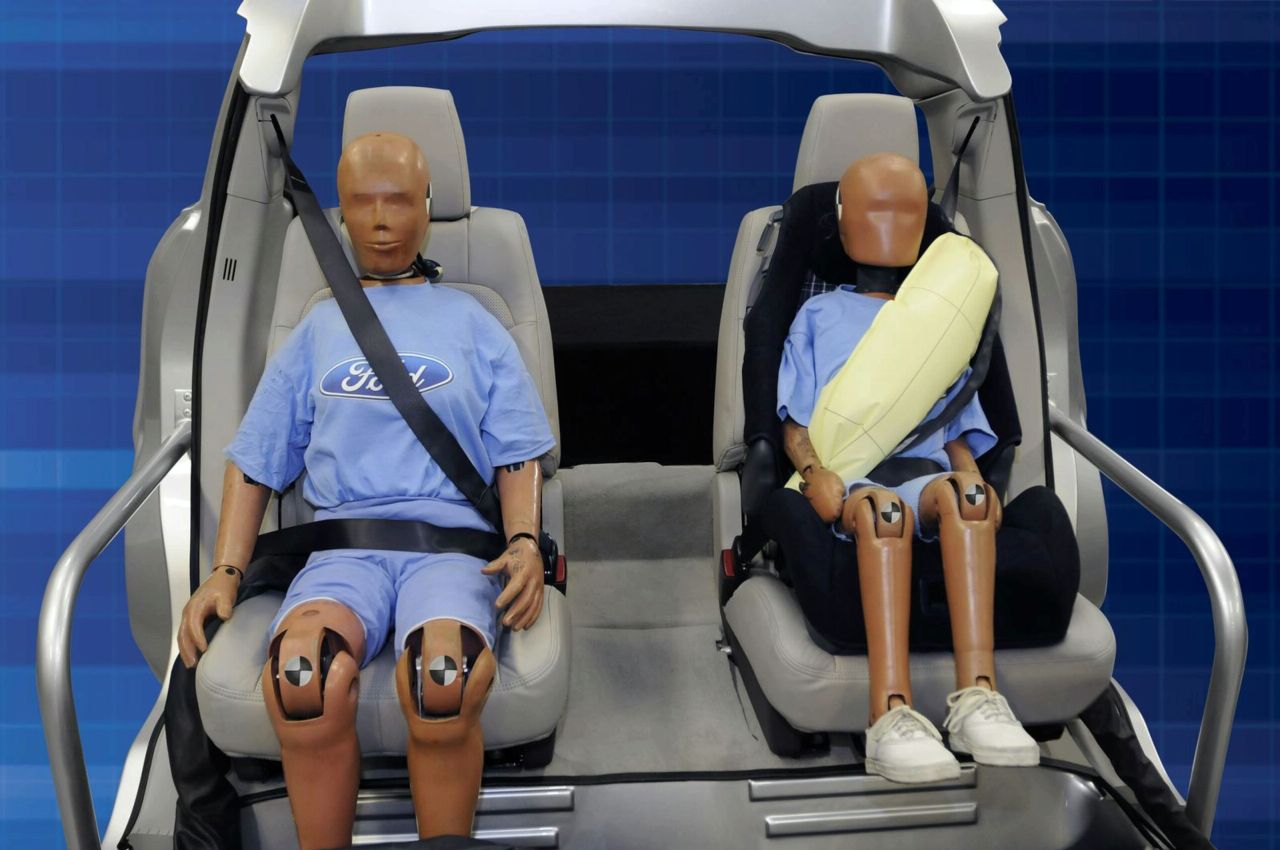
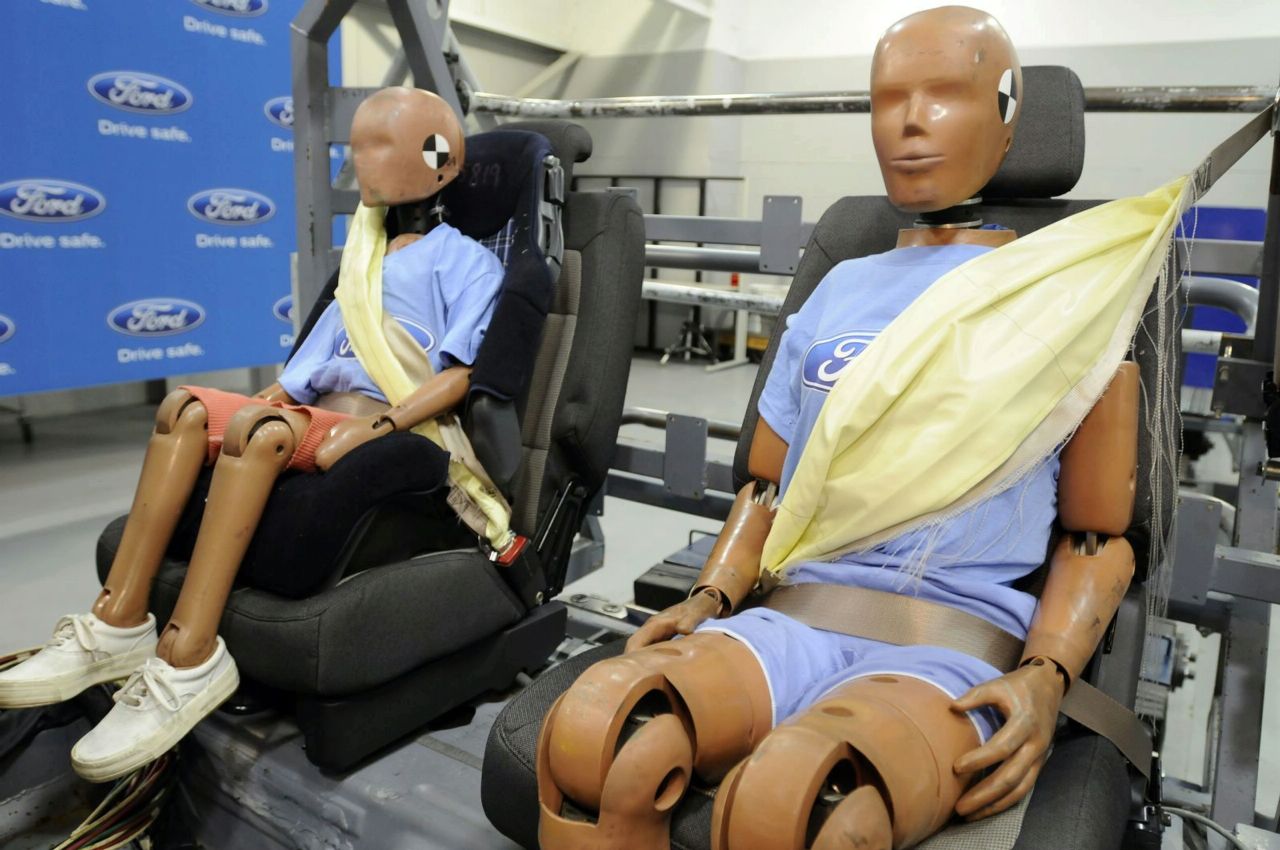
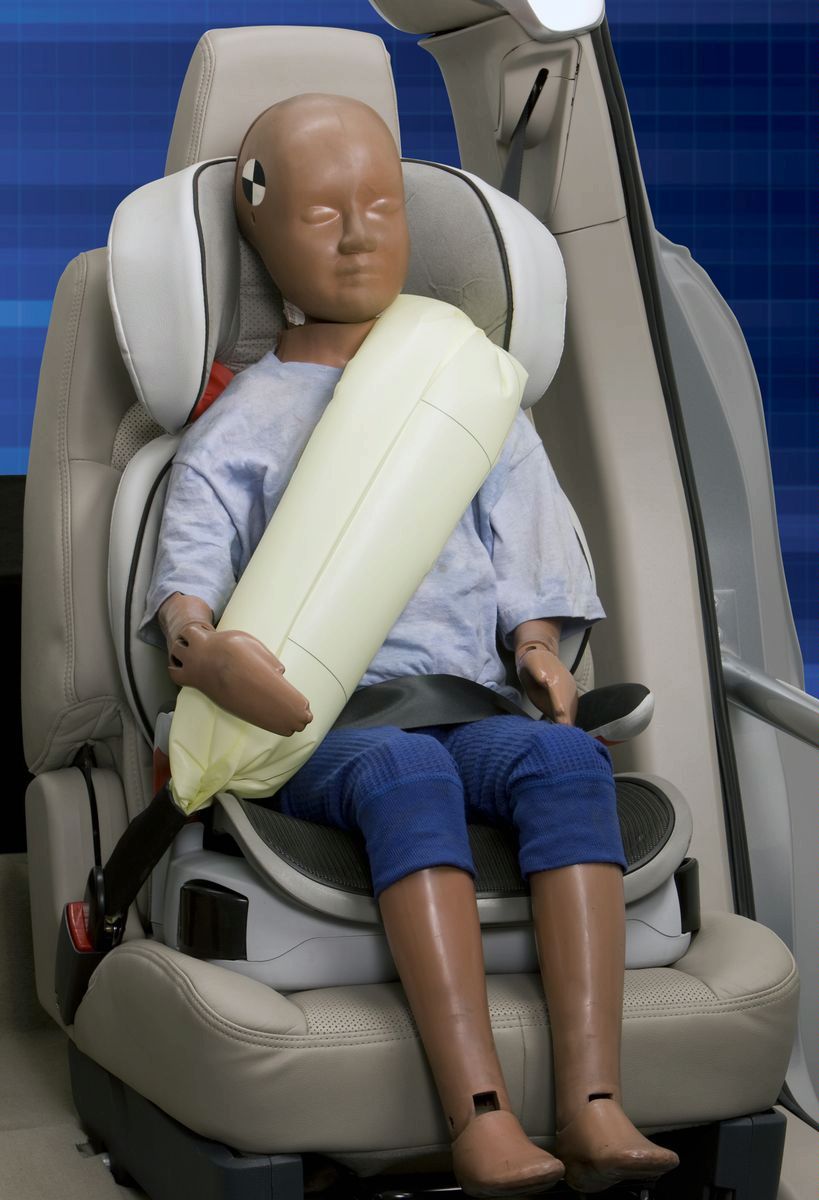
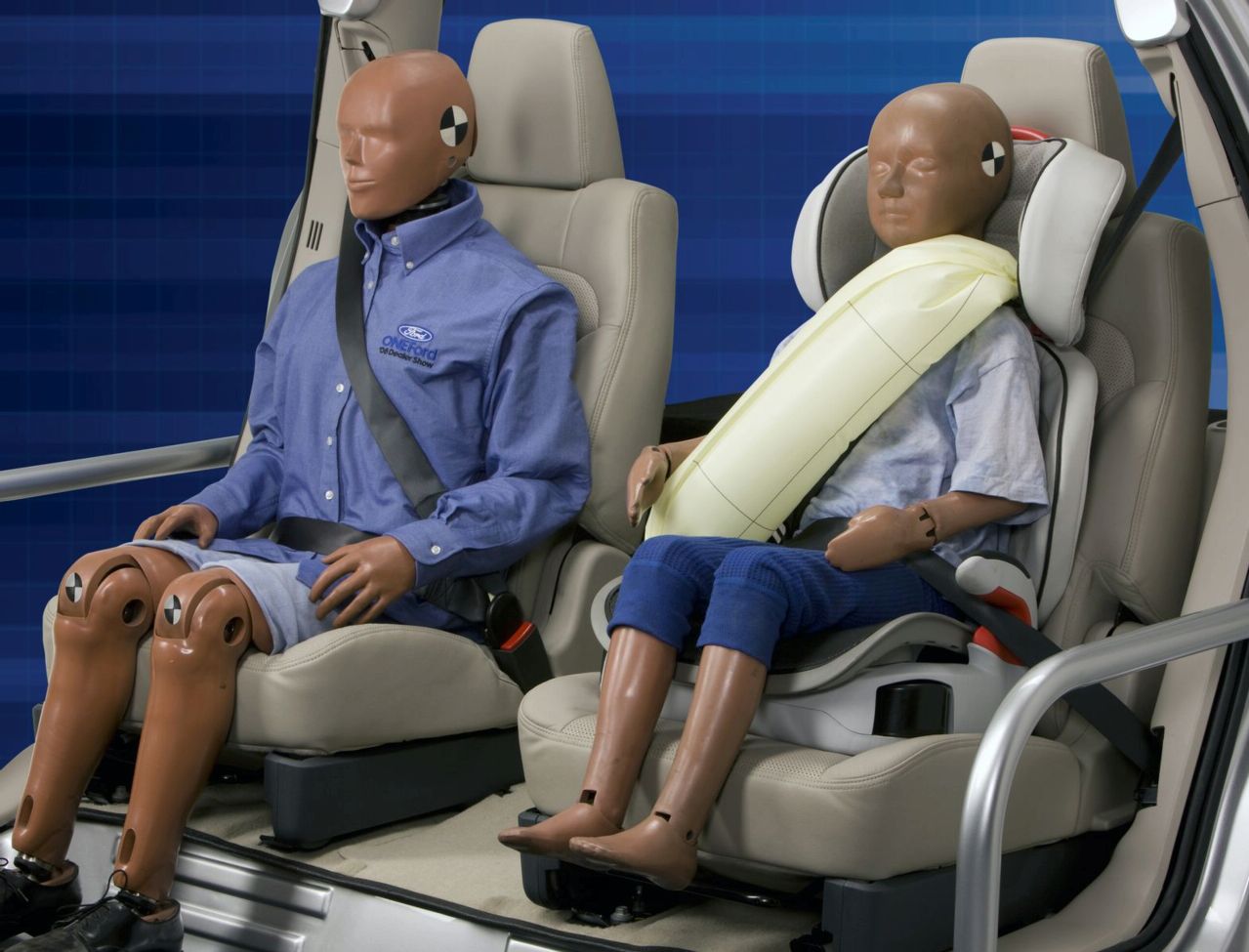
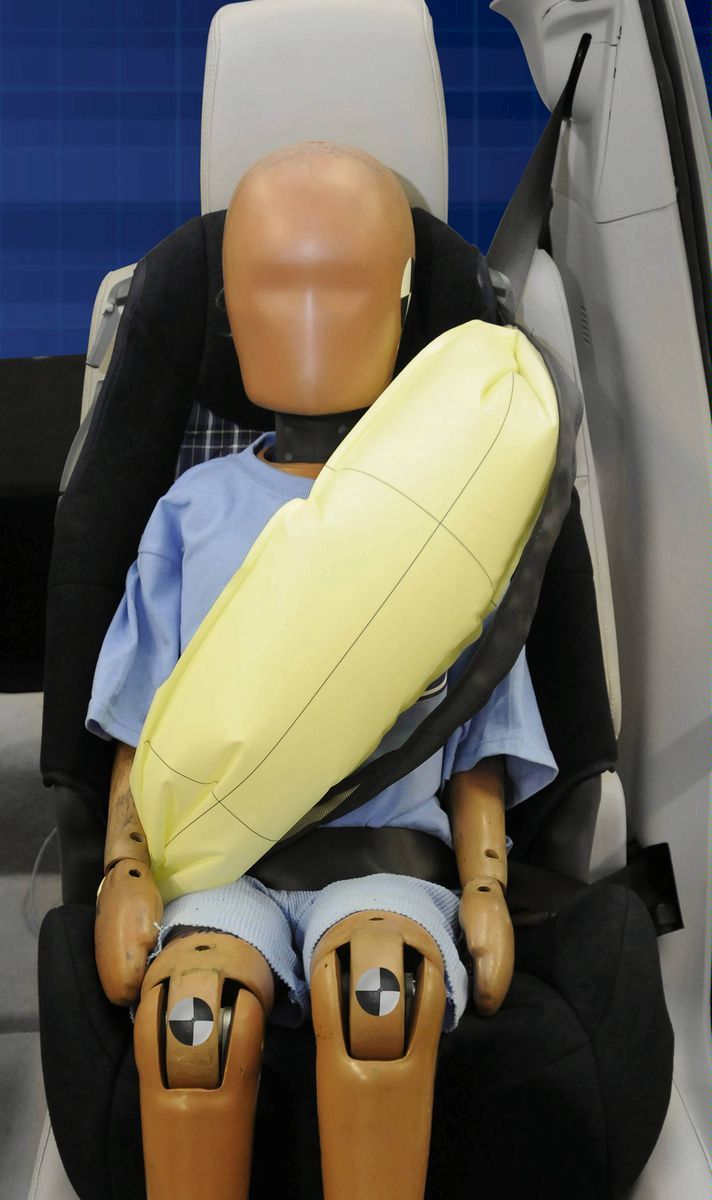
Η Ford προχώρησε στην κατασκευή ζωνών ασφαλείας που διαθέτουν αερόσακο. Η νέα ζώνη που προορίζεται αποκλειστικά για τα πίσω καθίσματα μπορεί να διανέμει την δύναμη της πρόσκρουσης έως πέντε φορές περισσότερο σε σχέση με τις κοινές ζώνες, ενώ προστατεύει καλύτερα τις ευαίσθητες περιοχές όπως το κεφάλι, το λαιμός και το στήθος. Οι ζώνες ανοίγουν μέσω κρύου συμπιεσμένου αερίου σε αντίθεση τους κοινούς αερόσακους οι οποίοι ενεργοποιούνται μετά από εξώθερμη χημική αντίδραση. Όσοι τις έχουν δοκιμάσει δήλωσαν ότι είναι πιο άνετες σε σχέση με τις απλές ζώνες ενώ η Ford ευελπιστεί ότι θα αυξήσουν τη χρήση των ζωνών ασφαλείας στους πίσω επιβάτες και αξίζει να σημειωθεί ότι οι νέες ζώνες είναι απολύτως συμβατές με όλα τα παιδικά καθίσματα. Το πρώτο αυτοκίνητο που θα διαθέτει τις νέες ζώνες θα είναι η επόμενη γενιά του SUV της Ford Explorer που είναι διαθέσιμο στην Αμερική ενώ η τεχνολογία θα περάσει σε όλη την γκάμα της παγκοσμίως μέσα στα επόμενα χρόνια. Ένα video επίδειξης της νέας αυτής τεχνολογίας μπορείς να δεις στη συνέχεια.
[Πηγή: Ford]
| FORD INTRODUCES INDUSTRY’S FIRST INFLATABLE SEAT BELTS TO ENHANCE REAR SEAT SAFETY* Ford introduces the auto industry’s first-ever production inflatable seat belts, which are designed to provide additional protection for rear-seat occupants, often children and older passengers who can be more vulnerable to head, chest and neck injuries * Ford’s inflatable rear seat belts will debut on the next-generation Ford Explorer sport utility vehicle, which goes into production next year; Ford eventually plans to offer inflatable seat belt technology in vehicles globally * Ford’s inflatable rear seat belts spread crash forces over five times more area of the body than conventional seat belts; this helps reduce pressure on the chest and helps control head and neck motion for rear seat passengers * More than 90 percent of Ford research participants indicated that Ford’s inflatable seat belts are similar to or more comfortable than traditional belts, which could help increase the lower rate of rear belt usage Click here to visit our Inflatable Seat Belt minisite for fact sheets, profiles and multimedia content DEARBORN, Mich., Nov. 5, 2009 – Ford Motor Company is bringing to market the world’s first automotive inflatable seat belts, combining attributes of traditional seat belts and air bags to provide an added level of crash safety protection for rear seat occupants. The advanced restraint system is designed to help reduce head, neck and chest injuries for rear seat passengers, often children and older passengers who can be more vulnerable to such injuries. Ford will introduce inflatable rear seat belts on the next-generation Ford Explorer, which goes into production next year for the North American market. Over time, Ford plans to offer the technology in vehicles globally. “Ford’s rear inflatable seat belt technology will enhance safety for rear-seat passengers of all ages, especially for young children who are more vulnerable in crashes,” said Sue Cischke, Ford group vice president of Sustainability, Environmental and Safety Engineering. “This is another unique family technology that builds on our safety leadership, including the most top safety ratings of any automaker.” Safer and more comfortable “Ford is pioneering inflatable seat belt technology to help enhance crash safety protection, while encouraging more people to buckle up with a more comfortable belt,” said Paul Mascarenas, Ford vice president, Engineering, Global Product Development. In the event of a frontal or side crash, the inflatable belt’s increased diameter more effectively holds the occupant in the appropriate seating position, helping to reduce the risk of injury. Vehicle safety sensors determine the severity of the collision in the blink of an eye and deploy the inflatable belts’ air bags. Each belt’s tubular air bag inflates with cold compressed gas, which flows through a specially designed buckle from a cylinder housed below the seat. The inflatable belt’s accordion-folded bag breaks through the belt fabric as it fills with air, expanding sideways across the occupant’s body in about the same amount of time it takes a car traveling at highway speed to cover a yard of distance. “It’s a very simple and logical system, but it required extensive trial and error and testing over several years to prove out the technology and ensure precise reliable performance in a crash situation,” said Srini Sundararajan, safety technical leader for Ford research and advance engineering. The inflated belt helps distribute crash force energy across five times more of the occupant’s torso than a traditional belt, which expands its range of protection and reduces risk of injury by diffusing crash pressure over a larger area, while providing additional support to the head and neck. After deployment, the belt remains inflated for several seconds before dispersing its air through the pores of the air bag. Ford’s safety leadership record continues to grow Ford was the first automaker to introduce seat belts in 1955 and led the way in making driver and front-passenger air bags standard in most vehicles by 1993. This year, Ford introduced radar-enabled Adaptive Cruise Control with Collision Warning with Brake Support and Blind Spot Information System (BLIS®) with Cross Traffic Alert (CTA). These technologies – introduced on the new 2010 Ford Taurus and Fusion – help drivers avoid potential dangerous crash situations using radar to detect the relative position of other vehicles and warn the driver with a combination of visual and audio alerts. Ford’s other recent seat belt and air bag innovations include the industry-first BeltMinder system in 2000, which the U.S. government credited with increasing front belt usage by 5 percent in Ford vehicles. On the 2002 Explorer, Ford launched the industry’s first rollover-activated side curtain air bags – called Safety Canopy – as well as Roll Stability Control technology that goes a step beyond traditional stability control systems by helping measure and prevent side-to-side skidding and dangerous situations that could lead to rollovers. Ford also introduced on the 2009 F-150 and 2010 Taurus some of the industry’s first pressure-based air bag technologies that help deploy side air bags up to 30 percent faster. |